ABB
In Stock OK
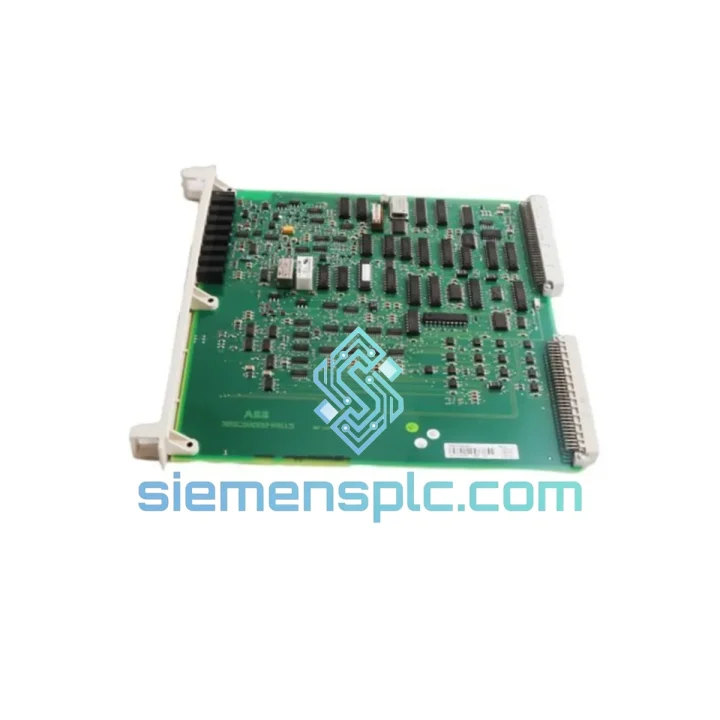
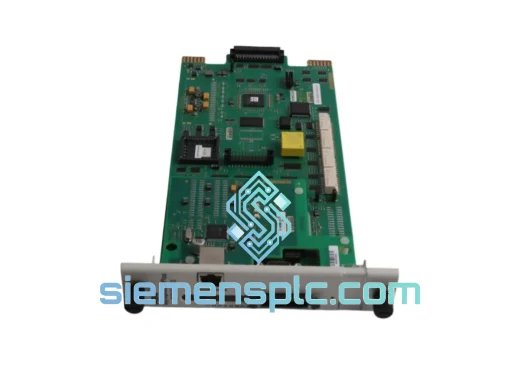
ABB DCO01 P37511-4-0369666 Communication Interface Module – AC500
Request verified availability, condition, replacement risk review, packing options and courier lead time for P37511-4-0369666.
BrandABB
Part NumberP37511-4-0369666
ConditionAvailability Check
Lead TimeRFQ Confirmation
DocumentsDatasheet / photos by RFQ
ShippingExport packing available
Auto-filled RFQ
P37511-4-0369666
Click Request Quote and the part number is inserted into the inquiry form automatically.
- Reply by email: [email protected]
- WhatsApp / Tel: +86 18359268345
- Mon-Sat 9:00-18:00 GMT+8
Procurement Data
Key Product Information
Core fields for model confirmation and RFQ routing. Detailed product narrative remains below.
- Brand
- ABB
- Primary Part Number
- P37511-4-0369666
- Product Type
- Communication Interface Module
- Series / Family
- AC500
- Manufacturer
- ABB
- Country of Origin
- SE
- Catalog Category
- Communication
- Operating Temp.
- 0 °C to +60 °C
- Warranty
- 12 months from dispatch date
Model confirmed for inquiry
P37511-4-0369666
Send quantity, destination and urgency. The RFQ form keeps this part number attached.
Request Quote
Product Overview
ABB DCO01 P37511-4-0369666: Fieldbus Communication Interface Module for AC500 Programmable Automation Controllers
Within any distributed control architecture, the communication layer is the structural backbone that determines whether process data reaches the CPU with the timing precision required for closed-loop control. The ABB DCO01, identified by assembly number P37511-4-0369666, is a slot-mounted communication interface module designed specifically for the AC500 programmable automation controller platform. It occupies a defined position on the AC500 backplane and manages all protocol-level transactions between the CPU module and connected fieldbus segments — including cyclic process data exchange, acyclic parameter access, and diagnostic event forwarding — without consuming CPU scan cycle resources.
The AC500 platform is deployed across power generation, water and wastewater treatment, oil and gas processing, and continuous manufacturing environments where control system uptime is measured in years, not months. In these applications, the communication module is not a peripheral — it is a load-bearing component of the control architecture. The DCO01 P37511-4-0369666 is factory-assembled and tested to ABB’s internal quality specification, with each unit traceable to its production batch through ABB’s manufacturing documentation system.
The module’s internal architecture separates fieldbus processing from CPU execution at the hardware level. A dedicated communication processor handles all fieldbus timing, token management, and acknowledgment sequencing autonomously. This processor-level separation means that fieldbus cycle jitter, network congestion events, or device timeout conditions on the fieldbus side do not propagate into the CPU’s process image update cycle — a critical design property in applications where control loop execution time must remain bounded regardless of network conditions.
Real-time Stock & RFQ: [email protected] | WhatsApp: +86 18359268345
Technical Parameters
| Parameter | Specification |
|---|---|
| Manufacturer | ABB |
| Model / Part Number | DCO01 / P37511-4-0369666 |
| Module Function | Backplane Fieldbus Communication Interface |
| Compatible Platform | ABB AC500 PAC / DCS Series |
| Backplane Bus Type | AC500 internal high-speed parallel bus |
| Supported Protocols | PROFIBUS DP, Modbus RTU, Modbus TCP, CANopen, DeviceNet (variant-dependent) |
| Data Exchange Mode | Cyclic (process image) and acyclic (parameter/diagnostic) |
| Isolation Voltage | 500 V DC (fieldbus to backplane, galvanic isolation) |
| Operating Temperature | 0 °C to +60 °C |
| Storage Temperature | -25 °C to +70 °C |
| Relative Humidity | 5% to 95%, non-condensing |
| EMC Immunity Standard | EN 61000-6-2 (industrial environment) |
| EMC Emission Standard | EN 61000-6-4 |
| Certification | CE |
| Mounting | AC500 backplane slot, DIN rail chassis |
| Country of Origin | Germany |
| Unit Weight | 900 g |
| Warranty | 12 months from dispatch date |
Hardware Logical Analysis
The DCO01 P37511-4-0369666 is built around a dual-processor architecture: a primary communication processor dedicated to fieldbus protocol execution, and a backplane interface controller that manages data transfer to and from the AC500 CPU’s process image memory. These two processors share access to a dual-port RAM buffer, which allows simultaneous read/write operations from both sides without bus arbitration delays. The result is a zero-wait-state data handoff between the fieldbus domain and the CPU domain — a design that eliminates the latency penalty that single-bus architectures impose when fieldbus transactions and CPU memory accesses compete for the same data path.
Galvanic Isolation Architecture: The signal path between the fieldbus connector and the backplane logic is interrupted by an optocoupler isolation stage rated at 500 V DC. This barrier prevents ground potential differences between the fieldbus cable shield and the control cabinet ground from driving common-mode currents through the module’s logic circuitry. In industrial environments where variable-frequency drives, large inductive loads, and long cable runs create significant ground noise, this isolation stage is the primary mechanism that prevents fieldbus-originated transients from corrupting backplane data.
EMC Layout and Filtering: The module PCB uses separate copper ground planes for the fieldbus interface section and the digital logic section, connected only at a single star-ground point to prevent ground loop formation. Ferrite bead filters are placed on the DC power supply rails entering the fieldbus interface section, attenuating high-frequency conducted noise from the backplane power bus before it reaches the fieldbus driver circuitry. Connector housings are shielded and bonded to the fieldbus ground plane, providing a low-impedance return path for cable shield currents that bypasses the logic circuitry entirely.
Hardware Watchdog and Fault Propagation: An independent hardware watchdog timer monitors the communication processor’s execution state on a configurable interval. If the processor fails to issue a watchdog reset within the timeout window — indicating a firmware hang, stack overflow, or hardware fault — the watchdog asserts a fault signal on the AC500 backplane bus. The CPU module captures this signal as a diagnostic event, logs it with a timestamp in the system event buffer, and can trigger a configurable fault response in the application program. This mechanism ensures that a silent communication module failure is impossible: any processor-level fault produces a visible, logged, and actionable diagnostic event within one watchdog cycle.
Redundancy Arbitration Support: In AC500 configurations with redundant CPU modules, the DCO01 participates in the backplane arbitration protocol that determines which CPU holds the active role. The communication module maintains its fieldbus master state continuously, transferring process data to whichever CPU is currently active, with switchover times that remain within the fieldbus cycle time — preventing fieldbus slaves from detecting a master absence event during CPU failover.
System Integration Benefits
- CPU Scan Cycle Isolation: Fieldbus processing executes on a dedicated processor, ensuring that network load variations, device timeouts, or protocol retries on the fieldbus side produce no measurable effect on the CPU’s scan cycle execution time — a prerequisite for deterministic PID and cascade control loops.
- Structured Diagnostic Access: Communication error counters, bus fault events, and module status flags are mapped into the AC500 CPU’s diagnostic data area and accessible via standard IEC 61131-3 function blocks, enabling application-level fault handling without proprietary diagnostic tools.
- Zero-Wiring Backplane Integration: The module connects to the CPU and I/O subsystem entirely through the backplane bus, eliminating inter-module signal cables and the associated failure modes: connector oxidation, cable routing errors, and vibration-induced intermittent contacts.
- Independent Fieldbus Domain Segmentation: Multiple DCO01 modules installed in parallel backplane slots create electrically independent fieldbus segments within a single chassis, allowing physical separation of safety instrumented system networks from standard process control networks without additional hardware.
- Multi-Protocol Hardware Platform: A single DCO01 hardware design supports PROFIBUS DP, Modbus RTU/TCP, CANopen, and DeviceNet through firmware and configuration, reducing the number of distinct spare module types required across a multi-protocol plant network.
- Rapid Device Commissioning: ABB-provided GSD and EDS device description files for common fieldbus masters reduce new device integration from manual parameter entry to a file-import operation, cutting commissioning time for standard network topologies from hours to under 30 minutes.
- Long-Term Parts Availability: ABB’s documented long-term availability commitment for the AC500 platform covers a minimum 15-year supply window from platform release, ensuring DCO01 modules remain procurable for the full operational lifecycle of installed control systems without forced hardware migrations.
- IEC 61131-3 Native Engineering Environment: All communication configuration, diagnostic mapping, and fault response logic is programmed through ABB Automation Builder using standard IEC 61131-3 languages — structured text, function block diagram, and ladder diagram — with no requirement for proprietary low-level configuration utilities outside the standard engineering workflow.
- Reduced Mean Time to Repair: Module-level fault isolation, combined with the AC500’s slot-addressed diagnostic architecture, allows maintenance personnel to identify a faulty communication module to the specific backplane slot within one diagnostic cycle, reducing fault localization time from hours to minutes in a live plant environment.
Quality Assurance & Global Logistics
Each ABB DCO01 P37511-4-0369666 unit dispatched from our Xiamen, China facility is sourced through verified industrial distribution channels with documented supply chain traceability. Pre-shipment inspection covers label authenticity verification against ABB’s part numbering format, connector pin condition assessment, housing integrity check, and firmware revision confirmation against the declared assembly number. Units presenting any indication of non-genuine marking, physical damage, or revision inconsistency are quarantined and removed from available stock.
Packaging protocol follows anti-static and moisture-barrier requirements for sensitive electronic assemblies: each module is individually sealed in an ESD-protective polyethylene bag with desiccant, placed in a foam-lined rigid inner carton, and enclosed in a double-wall corrugated outer carton rated for IATA air freight handling conditions. Commercial invoice, packing list, and available batch traceability documentation accompany every shipment to support customs clearance in regulated import markets including the EU, North America, and Southeast Asia.
Outbound logistics from Xiamen operate via DHL Express, FedEx International Priority, and UPS Worldwide Expedited, with standard transit times of 3–7 business days to major industrial centers in Europe, North America, the Middle East, and Southeast Asia. For urgent plant maintenance requirements, same-day dispatch is available for confirmed in-stock units when purchase orders are received and confirmed before 14:00 CST. All shipments include end-to-end tracking and are covered by a 12-month warranty from the date of dispatch.
Contact Information
Email: [email protected]
WhatsApp: +86 18359268345
Web: siemensplc.com
Location: Xiamen, China
© 2026
Ready to quote
[email protected]
Send This Part Number to Sales
RFQ workflow
Quality workflow ->
Confirmation Process
01Model confirmation
We check the full part number, brand, series and visible nameplate information before quotation.
02Availability reply
Sales confirms stock path, condition option, quantity and realistic lead time for export dispatch.
03Packing & courier
DHL, FedEx, UPS or buyer courier arrangements can be reviewed with packing requirements.
Continue sourcing
Browse full catalog ->
Related Automation Parts
Similar brand or category products for fast comparison and multi-item RFQ lists.
ABB
RFQ Ready
ABB SPBRC410 PLC Communication Controller
AC500
Origin SE
PLC Communication Controller