ABB
RFQ Ready
ABB HAC807B102 Analog Input Termination Unit – AC800M Series
AC800M
Origin SE
Analog Input Termination Unit
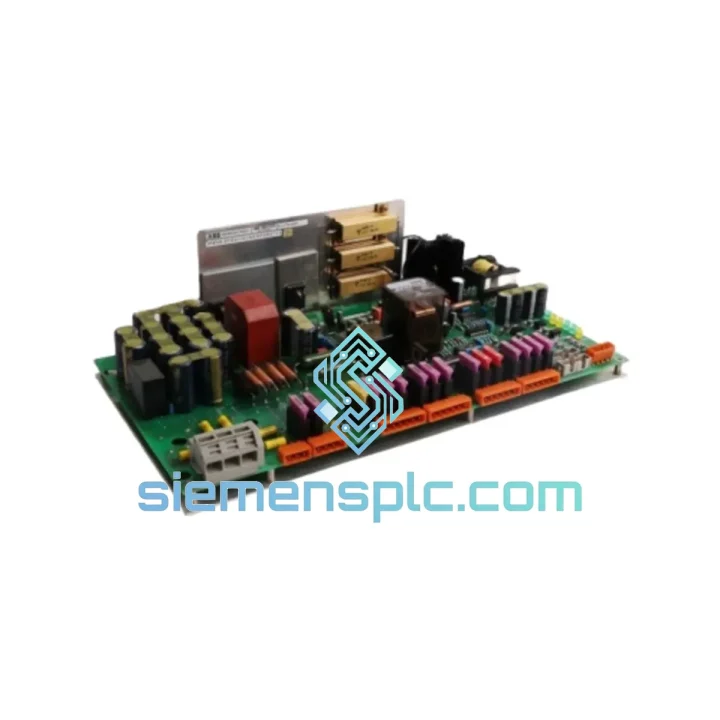
Request verified availability, condition, replacement risk review, packing options and courier lead time for DSAI130A 3BSE018292R1.
Click Request Quote and the part number is inserted into the inquiry form automatically.
Core fields for model confirmation and RFQ routing. Detailed product narrative remains below.
The ABB DSAI130A, ordered under catalog reference 3BSE018292R1, is a multi-channel analog input module designed for integration into ABB’s S100 I/O bus infrastructure. It serves as the primary signal acquisition interface between field instrumentation and the DCS controller backplane in Advant OCS and AC800M-based control systems. In continuous-process environments — including thermal power generation, hydrocarbon processing, pulp and paper, and chemical manufacturing — the integrity of analog input data directly determines the quality of closed-loop control. A degraded or failed analog input module introduces measurement latency, signal drift, or complete channel loss, each of which forces control loops into manual override or failsafe states. The DSAI130A is engineered to eliminate these failure modes through a combination of hardware-level signal isolation, high-resolution A/D conversion, and deterministic data transfer to the controller CPU via the S100 backplane bus.
Within the ABB Advant OCS architecture, the S100 I/O bus operates as a synchronous, time-deterministic communication layer between I/O modules and the master controller. The DSAI130A participates in this bus as a slave node, responding to cyclic polling from the AC800M or Advant controller at fixed scan intervals. This architecture guarantees that analog process values are delivered to the control application with bounded latency — a non-negotiable requirement in regulatory control loops where derivative action and cascade configurations demand consistent sample timing. The module’s internal A/D converter samples each input channel sequentially, with the digitized result buffered and transmitted to the controller during the next bus cycle. This scan-and-transmit architecture, combined with the S100 bus’s deterministic arbitration protocol, ensures that no channel is starved of service under normal operating conditions.
Real-time Stock & RFQ: [email protected] | WhatsApp: +86 18359268345
| Parameter | Specification |
|---|---|
| Part Number | DSAI130A |
| Catalog / Order Number | 3BSE018292R1 |
| Manufacturer | ABB (ASEA Brown Boveri) |
| Module Classification | Analog Input Module |
| Compatible Platform | ABB Advant OCS / AC800M DCS |
| I/O Bus Interface | S100 I/O Bus (synchronous, cyclic polling) |
| Signal Input Type | 4–20 mA current loop; 0–10 V / ±10 V voltage (channel-configurable) |
| A/D Resolution | 12-bit (4096 counts), linear conversion |
| Channel Isolation | Optical isolation per channel group; channel-to-bus isolation ≥ 500 V AC |
| Input Impedance (current) | ≤ 250 Ω (burden resistor integrated) |
| Input Impedance (voltage) | ≥ 100 kΩ |
| Accuracy | ±0.1% of full scale at 25 °C |
| Operating Temperature | 0 °C to +55 °C |
| Storage Temperature | −25 °C to +70 °C |
| Relative Humidity | 5% to 95% RH, non-condensing |
| EMC Compliance | EN 61000-4-2 (ESD), EN 61000-4-4 (EFT/Burst), EN 61000-4-5 (Surge) |
| Power Consumption | Supplied via S100 backplane; ≤ 3 W typical |
| Form Factor | Plug-in card for S100 I/O subrack |
| Weight | Approx. 200 g |
| Warranty | 12 months from date of shipment |
The DSAI130A’s hardware architecture reflects ABB’s design philosophy for process-critical I/O: signal integrity and fault containment take precedence over component cost reduction. Several design decisions are worth examining in detail.
Optical Isolation Architecture: Each channel group on the DSAI130A is separated from the S100 backplane logic by an optocoupler barrier. This galvanic isolation serves two functions. First, it prevents ground loop currents — common in large industrial installations where field cable runs span hundreds of meters across multiple earthing points — from corrupting the digitized signal. Ground potential differences of 1–5 V are not uncommon in such environments; without isolation, these appear as DC offset errors on the measured signal. Second, the isolation barrier limits the propagation of transient overvoltage events from the field side to the backplane. A lightning-induced surge on a field cable, even after primary protection, can carry residual energy sufficient to latch or destroy unprotected CMOS logic. The optocoupler’s isolation rating of ≥ 500 V AC provides a defined withstand margin against such events.
Burden Resistor Integration for Current Loop Inputs: For 4–20 mA inputs, the DSAI130A integrates the burden resistor on-board, typically 250 Ω, converting the loop current to a 1–5 V signal presented to the A/D converter input stage. This eliminates the need for external signal conditioning terminals and reduces wiring complexity in the marshalling cabinet. The on-board resistor is precision-grade (±0.1% tolerance, low temperature coefficient) to maintain measurement accuracy across the module’s operating temperature range without requiring field calibration adjustments.
A/D Conversion and Sampling Sequence: The module employs a successive-approximation register (SAR) A/D converter operating at 12-bit resolution. Channels are sampled sequentially via an analog multiplexer. The multiplexer settling time and A/D conversion time are fixed by the module’s internal clock, ensuring that the total scan time per module is deterministic and independent of signal amplitude. This is critical for cascade control applications where the timing relationship between primary and secondary loop measurements must be consistent.
EMC Hardening: The PCB layout incorporates dedicated ground planes separating analog signal traces from digital logic traces, minimizing capacitive coupling between the high-impedance analog front end and the switching noise generated by the backplane bus drivers. Ferrite beads are placed on power supply lines entering the analog section to attenuate high-frequency conducted interference. The module’s front panel connector uses a shielded housing that bonds to the subrack chassis ground, providing a low-impedance return path for shield currents from field cables.
Every DSAI130A unit supplied by siemensplc.com is sourced as genuine ABB-manufactured hardware. Authenticity is verified against ABB’s part marking standards: the module’s PCB silkscreen, front panel label, and connector housing markings are cross-checked against the 3BSE018292R1 catalog reference and ABB’s internal revision documentation. Counterfeit or non-OEM modules are rejected at the incoming inspection stage.
Prior to shipment, each unit undergoes a structured pre-dispatch inspection: visual examination of the PCB for component damage, solder joint integrity, and connector pin condition; verification of the revision label against the ordered catalog number; and ESD-safe packaging in anti-static bags with foam cushioning inserts. A 12-month warranty against manufacturing defects and functional failure is provided from the date of shipment.
Logistics operations are based in Xiamen, China — a major international freight hub with direct access to DHL Express, FedEx International Priority, and UPS Worldwide Express services. Standard dispatch lead time for in-stock units is 1–3 business days from order confirmation. Emergency orders are prioritized for same-day dispatch where stock is confirmed available. Full export documentation — commercial invoice, packing list, and certificate of origin — is prepared for each shipment to facilitate customs clearance in all major import markets including the EU, USA, Southeast Asia, and the Middle East. HS code classification is provided on request to assist procurement teams with import duty pre-calculation.
Email: [email protected]
WhatsApp: +86 18359268345
Web: siemensplc.com
Location: Xiamen, China
© 2026 siemensplc.com. All rights reserved.
We check the full part number, brand, series and visible nameplate information before quotation.
Sales confirms stock path, condition option, quantity and realistic lead time for export dispatch.
DHL, FedEx, UPS or buyer courier arrangements can be reviewed with packing requirements.
Similar brand or category products for fast comparison and multi-item RFQ lists.