ABB
In Stock OK
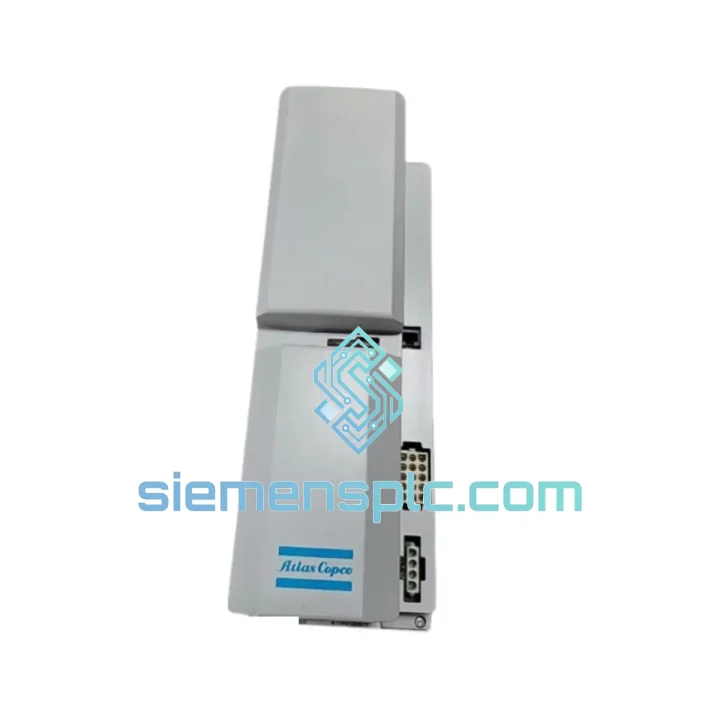
ABB DSQC345C 3HAB8101-3 Drive Rectifier Unit – IRC5 Series
Request verified availability, condition, replacement risk review, packing options and courier lead time for 3HAB8101-3.
BrandABB
Part Number3HAB8101-3
ConditionAvailability Check
Lead TimeRFQ Confirmation
DocumentsDatasheet / photos by RFQ
ShippingExport packing available
Auto-filled RFQ
3HAB8101-3
Click Request Quote and the part number is inserted into the inquiry form automatically.
- Reply by email: [email protected]
- WhatsApp / Tel: +86 18359268345
- Mon-Sat 9:00-18:00 GMT+8
Procurement Data
Key Product Information
Core fields for model confirmation and RFQ routing. Detailed product narrative remains below.
- Brand
- ABB
- Primary Part Number
- 3HAB8101-3
- Product Type
- Drive Rectifier Unit
- Series / Family
- IRC5
- Manufacturer
- ABB Robotics
- Country of Origin
- SE
- Model Function
- Three-phase AC-to-DC bus rectifier
- Catalog Category
- Motor Drives
- Warranty
- 12 months from dispatch date
Model confirmed for inquiry
3HAB8101-3
Send quantity, destination and urgency. The RFQ form keeps this part number attached.
Request Quote
Product Overview
ABB DSQC345C 3HAB8101-3: DC Bus Rectifier Architecture in the IRC5 Drive Module Stack
The ABB DSQC345C (catalog reference 3HAB8101-3) is the three-phase AC-to-DC rectifier assembly integrated into the IRC5 robot controller’s drive module bay. Its singular function — converting mains-level AC voltage into a stable, regulated DC bus — is the prerequisite for every servo axis command the IRC5 issues. Without a correctly functioning rectifier, the DC bus collapses, the axis computer loses its supply rail, and all six robot axes enter a controlled fault state. No motion, no production.
In the IRC5 architecture, the drive module is physically separated from the main computer module. The DSQC345C sits at the front of the drive module’s power chain: it accepts three-phase AC input from the cabinet’s main contactor, performs full-wave rectification through a diode bridge topology, and feeds the resulting DC bus to the downstream DSQC346-series drive units. Each drive unit draws from this common bus to power its IGBT inverter stage, which in turn drives the motor windings of each robot axis. The rectifier therefore carries the aggregate load of all active axes simultaneously — a demanding electrical duty that requires robust thermal design and tight voltage regulation.
The “C” hardware revision designation in DSQC345C reflects component-level updates to the rectifier’s protection circuitry and thermal management compared to earlier DSQC345 and DSQC345B variants. The part number 3HAB8101-3 is ABB’s internal manufacturing reference and is the identifier used in IRC5 spare parts documentation, controller configuration files, and ABB’s RobotStudio diagnostic environment. Both identifiers must be cross-referenced when sourcing a replacement to avoid revision mismatches that can cause bus voltage instability or incompatibility with the controller’s firmware-level power monitoring routines.
Real-time Stock & RFQ: [email protected] | WhatsApp: +86 18359268345
Technical Parameters
| Parameter | Value / Specification |
|---|---|
| Part Number (ABB) | DSQC345C |
| Catalog Reference | 3HAB8101-3 |
| Hardware Revision | C (current production revision) |
| Function | Three-phase AC-to-DC bus rectifier |
| Compatible Controller | ABB IRC5 Single Cabinet, Dual Cabinet, Panel Mounted Controller |
| Input Voltage | Three-phase AC, 200–600 V (controller-dependent) |
| DC Bus Output | Regulated DC bus rail feeding DSQC346-series drive units |
| Rectifier Topology | Full-wave diode bridge with capacitive filtering |
| Thermal Protection | Integrated NTC thermistor monitoring; hardware over-temperature shutdown |
| Mounting | Drive module bay, DIN-rail compatible bracket |
| Weight | 3,680 g (approx.) |
| Manufacturer | ABB Robotics |
| Country of Origin | Germany |
| Warranty | 12 months from dispatch date |
Hardware Logical Analysis
The DSQC345C operates at the intersection of mains power distribution and precision servo control — a position that imposes strict requirements on both electrical robustness and signal integrity.
Diode Bridge & Capacitive DC Bus: The rectifier employs a six-pulse full-wave diode bridge, converting three-phase AC into a pulsating DC waveform. A bank of electrolytic bulk capacitors then filters this waveform to produce the stable DC bus voltage. The capacitor bank’s energy storage capacity is sized to ride through brief mains dips — typically 10–20 ms — without triggering a bus undervoltage fault, which is critical in environments where mains quality is variable.
EMC Design: The DSQC345C incorporates line-side filtering to suppress conducted emissions generated by the rectifier’s switching transients. This filtering is coordinated with the IRC5 cabinet’s EMC shielding to meet EN 61000-6-4 industrial emission limits. The filter topology attenuates common-mode and differential-mode noise, protecting the axis computer’s analog feedback circuits from rectifier-generated interference — a non-trivial concern when encoder signal resolution is in the sub-micron range.
Thermal Management Architecture: The rectifier’s diode bridge and filter capacitors are the primary heat-generating elements. The DSQC345C uses a combination of a heatsink-mounted diode assembly and forced-air convection from the IRC5 cabinet’s internal fan system. An NTC thermistor embedded in the heatsink provides continuous temperature telemetry to the IRC5’s system board, enabling the controller to log thermal history and trigger a controlled shutdown before junction temperatures reach destructive levels. This design eliminates the abrupt, unlogged failures associated with thermal fuse-only protection schemes.
Inrush Current Limiting: At power-on, the uncharged DC bus capacitor bank presents a near-short-circuit load to the mains supply. The DSQC345C incorporates a negative-temperature-coefficient (NTC) inrush limiter in series with the rectifier input. As the capacitors charge and current drops, the NTC element’s resistance decreases, minimizing steady-state power dissipation. This protects both the rectifier diodes and the upstream mains contactor from repetitive inrush stress during frequent power cycling — common in multi-shift manufacturing environments.
Bus Voltage Monitoring Interface: The DSQC345C provides a DC bus voltage sense signal to the IRC5 system board. This signal is sampled by the controller’s power management firmware at each servo cycle (typically 4 ms). If the bus voltage deviates outside the defined window, the controller generates a specific error code (e.g., 38026 — DC bus undervoltage) that maintenance engineers can trace directly to the rectifier or upstream mains supply, rather than misdiagnosing the fault as a drive unit or motor failure.
System Integration Benefits
- Deterministic DC Bus Stability: The DSQC345C’s regulated output maintains bus voltage within the tolerance band required by DSQC346-series drive units, ensuring that torque commands are executed with consistent current delivery across all six axes simultaneously — a prerequisite for coordinated path accuracy in multi-axis welding or assembly applications.
- Firmware-Transparent Fault Reporting: The bus voltage sense interface feeds directly into the IRC5’s diagnostic layer. Fault codes generated by bus anomalies are logged with timestamp and axis state data, enabling root-cause analysis without oscilloscope measurement on live bus rails.
- Backward Compatibility with DSQC345/345B: The C revision maintains the same mechanical footprint, connector pinout, and bus voltage output as earlier revisions, allowing direct replacement without controller reconfiguration or firmware updates in the vast majority of IRC5 installations.
- Thermal Telemetry Integration: NTC thermistor data is accessible via the IRC5’s service information system (SIS), enabling predictive maintenance scheduling based on actual thermal load history rather than fixed calendar intervals.
- Inrush Protection Extends Contactor Life: By limiting peak inrush current at power-on, the DSQC345C reduces contact erosion on the main cabinet contactor — a secondary maintenance cost that is frequently overlooked when rectifier inrush limiting is absent or degraded.
- EMC Compliance Preserves Encoder Signal Integrity: The line-side EMC filter prevents rectifier-generated noise from coupling into the IRC5’s resolver and encoder feedback circuits, maintaining position feedback accuracy and preventing spurious following-error faults during high-load acceleration phases.
- Reduced MTTR on Drive Module Faults: Because the DSQC345C is a discrete, field-replaceable unit within the drive module bay, a rectifier failure does not require replacement of the entire drive module assembly. Swap time for a trained technician is typically under 30 minutes, versus 2–4 hours for a full drive module exchange.
- Compatible with SafeMove Safety Functions: The DSQC345C’s bus voltage monitoring integrates with the IRC5’s SafeMove safety controller. Bus undervoltage events are treated as safety-relevant conditions, triggering a controlled safe stop (SS1 or SS2) rather than an uncontrolled coast-to-stop, preserving both tooling and workpiece integrity.
Quality Assurance & Global Logistics
Every DSQC345C 3HAB8101-3 unit dispatched from our Xiamen facility undergoes a structured pre-shipment verification process. Visual inspection covers connector integrity, capacitor condition (checking for bulging or electrolyte leakage), heatsink mounting torque, and PCB surface condition. Functional verification confirms that the bus voltage sense output is within specification and that the NTC thermistor reads within the expected resistance range at ambient temperature. Units that do not pass both stages are quarantined and not listed for sale.
Part number and revision code are cross-referenced against ABB’s spare parts database to confirm that the unit supplied matches the ordered specification exactly. Serial numbers are recorded at dispatch for full traceability. Anti-static packaging with foam-lined outer cartons protects the rectifier’s capacitor bank and PCB assembly during international transit. For air freight shipments, we comply with IATA regulations applicable to capacitor-containing assemblies.
From Xiamen, we ship to maintenance teams across Southeast Asia, the Middle East, Europe, and the Americas. Standard international express transit times are 3–7 business days to most destinations. For urgent production-down situations, same-day dispatch is available for in-stock units when orders are confirmed before 14:00 CST. All shipments include a commercial invoice, packing list, and — on request — a certificate of conformance referencing the ABB part number and revision.
A 12-month warranty covers all units against manufacturing defects and premature failure under normal operating conditions. Warranty claims are processed with a target response time of 48 hours from receipt of the defective unit.
Contact Information
Email: [email protected]
WhatsApp: +86 18359268345
Web: siemensplc.com
Location: Xiamen, China
© 2026 siemensplc.com. All rights reserved.
Ready to quote
[email protected]
Send This Part Number to Sales
RFQ workflow
Quality workflow ->
Confirmation Process
01Model confirmation
We check the full part number, brand, series and visible nameplate information before quotation.
02Availability reply
Sales confirms stock path, condition option, quantity and realistic lead time for export dispatch.
03Packing & courier
DHL, FedEx, UPS or buyer courier arrangements can be reviewed with packing requirements.
Continue sourcing
Browse full catalog ->
Related Automation Parts
Similar brand or category products for fast comparison and multi-item RFQ lists.