ABB
In Stock OK
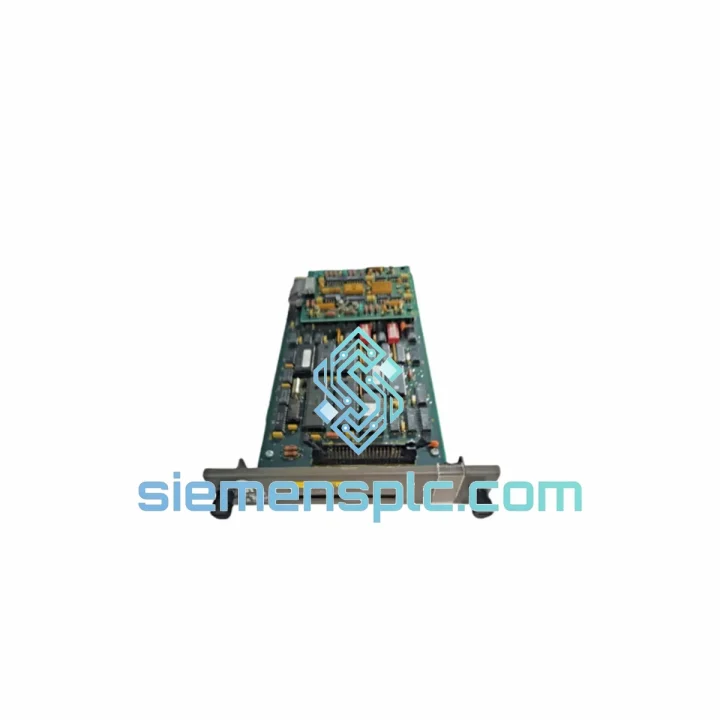
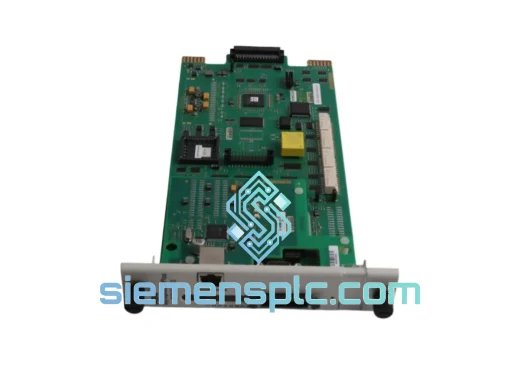
ABB INBIM02 Interface Module – AC500 Freelance DCS
Request verified availability, condition, replacement risk review, packing options and courier lead time for INBIM02.
BrandABB
Part NumberINBIM02
ConditionAvailability Check
Lead TimeRFQ Confirmation
DocumentsDatasheet / photos by RFQ
ShippingExport packing available
Auto-filled RFQ
INBIM02
Click Request Quote and the part number is inserted into the inquiry form automatically.
- Reply by email: [email protected]
- WhatsApp / Tel: +86 18359268345
- Mon-Sat 9:00-18:00 GMT+8
Procurement Data
Key Product Information
Core fields for model confirmation and RFQ routing. Detailed product narrative remains below.
- Brand
- ABB
- Primary Part Number
- INBIM02
- Product Type
- Interface Module
- Series / Family
- AC500
- Manufacturer
- ABB
- Country of Origin
- SE
- Catalog Category
- Communication
- Operating Temp.
- 0 °C to +60 °C
- Warranty
- 12 months from date of shipment
Model confirmed for inquiry
INBIM02
Send quantity, destination and urgency. The RFQ form keeps this part number attached.
Request Quote
Product Overview
ABB INBIM02 AC500 Freelance DCS Interface Module — Fieldbus Bridge Architecture in Distributed Control Loops
The ABB INBIM02 is a dedicated interface module engineered for the AC500 and Freelance distributed control system families. Its primary function is to serve as a deterministic communication bridge between the controller backplane and external fieldbus segments, enabling structured data exchange without burdening the CPU’s primary scan cycle. In process-critical environments — where loop closure latency directly affects product quality or plant safety — the INBIM02 provides a hardware-isolated communication path that decouples fieldbus polling from the controller’s real-time task scheduler.
Unlike software-layer protocol adapters, the INBIM02 implements its communication stack in dedicated onboard firmware, maintaining message queuing and acknowledgment handling independently of the host CPU. This architecture ensures that a fieldbus segment fault or communication timeout does not propagate as a task overrun into the controller’s deterministic execution environment. The module interfaces with the AC500 backplane via the internal S-Bus, a synchronous serial bus operating at fixed arbitration cycles, which guarantees bounded latency for data handoff between the interface module and the CPU’s process image.
In Freelance DCS configurations, the INBIM02 participates in the system’s distributed I/O model, where each module maintains its own local process image and reports delta changes to the controller at configurable update rates. This reduces backplane traffic during steady-state operation and concentrates bandwidth consumption during transient events — a design principle that directly supports high-density I/O configurations without degrading scan time performance.
Real-time Stock & RFQ: [email protected] | WhatsApp: +86 18359268345
Technical Parameters
| Parameter | Specification |
|---|---|
| Part Number / SKU | INBIM02 |
| Manufacturer | ABB |
| Product Series | AC500 / Freelance DCS |
| Module Classification | Interface / Communication Module |
| Backplane Interface | ABB S-Bus (synchronous serial, fixed arbitration) |
| Fieldbus Protocol Support | PROFIBUS DP / fieldbus segment (firmware-defined) |
| Electrical Isolation | Galvanic isolation between fieldbus port and backplane logic |
| Supply Voltage | Derived from AC500 backplane (24 V DC nominal) |
| Power Consumption | ≤ 3.5 W (typical, backplane-supplied) |
| Operating Temperature | 0 °C to +60 °C |
| Storage Temperature | −25 °C to +70 °C |
| Relative Humidity | 5 % to 95 %, non-condensing |
| Degree of Protection | IP20 (panel-mounted) |
| Mounting | DIN rail via AC500 backplane slot |
| Weight | 340 g |
| Dimensions (W × H × D) | Per AC500 module form factor |
| EMC Compliance | EN 61000-4 series (ESD, EFT, surge, conducted RF) |
| Certifications | CE, UL, RoHS 2011/65/EU |
| Country of Origin | Germany |
| Warranty | 12 months from date of shipment |
Hardware Logical Analysis
The INBIM02’s internal architecture separates its logic into three functional planes: the backplane interface plane, the protocol processing plane, and the fieldbus physical layer plane. Each plane operates with its own clock domain, and inter-plane data transfer is managed through dual-port SRAM buffers with hardware semaphore arbitration. This prevents data corruption during simultaneous read/write operations that would otherwise occur in a single-bus architecture.
Galvanic Isolation and EMC Design: The fieldbus port is galvanically isolated from the backplane logic using transformer-coupled isolation with a minimum isolation voltage of 500 V DC. This isolation barrier prevents ground loop currents — common in large industrial installations where cable runs span multiple earthing zones — from injecting common-mode noise into the controller’s logic supply. The isolation also limits the propagation of transient overvoltages caused by inductive load switching on the fieldbus cable, protecting the backplane from damage events that would otherwise require full system shutdown for module replacement.
Firmware-Resident Protocol Stack: The communication protocol stack executes entirely within the module’s onboard microcontroller, which runs a fixed-priority RTOS kernel. Message framing, CRC verification, retry logic, and station address management are handled at the firmware level without any software intervention from the AC500 CPU. This means the CPU’s task scheduler sees only completed, validated data frames — not raw bus events — which eliminates jitter sources that would otherwise appear as variable-latency interrupts in the CPU’s execution timeline.
Watchdog and Fault Containment: The module implements a two-tier watchdog mechanism. The first tier monitors the fieldbus segment for token loss or excessive collision rates and triggers a local fault flag without halting the backplane interface. The second tier monitors the backplane communication heartbeat; if the CPU fails to poll the module within a configurable timeout window, the module asserts a hardware fault output and transitions its fieldbus port to a safe state, preventing stale data from being forwarded to the process image.
Thermal Management: The module’s power dissipation is managed through a low-dropout voltage regulator on the backplane supply rail, which maintains stable logic supply voltage across the full operating temperature range of 0 °C to +60 °C. The PCB layout routes high-current traces away from the isolation barrier to minimize self-heating near the transformer cores, extending mean time between failures in continuously powered installations.
System Integration Benefits
- Deterministic scan time preservation: By offloading fieldbus polling to dedicated onboard firmware, the INBIM02 prevents communication overhead from extending the CPU’s task cycle, maintaining scan time consistency even under high fieldbus traffic loads.
- Transparent diagnostic reporting: The module maps its internal fault register — including CRC error counts, retry statistics, and station dropout events — directly into the AC500 process image, making fieldbus health visible to the application program without requiring separate diagnostic tools.
- Modular scalability: Multiple INBIM02 modules can be installed in a single AC500 rack, each managing an independent fieldbus segment. This allows the system designer to partition the fieldbus topology by process area, limiting fault propagation to a single segment without affecting other control loops.
- Reduced wiring complexity: Centralizing fieldbus termination at the INBIM02 module eliminates the need for external repeaters or media converters in standard-length segment configurations, reducing panel wiring density and associated installation labor.
- Hot-insertion compatibility: The module supports insertion and removal from a powered AC500 rack (system configuration dependent), enabling maintenance operations without full system shutdown — a critical capability in continuous-process industries where planned downtime windows are measured in hours per year.
- Firmware field-upgradeability: The protocol firmware can be updated via the AC500 programming environment without physical access to the module, allowing protocol parameter adjustments or bug fixes to be applied during scheduled maintenance windows.
- Consistent data integrity under noise: The hardware CRC engine on the fieldbus port validates every received frame before forwarding data to the process image, ensuring that bit errors caused by electromagnetic interference do not silently corrupt control variables.
- Interoperability with third-party fieldbus devices: The INBIM02 adheres to the published fieldbus standard specifications, enabling integration with sensors, actuators, and drives from vendors other than ABB without requiring custom protocol adapters or gateway devices.
Quality Assurance & Global Logistics
Every ABB INBIM02 unit supplied through siemensplc.com is sourced from verified distribution channels and undergoes a structured pre-shipment inspection covering label authenticity, connector pin integrity, housing condition, and firmware version verification against ABB factory records. Units are packed in anti-static shielding bags with foam-lined cartons rated for air freight handling, meeting ISTA 2A transit testing standards.
Shipments originate from our Xiamen, China operations center, with access to DHL Express, FedEx International Priority, and UPS Worldwide Expedited services. Standard transit times to major industrial hubs are 3–5 business days to Southeast Asia, 4–7 business days to Europe, and 5–8 business days to North America. For time-critical plant shutdowns, same-day dispatch is available for orders confirmed before 14:00 CST. Full export documentation — commercial invoice, packing list, certificate of origin, and HS code declaration (8537.10) — is prepared for every shipment to support customs clearance without delay.
Bulk order pricing and consignment stocking arrangements are available for MRO procurement teams and system integrators managing multi-site ABB installations. Contact our technical sales team to discuss framework agreements with guaranteed lead times.
Contact Information
Email: [email protected]
WhatsApp: +86 18359268345
Web: siemensplc.com
Location: Xiamen, China
© 2026 siemensplc.com. All rights reserved.
Ready to quote
[email protected]
Send This Part Number to Sales
RFQ workflow
Quality workflow ->
Confirmation Process
01Model confirmation
We check the full part number, brand, series and visible nameplate information before quotation.
02Availability reply
Sales confirms stock path, condition option, quantity and realistic lead time for export dispatch.
03Packing & courier
DHL, FedEx, UPS or buyer courier arrangements can be reviewed with packing requirements.
Continue sourcing
Browse full catalog ->
Related Automation Parts
Similar brand or category products for fast comparison and multi-item RFQ lists.
ABB
RFQ Ready
ABB SPBRC410 PLC Communication Controller
AC500
Origin SE
PLC Communication Controller