
ABB
In Stock OK
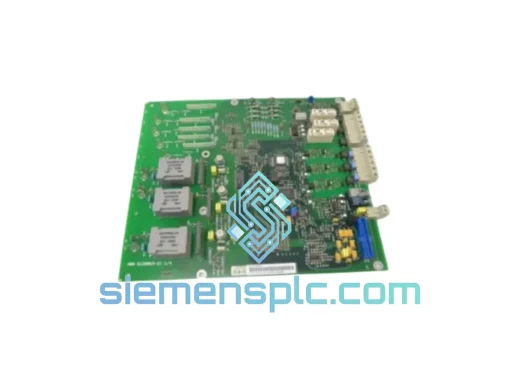
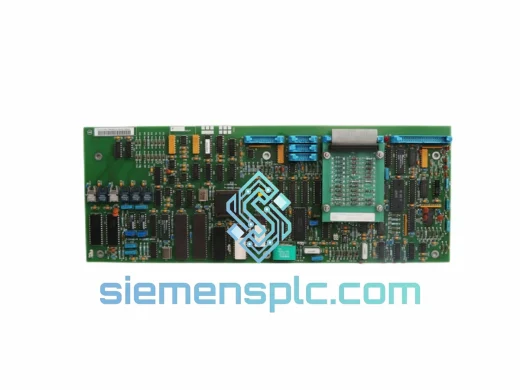
ABB JINT-E02C VFD Interface Board – ACS Series
Request verified availability, condition, replacement risk review, packing options and courier lead time for JINT-E02C.
BrandABB
Part NumberJINT-E02C
ConditionAvailability Check
Lead TimeRFQ Confirmation
DocumentsDatasheet / photos by RFQ
ShippingExport packing available
Auto-filled RFQ
JINT-E02C
Click Request Quote and the part number is inserted into the inquiry form automatically.
- Reply by email: [email protected]
- WhatsApp / Tel: +86 18359268345
- Mon-Sat 9:00-18:00 GMT+8
Procurement Data
Key Product Information
Core fields for model confirmation and RFQ routing. Detailed product narrative remains below.
- Brand
- ABB
- Primary Part Number
- JINT-E02C
- Product Type
- VFD Interface Board
- Series / Family
- ACS
- Manufacturer
- ABB
- Country of Origin
- SE
- Catalog Category
- Motor Drives
- Warranty
- 12 months from date of shipment
- Compliance
- CE, RoHS; manufactured under ISO 9001-certified QMS
Model confirmed for inquiry
JINT-E02C
Send quantity, destination and urgency. The RFQ form keeps this part number attached.
Request Quote
Product Overview
ABB JINT-E02C Conformal-Coated Main Circuit Interface Board — Signal Architecture in ACS Series Drive Control Loops
The JINT-E02C occupies a structurally critical position within the ABB ACS800 variable-frequency drive platform. Its primary function is to condition, isolate, and route analog measurement signals — DC bus voltage, phase current feedback, and thermal sensor data — from the power stage to the RMIO control unit. Without a fully functional interface board at this node, the drive’s closed-loop vector control algorithm loses its feedback reference, making accurate torque and speed regulation impossible. The “-C” suffix designates factory-applied conformal coating, a process that encapsulates the PCB substrate and component bodies in a dielectric polymer layer, providing measurable protection against condensation, corrosive vapors, and particulate ingress in environments where standard FR4 assemblies would degrade within months.
This board is not a passive signal conduit. It incorporates active signal conditioning circuitry that scales raw sensor outputs to the voltage ranges expected by the RMIO’s ADC inputs, and it carries the optocoupler isolation barrier that maintains galvanic separation between the high-voltage power bus and the low-voltage control domain. The integrity of this isolation barrier is a direct determinant of both personnel safety and control-loop noise immunity.
Real-time Stock & RFQ: [email protected] | WhatsApp: +86 18359268345
Technical Parameters
| Part Number (SKU) | JINT-E02C |
| Manufacturer | ABB |
| Compatible Platform | ABB ACS800 Series Variable Frequency Drives |
| Board Function | Main Circuit Interface — DC bus voltage sensing, phase current feedback routing, thermal signal conditioning |
| Isolation Architecture | Optocoupler-based galvanic isolation between power stage and control domain |
| PCB Surface Treatment | Conformal coating (IPC-CC-830 / IEC 61086 compliant polymer encapsulation) |
| Operating Temperature Range | -10 °C to +55 °C (ambient, drive enclosure) |
| Storage Temperature | -40 °C to +70 °C |
| Relative Humidity Tolerance | Up to 95% RH non-condensing (conformal-coated variant) |
| Form Factor | Plug-in PCB assembly, frame-specific connector footprint |
| Weight | 400 g (approx.) |
| Condition | Genuine OEM — New / Surplus New |
| Warranty | 12 months from date of shipment |
| Compliance | CE, RoHS; manufactured under ISO 9001-certified QMS |
Hardware Logical Analysis
The JINT-E02C’s hardware design addresses three distinct engineering challenges inherent to high-power drive electronics: signal fidelity across a noisy power environment, long-term reliability under thermal and chemical stress, and maintainability in field-service scenarios.
Optocoupler Isolation Barrier: The board’s isolation stage uses high-speed optocouplers to transfer analog measurement data across the galvanic boundary between the 540–810 V DC bus domain and the 5 V logic domain of the RMIO. The optocoupler selection determines both the bandwidth of the feedback signal and the common-mode rejection ratio (CMRR). In the ACS800 architecture, the DC bus voltage measurement must track transients with sufficient bandwidth to allow the firmware’s overvoltage protection algorithm to respond within its defined reaction window — typically sub-millisecond. A degraded optocoupler with reduced current transfer ratio (CTR) will introduce gain error into this measurement chain, causing the drive to either trip prematurely on false overvoltage events or, more critically, fail to trip on genuine bus overvoltage conditions.
EMC Design and Ground Plane Architecture: The PCB layout employs a segmented ground plane strategy: the power-side ground reference is physically separated from the logic-side ground, with the isolation barrier defining the boundary. Decoupling capacitors are placed at each IC power pin with values selected to suppress both high-frequency switching noise (from the IGBT gate drive transitions at 3–12 kHz carrier frequency) and lower-frequency ripple from the rectifier stage. This layout discipline is what allows the board to maintain ADC measurement accuracy within ±0.5% of full scale in the presence of high dV/dt transients on adjacent bus bars.
Conformal Coating Process: The “-C” designation indicates that the assembled PCB has been processed through a selective conformal coating line after component soldering and inspection. The coating material — typically an acrylic or polyurethane compound — is applied to a controlled thickness of 25–75 µm over all component bodies and PCB surfaces, with selective masking of connector pins and test points. This coating raises the board’s comparative tracking index (CTI) and prevents dendritic growth between adjacent conductors in humid environments, which is the primary failure mode of uncoated boards in pulp-and-paper or coastal installations.
Thermal Signal Conditioning: NTC thermistor signals from the drive’s heatsink and IGBT module are routed through the JINT-E02C’s analog front end, where they are linearized and scaled before being passed to the RMIO. The linearization network compensates for the inherently nonlinear resistance-temperature characteristic of NTC devices, ensuring that the firmware’s thermal model receives a signal that is proportional to actual temperature across the full operating range. Errors in this signal chain manifest as incorrect thermal derating behavior — the drive either runs hotter than its protection threshold allows or derates unnecessarily at moderate loads.
System Integration Benefits
- Deterministic Feedback Latency: The optocoupler isolation stage is selected for propagation delay consistency, ensuring that current and voltage feedback signals arrive at the RMIO’s ADC within a fixed, predictable window relative to the PWM carrier cycle — a prerequisite for stable field-oriented control (FOC) at high dynamic bandwidth.
- Direct OEM Drop-In Replacement: The JINT-E02C is a form-fit-function replacement for the original ABB assembly. No firmware parameter changes, no connector adapters, and no re-commissioning of drive parameters are required after board swap — reducing mean time to repair (MTTR) to the time required for physical replacement alone.
- Extended Service Life in Harsh Environments: The conformal coating extends the board’s expected service life by 3–5× compared to uncoated equivalents in environments with relative humidity above 70% RH or exposure to H₂S, SO₂, or chlorine-bearing atmospheres — quantified by IEC 60068-2-43 mixed-flowing gas test data.
- Diagnostic Transparency: Because the JINT-E02C carries the measurement signals that feed the RMIO’s fault logging system, a correctly functioning board ensures that drive fault codes (e.g., F-0001 Overcurrent, F-0002 DC Overvoltage) reflect actual power-stage conditions rather than measurement artifacts — preserving the diagnostic integrity of the drive’s event log.
- Reduced Unplanned Downtime Exposure: Stocking one JINT-E02C per installed ACS800 drive eliminates the 4–12 week OEM lead time that typically applies to this board class during supply-constrained periods, converting a potential production-stopping event into a sub-hour maintenance task.
- Compatibility Across ACS800 Frame Sizes: The JINT-E02C interfaces with multiple ACS800 frame configurations. Cross-referencing the drive’s type code against the service BOM confirms exact applicability, allowing a single spare to cover multiple drive units within a plant’s installed base.
- Thermal Derating Accuracy: Accurate NTC signal conditioning through the JINT-E02C ensures that the drive’s thermal derating algorithm operates on correct temperature data, preventing both premature derating (which reduces throughput) and under-derating (which risks IGBT module damage and unplanned shutdown).
- Isolation Integrity Preservation: The galvanic isolation provided by the JINT-E02C’s optocoupler stage protects the RMIO control board from common-mode voltage transients on the DC bus — transients that, if allowed to propagate, would corrupt ADC readings, trigger spurious faults, or permanently damage the control board’s input protection circuitry.
Quality Assurance & Global Logistics
Every JINT-E02C unit dispatched from our Xiamen facility is sourced directly from ABB’s authorized distribution network or from decommissioned OEM equipment with full chain-of-custody documentation. Each unit undergoes a structured pre-shipment inspection protocol:
- Visual inspection of PCB surface, solder joints, component bodies, and conformal coating integrity under magnification
- Connector pin inspection for fretting corrosion, bent contacts, and retention force verification
- Part number label and revision marking cross-referenced against ABB service documentation
- Anti-static packaging with humidity indicator card and desiccant sachet
- Batch traceability record retained on file for 5 years post-shipment
- 12-month warranty from shipment date — covers manufacturing defects and latent failures under normal operating conditions
Logistics from Xiamen, China: standard international express (DHL / FedEx / UPS) delivers to most destinations in 3–7 business days. Air freight consolidation is available for multi-unit orders. Export documentation — commercial invoice, packing list, and certificate of origin — is prepared to customs requirements for all major import markets including the EU, USA, Southeast Asia, and the Middle East.
Contact Information
Email: [email protected]
WhatsApp: +86 18359268345
Web: siemensplc.com
Location: Xiamen, China
© 2026 siemensplc.com. All rights reserved.
Ready to quote
[email protected]
Send This Part Number to Sales
RFQ workflow
Quality workflow ->
Confirmation Process
01Model confirmation
We check the full part number, brand, series and visible nameplate information before quotation.
02Availability reply
Sales confirms stock path, condition option, quantity and realistic lead time for export dispatch.
03Packing & courier
DHL, FedEx, UPS or buyer courier arrangements can be reviewed with packing requirements.
Continue sourcing
Browse full catalog ->
Related Automation Parts
Similar brand or category products for fast comparison and multi-item RFQ lists.
ABB
RFQ Ready
ABB SAFT103CONB SAFT315F380 CPU Control PCB Board – ACS Series
ACS
Origin SE
PLC / Drive Control Board