ABB
In Stock OK
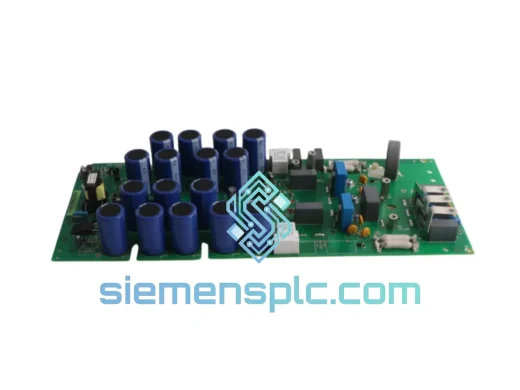
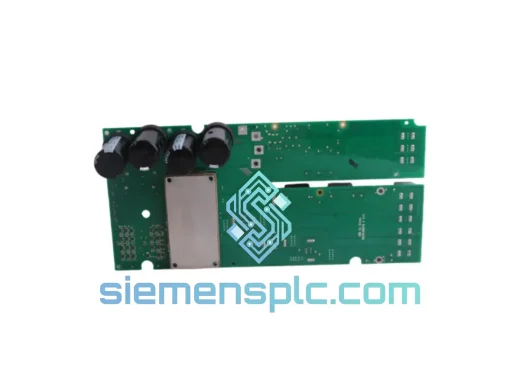
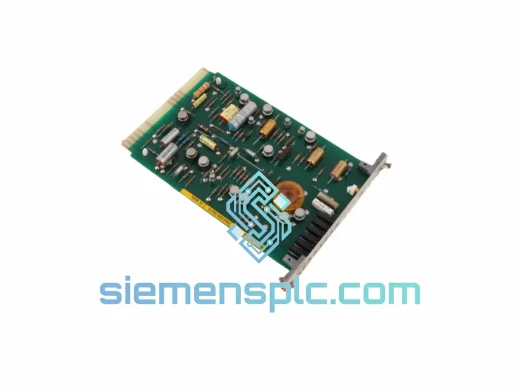
ABB LEX11 R1D ANR27900277 Servo Drive Board
Request verified availability, condition, replacement risk review, packing options and courier lead time for LEX11 R1D ANR27900277.
BrandABB
Part NumberLEX11 R1D ANR27900277
ConditionAvailability Check
Lead TimeRFQ Confirmation
DocumentsDatasheet / photos by RFQ
ShippingExport packing available
Auto-filled RFQ
LEX11 R1D ANR27900277
Click Request Quote and the part number is inserted into the inquiry form automatically.
- Reply by email: [email protected]
- WhatsApp / Tel: +86 18359268345
- Mon-Sat 9:00-18:00 GMT+8
Procurement Data
Key Product Information
Core fields for model confirmation and RFQ routing. Detailed product narrative remains below.
- Brand
- ABB
- Primary Part Number
- LEX11 R1D ANR27900277
- Product Type
- Servo Drive Board
- Series / Family
- Lexium 11
- Country of Origin
- SE
- Catalog Category
- Motor Drives
Model confirmed for inquiry
LEX11 R1D ANR27900277
Send quantity, destination and urgency. The RFQ form keeps this part number attached.
Request Quote
Product Overview
ABB LEX11 R1D ANR27900277 — Stop the Bleed: Get Your Lexium 11 Drive Back Online Before the Next Shift
Line down. Servo fault. The Lexium 11 axis won’t home. Your maintenance team has already swapped the motor, checked the encoder cable, and cleared every fault code — and the drive still won’t come up. Nine times out of ten, when a Lexium 11 throws persistent overcurrent, regenerative fault, or axis control errors that survive a power cycle, the culprit is the R1D regenerative drive control board itself. That’s ANR27900277. And every hour you spend waiting on OEM lead times is money walking out the door.
We stock the ABB LEX11 R1D ANR27900277 in Xiamen. Not “available to order” — physically on the shelf, tested, packed, and ready to move via DHL or FedEx the same business day you confirm. If your plant is in Southeast Asia, the Middle East, or Europe, you’re looking at 2–5 business days door-to-door. That’s the difference between a shift delay and a week-long production crisis.
URGENT REQUIREMENT? Contact: [email protected] | WhatsApp: +86 18359268345
Quick Technical Datasheet
| Parameter | Value |
|---|---|
| Brand | ABB |
| Full Part Number | ANR27900277 |
| Model / SKU | LEX11 R1D ANR27900277 |
| Series | Lexium 11 (LEX11) |
| Board Function | Regenerative Drive Control Board (R1D) |
| Component Type | Servo Drive PCB Assembly |
| Drive Architecture | Active Regenerative Braking, DC Bus Energy Return |
| Feedback Interface | Encoder signal processing, real-time torque/speed loop |
| Compatible Platform | ABB Lexium 11 Series Servo Drives |
| Weight | 360 g |
| Origin | China (Xiamen stocking point) |
| Condition | New OEM / Tested Refurbished (confirm on inquiry) |
| Stock Status | ✔ Ready to Ship — Same Day Dispatch Available |
Troubleshooting & Replacement Tips
Fault Codes That Point to the R1D Board
Before you pull the board, confirm the fault pattern. The LEX11 R1D ANR27900277 is the primary suspect when you see any of the following on the Lexium 11 drive display or via the commissioning tool:
- F218 / F219 — Regenerative Overcurrent: The R1D board manages the regenerative braking transistor stack. If the IGBT gate driver circuit on the board has degraded, you’ll get nuisance trips under deceleration even with a healthy motor and correctly sized braking resistor. Swapping the resistor won’t fix this.
- F112 — DC Bus Overvoltage during decel: If the regen circuit isn’t clamping the bus correctly, energy has nowhere to go. The bus spikes. The drive trips. The R1D board is the first thing to check before you start resizing the braking resistor.
- F031 — Internal Hardware Fault: This is a catch-all that often traces back to the control board’s self-diagnostic routines detecting a failed gate driver or corrupted EEPROM on the R1D assembly.
- Axis won’t enable after power cycle, no fault code: If the drive powers up, the display is normal, but the axis simply won’t enable and there’s no active fault — check the R1D board’s enable signal path. A failed optocoupler on the board can block the enable command silently.
Replacement Procedure — Field Notes
- De-energize and discharge: Isolate the drive from mains. Wait a minimum of 5 minutes for the DC bus capacitors to discharge below 50 V. Verify with a meter before touching anything. The Lexium 11 bus voltage can hold lethal charge well after mains isolation.
- Document the DIP switch positions: The LEX11 R1D board carries DIP switches that configure axis address, termination resistance for the serial feedback bus, and in some firmware revisions, the regenerative current limit threshold. Photograph the switch bank before removal. The replacement board ships in a default state — you must replicate the original configuration exactly.
- Note the firmware revision on the outgoing board: Check the label on the board or read it via the commissioning software before pulling the board. The ANR27900277 revision must match or be forward-compatible with your drive’s main control board firmware. Mismatched firmware between the R1D board and the axis control board is a common cause of post-replacement F031 faults.
- Handle with ESD precautions: Ground yourself before handling. The gate driver ICs on this board are sensitive. A static discharge during installation can cause latent failure that won’t show up until the drive is under load.
- Re-run the drive’s auto-tuning routine after replacement: Even with identical hardware, the new board’s internal calibration offsets may differ slightly from the outgoing unit. Run the Lexium 11 auto-tune sequence before returning the axis to production. Skip this step and you risk oscillation or torque ripple that damages the mechanical load.
- Verify regen operation under controlled decel: Before handing the machine back to production, command a controlled deceleration from full speed with the drive in local mode. Monitor the DC bus voltage on the commissioning tool. It should clamp cleanly. If the bus still spikes, the issue may be upstream — check the braking resistor connection and the main control board before assuming the replacement board is faulty.
Reliability in Harsh Conditions
The Lexium 11 platform was designed for industrial environments where consumer-grade electronics would fail within weeks. The R1D board reflects that design philosophy. The PCB substrate is rated for continuous operation across a wide thermal range, and the conformal coating on production-spec boards provides a barrier against condensation and airborne contaminants — the kind of fine metallic dust that kills unprotected electronics in machining and casting environments.
Vibration is the silent killer of drive electronics. Solder joint fatigue from resonant vibration is responsible for a significant percentage of field failures in servo drives mounted on or near presses, compressors, and stamping equipment. The ANR27900277 board uses through-hole construction for its high-stress connector interfaces and surface-mount components with underfill on the most vibration-sensitive ICs — a design choice that extends service life in high-vibration installations compared to fully SMT assemblies.
Thermal cycling is the other major stress factor. In applications where the drive runs hot during production and cools to ambient overnight, the repeated expansion and contraction of the PCB and its components creates mechanical stress at every solder joint. ABB’s Lexium 11 boards are qualified to IEC 60068-2-14 thermal shock standards. Our stocked units are stored in climate-controlled conditions and inspected for cold-solder joints and delamination before dispatch — failures that can develop during improper storage in humid or temperature-variable warehouses.
For installations in coastal or high-humidity environments, request our conformal-coated variant on inquiry. We can also supply the board with additional potting on the gate driver section for applications in wash-down or high-condensation environments.
Global Express Logistics
Our stocking point is Xiamen, Fujian — one of China’s primary export hubs with direct access to DHL, FedEx, and UPS international express networks. This is not a drop-ship arrangement. The board is physically in our warehouse. When you confirm an order before 14:00 CST, it ships the same business day.
Typical transit times from Xiamen:
- Southeast Asia (Singapore, Thailand, Vietnam, Malaysia): 2–3 business days via DHL Express
- Middle East (UAE, Saudi Arabia, Qatar): 3–4 business days via FedEx International Priority
- Europe (Germany, Netherlands, Poland, UK): 3–5 business days via DHL Express Worldwide
- North America (USA, Canada, Mexico): 3–5 business days via FedEx International Priority
- Australia / New Zealand: 3–4 business days via DHL Express
- South Asia (India, Pakistan, Bangladesh): 2–4 business days via DHL or FedEx
All shipments include full tracking from pickup to delivery. For critical downtime situations, we can arrange Saturday delivery and hold-at-location options through DHL and FedEx where available. Export documentation — commercial invoice, packing list, and HS code declaration — is prepared accurately to avoid customs delays. We have experience shipping industrial electronics components to over 60 countries and understand the documentation requirements that trip up less experienced shippers.
For orders requiring formal export licensing or end-user declarations, contact us in advance. We will advise on requirements and prepare the necessary documentation to keep your shipment moving.
Contact Information
Email: [email protected]
WhatsApp: +86 18359268345
Web: siemensplc.com
© 2026 siemensplc.com. All rights reserved.
Ready to quote
[email protected]
Send This Part Number to Sales
RFQ workflow
Quality workflow ->
Confirmation Process
01Model confirmation
We check the full part number, brand, series and visible nameplate information before quotation.
02Availability reply
Sales confirms stock path, condition option, quantity and realistic lead time for export dispatch.
03Packing & courier
DHL, FedEx, UPS or buyer courier arrangements can be reviewed with packing requirements.
Continue sourcing
Browse full catalog ->
Related Automation Parts
Similar brand or category products for fast comparison and multi-item RFQ lists.
ABB
RFQ Ready
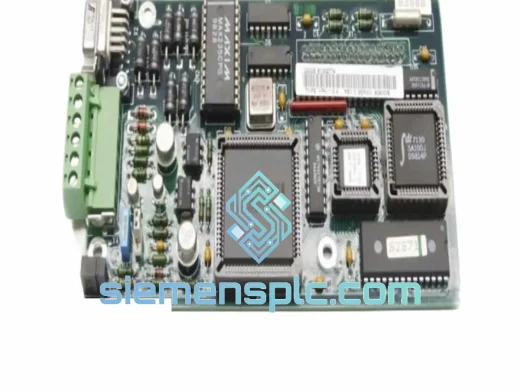
ABB YPK113A 61002774 Drive Control Board
In-Stock Xiamen
Origin SE
Drive Control Board
ABB
RFQ Ready
ABB UT4642a EIA302398R121 Speed Transducer Module
Industrial Control
Origin SE
Speed Transducer Module