
ABB
In Stock OK
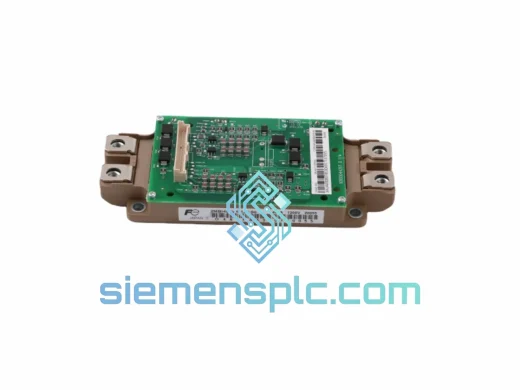
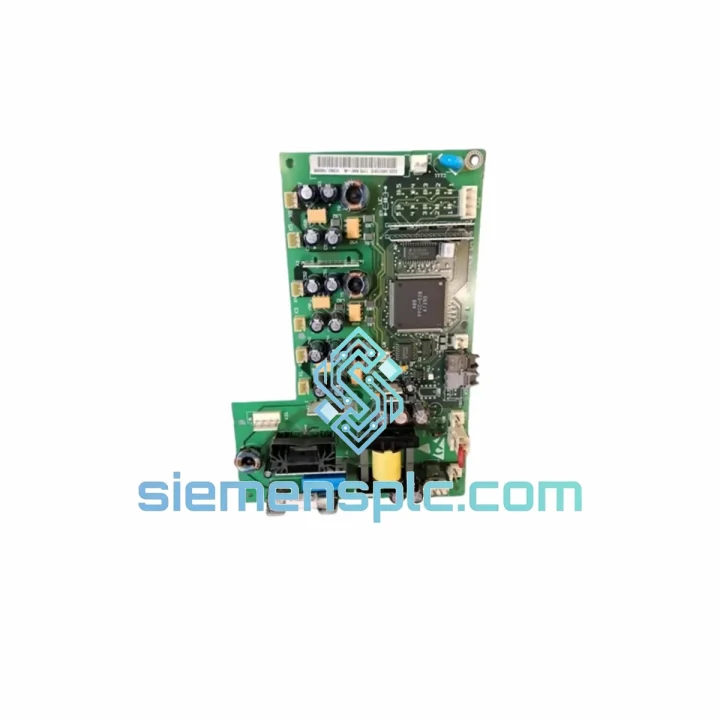
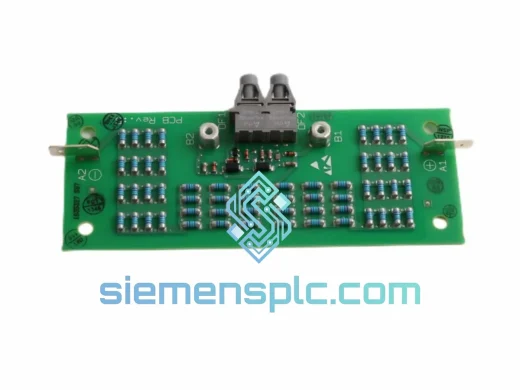
ABB NINT-46 Drive Interface Board – ACS800 Series
Request verified availability, condition, replacement risk review, packing options and courier lead time for NINT-46.
BrandABB
Part NumberNINT-46
ConditionAvailability Check
Lead TimeRFQ Confirmation
DocumentsDatasheet / photos by RFQ
ShippingExport packing available
Auto-filled RFQ
NINT-46
Click Request Quote and the part number is inserted into the inquiry form automatically.
- Reply by email: [email protected]
- WhatsApp / Tel: +86 18359268345
- Mon-Sat 9:00-18:00 GMT+8
Procurement Data
Key Product Information
Core fields for model confirmation and RFQ routing. Detailed product narrative remains below.
- Brand
- ABB
- Primary Part Number
- NINT-46
- Product Type
- Drive Interface Board
- Series / Family
- S800
- Manufacturer
- ABB Ltd.
- Country of Origin
- SE
- Catalog Category
- Motor Drives
- Operating Temp.
- 0 °C to +55 °C (ambient inside drive cabinet)
- Humidity
- 5–95 % RH, non-condensing
- Warranty
- 12 months — covers functional failure under normal operating conditions
Model confirmed for inquiry
NINT-46
Send quantity, destination and urgency. The RFQ form keeps this part number attached.
Request Quote
Product Overview
ABB NINT-46 ACS800 Main Circuit Interface Board — Control Loop Architecture and Functional Role
The NINT-46 is the primary signal-conditioning and measurement interface board within the ABB ACS800 variable-frequency drive platform. Its position in the drive’s hardware hierarchy sits between the DC bus measurement circuitry and the RMIO motor-control board, making it the single point of truth for DC link voltage, phase current feedback, and gate-driver status signals that the drive’s direct torque control (DTC) algorithm depends on at every 25 µs computation cycle.
In a standard ACS800 power stage, the NINT-46 receives raw analog signals from the DC bus voltage divider network and from the LEM-type hall-effect current transducers mounted on the output phase busbars. These signals are conditioned through precision instrumentation amplifiers, filtered, and converted to differential logic-level outputs before being passed to the RMIO board via the internal fiber-optic DDCS link. The board also aggregates gate-driver fault signals from the IGBT snubber circuits and encodes them into a fault word that the RMIO can parse within a single scan cycle — typically under 1 ms from fault onset to drive trip, which is well within the protection window for 690 V IGBT modules rated at 1,200 V blocking voltage.
Because the NINT-46 handles both power-domain analog signals and logic-domain digital outputs simultaneously, its PCB layout follows strict partition rules: the analog front-end occupies a dedicated ground plane island separated from the digital section by a moat-and-bridge topology. Bypass capacitors on the ±15 V analog supply rails are placed within 2 mm of each op-amp supply pin to suppress high-frequency noise injected from the IGBT switching transients, which in a 500 kW ACS800 frame can produce dV/dt rates exceeding 5 kV/µs on the DC bus.
Real-time stock and RFQ: [email protected] | WhatsApp: +86 18359268345
Technical Parameters
| Parameter | Value |
|---|---|
| Part Number (SKU) | NINT-46 |
| Manufacturer | ABB Ltd. |
| Compatible Drive Series | ACS800 (multi-frame) |
| Board Function | Main Circuit Interface — DC bus measurement, phase current feedback, gate-driver fault aggregation |
| DC Bus Voltage Measurement Range | 0–1,200 V DC (scaled via on-board divider network) |
| Current Feedback Input | Differential, ±10 V FS from LEM transducers |
| Signal Isolation | Optical isolation on all digital I/O lines; analog front-end on isolated ground plane |
| Internal Communication | DDCS fiber-optic link to RMIO board |
| Operating Temperature | 0 °C to +55 °C (ambient inside drive cabinet) |
| Storage Temperature | −40 °C to +70 °C |
| Humidity | 5–95 % RH, non-condensing |
| PCB Coating | Conformal coating (acrylic) on production boards |
| Connector Interface | Proprietary ACS800 backplane edge connector + ribbon cable headers |
| Weight | Approx. 4,460 g (board + mounting hardware) |
| Condition | Genuine OEM — new or factory-refurbished (specify at inquiry) |
| Warranty | 12 months — covers functional failure under normal operating conditions |
| Origin | Finland (ABB OEM production) |
Hardware Logical Analysis
Analog Front-End Signal Chain. The DC bus voltage measurement path on the NINT-46 uses a resistive divider with a total impedance in the MΩ range to minimize loading on the bus capacitor bank. The divided signal feeds a precision differential amplifier with a common-mode rejection ratio (CMRR) of typically ≥80 dB at 50/60 Hz, which is critical in installations where the drive cabinet shares a ground reference with large transformer neutrals. The output of this amplifier is sampled by the RMIO’s 12-bit ADC at 40 kHz, providing voltage resolution of approximately 0.3 V per LSB across the full 1,200 V measurement range — sufficient for the DTC algorithm’s flux and torque estimator to maintain accuracy within ±0.5 % of rated values.
Phase Current Feedback Path. The three-phase current signals arrive from external LEM transducers as ±10 V differential voltages. The NINT-46 routes these through anti-aliasing low-pass filters with a −3 dB corner frequency set above the maximum fundamental output frequency of the drive (typically 300 Hz for ACS800 standard firmware) but well below the IGBT switching frequency (3–12 kHz depending on frame size). This filter topology prevents switching-frequency noise from aliasing into the DTC current model, which would otherwise introduce torque ripple at non-harmonic frequencies.
EMC Design and Shielding. The board’s ground plane architecture uses a split-plane approach: the analog section references a star-point ground tied to the drive’s PE rail at a single node, while the digital section references the RMIO’s logic ground. This prevents digital switching currents from flowing through the analog ground return path. All signal cables interfacing to the NINT-46 are specified as shielded twisted pairs in ABB’s installation guidelines, with shield termination at the board end only — a single-point shield grounding scheme that suppresses capacitively coupled interference without creating ground loops.
Gate-Driver Fault Aggregation Logic. Each IGBT module in the ACS800 power stage generates an open-collector fault output when an over-temperature, desaturation, or short-circuit condition is detected. The NINT-46 collects these signals through optocoupler input stages (typical propagation delay: 1–2 µs) and encodes them into a parallel fault word. The RMIO reads this word on every control cycle; if any bit is asserted for more than one cycle, the drive executes an immediate coast-stop and logs the fault code. This hardware-level fault path operates independently of the firmware task scheduler, ensuring protection response is not delayed by software latency.
Fiber-Optic DDCS Link. Communication between the NINT-46 and the RMIO uses ABB’s DDCS (Drive Data Communication System) protocol over plastic optical fiber. The fiber link provides galvanic isolation rated at several kV between the power-stage electronics and the control board, which is essential in high-power drives where the DC bus potential can float significantly above PE during fault conditions. The DDCS frame rate is synchronized to the DTC computation cycle, ensuring that current and voltage samples are time-stamped consistently relative to the PWM carrier.
System Integration Benefits
- Deterministic DTC Feedback Loop: By delivering current and voltage samples to the RMIO within a fixed latency bounded by the DDCS frame period, the NINT-46 ensures the DTC torque estimator operates on data that is never more than one computation cycle old — a prerequisite for the sub-millisecond torque step response that ACS800 is specified to achieve.
- Galvanic Isolation Across All Signal Paths: Optical isolation on digital lines and a fiber-optic main data link mean that no conductive path exists between the power stage and the control electronics, eliminating a common failure mode in high-dV/dt environments where capacitive coupling can corrupt control signals.
- Plug-Compatible OEM Replacement: The NINT-46 uses the same connector footprint and firmware interface as the original factory-fitted board. No parameter re-entry or firmware update is required in standard replacement scenarios, reducing commissioning time to under 30 minutes for a trained drive technician.
- Diagnostic Transparency: The gate-driver fault word encoded by the NINT-46 maps directly to ACS800 fault codes visible on the CDP312R panel and in DriveWindow. Maintenance engineers can identify which specific IGBT module triggered a fault without oscilloscope access to the power stage.
- Conformal Coating for Harsh Environments: The acrylic conformal coating on production boards provides protection against condensation, dust, and mild chemical vapors — relevant in cement, mining, and coastal marine installations where uncoated PCBs show accelerated corrosion within 12–18 months.
- Reduced Spare-Parts Inventory Complexity: A single NINT-46 board covers multiple ACS800 frame sizes, allowing maintenance planners to stock one SKU rather than frame-specific variants, which simplifies warehouse management and reduces capital tied up in spare parts.
- Compatibility with ACS800 Firmware Versions: The board’s hardware interface is backward-compatible across the ACS800 firmware release history, meaning a replacement NINT-46 will function correctly with drives running older firmware versions without requiring a firmware upgrade — important in installations where firmware changes require re-validation under process safety procedures.
- Fast Fault Isolation During Commissioning: During drive commissioning, the NINT-46’s measurement channels can be verified independently using the ACS800’s built-in signal monitoring function (accessible via DriveWindow or the panel), allowing engineers to confirm correct scaling of voltage and current feedback before the drive is energized at full power.
- Long-Term Parts Availability: As an OEM-sourced board stocked by siemensplc.com, the NINT-46 is available with shorter lead times than direct OEM procurement channels, which is critical for unplanned outages in continuous-process industries where each hour of downtime carries measurable production cost.
Quality Assurance & Global Logistics
Every NINT-46 unit dispatched from our Xiamen, China facility is sourced exclusively from verified ABB OEM supply channels — authorized distributors, factory surplus programs, and certified refurbishment centers. No third-party remanufactured or counterfeit-risk boards are accepted into inventory.
Pre-shipment inspection protocol includes: visual PCB examination under 10× magnification for solder joint integrity, component seating, and conformal coating coverage; functional verification against ACS800 reference parameters where test fixtures are available; electrostatic discharge (ESD) handling throughout — boards are stored and packed in anti-static shielding bags with humidity indicator cards inside sealed moisture-barrier packaging.
Shipping from Xiamen is available via DHL Express (2–4 business days to Europe and North America), FedEx International Priority, and sea freight for bulk orders. Export documentation — commercial invoice, packing list, and certificate of origin — is prepared to comply with customs requirements in the EU, USA, Australia, and Southeast Asian markets. HS code 8537.10 is applied for customs classification. All shipments are fully insured. Tracking numbers are provided within 24 hours of dispatch.
The 12-month warranty covers functional failure under normal operating conditions. Warranty claims are processed with a target response time of 48 hours; replacement boards are dispatched before the defective unit is returned in confirmed cases, minimizing plant downtime.
Contact Information
Email: [email protected]
WhatsApp: +86 18359268345
Web: siemensplc.com
Location: Xiamen, China
© 2026 siemensplc.com. All rights reserved.
Ready to quote
[email protected]
Send This Part Number to Sales
RFQ workflow
Quality workflow ->
Confirmation Process
01Model confirmation
We check the full part number, brand, series and visible nameplate information before quotation.
02Availability reply
Sales confirms stock path, condition option, quantity and realistic lead time for export dispatch.
03Packing & courier
DHL, FedEx, UPS or buyer courier arrangements can be reviewed with packing requirements.
Continue sourcing
Browse full catalog ->
Related Automation Parts
Similar brand or category products for fast comparison and multi-item RFQ lists.
ABB
RFQ Ready
ABB SDCS-UCM-1 3ADT220090R0008 Excitation Control Board
S800
Origin SE
DC Drive Control Module
ABB
RFQ Ready
ABB SDCS-PIN-51-COAT 3ADT220090R0006 DC Drive Control Card
S800
Origin SE
DC Drive Control Card