ABB
In Stock OK
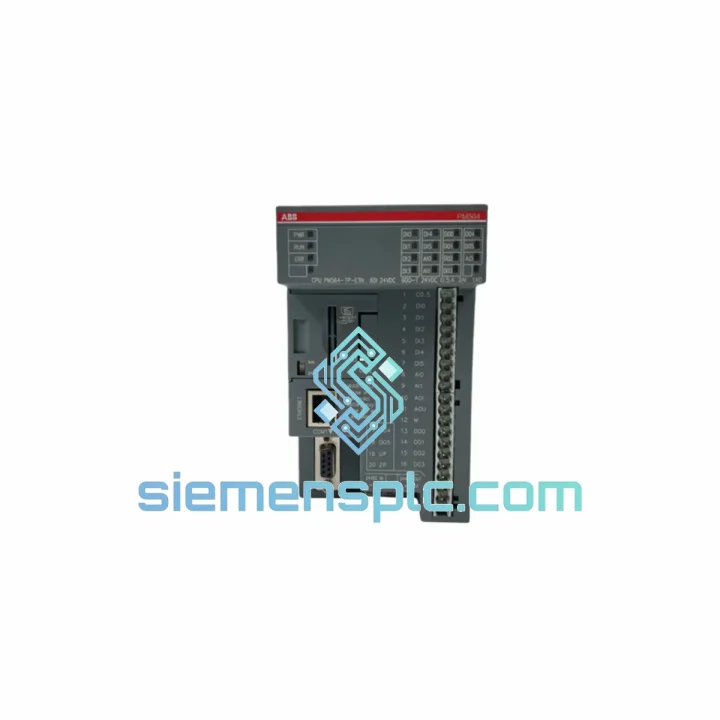
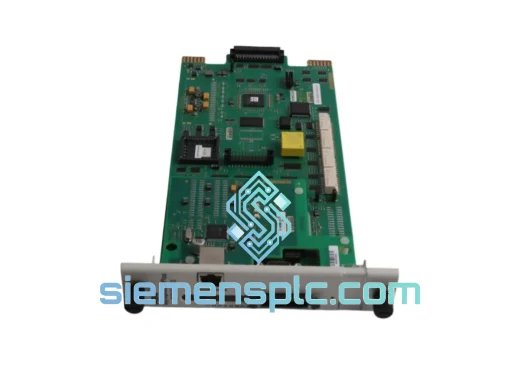
ABB PM564-TP-ETH 1SAP120900R0071 PLC CPU Module – AC500
Request verified availability, condition, replacement risk review, packing options and courier lead time for PM564-TP-ETH.
BrandABB
Part NumberPM564-TP-ETH
ConditionAvailability Check
Lead TimeRFQ Confirmation
DocumentsDatasheet / photos by RFQ
ShippingExport packing available
Auto-filled RFQ
PM564-TP-ETH
Click Request Quote and the part number is inserted into the inquiry form automatically.
- Reply by email: [email protected]
- WhatsApp / Tel: +86 18359268345
- Mon-Sat 9:00-18:00 GMT+8
Procurement Data
Key Product Information
Core fields for model confirmation and RFQ routing. Detailed product narrative remains below.
- Brand
- ABB
- Primary Part Number
- PM564-TP-ETH
- Product Type
- PLC CPU Module
- Series / Family
- AC500
- Manufacturer
- ABB
- Country of Origin
- SE
- Catalog Category
- Communication
- Operating Temp.
- −25 °C to +60 °C
- Warranty
- 12 months from date of shipment
Model confirmed for inquiry
PM564-TP-ETH
Send quantity, destination and urgency. The RFQ form keeps this part number attached.
Request Quote
Product Overview
ABB PM564-TP-ETH 1SAP120900R0071 — Ethernet-Integrated CPU at the Core of AC500 Control Architecture
The ABB PM564-TP-ETH (order number 1SAP120900R0071) is a mid-range programmable logic controller CPU from the ABB AC500 platform, designed for deterministic process control in industrial environments where Ethernet connectivity, compact form factor, and IEC 61131-3 compliance are non-negotiable requirements. Unlike general-purpose computing hardware adapted for industrial use, the PM564-TP-ETH is purpose-built around a real-time executive kernel that enforces strict scan-cycle determinism — a property critical in closed-loop control applications where jitter above 1 ms can propagate into process instability.
The module mounts onto a TB521-ETH or TB541-ETH terminal base, which provides the backplane bus interface, field wiring terminals, and power distribution rail. This physical separation of the CPU logic from the field wiring layer is a deliberate architectural decision: it allows the CPU to be swapped without disturbing field wiring, reducing mean time to repair (MTTR) in production environments. The backplane bus operates at a fixed clock rate that synchronizes I/O data exchange across all attached S500 modules, ensuring that analog and digital samples are coherent within a single scan cycle.
Real-time Stock & RFQ: [email protected] | WhatsApp: +86 18359268345
Technical Parameters
| Parameter | Specification |
|---|---|
| Manufacturer | ABB |
| Series | AC500 |
| Model / SKU | PM564-TP-ETH |
| Order Number | 1SAP120900R0071 |
| CPU Architecture | 32-bit RISC processor |
| Program Memory (Flash) | 512 KB |
| Data Memory (RAM) | 512 KB |
| Retain Memory (NVRAM) | 32 KB battery-backed |
| Minimum Cycle Time | 0.5 ms (configurable) |
| Boolean Processing Speed | ~0.1 µs per instruction |
| Ethernet Port | 1× RJ45, 10/100 Mbit/s, auto-negotiation |
| Serial Port (COM1) | RS-232 / RS-485 switchable |
| USB Port | 1× USB Type-B (programming / firmware update) |
| Supported Protocols | Modbus TCP, Modbus RTU, FTP, SNTP, HTTP (via Ethernet); Modbus RTU (via COM1) |
| Max. S500 I/O Modules | 10 modules per CPU (up to 512 DI/DO, 64 AI/AO) |
| Supply Voltage | 24 V DC (via terminal base, ±20%) |
| Power Consumption | ≤ 3.5 W (CPU module only) |
| Operating Temperature | −25 °C to +60 °C |
| Storage Temperature | −40 °C to +70 °C |
| Relative Humidity | 5 % to 95 % (non-condensing) |
| Protection Rating | IP20 |
| Dimensions (W × H × D) | 72 × 90 × 56 mm (on TB521 terminal base) |
| Weight | Approx. 250 g (module only) |
| Certifications | CE, UL, cUL, ATEX Zone 2 (II 3 G Ex nA IIC T4) |
| Programming Standard | IEC 61131-3 (LD, FBD, ST, IL, SFC) |
| Programming Software | ABB Automation Builder 2.x (CoDeSys 3.5 runtime) |
| MTBF | > 100,000 hours at 40 °C ambient |
| Warranty | 12 months from date of shipment |
Hardware Logical Analysis
Backplane Bus Architecture and I/O Coherency: The PM564-TP-ETH communicates with S500 I/O modules through a proprietary synchronous serial backplane bus embedded in the terminal base. The bus master role is held exclusively by the CPU, which issues a deterministic polling frame to each I/O module at the start of every scan cycle. This master-slave arbitration eliminates bus contention and guarantees that all I/O data presented to the application program reflects the same physical sampling instant — a property known as I/O coherency. In process control loops where analog feedback from multiple sensors must be compared within a single algorithm execution, this coherency prevents the class of race conditions that arise in asynchronous I/O architectures.
Electromagnetic Compatibility (EMC) Design: The module’s PCB layout employs a four-layer stackup with dedicated ground planes separating the CPU power domain from the I/O interface domain. Ferrite bead filters are placed on all inter-board signal lines crossing the terminal base connector, attenuating common-mode noise above 10 MHz. The Ethernet magnetics are integrated into the RJ45 connector assembly, providing 1500 V AC isolation between the network interface and the CPU logic ground. This isolation is critical in industrial environments where Ethernet cables may run parallel to high-current motor drive cables, inducing transient voltages that would otherwise corrupt network frames or damage the PHY layer.
Retain Memory and Power-Loss Handling: The 32 KB NVRAM retain area is battery-backed and preserves process variable values, PID tuning parameters, and recipe data across power cycles. The CPU monitors the 24 V DC supply rail continuously; upon detecting an undervoltage condition (threshold: approximately 18 V DC), it initiates a controlled shutdown sequence that flushes the retain data buffer to NVRAM before the logic supply collapses. This sequence completes within 10 ms, well within the hold-up time provided by the terminal base capacitors. The result is that process state is preserved even during unplanned power interruptions, allowing the application to resume from a known state rather than executing a cold-start initialization sequence.
Ethernet Stack and Protocol Handling: The onboard Ethernet controller implements a hardware-accelerated TCP/IP stack that offloads packet processing from the main CPU core. Modbus TCP server and client functions execute as background tasks with configurable polling intervals, independent of the PLC scan cycle. This decoupling prevents network traffic bursts from extending the scan cycle time — a failure mode observed in software-only TCP/IP implementations where a large incoming packet can delay the I/O update phase by several milliseconds. The HTTP server function supports a built-in diagnostic web page accessible via any standard browser, displaying real-time CPU load, memory utilization, and communication statistics without requiring the Automation Builder IDE.
System Integration Benefits
- Zero-additional-module Ethernet connectivity: The integrated 10/100 Mbit/s Ethernet port eliminates the need for a separate CM communication module for basic Modbus TCP and FTP functions, reducing panel space by one module slot (72 mm width) and lowering BOM cost by the price of a CM module.
- Deterministic scan cycle with configurable watchdog: The hardware watchdog timer is independently clocked from the CPU oscillator. If the application program fails to service the watchdog within the configured timeout (1 ms to 6553 ms), the CPU transitions to STOP mode and asserts a fault output, preventing uncontrolled actuator behavior during software faults.
- Modular I/O scalability without CPU replacement: The S500 bus supports up to 10 I/O modules per CPU, covering up to 512 digital and 64 analog channels. Expanding the I/O count requires only adding modules to the terminal base rail — no CPU firmware changes, no address reconfiguration beyond the Automation Builder project update.
- IEC 61131-3 multi-language programming: All five IEC 61131-3 languages (LD, FBD, ST, IL, SFC) are supported within a single project. Engineers can implement sequential machine logic in SFC, PID control in FBD, and data processing in ST within the same CPU, eliminating the need for co-processors or external computing nodes.
- ATEX Zone 2 certification for hazardous area deployment: The module carries II 3 G Ex nA IIC T4 certification, permitting installation in Zone 2 hazardous areas (locations where explosive gas atmospheres are not likely to occur in normal operation but may occur in abnormal conditions). This eliminates the need for purged enclosures in many oil & gas and chemical plant applications.
- Battery-backed retain memory for stateful restart: Process variables, counters, and PID parameters stored in the 32 KB retain area survive power loss. Applications that manage batch recipes or accumulated production counts do not require external non-volatile storage devices or SCADA write-back on restart.
- Integrated diagnostic transparency via web server: The built-in HTTP diagnostic server provides CPU load percentage, scan cycle time (current, minimum, maximum), Ethernet link status, and module fault codes in a browser-accessible format. Maintenance personnel can assess system health without connecting a programming laptop or interrupting the running application.
- Firmware update via USB without panel disassembly: The USB Type-B port on the front face of the module accepts firmware update packages directly from the Automation Builder IDE. Updates do not require removing the module from the terminal base or accessing the backplane, reducing the physical intervention required during scheduled maintenance windows.
Quality Assurance & Global Logistics
Every ABB PM564-TP-ETH 1SAP120900R0071 unit supplied by siemensplc.com is sourced through verified supply channels and undergoes incoming inspection before dispatch. Inspection procedures include visual examination of the module housing and connector pins, power-on functional verification confirming CPU boot sequence completion and Ethernet link establishment, and firmware version recording against the customer’s specified revision where applicable.
Units are shipped from our warehouse in Xiamen, China, using DHL Express, FedEx International Priority, or UPS Worldwide Expedited, depending on destination and customer preference. Standard transit times are 3–5 business days to Europe, 4–6 business days to North America, and 2–4 business days to Southeast Asia. Export documentation — including commercial invoice, packing list, and certificate of origin — is prepared in compliance with the destination country’s import requirements. HS code 8537.10 applies to this product category for customs classification purposes.
All units are covered by a 12-month warranty from the date of shipment. Warranty claims are processed by advance replacement: a replacement unit is dispatched upon receipt of the defective module and confirmation of the fault condition. Customers in time-critical industries may request priority replacement processing, which targets dispatch within 24 hours of fault confirmation.
Anti-static packaging (ESD bags, foam-lined cartons) is used for all shipments. Each carton is labeled with the order number, SKU, serial number, and destination address. Tracking numbers are provided within 24 hours of dispatch.
Contact Information
Email: [email protected]
WhatsApp: +86 18359268345
Web: siemensplc.com
Location: Xiamen, China
© 2026 siemensplc.com. All rights reserved.
Ready to quote
[email protected]
Send This Part Number to Sales
RFQ workflow
Quality workflow ->
Confirmation Process
01Model confirmation
We check the full part number, brand, series and visible nameplate information before quotation.
02Availability reply
Sales confirms stock path, condition option, quantity and realistic lead time for export dispatch.
03Packing & courier
DHL, FedEx, UPS or buyer courier arrangements can be reviewed with packing requirements.
Continue sourcing
Browse full catalog ->
Related Automation Parts
Similar brand or category products for fast comparison and multi-item RFQ lists.
ABB
RFQ Ready
ABB SPBRC410 PLC Communication Controller
AC500
Origin SE
PLC Communication Controller