
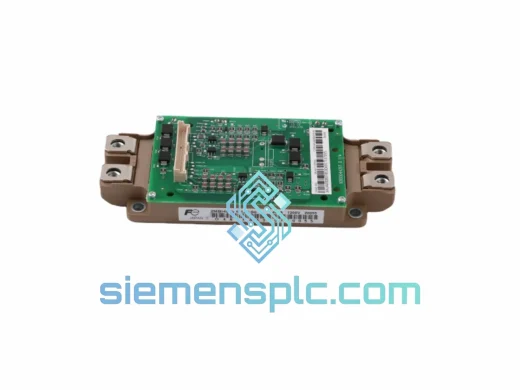
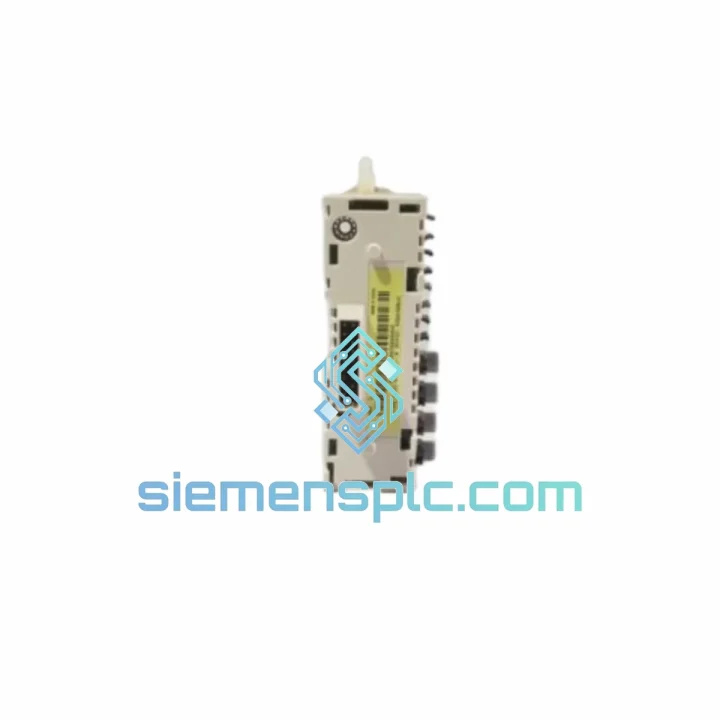
ABB
In Stock OK
ABB RDCO-03C Drive Communication Module – ACS800 DDCS
Request verified availability, condition, replacement risk review, packing options and courier lead time for RDCO-03C.
BrandABB
Part NumberRDCO-03C
ConditionAvailability Check
Lead TimeRFQ Confirmation
DocumentsDatasheet / photos by RFQ
ShippingExport packing available
Auto-filled RFQ
RDCO-03C
Click Request Quote and the part number is inserted into the inquiry form automatically.
- Reply by email: [email protected]
- WhatsApp / Tel: +86 18359268345
- Mon-Sat 9:00-18:00 GMT+8
Procurement Data
Key Product Information
Core fields for model confirmation and RFQ routing. Detailed product narrative remains below.
- Brand
- ABB
- Primary Part Number
- RDCO-03C
- Product Type
- Drive Communication Module
- Series / Family
- S800
- Manufacturer
- ABB Ltd.
- Country of Origin
- SE
- Catalog Category
- Motor Drives
- Operating Temp.
- 0 °C to +55 °C
- Warranty
- 12 months against manufacturing defects
Model confirmed for inquiry
RDCO-03C
Send quantity, destination and urgency. The RFQ form keeps this part number attached.
Request Quote
Product Overview
ABB RDCO-03C: Fiber Optic DDCS Node Module for ACS800 Multi-Drive Architectures
The RDCO-03C is ABB’s dedicated plug-in communications module for the ACS800 variable frequency drive platform, implementing the DDCS (Distributed Drives Communication System) fiber optic protocol. In multi-drive installations where copper-based fieldbus architectures introduce unacceptable EMI susceptibility and ground-loop risk, the RDCO-03C provides a galvanically isolated, deterministic data path operating at 4 Mbps over plastic optical fiber (POF). Its conformal-coated PCB variant designation (“-C” suffix) extends operational reliability into environments with elevated humidity and airborne corrosive contaminants — a specification requirement common in pulp and paper, marine, and chemical processing sectors.
Within the ACS800 control architecture, the RDCO-03C occupies the dedicated RDCO option slot on the drive’s RMIO control board. It draws operating power directly from the drive’s internal 5 VDC bus, requiring no external power supply. The module’s HFBR-type duplex connectors (TX/RX) interface with standard POF cable segments, with each inter-node segment supporting runs up to approximately 10 m under the POF attenuation budget. Node addressing is performed via onboard DIP switches prior to installation, assigning each drive a unique position within the ring — a hardware-level mechanism that eliminates address conflicts arising from software misconfiguration during commissioning.
In a closed-ring DDCS topology, the master controller — typically an ACS800 configured as ring master, or an external APBU-44C branching unit — initiates a cyclic data frame. Each RDCO-03C node receives the frame on its RX port, extracts its addressed data words (speed reference, torque reference, control word), updates its local drive parameters, appends its status words and actual values, and retransmits the frame via its TX port to the next node. The ring closes at the master within a single scan cycle, delivering fully synchronous multi-drive coordination without the jitter inherent in token-passing or collision-based bus protocols. Up to 12 nodes can participate in a single DDCS ring, with multiple rings manageable from one master controller via the APBU-44C branching architecture.
The conformal coating applied to the RDCO-03C PCB is a polyurethane or acrylic compound deposited over all active components and solder joints, providing IEC 60721-3-3 Class 3C2 chemical resistance. This is not a cosmetic treatment — it directly extends mean time between failure (MTBF) in environments where uncoated boards would suffer dendritic growth or flux residue activation under high-humidity cycling. Engineers specifying drives for offshore platforms, coastal installations, or chemical plant motor control centers should treat the “-C” designation as a mandatory selection criterion rather than an optional upgrade.
Real-time Stock & RFQ: [email protected] | WhatsApp: +86 18359268345
Technical Parameters
| Part Number | RDCO-03C |
| Manufacturer | ABB Ltd. |
| Compatible Platform | ACS800 Series Variable Frequency Drives |
| Communication Protocol | DDCS (Distributed Drives Communication System) |
| Physical Medium | Plastic Optical Fiber (POF) |
| Network Topology | Closed ring, up to 12 nodes per ring |
| Data Transfer Rate | 4 Mbps |
| Optical Connectors | 2 × HFBR-type duplex (TX / RX) |
| Max Segment Length (POF) | ~10 m per inter-node segment |
| Node Address Setting | Hardware DIP switch (pre-installation) |
| Supply Voltage | 5 VDC via ACS800 RDCO option slot internal bus |
| PCB Protection | Conformal coating (polyurethane/acrylic, “-C” variant) |
| Operating Temperature | 0 °C to +55 °C |
| Storage Temperature | −40 °C to +70 °C |
| Relative Humidity | 5–95% RH, non-condensing |
| Form Factor | Plug-in option module (RDCO slot on RMIO board) |
| Weight | Approx. 100 g |
| Certifications | CE, UL (drive-level system certification) |
| ABB Reference Document | 3AFE64486853 REV D (RDCO-0xC User’s Manual) |
| Warranty | 12 months against manufacturing defects |
Hardware Logical Analysis
The RDCO-03C’s hardware design addresses three primary failure modes endemic to industrial drive communication systems: electromagnetic interference ingress, ground potential differences between drive cabinets, and protocol timing jitter in multi-node synchronization.
Galvanic Isolation via Fiber Optic Medium: Unlike RS-485 or CAN-based fieldbus modules, the RDCO-03C’s POF medium provides complete galvanic isolation between every node in the ring. In high-power drive installations — particularly those involving 690 V or higher bus voltages — ground potential differences between cabinet earth points can reach tens of volts under fault conditions. Copper-based communication lines in such environments are susceptible to common-mode voltage transients that corrupt data frames and, in severe cases, damage transceiver ICs. The RDCO-03C eliminates this failure mode entirely: the optical signal carries no electrical potential, and the HFBR transceiver’s optical-to-electrical conversion occurs entirely within the isolated domain of each node’s local 5 VDC supply.
EMC Design and Shielding Architecture: The module’s PCB layout follows ABB’s internal EMC design rules for drive option boards, with high-frequency signal traces routed away from power supply planes and terminated with matched impedances to suppress reflections at 4 Mbps. The HFBR transceiver ICs are positioned at the board edge to minimize the length of unshielded optical-to-electrical conversion paths. The conformal coating additionally suppresses surface leakage currents that could otherwise create parasitic coupling paths between signal traces in high-humidity environments.
Deterministic Ring Protocol Timing: The DDCS ring protocol is a master-initiated, time-slotted cyclic frame structure. Each node’s RDCO-03C processes its data slot within a fixed latency window — the frame propagation delay per node is bounded by the POF segment length and the transceiver’s optical-to-electrical conversion time (sub-microsecond for HFBR devices). This architecture guarantees that all drives in the ring receive updated references and transmit their actual values within a single, predictable scan cycle. For torque-follower applications — where a follower drive must track a master drive’s torque output with minimal lag — this determinism is a hard requirement that token-passing or CSMA/CD protocols cannot satisfy.
Conformal Coating as Reliability Engineering: The “-C” suffix is not a marketing designation. ABB applies conformal coating to the RDCO-03C PCB to meet IEC 60721-3-3 Class 3C2 chemical environment requirements. The coating encapsulates all component bodies, solder joints, and exposed copper features, preventing moisture absorption and ionic contamination from airborne sulfur compounds, chlorides, and industrial solvents. In uncoated boards, these contaminants initiate electrochemical migration — the growth of metallic dendrites between adjacent conductors — which presents as intermittent communication faults before progressing to permanent short circuits. The conformal coating extends the module’s service life in aggressive environments by a factor that ABB’s internal reliability testing quantifies as significant relative to uncoated variants.
System Integration Benefits
- Zero-jitter multi-drive synchronization: The DDCS ring’s fixed-cycle frame structure delivers speed and torque references to all follower drives within a deterministic window, enabling section speed coordination in paper machines and winding lines where inter-drive speed deviation tolerances are measured in fractions of a percent.
- Elimination of ground loop faults: Full galvanic isolation via POF removes the most common cause of communication faults in multi-cabinet drive installations — ground potential differences — without requiring isolation transformers or optical couplers on copper lines.
- Simplified commissioning via hardware addressing: DIP-switch node addressing assigns each drive a fixed ring position independent of software configuration, reducing commissioning errors and enabling rapid module replacement without parameter re-entry.
- Scalable ring architecture: Up to 12 RDCO-03C nodes per ring, with multiple rings manageable from a single master via APBU-44C branching units, allowing system architects to scale multi-drive coordination without redesigning the communication backbone.
- Diagnostic transparency: Each RDCO-03C node appends its drive’s status word and actual values to the cyclic frame, giving the master controller real-time visibility into every follower drive’s operating state — fault codes, actual speed, actual torque — within each scan cycle.
- Reduced wiring complexity: A single POF ring replaces individual point-to-point copper signal cables between drives, reducing panel wiring labor, cable tray fill, and the number of terminal connections subject to vibration-induced loosening.
- Immunity to high-frequency EMI: POF is unaffected by the radiated EMI generated by high-power IGBT switching in adjacent drive cabinets, eliminating the need for shielded cable routing, ferrite cores, or additional EMC mitigation measures on the communication medium.
- OEM firmware compatibility: As a genuine ABB option module, the RDCO-03C is validated against all ACS800 standard application firmware versions, ensuring that drive parameter sets, fault response behaviors, and DDCS data word mappings function as documented without compatibility workarounds.
- Long-term spare parts availability: The RDCO-03C’s standardized form factor and DIP-switch addressing mean that replacement modules can be installed by maintenance personnel without specialist tools or software, minimizing mean time to repair (MTTR) in production-critical applications.
Quality Assurance & Global Logistics
Every RDCO-03C unit supplied by siemensplc.com is sourced through verified industrial channels with full traceability documentation. Prior to dispatch, each module undergoes a structured inspection protocol: visual examination of PCB surface, HFBR connector integrity, conformal coating coverage, and label authenticity; functional power-on verification confirming correct LED status indication; and firmware version confirmation against ABB’s published compatibility matrix.
Units are packed in anti-static bags with foam-lined cartons to IEC 61340-5-1 electrostatic discharge protection standards. Where original ABB packaging is available, it is preserved and included. Each shipment is accompanied by the ABB part label, serial number record, and inspection test record.
Logistics operations are based in Xiamen, China — a major international freight hub with direct access to DHL, FedEx, UPS, and TNT express networks. Standard dispatch lead time is 2–5 business days from order confirmation. Expedited same-day dispatch is available for urgent requirements. Export documentation including commercial invoice, packing list, and certificate of origin is prepared for all international shipments. Customs HS code classification and export licensing compliance are handled in-house.
All units are covered by a 12-month warranty against defects in materials and workmanship from the date of shipment. Warranty claims are processed with replacement dispatch within 5 business days of confirmed fault verification.
Contact Information
Email: [email protected]
WhatsApp: +86 18359268345
Web: siemensplc.com
Location: Xiamen, China
© 2026 siemensplc.com. All rights reserved.
Ready to quote
[email protected]
Send This Part Number to Sales
RFQ workflow
Quality workflow ->
Confirmation Process
01Model confirmation
We check the full part number, brand, series and visible nameplate information before quotation.
02Availability reply
Sales confirms stock path, condition option, quantity and realistic lead time for export dispatch.
03Packing & courier
DHL, FedEx, UPS or buyer courier arrangements can be reviewed with packing requirements.
Continue sourcing
Browse full catalog ->
Related Automation Parts
Similar brand or category products for fast comparison and multi-item RFQ lists.
ABB
RFQ Ready
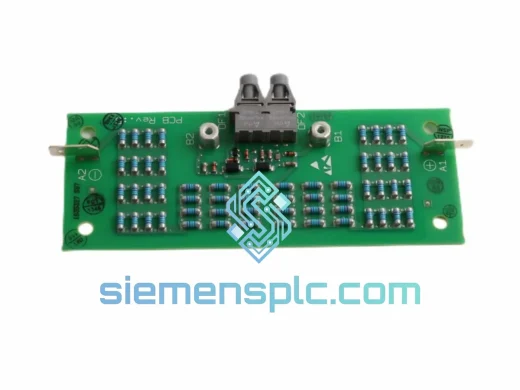
ABB SDCS-UCM-1 3ADT220090R0008 Excitation Control Board
S800
Origin SE
DC Drive Control Module
ABB
RFQ Ready
ABB SDCS-PIN-51-COAT 3ADT220090R0006 DC Drive Control Card
S800
Origin SE
DC Drive Control Card