ABB
In Stock OK
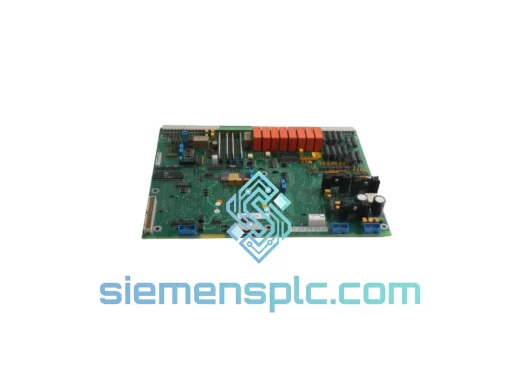
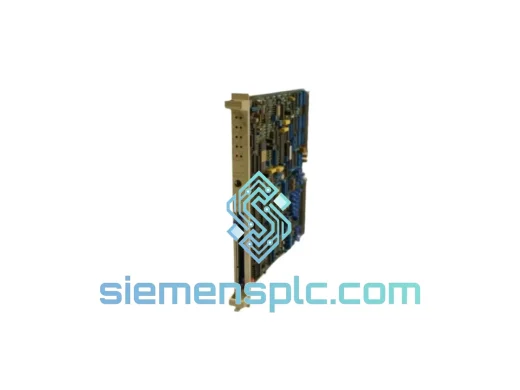
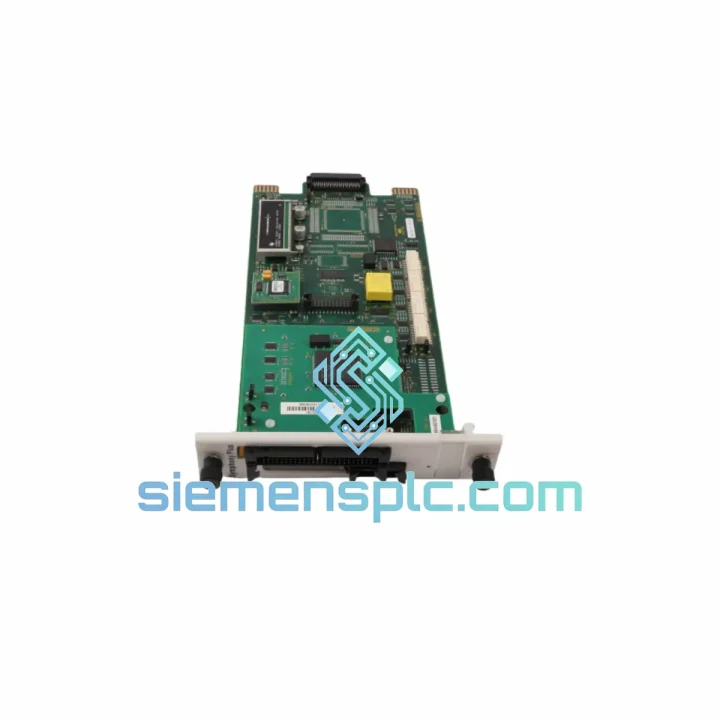
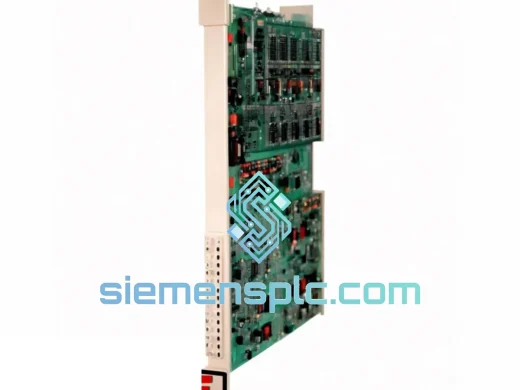
ABB SPICT13A Computer Interface Module – Advant Series
Request verified availability, condition, replacement risk review, packing options and courier lead time for SPICT13A.
BrandABB
Part NumberSPICT13A
ConditionAvailability Check
Lead TimeRFQ Confirmation
DocumentsDatasheet / photos by RFQ
ShippingExport packing available
Auto-filled RFQ
SPICT13A
Click Request Quote and the part number is inserted into the inquiry form automatically.
- Reply by email: [email protected]
- WhatsApp / Tel: +86 18359268345
- Mon-Sat 9:00-18:00 GMT+8
Procurement Data
Key Product Information
Core fields for model confirmation and RFQ routing. Detailed product narrative remains below.
- Brand
- ABB
- Primary Part Number
- SPICT13A
- Product Type
- Computer Interface Module
- Series / Family
- Advant
- Manufacturer
- ABB (Asea Brown Boveri)
- Country of Origin
- SE
- Catalog Category
- Communication
- Operating Temp.
- 0°C to +60°C
- Warranty
- 12 months from date of shipment
Model confirmed for inquiry
SPICT13A
Send quantity, destination and urgency. The RFQ form keeps this part number attached.
Request Quote
Product Overview
ABB SPICT13A Computer Interface Module – Serial Communication Architecture in Advant DCS Control Loops
The ABB SPICT13A is a dedicated computer interface module engineered for integration within ABB’s Advant Open Control System (OCS) and Master Series distributed control architectures. Its primary function is to establish a deterministic, high-integrity serial communication channel between the process controller backplane and supervisory computer systems — including SCADA hosts, engineering workstations, and historian servers. Unlike generic communication adapters, the SPICT13A is designed to operate within ABB’s proprietary INFI-NET token-ring bus topology, where timing precision and message arbitration directly affect closed-loop control performance.
In a typical Advant OCS deployment, the SPICT13A occupies a dedicated slot within the ABB PM series processor rack. It handles the protocol translation layer between the controller’s internal data highway and the external RS-232C or RS-485 serial port, enabling structured data exchange at defined polling intervals. This architecture decouples supervisory communication overhead from the real-time scan cycle of the process controller, preserving deterministic I/O response times even under high supervisory traffic loads.
Real-time Stock & RFQ: [email protected] | WhatsApp: +86 18359268345
Technical Parameters
| Part Number | SPICT13A |
| Manufacturer | ABB (Asea Brown Boveri) |
| Module Classification | Computer Interface Module (CIM) |
| Compatible Platform | ABB Advant OCS, Master Series, INFI-NET DCS |
| Communication Interface | RS-232C / RS-485 serial (host-side); INFI-NET token-ring (backplane-side) |
| Data Transfer Rate | Up to 19.2 kbps (serial port); backplane bus rate per ABB INFI-NET specification |
| Isolation | Optical isolation on serial I/O lines; galvanic separation from backplane logic |
| Supply Voltage | 24 VDC ± 10% (supplied via backplane) |
| Power Consumption | ≤ 5 W (typical operating load) |
| Operating Temperature | 0°C to +60°C |
| Storage Temperature | -40°C to +85°C |
| Relative Humidity | 5% to 95% non-condensing |
| Mounting | ABB standard module rack (backplane slot insertion) |
| Form Factor | Single-width Advant module card |
| Weight | Approx. 50 g |
| Certifications | CE, UL (per ABB Advant system certification) |
| Country of Origin | Germany |
| Warranty | 12 months from date of shipment |
Hardware Logical Analysis
The SPICT13A’s internal architecture is structured around a dual-processor design: one processor manages the INFI-NET token-ring protocol stack on the backplane side, while a secondary microcontroller handles the asynchronous serial framing and buffering on the host-computer side. This separation prevents serial communication latency — inherent in asynchronous RS-232C/RS-485 protocols — from propagating into the synchronous backplane scan cycle.
Optical Isolation Architecture: The serial I/O lines are galvanically isolated from the module’s internal logic via high-speed optocouplers rated for common-mode transient voltages up to 2.5 kV. This design directly addresses ground loop interference, which is a common failure mode in industrial environments where serial cables run alongside power conductors or across separate grounding domains. The isolation barrier also protects the backplane bus from ESD events introduced through the host computer’s serial port.
EMC Design: The PCB layout employs a split ground plane strategy, separating the analog serial signal ground from the digital logic ground. Ferrite bead filters are placed on the serial signal lines at the connector entry point to suppress high-frequency conducted emissions. The module’s metal faceplate provides a Faraday shield for the front-panel connector, reducing radiated susceptibility in environments with variable-frequency drive (VFD) noise or high-current switching transients.
Token-Ring Arbitration Logic: On the INFI-NET side, the SPICT13A participates in the token-passing arbitration scheme that governs bus access across all modules in the rack. The module’s firmware implements a deterministic token-hold timer, ensuring that no single module can monopolize the bus during high-throughput supervisory polling cycles. This arbitration logic is critical in multi-drop configurations where several interface modules share a common backplane segment.
Watchdog and Fault Detection: An onboard hardware watchdog timer monitors the module’s firmware execution cycle. If the communication processor fails to reset the watchdog within the defined interval — typically 100–200 ms — the module asserts a fault signal on the backplane, triggering a system alarm without corrupting the data highway. This fail-safe behavior allows the DCS to continue operating in degraded mode while the faulty module is identified and replaced.
System Integration Benefits
- Deterministic scan cycle preservation: By offloading serial communication processing to a dedicated microcontroller, the SPICT13A prevents supervisory polling from extending the controller’s I/O scan time, maintaining loop closure at the configured cycle rate.
- Transparent diagnostic reporting: The module maps its own communication status — including frame error counts, buffer overflow events, and token-ring participation state — into the DCS data highway, making fault conditions visible in the engineering workstation without requiring physical inspection.
- Plug-and-play backplane integration: The SPICT13A uses ABB’s standard module addressing scheme, allowing hot-swap replacement in systems equipped with redundant power supplies without requiring a full controller restart.
- Multi-drop serial topology support: The RS-485 interface supports multi-drop wiring with up to 32 nodes on a single bus segment, enabling connection to multiple host computers or data concentrators from a single module slot.
- Protocol-agnostic host interface: The serial port operates in a transparent byte-stream mode, allowing the host computer to implement any higher-level protocol — Modbus RTU, proprietary ABB messaging, or custom framing — without firmware modification on the module.
- Reduced wiring complexity: Centralizing the host computer interface in a single backplane module eliminates the need for external serial converters, reducing cable count, connector failure points, and EMC compliance surface area.
- Long-term spare parts availability: The SPICT13A remains a stocked spare part for Advant OCS systems operating in regulated industries — including power generation, oil & gas, and water treatment — where system lifecycle extends 20–30 years beyond original commissioning.
- Backward compatibility with legacy engineering tools: The module is fully compatible with ABB Control Builder and Advant Builder software environments, requiring no driver updates or configuration changes when used as a direct replacement in an existing system.
Quality Assurance & Global Logistics
Every ABB SPICT13A unit supplied by siemensplc.com undergoes a structured incoming inspection process before dispatch. Visual inspection confirms PCB integrity, connector pin condition, and label authenticity against ABB’s known genuine part markings. Functional verification is performed using a dedicated ABB backplane test fixture that validates token-ring participation, serial port loopback integrity, and watchdog reset behavior under simulated operating conditions.
Anti-counterfeit screening includes component-level inspection of critical ICs against known ABB bill-of-materials references, UV marking verification, and cross-referencing of date codes against ABB’s production records where available. Units that do not pass all inspection stages are quarantined and not offered for sale.
Logistics operations are based in Xiamen, China — a major export hub with direct access to international freight forwarding services via Xiamen Gaoqi International Airport and Xiamen Port. Standard dispatch lead time for in-stock units is 1–3 business days. Express air freight to Europe, North America, Southeast Asia, and the Middle East typically achieves door-to-door delivery within 3–7 business days. All shipments include commercial invoice, packing list, and certificate of origin. Export classification and customs documentation are prepared in compliance with applicable trade regulations. A 12-month warranty covers defects in materials and workmanship from the date of shipment.
Contact Information
Email: [email protected]
WhatsApp: +86 18359268345
Web: siemensplc.com
Location: Xiamen, China
© 2026 siemensplc.com. All rights reserved.
Ready to quote
[email protected]
Send This Part Number to Sales
RFQ workflow
Quality workflow ->
Confirmation Process
01Model confirmation
We check the full part number, brand, series and visible nameplate information before quotation.
02Availability reply
Sales confirms stock path, condition option, quantity and realistic lead time for export dispatch.
03Packing & courier
DHL, FedEx, UPS or buyer courier arrangements can be reviewed with packing requirements.
Continue sourcing
Browse full catalog ->
Related Automation Parts
Similar brand or category products for fast comparison and multi-item RFQ lists.
ABB
RFQ Ready
ABB YXU172E Communication Board – Advant Controller
Advant
Origin SE
Communication Board
ABB
RFQ Ready
ABB YPQ102E YT204001-FT DCS Communication Module
Advant
Origin SE
DCS Communication Module