Allen-Bradley
RFQ Ready
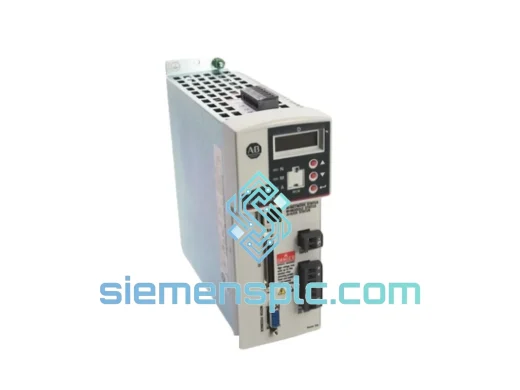
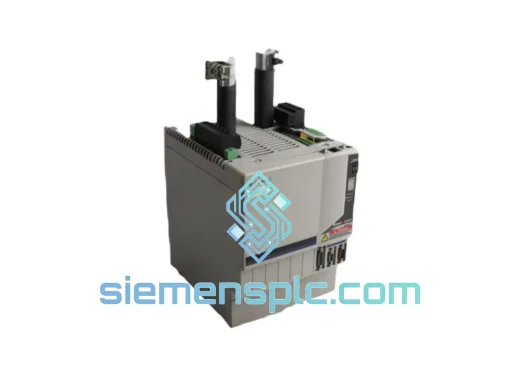
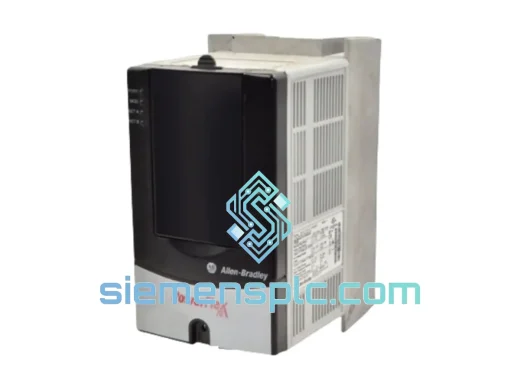
Allen-Bradley 20AD3P4A0AYNNNC0 Variable Frequency Drive
PowerFlex
Origin US
Variable Frequency Drive
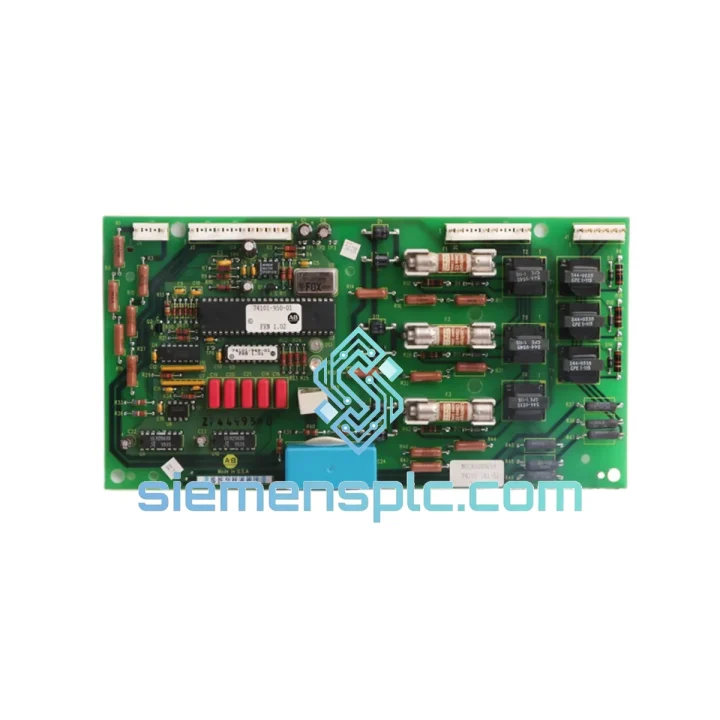
Request verified availability, condition, replacement risk review, packing options and courier lead time for 1336-PB-SP6C.
Click Request Quote and the part number is inserted into the inquiry form automatically.
Core fields for model confirmation and RFQ routing. Detailed product narrative remains below.
The Allen-Bradley 1336-PB-SP6C (internal assembly reference 74101-181-51) is the DC bus precharge control board engineered specifically for the 1336 PLUS (catalog prefix 1336F) and select 1336 PLUS II (1336S) frame configurations. Within the drive’s power conversion architecture, this board occupies a critical position in the startup sequence: it governs the controlled charging of the DC bus capacitor bank from zero volts to the rectified line voltage, preventing the destructive inrush current that would otherwise flow through the diode bridge and bus capacitors during a cold start or after a power interruption.
Without a functioning precharge circuit, the capacitor bank presents a near-short-circuit load to the rectifier at the moment of energization. The resulting inrush current — which can reach 10–20× rated current in unprotected circuits — stresses solder joints on the bus capacitor terminals, degrades the electrolytic capacitor dielectric, and can cause nuisance tripping of upstream protective devices. The 1336-PB-SP6C eliminates this failure mode by inserting a precharge resistor network into the DC bus path and bypassing it only after the bus voltage reaches a defined threshold, typically 85–90% of nominal DC bus voltage.
Real-time Stock & RFQ: [email protected] | WhatsApp: +86 18359268345
| Parameter | Specification |
|---|---|
| Manufacturer | Allen-Bradley / Rockwell Automation |
| Catalog Number | 1336-PB-SP6C |
| Internal Assembly Reference | 74101-181-51 |
| Board Function | DC Bus Precharge Control |
| Compatible Drive Series | 1336 PLUS (1336F), 1336 PLUS II (1336S) — frame-dependent |
| Precharge Method | Series resistor bypass via precharge relay |
| Bus Voltage Threshold (bypass) | ~85–90% of nominal DC bus voltage |
| Relay Output | Dry contact, rated for DC bus bypass switching |
| Board Form Factor | Single PCB, internal chassis mount |
| Connector Interface | Molex-style locking headers; revision-specific pinout |
| Operating Temperature | 0°C to +55°C (drive enclosure ambient) |
| Storage Temperature | -40°C to +85°C |
| Approximate Weight | 300 g |
| Warranty | 12 months functional warranty from shipment date |
The 1336-PB-SP6C operates as a dedicated supervisory sub-system within the 1336 PLUS power stage. Its hardware design reflects several deliberate engineering decisions worth examining at the board level.
Precharge Relay Actuation Logic: The board monitors DC bus voltage via a resistive voltage divider network that feeds a comparator circuit. When the sensed bus voltage crosses the programmed threshold, the comparator output transitions, driving the base of a switching transistor that energizes the precharge relay coil. The relay’s normally-open contacts then close, short-circuiting the precharge resistors and placing the full rectified bus voltage directly across the capacitor bank. This two-stage approach — resistor-limited charging followed by hard bypass — is mechanically deterministic and does not depend on firmware execution timing, making it inherently more reliable than software-only precharge management.
EMC Design Considerations: The board is positioned in close proximity to the drive’s rectifier and capacitor bank, both of which are significant sources of conducted and radiated electromagnetic interference during switching transients. The PCB layout uses a ground plane layer to provide a low-impedance return path for high-frequency noise currents, reducing common-mode voltage buildup on signal traces. Snubber components across the relay coil suppress the inductive kickback voltage spike generated when the relay de-energizes, protecting the switching transistor from avalanche breakdown.
Fault Detection Architecture: The board interfaces with the drive’s main control board via a dedicated status signal line. If the precharge relay fails to close within the expected time window — indicating a welded resistor, open relay contact, or bus voltage sensor fault — the main control board interprets the missing status transition as a precharge fault and inhibits the drive’s gate firing signals. This prevents the inverter section from operating with an incompletely charged bus, which would otherwise result in undervoltage faults or capacitor damage during the first PWM switching cycle.
Revision Differentiation (SP6 → SP6B → SP6C): The SP6C revision incorporates component-level changes relative to earlier SP6 and SP6B variants, including updated relay specifications and revised comparator threshold resistor values to improve precharge timing accuracy across a wider ambient temperature range. These changes are not backward-compatible in all frame configurations; substituting an earlier revision without engineering verification risks incorrect precharge timing or connector incompatibility.
Every 1336-PB-SP6C unit dispatched from our Xiamen, China facility undergoes a structured pre-shipment verification process. Boards are functionally tested for relay actuation voltage threshold, comparator output transition accuracy, and connector integrity before packaging. Anti-static shielding bags with humidity indicator cards are used for all PCB shipments, and outer cartons are reinforced for air freight handling.
Traceability documentation — including lot reference, test date, condition grade (New OEM / Refurbished / Tested Exchange), and inspector ID — is included with each shipment. Certificate of Conformance is available upon request for MRO procurement teams operating under ISO 9001 or AS9120 quality frameworks.
Logistics from Xiamen covers major industrial hubs globally: standard air freight to Europe and North America typically delivers within 5–8 business days; express courier (DHL / FedEx Priority) achieves 3–5 business days to most destinations. For urgent plant-down situations, same-day dispatch is available for in-stock units ordered before 14:00 CST. All shipments include tracking numbers and commercial invoices with accurate HS code classification for customs clearance.
Email: [email protected]
WhatsApp: +86 18359268345
Web: siemensplc.com
Location: Xiamen, China
© 2026
We check the full part number, brand, series and visible nameplate information before quotation.
Sales confirms stock path, condition option, quantity and realistic lead time for export dispatch.
DHL, FedEx, UPS or buyer courier arrangements can be reviewed with packing requirements.
Similar brand or category products for fast comparison and multi-item RFQ lists.