Allen-Bradley
RFQ Ready
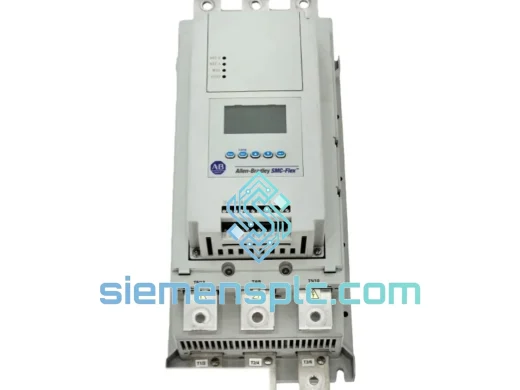
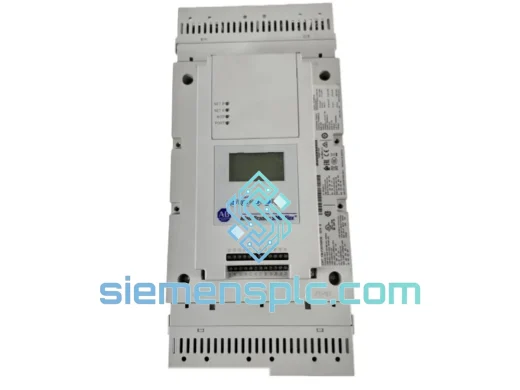
Allen-Bradley 150-F201NBDB Soft Starter
SMC-Flex
Origin US
Soft Starter / Smart Motor Controller
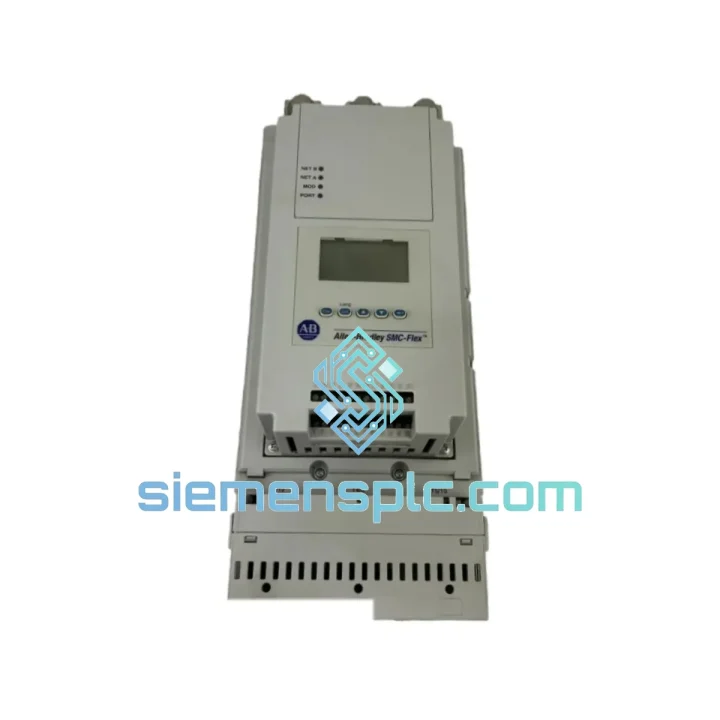
Request verified availability, condition, replacement risk review, packing options and courier lead time for 150-F108NBDB.
Click Request Quote and the part number is inserted into the inquiry form automatically.
Core fields for model confirmation and RFQ routing. Detailed product narrative remains below.
The Allen-Bradley 150-F108NBDB is a 108 A continuous-duty, three-phase solid-state soft starter belonging to Rockwell Automation’s SMC-Flex platform. Its primary function within a motor control loop is to govern the voltage ramp applied to the stator windings during acceleration and deceleration, thereby limiting peak inrush current and eliminating the mechanical torque shock that characterises across-the-line starting. At 108 A, the device covers induction motors up to approximately 75 kW (100 hp) at 400 VAC or 90 kW (125 hp) at 480 VAC — a capacity range that spans the majority of pump, fan, compressor, and conveyor drive applications encountered in process and discrete manufacturing.
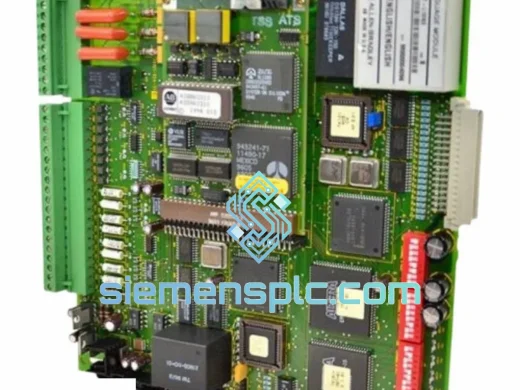
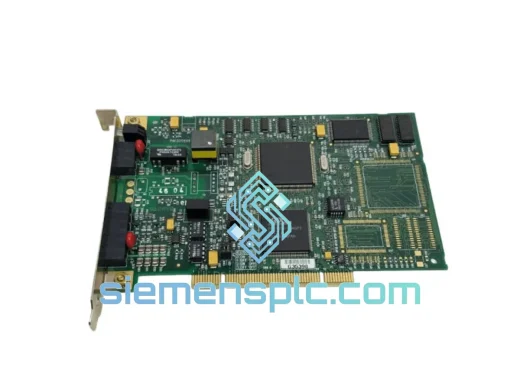
The NBDB suffix designates the factory-installed DeviceNet communication option board. This board implements the ODVA DeviceNet specification at the physical and data-link layers, presenting the soft starter as a Group 2 Only slave device on the network. The host PLC — typically an Allen-Bradley ControlLogix with a 1756-DNB scanner or a CompactLogix with a 1769-SDN module — polls the 150-F108NBDB at configurable rates to read real-time operating data (motor current, thermal model state, fault codes) and to issue start, stop, and parameter-write commands. This architecture eliminates the discrete I/O wiring that would otherwise be required for remote control and diagnostic feedback, reducing panel wiring labour and improving fault-response latency.
Real-time Stock & RFQ: [email protected] | WhatsApp: +86 18359268345
| Parameter | Value |
|---|---|
| Part Number / SKU | 150-F108NBDB |
| Platform / Series | SMC-Flex (Frame F) |
| Manufacturer | Allen-Bradley / Rockwell Automation |
| Continuous Current Rating | 108 A |
| Motor Power (400 VAC) | ≈ 75 kW / 100 hp |
| Motor Power (480 VAC) | ≈ 90 kW / 125 hp |
| Supply Voltage Range | 200–600 VAC, 3-Phase, 50/60 Hz |
| Control Voltage | 100–240 VAC, 50/60 Hz |
| Communication Interface | DeviceNet (ODVA), Group 2 Only Slave |
| Start Modes | Soft Start (voltage ramp), Current Limit, Full Voltage, Preset Slow Speed |
| Stop Modes | Soft Stop (voltage ramp-down), Coast-to-Rest, DC Braking |
| Bypass Contactor | Internal, factory-integrated (closes at full speed) |
| Motor Protection Functions | Electronic Overload, Phase Loss, Phase Reversal, Stall, Jam, Underload |
| Overload Class | Class 10, 15, 20, 30 (selectable) |
| Enclosure / Mounting | Open / Panel Mount (IP00), MCC bucket compatible |
| Ambient Temperature | 0 °C to +40 °C (derate above 40 °C) |
| Storage Temperature | −40 °C to +85 °C |
| Relative Humidity | 5–95 % non-condensing |
| Altitude | Up to 1000 m without derating |
| Certifications | UL 508, CE (LVD + EMC), CSA C22.2 |
| Approximate Weight | 15 kg |
| Warranty (siemensplc.com) | 12 months from invoice date |
The power stage of the 150-F108NBDB is built around three anti-parallel SCR (silicon-controlled rectifier) pairs — one pair per phase — arranged in a six-pulse thyristor bridge configuration. During the start ramp, the firing angle of each SCR pair is progressively advanced from a high-impedance state toward full conduction, producing a smooth voltage envelope at the motor terminals. The ramp profile is governed by a dedicated microcontroller that samples line voltage and motor current on every half-cycle (at 50 Hz: every 10 ms; at 60 Hz: every 8.33 ms), adjusting firing angle in closed-loop to track the configured current-limit or voltage-ramp setpoint.
Once the motor reaches synchronous speed — detected by the current feedback falling below a configurable threshold — the internal bypass contactor closes, short-circuiting the SCR stack. This is a critical design decision: SCRs in continuous conduction generate approximately 1.5–2.0 V forward drop per device, translating to several hundred watts of heat dissipation at 108 A. Bypassing the SCRs after run-up eliminates this loss entirely, removes the SCR stack from the thermal stress of continuous operation, and extends device service life. The bypass contactor itself is a standard AC contactor rated for the full 108 A continuous duty.
EMC performance is addressed at two levels. At the component level, the SCR gate drive circuits are optically isolated from the control logic, preventing high-dV/dt switching transients on the power bus from coupling into the microcontroller. At the system level, the device complies with EN 61800-3 Category C2 conducted and radiated emission limits when installed with the recommended line-side EMC filter. The DeviceNet physical layer uses a differential twisted-pair bus with 120 Ω termination resistors at each end of the trunk, providing inherent common-mode noise rejection in environments with significant ground potential differences between nodes — a common condition in large motor control centres.
The thermal model implemented in firmware tracks motor winding temperature as a first-order thermal equivalent circuit, accumulating I²t over time and comparing it against the motor’s thermal capacity curve. This model persists across power cycles via non-volatile memory, preventing a cold-restart from resetting the thermal accumulator and allowing a hot motor to be restarted only when the thermal model indicates sufficient cooling has occurred.
Every 150-F108NBDB unit offered through siemensplc.com is sourced from authorised Allen-Bradley distribution channels or verified factory-sealed inventory with full traceability documentation. Pre-shipment inspection covers nameplate data integrity, terminal block condition, SCR stack continuity, bypass contactor mechanical operation, DeviceNet port pin-out verification, and firmware version confirmation against Rockwell Automation’s published revision history. Date codes and serial numbers are cross-referenced against production records where available. A zero-tolerance policy on counterfeit components is enforced at every procurement stage.
Logistics operations are managed from Xiamen, China — a major export hub with direct access to international express carriers including DHL Express, FedEx International Priority, and UPS Worldwide Expedited. Standard export documentation (commercial invoice, packing list, certificate of origin, packing declaration) is prepared for every shipment to facilitate customs clearance in the destination country. For time-critical requirements, same-day dispatch is available for orders confirmed before 14:00 CST. Transit times to major industrial centres in Europe, Southeast Asia, the Middle East, and North America typically range from 3 to 7 business days via express services. All units are packed in anti-static foam-lined cartons with corner protection to withstand the mechanical shock and vibration levels specified in ISTA 2A transit testing.
Email: [email protected]
WhatsApp: +86 18359268345
Web: siemensplc.com
Location: Xiamen, China
© 2026 siemensplc.com. All rights reserved.
We check the full part number, brand, series and visible nameplate information before quotation.
Sales confirms stock path, condition option, quantity and realistic lead time for export dispatch.
DHL, FedEx, UPS or buyer courier arrangements can be reviewed with packing requirements.
Similar brand or category products for fast comparison and multi-item RFQ lists.