Allen-Bradley
RFQ Ready
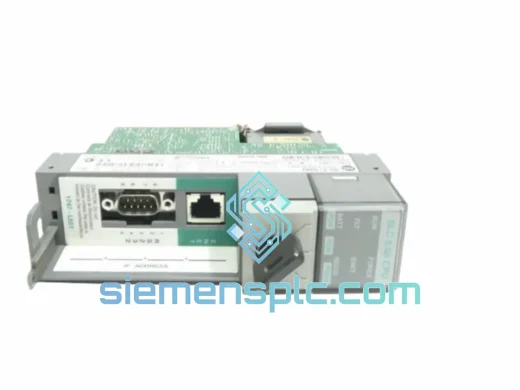
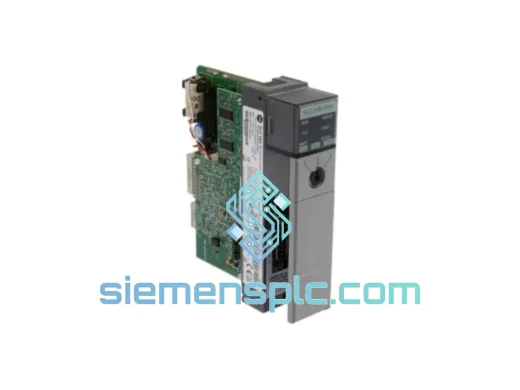
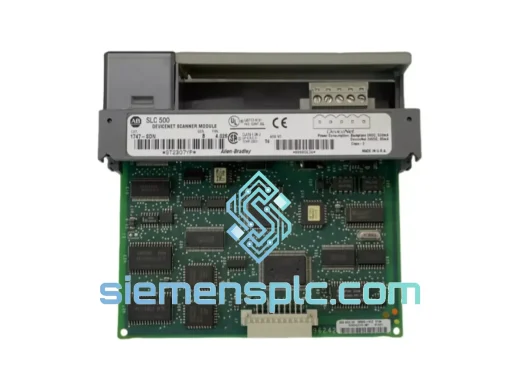
Allen-Bradley 1747-SDN PLC Scanner Module
SLC 500
Origin US
PLC Scanner Module
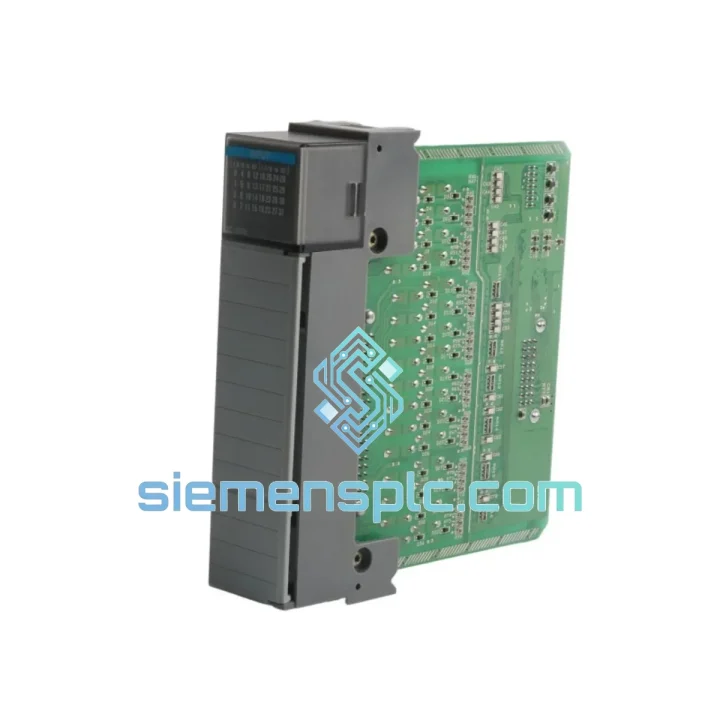
Request verified availability, condition, replacement risk review, packing options and courier lead time for 1747-DCM.
Click Request Quote and the part number is inserted into the inquiry form automatically.
Core fields for model confirmation and RFQ routing. Detailed product narrative remains below.
In a multi-node SLC 500 control architecture, the processor scan cycle is a finite resource. Every MSG instruction executed by the CPU consumes scan time — and in high-throughput discrete or batch applications, that overhead compounds. The Allen-Bradley 1747-DCM Direct Communication Module resolves this constraint by functioning as a dedicated DH-485 communication co-processor, resident in the SLC 500 I/O chassis, handling token-ring arbitration and peer messaging independently of the host CPU’s ladder scan. The result is a control system where communication latency is decoupled from logic execution time, and where a network fault does not cascade into a processor fault.
This module is the correct selection for engineers maintaining or expanding SLC 500 installations that require deterministic peer-to-peer data exchange, multi-drop HMI connectivity, or isolated communication fault domains. It is not a gateway device and does not bridge to Ethernet/IP or ControlNet — its scope is the DH-485 physical layer, and it executes that function with precision.
Real-time Stock & RFQ: [email protected] | WhatsApp: +86 18359268345
| Parameter | Value | Notes |
|---|---|---|
| Catalog Number | 1747-DCM | Allen-Bradley / Rockwell Automation |
| Module Type | Direct Communication Module | DH-485 co-processor, not a gateway |
| Compatible Platform | SLC 500 Modular (1746-Axxx chassis) | Not compatible with fixed-hardware SLC units |
| Network Protocol | DH-485 (RS-485 physical layer) | Token-passing, multi-master |
| Baud Rates | 1200 / 2400 / 4800 / 9600 / 19200 bps | Switch-selectable on module faceplate |
| Max Network Nodes | 32 per segment | Includes all devices on the DH-485 segment |
| Max Cable Length | 1219 m @ 1200 bps / 304 m @ 19200 bps | Belden 3106A or equivalent shielded twisted pair |
| Port Connector | 9-pin D-shell (DB-9) | DH-485 network connection |
| Optical Isolation | Yes — DH-485 port isolated from backplane | Decouples field ground from logic ground |
| Backplane Current Draw | 250 mA @ 5 VDC | Supplied by SLC 500 chassis power supply |
| Power Dissipation | 1.25 W (typical) | Factor into chassis power budget |
| Chassis Slot | Any I/O slot (not processor slot) | Slot addressing via RSLogix 500 I/O configuration |
| Form Factor | Single-slot SLC 500 module | 1746-Axxx chassis compatible |
| Dimensions (H×W×D) | 111 × 35 × 87 mm | Standard SLC 500 module envelope |
| Weight | ~170 g | |
| Operating Temperature | 0 °C to +60 °C | IEC 68-2-1 / IEC 68-2-2 |
| Storage Temperature | −40 °C to +85 °C | |
| Relative Humidity | 5% to 95% non-condensing | |
| Vibration | 2 g @ 10–500 Hz | IEC 68-2-6 |
| Shock | 30 g operational / 50 g non-operational | IEC 68-2-27 |
| Certifications | UL 508, CSA C22.2 No.142, CE (EMC + LVD), RoHS | |
| Warranty | 12 months from shipment date | Ready to Ship — stock confirmed before order |
The 1747-DCM’s architecture separates into three functional blocks: the backplane interface logic, the DH-485 token-ring controller, and the optical isolation barrier. Understanding each layer is essential for correct integration and fault diagnosis.
Backplane Interface & M0/M1 File Mechanism: The module communicates with the SLC host processor exclusively through the M0 (output) and M1 (input) integer files — a memory-mapped interface that the processor accesses during its normal I/O scan. MSG instructions written to M0 are queued by the 1747-DCM’s onboard microcontroller and transmitted onto the DH-485 network asynchronously. Response data is written back to M1 for the processor to read on the next scan. This architecture means the DH-485 transaction is never blocking — the processor does not wait for network acknowledgment before continuing ladder execution. Network round-trip time (typically 5–50 ms depending on baud rate and node count) is absorbed by the module’s internal buffer, not the CPU scan.
DH-485 Token-Ring Controller: DH-485 uses a distributed token-passing protocol. Each node on the network holds the token for a defined time window, during which it may transmit. The 1747-DCM implements the full token-ring state machine in firmware — it participates in token rotation, handles token loss recovery, and manages node address conflict detection. At 19200 bps with 32 nodes, worst-case token rotation time is approximately 160 ms; at 9600 bps with 8 nodes (typical small system), rotation time drops below 40 ms. These figures are deterministic — unlike Ethernet CSMA/CD, DH-485 token passing guarantees bounded latency, which is why it remains appropriate for time-sensitive peer messaging in legacy SLC 500 systems.
Optical Isolation Barrier: The DB-9 DH-485 port is galvanically isolated from the backplane logic. This isolation serves two purposes: it prevents ground loop currents — which arise when two nodes in a multi-drop network have different earth ground potentials — from flowing through the backplane, and it clamps transient voltages induced by nearby VFDs, contactors, or welding equipment from reaching the SLC processor’s logic circuitry. The isolation rating is sufficient for the pollution degree 2 environments defined in IEC 664, covering the majority of industrial panel installations. For installations in close proximity to high-energy switching equipment (>100 kVA VFDs, arc welders), additional shielding of the DH-485 cable and proper cable routing away from power conductors remains mandatory regardless of module isolation.
EMC Design Considerations: The module’s PCB layout follows Rockwell Automation’s internal EMC design rules for the SLC 500 platform — decoupling capacitors on the backplane power rails, ground plane segmentation between the isolated DH-485 side and the backplane logic side, and filtered power entry on the backplane connector. These design choices contribute to the module’s CE EMC certification (EN 61000-4-2 ESD, EN 61000-4-4 EFT, EN 61000-4-5 surge) and its field reliability in electrically noisy industrial environments.
Sourcing & Authenticity: All 1747-DCM units supplied through siemensplc.com are sourced from verified industrial surplus channels, OEM decommission programs, and authorized distributor overstock. Each unit is physically inspected for authenticity markers — Rockwell Automation catalog label format, PCB revision markings, backplane edge connector condition, and faceplate LED lens integrity. Counterfeit screening is applied to every unit before acceptance into inventory.
Pre-Shipment Test Protocol:
Warranty: 12 months from confirmed shipment date. Covers functional failure under normal operating conditions. Does not cover physical damage post-shipment or installation in environments exceeding rated specifications.
Global Express Logistics from Xiamen, China: Orders are dispatched from our Xiamen warehouse via DHL Express or FedEx International Priority — both services offer door-to-door transit times of 2–5 business days to major industrial hubs in Europe, North America, Southeast Asia, and the Middle East. Same-day dispatch is available for orders confirmed before 14:00 CST. Full export documentation is included with every international shipment: commercial invoice, packing list, country of origin certificate, and HS code declaration (HS 8537.10) for customs clearance. For urgent MRO requirements where production downtime cost exceeds freight cost, express air freight is the standard recommendation — contact us to confirm stock and arrange priority dispatch.
Email: [email protected]
WhatsApp: +86 18359268345
Web: siemensplc.com
Location: Xiamen, China
© 2026 siemensplc.com. All rights reserved.
We check the full part number, brand, series and visible nameplate information before quotation.
Sales confirms stock path, condition option, quantity and realistic lead time for export dispatch.
DHL, FedEx, UPS or buyer courier arrangements can be reviewed with packing requirements.
Similar brand or category products for fast comparison and multi-item RFQ lists.