Allen-Bradley
RFQ Ready
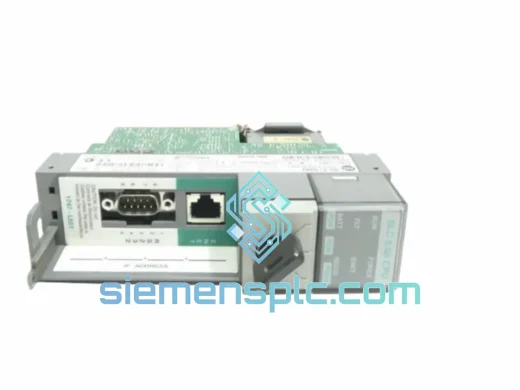
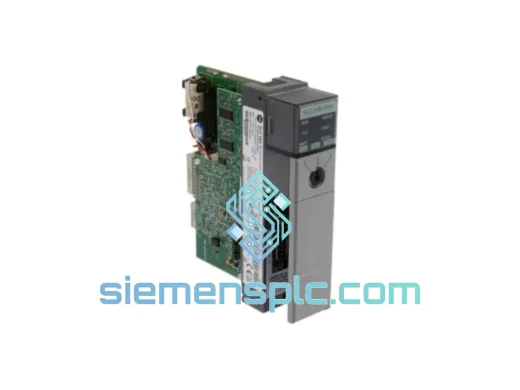
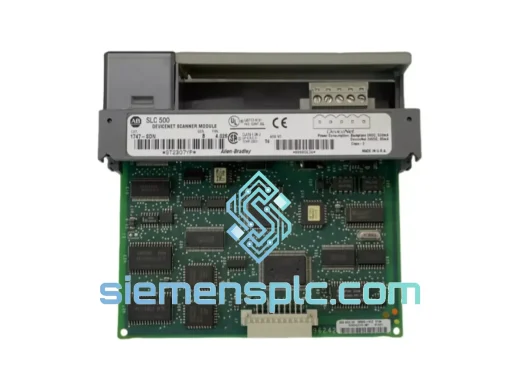
Allen-Bradley 1747-SDN PLC Scanner Module
SLC 500
Origin US
PLC Scanner Module
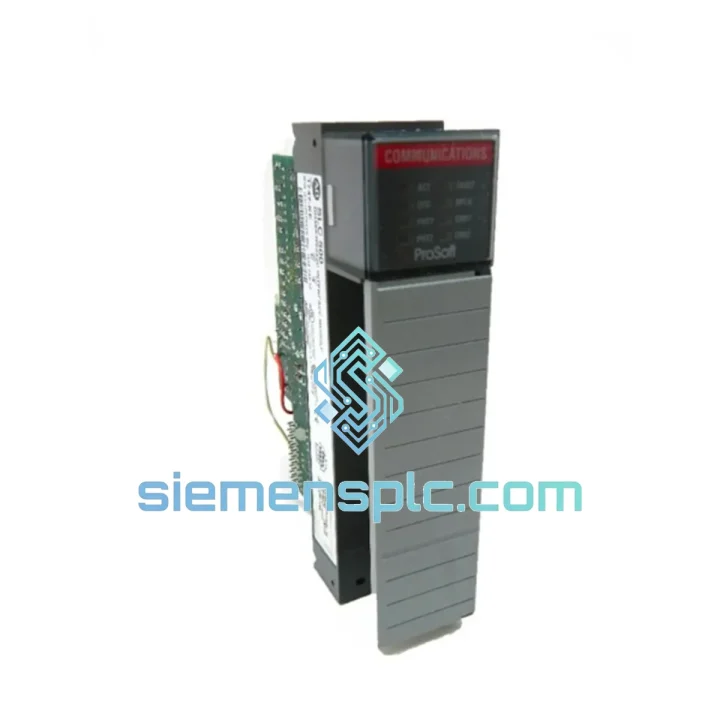
Request verified availability, condition, replacement risk review, packing options and courier lead time for 1747-KE.
Click Request Quote and the part number is inserted into the inquiry form automatically.
Core fields for model confirmation and RFQ routing. Detailed product narrative remains below.
The 1747-KE occupies a structurally critical position in any SLC 500 control architecture: it is the sole hardware path through which the DH-485 token-passing network exposes itself to RS-232C serial endpoints. Without this module, the SLC 500 backplane remains isolated from host SCADA systems, programming terminals, HMI panels, and third-party serial instrumentation. The 1747-KE resolves this isolation by implementing a bidirectional protocol translation engine that operates transparently within the SLC 500 chassis, consuming one I/O slot and drawing power directly from the 1746-series backplane.
At the hardware level, the module contains two independent communication controllers: one dedicated to the DH-485 side, managing token acquisition, node addressing (up to 31 nodes on a single DH-485 segment), and collision avoidance at data rates up to 19.2 kbps; and one dedicated to the RS-232C side, supporting asynchronous serial framing at configurable baud rates from 1200 to 19200 bps. The two controllers exchange data through an internal shared-memory buffer, which decouples the timing domains of the two networks and prevents RS-232C latency from propagating into the deterministic DH-485 token cycle. This architecture ensures that the DH-485 network’s real-time characteristics are preserved regardless of the RS-232C host’s polling behavior.
The module supports the DF1 full-duplex and DF1 half-duplex protocols on the RS-232C port, making it directly compatible with RSLinx Classic driver configurations for both point-to-point and multi-drop serial topologies. In DF1 full-duplex mode, the 1747-KE acts as a transparent bridge, forwarding DF1 packets from the RS-232C host into the DH-485 network and routing responses back without requiring the host to manage DH-485 token logic. This is the standard configuration for RSLogix 500 programming sessions conducted over a serial cable.
From an EMC standpoint, the 1747-KE’s RS-232C port incorporates transient suppression on all signal lines, and the module’s internal ground plane is bonded to the SLC 500 chassis ground through the backplane connector, providing a low-impedance return path for common-mode noise currents. This design is consistent with Allen-Bradley’s industrial EMC compliance requirements for IEC 61000-4 series immunity tests, including ESD (Level 3), EFT/Burst (Level 3), and surge (Level 2) — parameters that matter in panel environments where variable-frequency drives and contactors generate significant conducted and radiated interference.
Real-time Stock & RFQ: [email protected] | WhatsApp: +86 18359268345
| Parameter | Specification |
|---|---|
| Part Number | 1747-KE |
| Manufacturer | Allen-Bradley (Rockwell Automation) |
| Product Series | SLC 500 |
| Module Function | DH-485 to RS-232C Protocol Interface |
| DH-485 Data Rate | 1200 / 2400 / 4800 / 9600 / 19200 bps (selectable) |
| DH-485 Max Nodes | 31 nodes per segment |
| RS-232C Baud Rate | 1200 / 2400 / 4800 / 9600 / 19200 bps |
| RS-232C Connector | DB-9 male |
| Supported Protocols (RS-232C) | DF1 Full-Duplex, DF1 Half-Duplex |
| Chassis Slot Requirement | 1 slot (1746-series modular chassis) |
| Backplane Power Draw | 5 VDC from SLC 500 backplane |
| Operating Temperature | 0 °C to +60 °C |
| Storage Temperature | -40 °C to +85 °C |
| Relative Humidity | 5% to 95% non-condensing |
| Enclosure Rating | Open-frame (chassis-mounted) |
| Compatible Software | RSLogix 500, RSLinx Classic |
| Approvals | UL, CSA, CE |
| Weight (approx.) | 400 g |
| Warranty | 12 months from date of shipment |
The 1747-KE’s internal architecture separates the DH-485 and RS-232C communication domains at the controller level, not merely at the signal level. Each port is managed by a dedicated microcontroller with its own oscillator and interrupt handler, which means that a stall condition on the RS-232C side — caused by a host that stops polling or loses power — does not cause the DH-485 controller to miss token passes or generate spurious bus errors. This fault isolation is a deliberate design choice that protects the integrity of the DH-485 network when the serial host is unreliable.
The DH-485 physical layer uses RS-485 differential signaling, which provides inherent common-mode noise rejection. The 1747-KE’s DH-485 transceiver includes fail-safe biasing resistors that hold the bus in a defined idle state when no node is actively driving — preventing the bus from floating into an indeterminate state during power-up sequencing or when nodes are added or removed. This is particularly relevant in multi-drop installations where the bus may be energized before all nodes have completed their initialization routines.
On the RS-232C side, the module implements hardware flow control via RTS/CTS lines, which allows the connected host to throttle data transmission when its receive buffer approaches capacity. This prevents data loss in high-throughput scenarios such as bulk data uploads to the SLC 500 data table or firmware transfers. The DB-9 connector pinout is compatible with standard null-modem and straight-through cable configurations, reducing cabling complexity during commissioning.
The module’s internal shared-memory buffer is sized to accommodate the maximum DF1 packet length, ensuring that no packet fragmentation occurs during protocol translation. The buffer management logic implements a FIFO discipline with overflow detection: if the buffer fills due to a sustained mismatch between DH-485 and RS-232C throughput, the module asserts an error flag on the backplane status register, which the SLC 500 CPU can read and act upon through ladder logic — providing a software-visible diagnostic path for communication faults.
Every Allen-Bradley 1747-KE unit supplied by siemensplc.com is sourced through traceable supply channels and subjected to a structured pre-shipment verification process. Physical inspection covers label integrity, connector condition, and housing for signs of rework or counterfeiting. Where manufacturer serialization data is available, serial numbers are cross-referenced against Allen-Bradley production records. Units are packed in anti-static shielding bags with foam cushioning inside double-wall corrugated cartons, rated for international air freight handling.
Shipments originate from Xiamen, China — a major export hub with direct access to DHL Express, FedEx International Priority, and UPS Worldwide Expedited services. Standard international transit times are 3–5 business days to Southeast Asia, 4–7 business days to Europe and the Middle East, and 5–8 business days to North and South America. All shipments include a commercial invoice, packing list, and certificate of origin. For orders requiring specific customs documentation — including HS code declarations, CITES exemption letters, or end-user certificates — our logistics team prepares the required paperwork prior to dispatch. A 12-month warranty covers manufacturing defects; units exhibiting functional failure under normal operating conditions within this period are replaced or credited at no additional cost.
Email: [email protected]
WhatsApp: +86 18359268345
Web: siemensplc.com
Location: Xiamen, China
© 2026 siemensplc.com. All rights reserved.
We check the full part number, brand, series and visible nameplate information before quotation.
Sales confirms stock path, condition option, quantity and realistic lead time for export dispatch.
DHL, FedEx, UPS or buyer courier arrangements can be reviewed with packing requirements.
Similar brand or category products for fast comparison and multi-item RFQ lists.