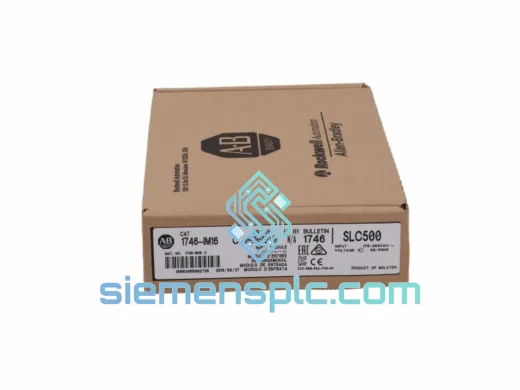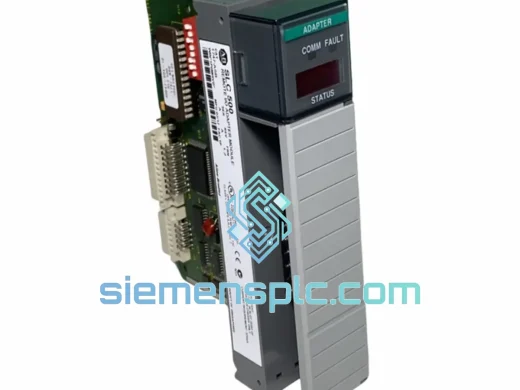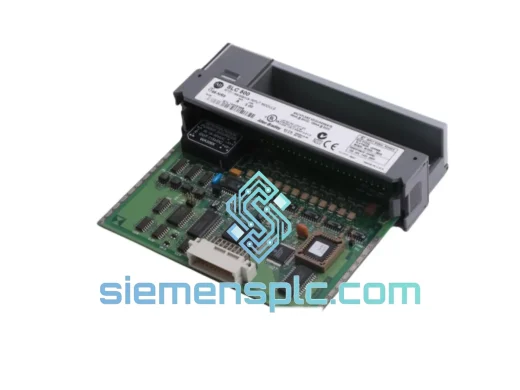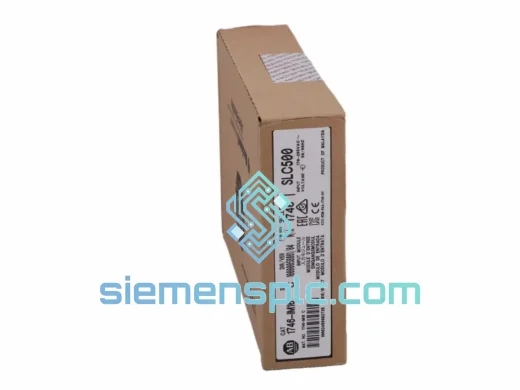
Allen-Bradley
RFQ Ready
Allen-Bradley DIM16 Discrete Input Module
SLC 500
Origin US
Discrete Input Module
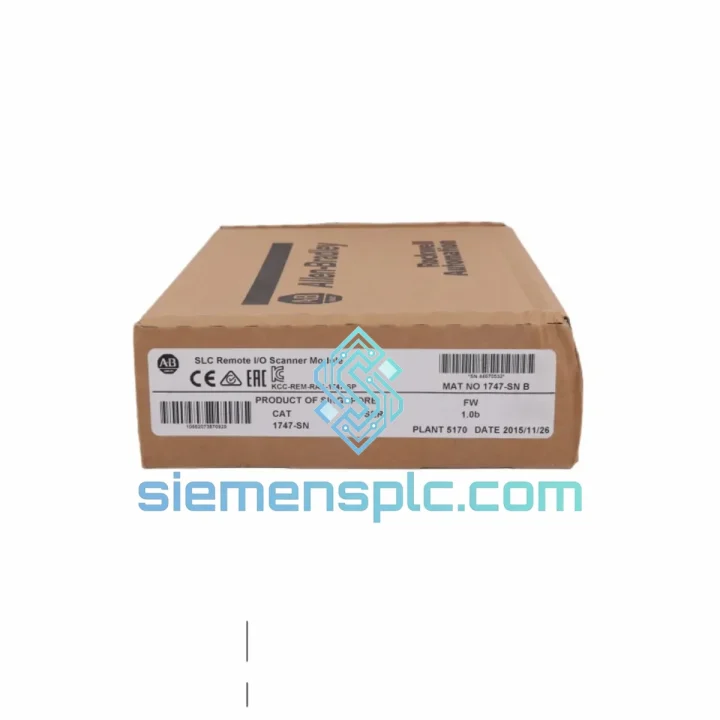
Request verified availability, condition, replacement risk review, packing options and courier lead time for 1747-SN.
Click Request Quote and the part number is inserted into the inquiry form automatically.
Core fields for model confirmation and RFQ routing. Detailed product narrative remains below.
Your SLC 500 system is down. The remote I/O link is dead. Every minute the line sits idle, you’re bleeding money — rework costs, missed shipments, penalty clauses. The Allen-Bradley 1747-SN Remote I/O Scanner Module is the single component standing between you and full production recovery. We stock it. We test it. We ship it the same day you call.
From our Xiamen warehouse, DHL and FedEx express lanes put this module on your bench in 24–72 hours — whether you’re in Southeast Asia, the Middle East, or Europe. No waiting on OEM lead times. No broker runaround. One call, one part, line back up.
URGENT REQUIREMENT? Contact: [email protected] | WhatsApp: +86 18359268345
| Parameter | Specification | Status |
|---|---|---|
| Catalog Number | 1747-SN | ✔ Ready to Ship |
| Series | SLC 500 | — |
| Module Function | Remote I/O Scanner | — |
| Communication Protocol | Allen-Bradley 1771 Remote I/O (RIO) | — |
| Supported Baud Rates | 57.6 / 115.2 / 230.4 Kbps | — |
| Max RIO Link Distance | 3,048 m @ 57.6 Kbps | — |
| Max Logical Rack Addresses | 32 | — |
| Backplane Current Draw | 800 mA @ 5 VDC | — |
| Chassis Slot Occupancy | Single slot, SLC 500 chassis | — |
| Operating Temperature | 0 °C to +60 °C | — |
| Storage Temperature | −40 °C to +85 °C | — |
| Relative Humidity | 5% – 95% non-condensing | — |
| Weight | ~350 g | — |
| Compatible Processors | SLC 5/03, 5/04, 5/05 | — |
| Programming Software | RSLogix 500 v8.x+ | — |
| Certifications | UL 508, CE, RoHS, Class I Div 2 | — |
| Origin | USA | — |
Ten years on the floor taught me one thing: most 1747-SN failures follow a short list of patterns. Here’s what to check before you pull the module — and what to configure the moment the new one lands.
Fault Code SY/MAX E3 or RIO Link Fault LED solid red: This is almost always a baud rate mismatch between the scanner and the remote adapter (1771-ASB). The 1747-SN sets baud rate via rotary switch SW1 on the module face. Match it exactly to the 1771-ASB DIP switch setting — 57.6 / 115.2 / 230.4 Kbps. A one-position error here kills the entire link silently.
Rack address conflicts after hot swap: The 1747-SN does not auto-address. Rack start address is set by SW2 (rotary) on the module. Before seating the replacement, photograph or record the original switch positions from the failed unit. If the label is worn, pull the rack map from your RSLogix 500 project file — it’s under the I/O Configuration tree. Mismatched rack addressing causes the processor to fault on first scan with a Major Fault Code 71.
Firmware revision mismatch: The 1747-SN firmware revision is printed on the module label (e.g., Series B, Rev C.1). While most revisions are backward compatible, if your SLC 5/03 processor is running firmware below FRN 10, verify compatibility in Rockwell’s Product Compatibility and Download Center (PCDC) before installing a later-series scanner. A mismatch won’t brick the system but can cause intermittent I/O update failures under heavy scan load.
Replacement procedure — field-proven sequence:
Persistent link fault after confirmed correct switch settings: Suspect the RIO cable termination. The 1747-SN requires a 150 Ω terminating resistor at both ends of the RIO trunk. If the failed scanner was also the cable termination point, the resistor may have been integrated into the module connector — verify the replacement is terminated correctly. Use Belden 9463 or equivalent shielded twisted-pair; unshielded cable is a common root cause of intermittent faults in high-EMI environments.
The 1747-SN was designed for the environments where failures are most expensive — not climate-controlled server rooms, but foundry floors, outdoor pump stations, and paint booths running three shifts.
The module’s conformal-coated PCB resists condensation and airborne contaminants common in food processing and chemical plants. Operating across 0 °C to +60 °C with storage down to −40 °C, it survives the thermal cycling that kills lesser hardware — cold startups in northern winters, summer heat buildup in non-air-conditioned enclosures. Vibration tolerance meets IEC 68-2-6 test profiles, meaning it holds its backplane connection through the mechanical shock loads typical of press lines and compressor rooms.
Every unit we ship has been bench-powered and LED-verified before packaging. We do not ship untested stock. The RIO Link LED, Backplane Active LED, and fault indicators are all confirmed operational. Anti-static ESD bags and double-wall corrugated packaging protect the module through the express freight journey from Xiamen to your site — because a module damaged in transit is just as useless as the one that failed.
Units sourced exclusively through verified supply channels with traceable provenance. PCB markings, component date codes, and housing tolerances are cross-checked against known-good reference units. Counterfeit screening is not optional — it’s standard procedure on every order.
Our Xiamen warehouse sits 40 minutes from Xiamen Gaoqi International Airport — one of South China’s primary air cargo hubs with direct DHL and FedEx express lanes to major industrial regions worldwide.
Typical transit times from Xiamen:
Orders confirmed before 14:00 CST on business days ship same day. You receive a tracking number within 2 hours of dispatch. All shipments are fully insured. Commercial invoice and packing list are prepared to your customs requirements — HS code 8537.10 for PLC modules is standard, but we accommodate country-specific documentation needs on request.
For critical downtime situations, contact us directly on WhatsApp for real-time stock confirmation and same-hour shipping commitment. We understand that a tracking number tomorrow is worth more than a promise today.
Email: [email protected]
WhatsApp: +86 18359268345
Web: siemensplc.com
© 2026 siemensplc.com. All rights reserved.
We check the full part number, brand, series and visible nameplate information before quotation.
Sales confirms stock path, condition option, quantity and realistic lead time for export dispatch.
DHL, FedEx, UPS or buyer courier arrangements can be reviewed with packing requirements.
Similar brand or category products for fast comparison and multi-item RFQ lists.