Allen-Bradley
RFQ Ready
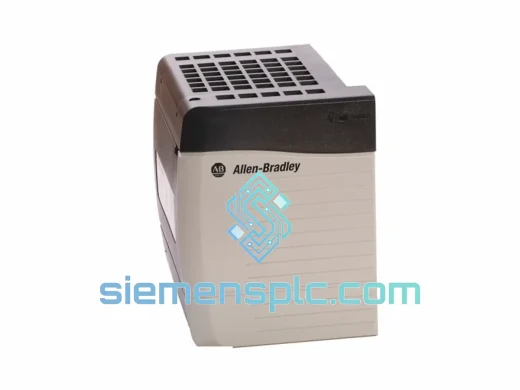
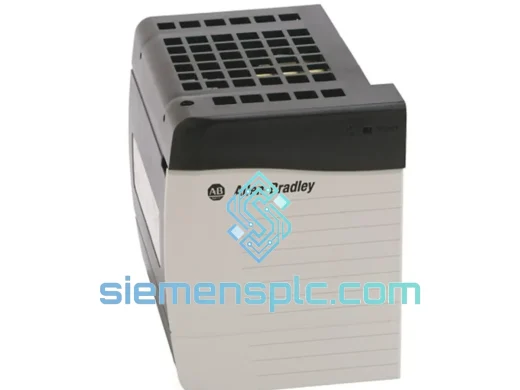
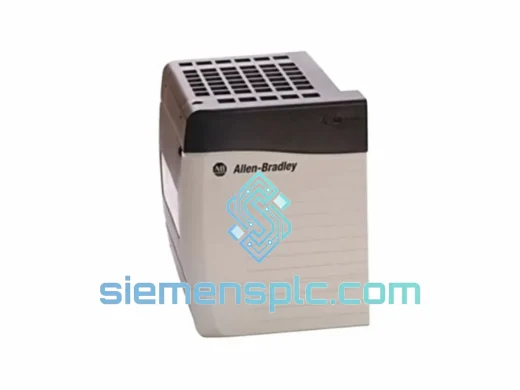
Allen-Bradley 1756-PAR2 Redundant Power Supply Adapter – ControlLogix Series
ControlLogix
Origin US
Redundant Power Supply Adapter
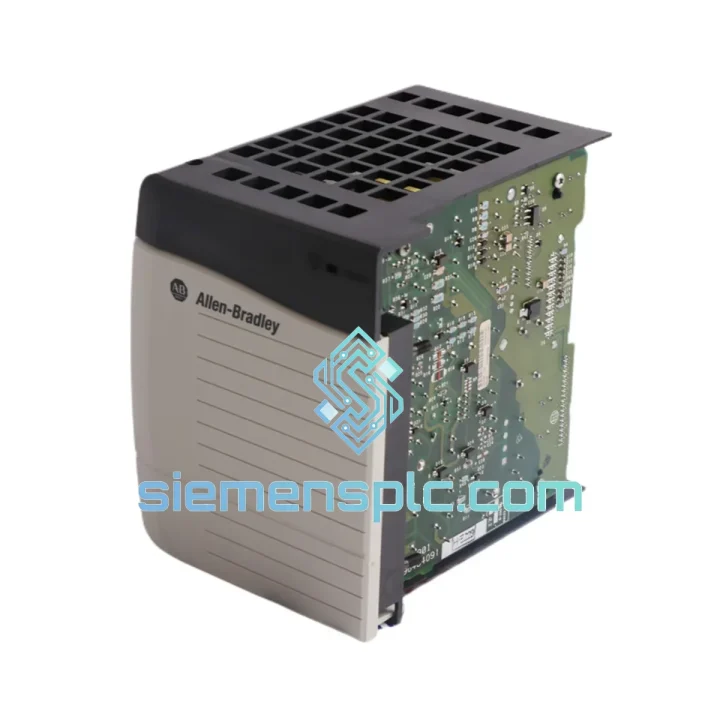
Request verified availability, condition, replacement risk review, packing options and courier lead time for 1756-PB75.
Click Request Quote and the part number is inserted into the inquiry form automatically.
Core fields for model confirmation and RFQ routing. Detailed product narrative remains below.
Your ControlLogix chassis just lost power. The line is cold. Every minute of unplanned downtime is burning through your production budget — and the clock is running. The Allen-Bradley 1756-PB75 is the 75 W DC-input backplane power supply that keeps your 1756-series chassis alive, and we have it on the shelf right now in Xiamen, ready to clear customs and land on your dock faster than your maintenance team can finish the incident report.
We don’t sell paper. We ship hardware. If you’re reading this at 2 AM with a dead chassis and a plant manager breathing down your neck, skip the rest and call us now.
URGENT REQUIREMENT? Contact: [email protected] | WhatsApp: +86 18359268345
| Parameter | Specification | Notes |
|---|---|---|
| Catalog Number | 1756-PB75 | ✅ Ready to Ship |
| Series / Platform | ControlLogix 1756 | — |
| Input Voltage Range | 18–32 VDC | ⚠ Must match DC bus voltage |
| Output Power | 75 W (backplane) | ⚠ Verify chassis load budget before swap |
| Backplane Rail — 1.2 V | 10 A max | Module count planning |
| Backplane Rail — 3.3 V | 4 A max | Module count planning |
| Backplane Rail — 5 V | 4 A max | Module count planning |
| Backplane Rail — 24 V | 2 A max | Module count planning |
| Chassis Compatibility | 1756-A4 / A7 / A10 / A13 / A17 | Occupies dedicated PSU slot |
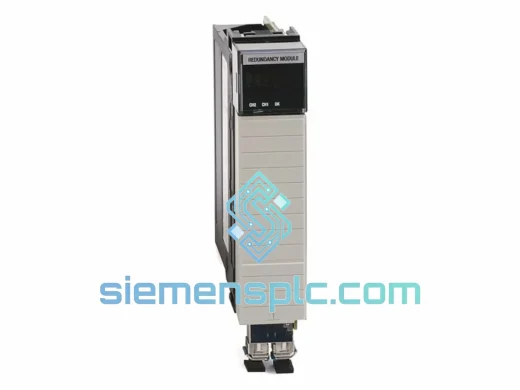
| Redundancy Support | Yes — requires 1756-PSCA2 adapter | N+1 high-availability config |
| Diagnostics | LED status indicators + FAULT relay output | Visible in Studio 5000 |
| Operating Temperature | 0 °C to 60 °C | Derate above 55 °C in sealed enclosures |
| Dimensions (H × W × D) | 147 × 45 × 144 mm | Single chassis slot width |
| Weight | ~980 g | — |
| Certifications | UL 508, CE, cUL, C-Tick | Pre-validated for panel compliance |
| Firmware Required | None | Plug-and-power — no commissioning software needed |
| Stock Status | ✅ IN STOCK — READY TO SHIP | Xiamen warehouse, same-day dispatch available |
Fifteen years of field calls on ControlLogix systems teach you the same lesson every time: a dead 1756-PB75 rarely announces itself cleanly. Here’s what you actually see on the floor and how to handle the swap without creating a second fault.
Common Failure Signatures
The most frequent presentation is a chassis that powers up momentarily then drops — the POWER LED flickers green for two to three seconds before going dark. This is almost always the internal bulk capacitor bank degrading under load, not an upstream DC supply issue. Confirm by measuring your 24 VDC input at the PSU terminals: if it reads steady 24 V and the chassis still won’t hold, the 1756-PB75 is your culprit.
A solid red FAULT LED with no POWER LED typically indicates an output short on one of the backplane rails — usually caused by a failed module drawing excessive current. Before condemning the PSU, pull all I/O modules and repower with only the controller installed. If the PSU comes up clean, add modules back one at a time to isolate the shorted card.
Intermittent nuisance faults logged as “Power Supply Fault” in the controller’s fault log, without a full chassis dropout, point to marginal output voltage on the 5 V or 3.3 V rail. This is a slow-death failure mode — the PSU is still running but no longer within spec. Don’t wait for a full dropout; schedule the replacement during the next maintenance window.
Replacement Procedure — Step by Step
Step 1: Record your controller project. Connect to the 1756-Lxx controller via Studio 5000 or RSLogix 5000 and upload the current project to your laptop. Do not skip this — a chassis power cycle can corrupt the controller’s non-volatile memory if the PSU fails mid-write.
Step 2: De-energize the DC input. Open the upstream DC breaker feeding the 1756-PB75 input terminals. Verify zero volts at the PSU input with a calibrated meter before touching the module. The 1756-PB75 does not have an internal isolation switch.
Step 3: Remove the failed PSU. Loosen the two captive screws on the PSU faceplate, slide the module straight out of the chassis slot. The backplane connector is a blind-mate type — pull straight, no rocking.
Step 4: Inspect the chassis backplane connector. Look for bent pins, carbon tracking, or moisture ingress. A failed PSU that shorted internally can damage the backplane connector. If you see any of these, the chassis itself needs evaluation before installing the replacement.
Step 5: Install the 1756-PB75 replacement. Slide the new module straight into the PSU slot until the faceplate is flush and the captive screws engage. Torque to 0.9 N·m (8 in·lb) — finger-tight plus a quarter turn. Reconnect your DC input wiring, observing polarity markings on the terminal block.
Step 6: Restore power and verify. Close the upstream breaker. The POWER LED should illuminate solid green within two seconds. Check Studio 5000 — the controller should come online and all I/O modules should re-establish communication within 30 seconds. If any module shows a fault, check that module’s backplane power draw against the 75 W budget.
Step 7: No dip switches, no firmware, no addressing. The 1756-PB75 is a passive power conversion module — there is no configuration required. It does not participate in the ControlLogix backplane communication protocol. Power it up and it works.
Revision Compatibility Note
The 1756-PB75 has been manufactured across multiple series revisions (A through D and beyond). All revisions are electrically and mechanically interchangeable in the chassis slot. If your system uses the 1756-PSCA2 redundant power adapter, confirm that both PSU units in the redundant pair are the same catalog number — mixing 1756-PB75 with 1756-PB72 in a redundant pair is not supported.
The 1756-PB75 was not designed for a climate-controlled server room. It was built for the kind of environments that destroy lesser hardware — and it has the test pedigree to prove it.
Rockwell Automation subjects the ControlLogix power supply series to IEC 60068-2 environmental stress testing before any unit reaches the field. Vibration testing runs at 2 g across the 10–500 Hz sweep range, simulating the continuous mechanical stress of pump stations, compressor skids, and conveyor drive panels where the chassis is bolted directly to the machine frame. The 1756-PB75 passes without connector loosening or output rail deviation.
Thermal cycling tests push the module from -25 °C storage to 60 °C operating temperature repeatedly, validating that the internal power conversion components — particularly the transformer core and output filter capacitors — maintain specification across the full thermal excursion. In practice, this means the module survives the daily heat-up and cool-down cycles of an outdoor enclosure in a desert climate or a northern Canadian winter without capacitor degradation accelerating beyond design life.
Humidity testing at 95% relative humidity non-condensing validates the conformal coating on the PCB assembly. For installations in coastal environments, chemical processing plants, or food and beverage facilities with regular washdown cycles, the 1756-PB75K variant adds a full conformal coat — electrically identical, mechanically identical, and rated for the same chassis slots. If your environment is aggressive, specify the K variant when you contact us.
The module’s input terminal block is rated for 18 AWG to 12 AWG wire, with a torque specification of 0.9 N·m. In high-vibration applications, use ferrule-terminated wire ends rather than bare stranded conductors to prevent fretting corrosion at the terminal interface — a failure mode that shows up as intermittent input undervoltage faults after 18 to 24 months of operation in vibrating panels.
Our warehouse is in Xiamen, China — one of the most logistics-efficient export hubs on the mainland, with direct access to DHL, FedEx, and UPS international express lanes. When you confirm your order, here is exactly what happens:
Same-day dispatch is available for orders confirmed before 14:00 CST. The unit is pulled from bonded warehouse stock, inspected, photographed, packed in anti-static ESD shielding with foam corner protection, and handed to the carrier the same afternoon. You receive a tracking number within two hours of dispatch.
Transit times from Xiamen to major industrial hubs: Europe (Germany, Netherlands, UK) — 2 to 3 business days via DHL Express. North America (USA, Canada, Mexico) — 2 to 4 business days via FedEx International Priority. Southeast Asia (Singapore, Thailand, Vietnam, Indonesia) — 1 to 2 business days. Middle East (UAE, Saudi Arabia, Qatar) — 2 to 3 business days. Australia and New Zealand — 3 to 4 business days.
All shipments include a commercial invoice, packing list, and certificate of origin for customs clearance. HS code 8537.10 applies to this module in most jurisdictions. For customers in the EU, we provide EORI-compliant documentation. For customers in the USA, we provide a formal entry-ready commercial invoice with HTS code pre-filled. If your procurement team requires a specific customs document format, tell us at the time of order — we accommodate it.
Expedited customs brokerage is available through our DHL and FedEx account relationships for shipments to countries with complex import procedures. We have cleared ControlLogix modules into Brazil, India, and Nigeria without delays — if you have had trouble importing industrial automation hardware before, talk to us before you assume it can’t be done quickly.
Every shipment is fully insured at declared value. In the event of transit damage, we file the claim and ship a replacement — you do not chase the carrier. Our goal is a replacement module on your bench, not a claims process.
📧 Email: [email protected]
📱 WhatsApp: +86 18359268345
🌐 Web: siemensplc.com
© 2026 siemensplc.com. All rights reserved.
We check the full part number, brand, series and visible nameplate information before quotation.
Sales confirms stock path, condition option, quantity and realistic lead time for export dispatch.
DHL, FedEx, UPS or buyer courier arrangements can be reviewed with packing requirements.
Similar brand or category products for fast comparison and multi-item RFQ lists.