Allen-Bradley
RFQ Ready
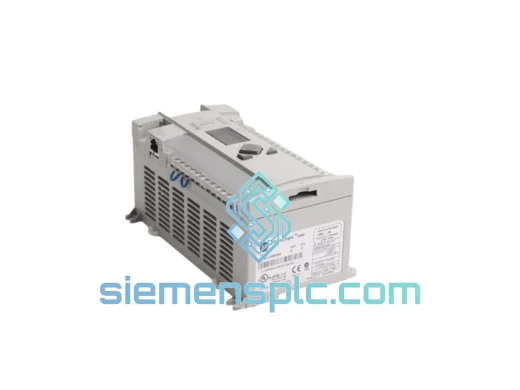
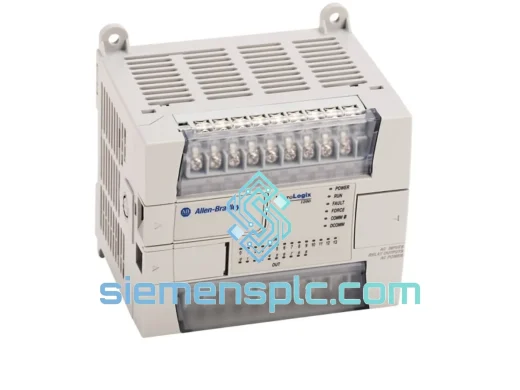
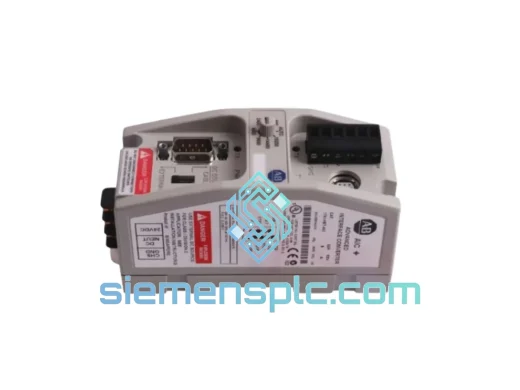
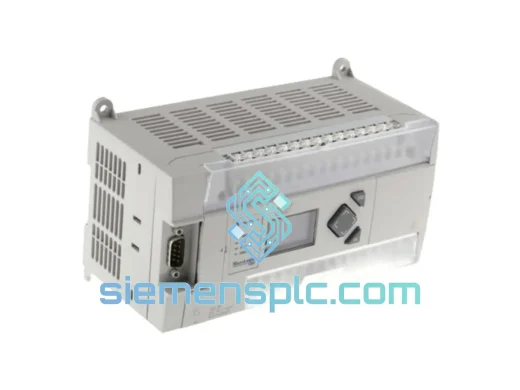
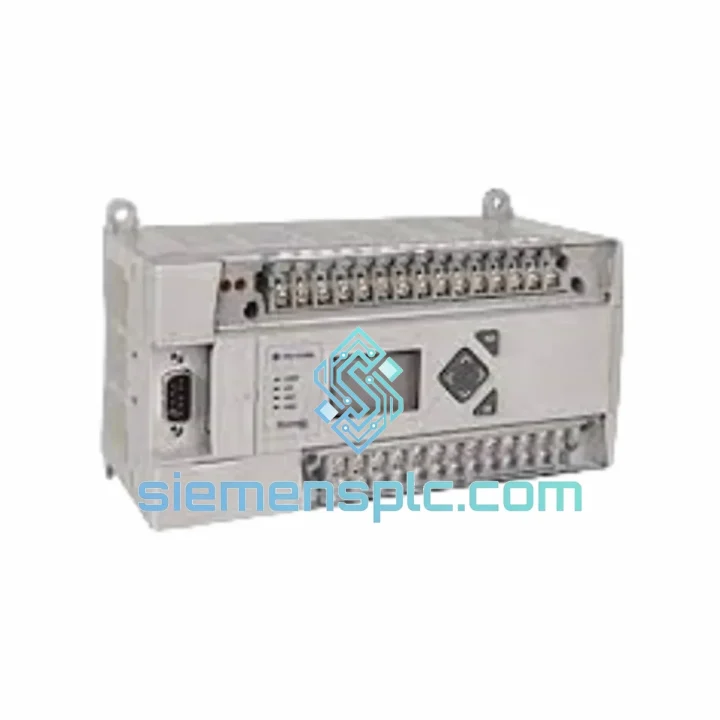
Allen-Bradley 1766-L32BXB PLC Controller
MicroLogix
Origin US
Programmable Logic Controller
Request verified availability, condition, replacement risk review, packing options and courier lead time for 1766-L32BWA.
Click Request Quote and the part number is inserted into the inquiry form automatically.
Core fields for model confirmation and RFQ routing. Detailed product narrative remains below.
The Allen-Bradley 1766-L32BWA is a 32-point fixed I/O programmable logic controller within Rockwell Automation’s MicroLogix 1400 platform. It integrates 20 DC sink/source inputs and 12 relay outputs into a single base unit, powered by a 120/240V AC supply rail. The controller’s architecture is built around a 32-bit RISC-class processor executing ladder logic, function block, and structured text instructions with a deterministic scan cycle — a critical requirement in applications where output response latency directly affects process quality, such as dosing systems, conveyor indexing, and batch sequencing.
Unlike entry-level compact PLCs that treat Ethernet as an optional add-on, the 1766-L32BWA integrates a native EtherNet/IP port at the hardware level, sharing the same backplane bus as the CPU. This eliminates the protocol translation overhead and latency penalty associated with external communication adapters. The result is a controller capable of participating in a CIP-based control network — exchanging I/O data with remote adapters, HMIs, and SCADA systems — while simultaneously executing its local scan cycle without measurable jitter under normal network load conditions.
Real-time Stock & RFQ: [email protected] | WhatsApp: +86 18359268345
| Parameter | Specification |
|---|---|
| Catalog Number | 1766-L32BWA |
| Platform | MicroLogix 1400 |
| Manufacturer | Allen-Bradley / Rockwell Automation |
| Total I/O Points (Base) | 32 (20 inputs / 12 outputs) |
| Input Type | 24V DC, sink/source (IEC Type 1 & Type 3) |
| Input ON Voltage | ≥ 15V DC |
| Input OFF Voltage | ≤ 5V DC |
| Input Impedance | Approx. 3 kΩ at 24V DC |
| Output Type | Relay (Form A, SPST-NO) |
| Output Voltage Range | 5–240V AC / 5–30V DC |
| Output Current (per point) | 2.0 A continuous (resistive load) |
| Output Current (per common) | 8.0 A max |
| Relay Mechanical Life | ≥ 10,000,000 operations |
| Relay Electrical Life | ≥ 100,000 operations at rated load |
| Power Supply Input | 85–265V AC, 47–63 Hz |
| Power Consumption | Max 50 VA (base unit) |
| User Program Memory | 10K words |
| Data Memory | 10K words |
| Ethernet Port | 10/100 Mbps, RJ-45, EtherNet/IP (CIP) |
| Serial Port — Channel 0 | RS-232, DF1 Full/Half Duplex, DH-485, Modbus RTU, ASCII |
| Serial Port — Channel 1 | RS-232 / RS-485, Modbus RTU, DF1, ASCII |
| High-Speed Counter Inputs | 4 channels, up to 20 kHz |
| HSC Modes | Accumulator, Period/Rate, Quadrature Encoder (×1, ×4) |
| PTO/PWM Outputs | 2 channels, up to 100 kHz (transistor output variants) |
| PID Loops | Up to 8 (software-based, 10 ms minimum loop update) |
| Expansion Modules | Up to 7 × MicroLogix 1762 series |
| Max Expanded I/O | Approx. 136 points (base + 7 modules) |
| Real-Time Clock | Built-in, battery-backed (±2 min/month accuracy) |
| LCD Operator Panel | 4-line × 20-character, 4 navigation keys |
| Operating Temperature | 0°C to +60°C (32°F to 140°F) |
| Storage Temperature | −40°C to +85°C |
| Relative Humidity | 5% to 95% non-condensing |
| Vibration (Operating) | 2g, 10–500 Hz (IEC 60068-2-6) |
| Shock (Operating) | 15g, 11 ms half-sine (IEC 60068-2-27) |
| EMC Immunity | IEC 61000-4-2 (ESD), IEC 61000-4-4 (EFT), IEC 61000-4-5 (Surge) |
| Certifications | UL 508, CE (EN 61131-2), CSA C22.2 No. 142, RCM |
| Enclosure Rating | IP20 (open type, panel mount) |
| Dimensions (W × H × D) | Approx. 180 × 90 × 87 mm |
| Weight | Approx. 900 g |
| Programming Software | RSLogix 500 / Connected Components Workbench |
| Warranty | 12 months from date of shipment |
Input Isolation Architecture: The 1766-L32BWA’s 20 DC inputs employ optical isolation between the field-side terminals and the internal logic bus. Each input channel passes the field signal through an LED-photodetector pair rated for a minimum isolation voltage of 500V DC. This galvanic barrier prevents ground loop currents — common in industrial panels where multiple field devices share a common return — from coupling noise into the CPU’s data bus. The input filter time constant is software-configurable per channel (0 ms to 32 ms in discrete steps), allowing the engineer to trade off noise rejection against response speed depending on the sensor type: proximity switches typically run at 1–2 ms, while mechanical contacts benefit from 8–16 ms debounce filtering.
Relay Output Contact Architecture: The 12 relay outputs use Form A (SPST-NO) contacts with a common-per-group wiring topology: outputs O:0/0 through O:0/3 share one common terminal, O:0/4 through O:0/7 share a second, and O:0/8 through O:0/11 share a third. This grouping allows each output group to switch a different voltage rail — for example, Group 1 at 24V DC for solenoid valves, Group 2 at 120V AC for motor starters, and Group 3 at 240V AC for heating elements — within a single base unit. The relay coil drive circuit is internally powered from the backplane 5V DC rail, so relay switching does not load the field power supply.
EtherNet/IP Backplane Integration: The Ethernet MAC/PHY is connected directly to the CPU’s internal peripheral bus rather than through a UART bridge. This means EtherNet/IP implicit messaging (Class 1 I/O connections) is handled by the CPU’s DMA controller, not by interrupt-driven software polling. The practical consequence is that the controller can sustain multiple concurrent CIP connections — typically up to 32 Class 3 (explicit) and 4 Class 1 (implicit) connections simultaneously — without the Ethernet activity degrading the ladder scan cycle time. The 10/100 Mbps auto-negotiation port supports both half- and full-duplex operation, with the controller defaulting to auto-negotiate on power-up.
High-Speed Counter Subsystem: The four HSC channels operate from a dedicated hardware counter circuit clocked independently of the main CPU scan. This means counter accumulation continues accurately even during a long scan cycle caused by complex math or communication processing. Each HSC channel supports quadrature encoder input (×1 and ×4 decode modes), enabling direct connection to incremental rotary encoders for position feedback without an external encoder interface module. At 20 kHz maximum count rate, the HSC can resolve encoder positions at speeds up to 1,200 RPM for a 1,000 PPR encoder in ×1 mode, or 300 RPM in ×4 mode.
Battery-Backed RTC and Memory Retention: Program memory is stored in non-volatile flash — no battery is required to retain the user program across power cycles. The battery (1747-BA compatible) backs only the real-time clock and the data file values that the programmer designates as retentive. This design choice means a dead battery does not cause program loss; it only affects RTC accuracy and retentive data values, a significantly safer failure mode than older EEPROM-dependent architectures.
Every Allen-Bradley 1766-L32BWA unit dispatched from our Xiamen, China facility is sourced directly from Rockwell Automation’s authorized distribution network or verified factory-sealed surplus channels with full lot traceability. Units are not repackaged or relabeled. The original Rockwell Automation holographic authentication label, date code, and serial number remain intact and verifiable against Rockwell’s product authentication portal.
Pre-shipment inspection covers: label and hologram integrity check against Rockwell Automation’s counterfeit identification guidelines; connector pin condition inspection under magnification; housing seam and screw torque verification; and power-on functional test with communication port handshake confirmation for units where test fixtures are available. Units that do not pass all inspection criteria are quarantined and not shipped.
Packaging uses anti-static PE foam inserts, desiccant sachets, and double-wall corrugated cartons rated for international air freight handling. For sea freight shipments, additional moisture barrier bags with humidity indicator cards are used. Export documentation — commercial invoice, packing list, certificate of conformity, and HS code declaration (8537.10) — is prepared for every shipment. Country-of-origin certificates and FORM E (ASEAN preferential tariff) are available on request.
Logistics partners include DHL Express, FedEx International Priority, and UPS Worldwide Expedited for time-sensitive orders. Standard transit times from Xiamen to major industrial hubs: Southeast Asia 2–4 business days, Europe 3–5 business days, North America 4–6 business days, Middle East 3–5 business days. Sea freight consolidation is available for bulk orders. All shipments include full tracking and are covered by cargo insurance.
A 12-month warranty from the date of shipment covers manufacturing defects and premature component failure under normal operating conditions. Warranty claims are processed with a replacement-first policy: a replacement unit is dispatched upon receipt of the defective unit and confirmation of the fault condition. No-fault-found returns are accepted within 30 days of shipment with prior authorization.
Email: [email protected]
WhatsApp: +86 18359268345
Web: siemensplc.com
Location: Xiamen, China
© 2026 siemensplc.com. All rights reserved.
We check the full part number, brand, series and visible nameplate information before quotation.
Sales confirms stock path, condition option, quantity and realistic lead time for export dispatch.
DHL, FedEx, UPS or buyer courier arrangements can be reviewed with packing requirements.
Similar brand or category products for fast comparison and multi-item RFQ lists.