
Allen-Bradley
In Stock OK
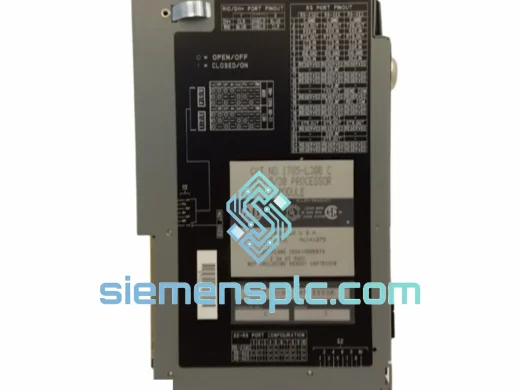
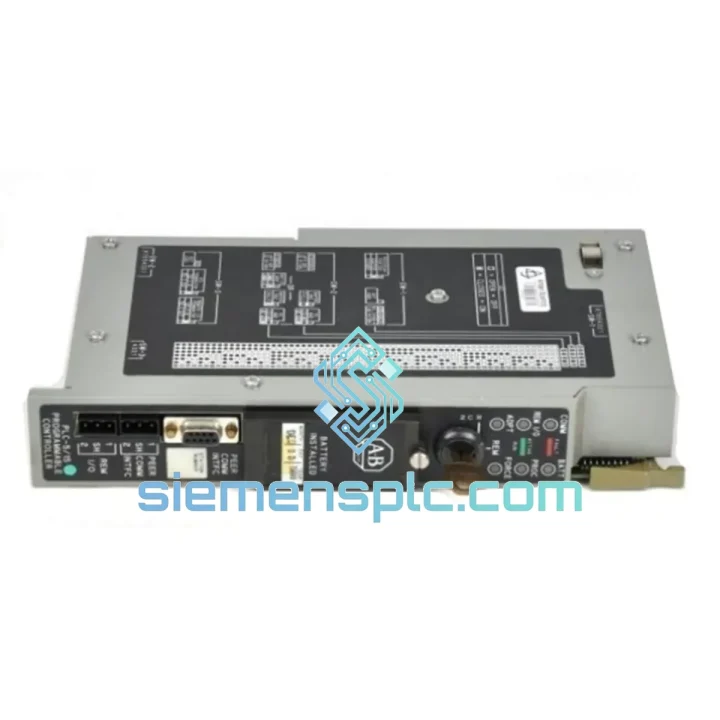
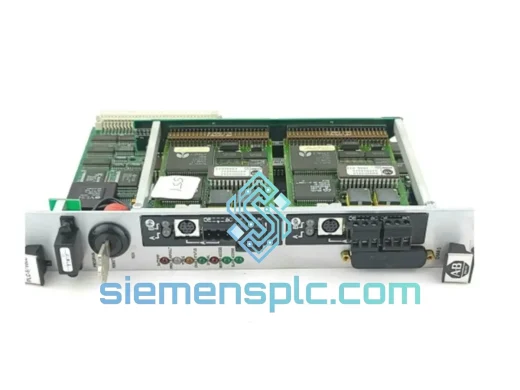
Allen-Bradley 1785-LT/B PLC Processor Module – PLC-5 Series
Request verified availability, condition, replacement risk review, packing options and courier lead time for 1785-LT/B.
BrandAllen-Bradley
Part Number1785-LT/B
ConditionAvailability Check
Lead TimeRFQ Confirmation
DocumentsDatasheet / photos by RFQ
ShippingExport packing available
Auto-filled RFQ
1785-LT/B
Click Request Quote and the part number is inserted into the inquiry form automatically.
- Reply by email: [email protected]
- WhatsApp / Tel: +86 18359268345
- Mon-Sat 9:00-18:00 GMT+8
Procurement Data
Key Product Information
Core fields for model confirmation and RFQ routing. Detailed product narrative remains below.
- Brand
- Allen-Bradley
- Primary Part Number
- 1785-LT/B
- Product Type
- PLC Processor Module
- Series / Family
- PLC-5
- Country of Origin
- US
- Catalog Category
- PLCs & Controllers
- Operating Temp.
- 0 °C to +60 °C
Model confirmed for inquiry
1785-LT/B
Send quantity, destination and urgency. The RFQ form keeps this part number attached.
Request Quote
Product Overview
Allen-Bradley 1785-LT/B: Small-Class CPU Architecture in the PLC-5 Control Hierarchy
The 1785-LT/B occupies a well-defined position within the Allen-Bradley PLC-5 processor family: it is the entry-level CPU variant engineered for applications where the full I/O density of the 1785-L40 or 1785-L80 is unnecessary, but where the deterministic scan performance and native DH+ communication of the PLC-5 platform remain non-negotiable. Deployed across petrochemical batch reactors, automotive transfer lines, water treatment pump stations, and utility substation auxiliary control panels, this processor has accumulated a multi-decade field record that few legacy platforms can match.
Unlike general-purpose embedded controllers, the 1785-LT/B was designed from the ground up for the 1771 backplane ecosystem. Its internal architecture reflects the engineering priorities of the early 1990s industrial control market: deterministic ladder scan execution, robust DH+ token-ring communication, and a memory map structured around the PLC-5 file-based data model. Understanding these design decisions is essential for engineers evaluating replacement procurement or planning phased migration programs.
📦 Real-time Stock & RFQ: [email protected] | WhatsApp: +86 18359268345
Technical Parameters
| Parameter | Specification |
|---|---|
| Catalog Number | 1785-LT/B |
| Platform | Allen-Bradley PLC-5 (Rockwell Automation) |
| Processor Class | Small (LT series) |
| Series Revision | Series B |
| User Program Memory | 16K words (16,384 words) |
| Data Table Memory | Shared within 16K word space; file-based addressing (N, F, B, T, C, R, I, O, S) |
| Maximum I/O Points | 512 (local + remote combined) |
| Local I/O Chassis | 1771 I/O chassis, any slot |
| Remote I/O Link | 1771 RIO, up to 3,048 m @ 57.6 Kbaud |
| Communication Port 1 | DH+ (Data Highway Plus), token-ring, 57.6 / 115.2 Kbaud |
| Communication Port 2 | RS-232C, DF1 full/half duplex or ASCII |
| Scan Time (typical) | ~1 ms per 1K of ladder logic |
| Programming Software | RSLogix 5 / 6200 Series (AI Series) |
| Backplane Power Draw | 1771-series backplane; refer to 1771-P power supply sizing guide |
| Operating Temperature | 0 °C to +60 °C |
| Storage Temperature | -40 °C to +85 °C |
| Relative Humidity | 5% to 95%, non-condensing |
| Vibration Resistance | 2 g, 10–500 Hz (per IEC 60068-2-6) |
| Shock Resistance | 30 g, 11 ms half-sine (per IEC 60068-2-27) |
| Certifications | UL Listed, CSA Certified, CE Marked (per original OEM listing) |
| Approximate Weight | 1.4 kg |
| Warranty (Supplied Unit) | 12 months from date of shipment |
Hardware Logical Analysis
Backplane Bus Architecture: The 1785-LT/B interfaces with the 1771 backplane via a parallel I/O bus operating at TTL logic levels. The processor holds bus mastership and arbitrates all read/write cycles to I/O modules installed in the same chassis. Each scan cycle, the CPU performs a sequential I/O scan: it reads all input module image data into the input image table (I-file), executes the ladder program against the current data table state, then writes the output image table (O-file) back to output modules. This deterministic, synchronous scan model eliminates the race conditions inherent in interrupt-driven I/O architectures, which is why PLC-5 systems remain preferred in safety-adjacent applications where scan-cycle predictability is a design requirement.
DH+ Token-Ring Communication: The DH+ port implements a token-passing protocol over a shielded twisted-pair bus. The token-ring mechanism guarantees bounded message latency — each node receives the token within a calculable maximum time based on node count and baud rate. At 57.6 Kbaud with a 32-node network, worst-case token rotation time remains under 100 ms, which is sufficient for HMI data polling and peer-to-peer MSG instruction execution. This bounded latency characteristic distinguishes DH+ from Ethernet-based protocols in environments where message delivery timing must be analytically verified rather than statistically estimated.
EMC Design Considerations: The 1785-LT/B’s PCB layout follows the shielding and ground-plane practices standard to Rockwell’s 1771-era hardware: the DH+ transceiver circuitry is galvanically isolated from the backplane logic supply, and the RS-232C port incorporates ESD protection diodes rated to IEC 61000-4-2 Level 2. The 1771 chassis itself provides a Faraday-cage enclosure effect when properly grounded, attenuating radiated emissions from the processor’s clock circuitry. In high-EMI environments (variable frequency drives, arc welders, high-current bus bars), supplementary ferrite cores on DH+ and RS-232C cables are recommended per Rockwell’s installation guidelines.
Memory Map and File Structure: Program and data memory share the 16K word address space. The processor allocates fixed file types (S-file for processor status, I/O image files, bit/integer/float/timer/counter/control files) with user-configurable file sizes. The S-file (Status file, file 2) exposes 164 words of processor diagnostic and configuration data accessible via MSG instructions from remote nodes — a feature that enables remote health monitoring without dedicated diagnostic hardware.
Remote I/O Adapter Coordination: When remote I/O racks are configured, the 1785-LT/B acts as the RIO scanner, polling 1771-ASB adapter modules over the RIO link. The scanner maintains a discrete I/O image for each remote rack slot, updated each scan cycle. Rack-level fault detection is handled by the ASB adapter, which asserts a fault signal to the processor if communication is lost, allowing the ladder program to execute a controlled fault response rather than entering an undefined state.
System Integration Benefits
- Zero-Modification Drop-In Replacement: The 1785-LT/B installs into any slot of a 1771 chassis without hardware modification, re-wiring, or I/O module reconfiguration. The existing RSLogix 5 project file uploads directly to the replacement processor, eliminating re-programming labor costs that can exceed the hardware cost in skilled-labor markets.
- Deterministic Scan-Cycle Execution: The synchronous ladder scan model delivers consistent, calculable cycle times. For a 16K program at typical logic density, scan times remain in the 8–20 ms range, providing the real-time response margin required for closed-loop PID control of process variables such as flow, pressure, and temperature.
- Native DH+ Network Participation: The processor joins existing DH+ networks without protocol converters or gateway hardware. PanelView HMIs, SCADA hosts, and peer PLC-5 processors communicate directly via MSG instructions, preserving the existing network topology and eliminating single-point-of-failure gateway nodes.
- RSLogix 5 Project Continuity: All existing ladder logic, data table configurations, and I/O addressing remain valid after processor replacement. Engineers familiar with the existing program can perform startup and verification without retraining on a new programming environment.
- S-File Diagnostic Transparency: The processor status file provides 164 words of real-time diagnostic data including scan time, fault codes, I/O fault table, and communication status. This data is accessible remotely via MSG instructions, enabling SCADA systems to monitor processor health without physical access to the control panel.
- Broad 1771 I/O Module Compatibility: The 1785-LT/B is compatible with the complete 1771 I/O module library — discrete 24 VDC, 120 VAC, 220 VAC; analog 4–20 mA, ±10 V; thermocouple; RTD; high-speed counter; and specialty modules. No I/O hardware changes are required when replacing the processor.
- DF1 Protocol SCADA Integration: The RS-232C port supports DF1 full-duplex and half-duplex protocols, enabling direct connection to SCADA hosts, data historians, and serial-to-Ethernet converters without additional protocol translation hardware. ASCII mode supports direct communication with barcode readers, weigh scales, and serial printers.
- Extended Temperature and Humidity Tolerance: Rated for 0–60 °C operation and 5–95% RH non-condensing, the processor operates reliably in non-climate-controlled industrial enclosures, outdoor substations with thermal management, and high-humidity process areas without derating.
- Phased Migration Compatibility: For facilities planning eventual migration to ControlLogix or CompactLogix, the 1785-LT/B supports interim DH+ to EtherNet/IP bridging via 1756-DHRIO or 1784-PKTX cards, allowing new Logix-based systems to exchange data with the existing PLC-5 installation during the transition period.
- Documented MTBF and Field History: PLC-5 processors deployed in controlled industrial environments have demonstrated service lives exceeding 20 years. The 1785-LT/B’s component selection and PCB construction reflect the reliability engineering standards of Rockwell’s 1771-era manufacturing, providing a statistically validated basis for maintenance interval planning.
Quality Assurance & Global Logistics
Every 1785-LT/B unit supplied by siemensplc.com undergoes a structured pre-shipment verification process before dispatch from our Xiamen, China facility. Inspection covers physical label authenticity (date code, series designation, catalog number format), PCB marking consistency, connector pin integrity, and ESD packaging condition. Units with any indication of counterfeit manufacture, physical damage, or label tampering are rejected and quarantined.
Functional power-on verification is available upon request and is recommended for critical replacement applications. A certificate of conformance documenting inspection findings is issued with each shipment for customers operating under ISO 9001, FDA 21 CFR Part 11, or equivalent quality management frameworks.
Shipments are dispatched via DHL Express International Priority or FedEx International Priority from Xiamen Gaoqi International Airport, with typical transit times of 3–5 business days to North America and Europe, and 2–4 business days to Southeast Asia. All shipments include full tracking, commercial invoice, and packing list documentation. Export classification and customs documentation are prepared in compliance with Chinese export regulations and destination country import requirements.
Our 12-month warranty covers verified functional units against defects in materials and workmanship under normal operating conditions. Warranty claims are processed within 5 business days of receipt of the returned unit, with replacement or credit issued upon confirmation of the defect.
Contact Information
Email: [email protected]
WhatsApp: +86 18359268345
Web: siemensplc.com
Location: Xiamen, China
© 2026 siemensplc.com. All rights reserved.
Ready to quote
[email protected]
Send This Part Number to Sales
RFQ workflow
Quality workflow ->
Confirmation Process
01Model confirmation
We check the full part number, brand, series and visible nameplate information before quotation.
02Availability reply
Sales confirms stock path, condition option, quantity and realistic lead time for export dispatch.
03Packing & courier
DHL, FedEx, UPS or buyer courier arrangements can be reviewed with packing requirements.
Continue sourcing
Browse full catalog ->
Related Automation Parts
Similar brand or category products for fast comparison and multi-item RFQ lists.
Allen-Bradley
RFQ Ready
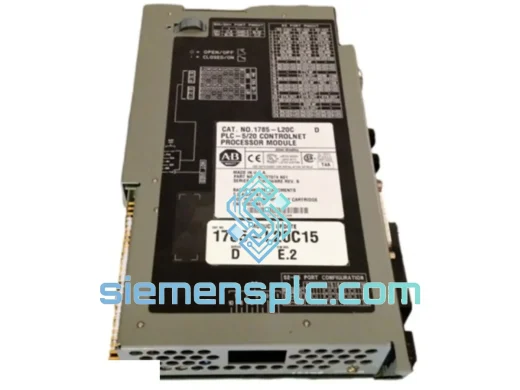
Allen-Bradley 1788-CNC CNC Interface Card – ControlNet Series
PLC-5
Origin US
CNC Interface Card
Allen-Bradley
RFQ Ready
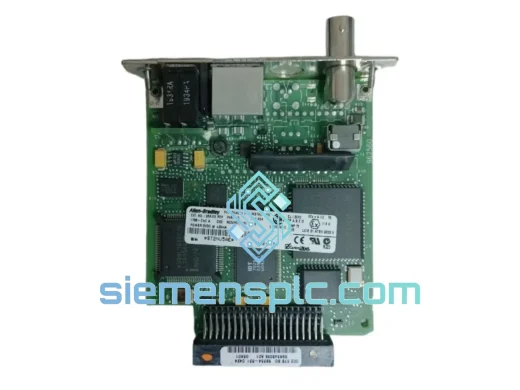
Allen-Bradley 1785-V40V CPU Module – PLC-5 Series
PLC-5
Origin US
CPU Module