Allen-Bradley
RFQ Ready
Allen-Bradley 1786-TPS Industrial Network Connector – 1786 Series
1786 Series
Origin US
Industrial Network Connector
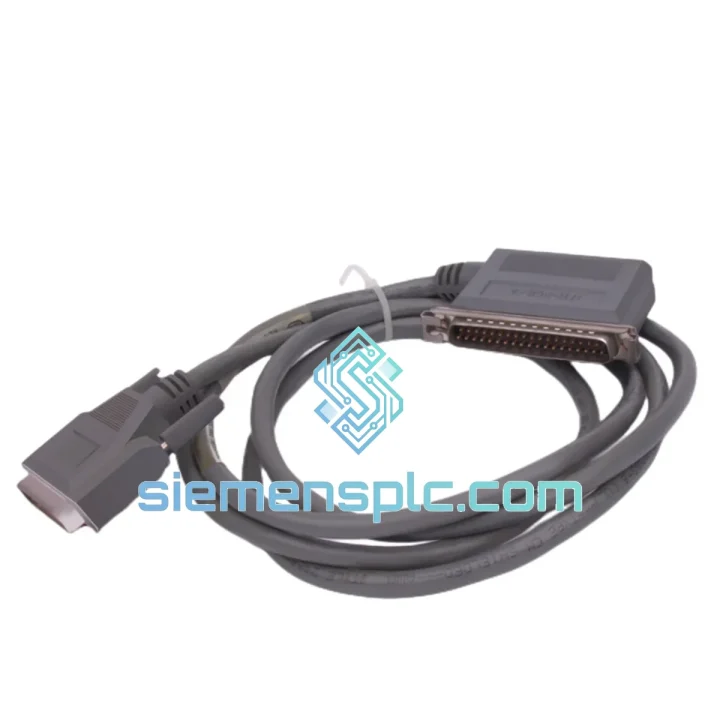
Request verified availability, condition, replacement risk review, packing options and courier lead time for 1786-RG6F.
Click Request Quote and the part number is inserted into the inquiry form automatically.
Core fields for model confirmation and RFQ routing. Detailed product narrative remains below.
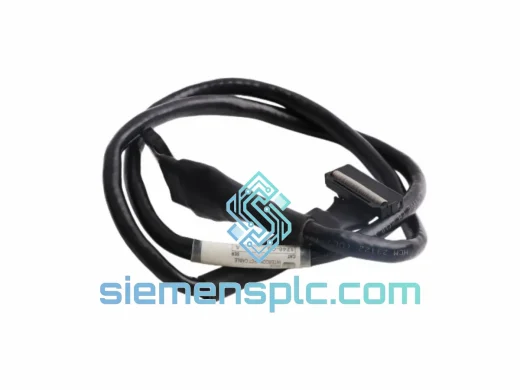
The Allen-Bradley 1786-RG6F is a factory-terminated, F-connector-compatible RG-6 coaxial cable engineered specifically for ControlNet physical-layer trunk segments. Within a ControlNet topology, the trunk cable is the primary signal-bearing medium that interconnects all network nodes — PLCs, I/O adapters, drives, and HMI stations — across a shared, time-division-multiplexed bus. The 1786-RG6F is not a generic coaxial cable adapted for industrial use; it is a purpose-specified component whose electrical parameters are matched to the ControlNet media specification defined by ControlNet International (CI) and adopted into IEC 61158 Type 2.
ControlNet operates at a fixed 5 Mbit/s data rate over a 75 Ω coaxial medium. Signal integrity across the full allowable trunk length of 1,000 m (unrepeated) depends on tight control of characteristic impedance, attenuation per unit length, and structural return loss (SRL). The 1786-RG6F achieves a nominal impedance of 75 Ω ± 3 Ω, an attenuation figure of approximately 6.5 dB/100 m at 5 MHz, and an SRL ≥ 23 dB across the 1–10 MHz band — all within the CI media specification window. Deviation from these parameters at any cable segment introduces reflections that degrade the network’s NUT (Network Update Time) determinism and can cause intermittent node dropouts that are notoriously difficult to diagnose without a ControlNet analyzer.
The cable’s center conductor is a solid copper-clad steel (CCS) wire, which provides the tensile strength necessary for fixed industrial installations while maintaining the conductivity required for low-loss RF transmission at 5 MHz. The dielectric is a foamed polyethylene (FPE) core, which reduces the velocity of propagation loss compared to solid PE and lowers the cable’s capacitance per unit length — a parameter that directly affects the network’s maximum node count and trunk length budget. The dual-layer shielding — an aluminum-polyester foil bonded to the dielectric, followed by an aluminum braid — achieves a transfer impedance low enough to suppress common-mode noise ingress from adjacent power conductors, variable-frequency drives (VFDs), and high-current switching equipment that are endemic in manufacturing environments.
The outer jacket is a UV-stabilized PVC compound rated for continuous operation from −20 °C to +75 °C. This temperature range covers the majority of indoor industrial installations, including those in proximity to process heat sources. For outdoor or direct-burial applications, the 1786-RG6F is not the appropriate selection; Rockwell Automation’s 1786-series includes armored and plenum-rated variants for those environments.
From a system architecture standpoint, the 1786-RG6F is used exclusively on the trunk segment. Drop cables — the short coaxial segments that connect individual nodes to the trunk via 1786-series BNC taps — use a different, lower-impedance cable (1786-RG6) with a BNC connector interface. Confusing trunk and drop cable types is a common installation error that produces impedance mismatches at tap points, increasing reflected energy and reducing the effective network margin. Procurement teams should verify the connector type (F vs. BNC) before ordering to ensure the correct cable is specified for each segment role.
Real-time Stock & RFQ: [email protected] | WhatsApp: +86 18359268345
| Parameter | Value / Specification |
|---|---|
| Part Number | 1786-RG6F |
| Manufacturer | Allen-Bradley / Rockwell Automation |
| Series | 1786 ControlNet Media |
| Cable Type | RG-6 Coaxial, F-connector (trunk segment) |
| Network Protocol | ControlNet (IEC 61158 Type 2 / CI Specification) |
| Data Rate | 5 Mbit/s |
| Characteristic Impedance | 75 Ω ± 3 Ω |
| Attenuation @ 5 MHz | ≤ 6.5 dB / 100 m |
| Structural Return Loss (SRL) | ≥ 23 dB (1–10 MHz) |
| Center Conductor | Solid copper-clad steel (CCS) |
| Dielectric | Foamed polyethylene (FPE) |
| Shield Layer 1 | Aluminum-polyester bonded foil (100% coverage) |
| Shield Layer 2 | Aluminum braid (≥ 60% optical coverage) |
| Outer Jacket | UV-stabilized PVC |
| Operating Temperature | −20 °C to +75 °C |
| Connector Interface | F-type (trunk use) |
| Max Trunk Length (unrepeated) | 1,000 m |
| Compliance | CE, RoHS 2011/65/EU, CI Media Specification |
| Warranty | 12 months from date of shipment |
The 1786-RG6F’s dual-shield architecture addresses two distinct interference mechanisms that coexist in industrial plant environments. The inner foil layer — bonded directly to the FPE dielectric — provides a continuous, 100%-coverage electrostatic shield that attenuates capacitively coupled electric-field interference. This is the dominant noise coupling mechanism from adjacent signal cables and sensor wiring. The outer aluminum braid provides a low-resistance return path for shield currents induced by magnetic-field interference from power cables and motor windings. The combination of foil and braid achieves a transfer impedance in the range of 5–15 mΩ/m at 5 MHz, which is substantially lower than single-shield constructions and is necessary to maintain the ControlNet receiver’s signal-to-noise margin at the end of a maximum-length trunk.
The FPE dielectric is a critical design choice. Foamed PE has a relative permittivity (εr) of approximately 1.45–1.55, compared to 2.25 for solid PE. This lower εr increases the propagation velocity to approximately 82–85% of the speed of light, which reduces the cable’s capacitance per unit length to approximately 52 pF/m. Lower capacitance per unit length directly increases the maximum allowable trunk length for a given attenuation budget and reduces the reactive loading on the ControlNet driver output stage, improving waveform fidelity at high node counts.
The CCS center conductor provides a tensile strength of approximately 180–220 N, which is adequate for fixed conduit installations and cable tray routing. The steel core prevents the permanent elongation (cold flow) that can occur with pure copper conductors in installations where the cable is subject to sustained mechanical tension — a condition that would alter the conductor cross-section and shift the cable’s impedance out of specification. For installations requiring repeated flexing (e.g., cable carriers on moving machine axes), the 1786-RG6F is not the appropriate selection; stranded-conductor variants are required for flex-cycle applications.
The F-connector interface on the 1786-RG6F is mechanically distinct from the BNC interface used on drop cables. The F-connector’s threaded coupling mechanism provides a more secure, vibration-resistant connection than the BNC bayonet lock, which is appropriate for trunk segments where connectors are typically installed once and remain undisturbed for the life of the installation. The F-to-BNC tap adapters in the 1786-series (e.g., 1786-TPYR) provide the impedance-matched transition between the 75 Ω trunk and the tap’s internal circuitry.
Every 1786-RG6F unit supplied through siemensplc.com is sourced from verified distribution channels and carries original Allen-Bradley / Rockwell Automation labeling, date codes, and packaging. Our procurement process retains supplier documentation for each batch, providing a traceable chain of custody from manufacturer to end customer. Physical inspection on receipt covers label integrity, part number marking, connector condition, and jacket continuity. Electrical pre-shipment checks verify center conductor continuity and shield integrity using calibrated test equipment.
Shipments originate from our Xiamen, China warehouse. Xiamen’s port infrastructure supports both air freight and sea freight consolidation, with direct connections to major logistics hubs in Europe, Southeast Asia, the Middle East, and North America. Standard in-stock orders are processed and handed to the carrier within 1–3 business days of order confirmation. Air freight via DHL Express or FedEx International Priority typically achieves delivery in 3–7 business days to most destinations. For bulk or project orders, LCL and FCL sea freight options are available with full export documentation: commercial invoice, packing list, certificate of origin, and HS code 8544.42 customs classification.
A 12-month warranty covers manufacturing defects and specification non-conformance from the date of shipment. Warranty claims are processed with replacement dispatch within 5 business days of confirmed defect verification. Certificate of conformance is available upon request for each order.
Email: [email protected]
WhatsApp: +86 18359268345
Web: siemensplc.com
Location: Xiamen, China
© 2026 siemensplc.com. All rights reserved.
We check the full part number, brand, series and visible nameplate information before quotation.
Sales confirms stock path, condition option, quantity and realistic lead time for export dispatch.
DHL, FedEx, UPS or buyer courier arrangements can be reviewed with packing requirements.
Similar brand or category products for fast comparison and multi-item RFQ lists.