Allen-Bradley
RFQ Ready
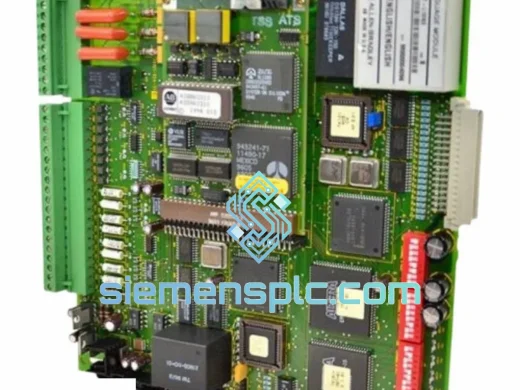
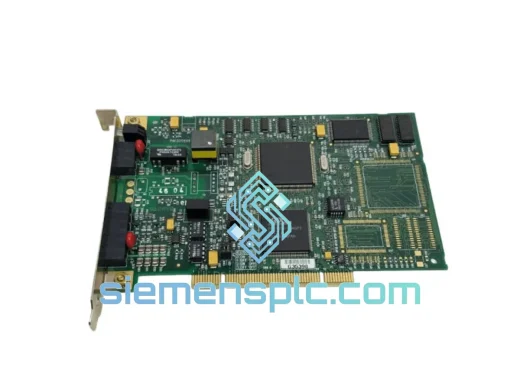
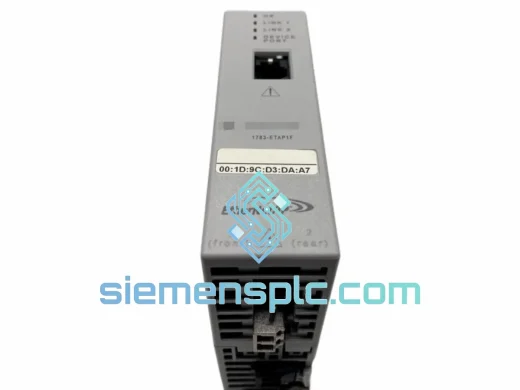
Allen-Bradley 1788-CNET ControlNet Communication Card – 1788 Series
1788 Series
Origin US
ControlNet Communication Module
Request verified availability, condition, replacement risk review, packing options and courier lead time for 1788-CN2DN.
Click Request Quote and the part number is inserted into the inquiry form automatically.
Core fields for model confirmation and RFQ routing. Detailed product narrative remains below.
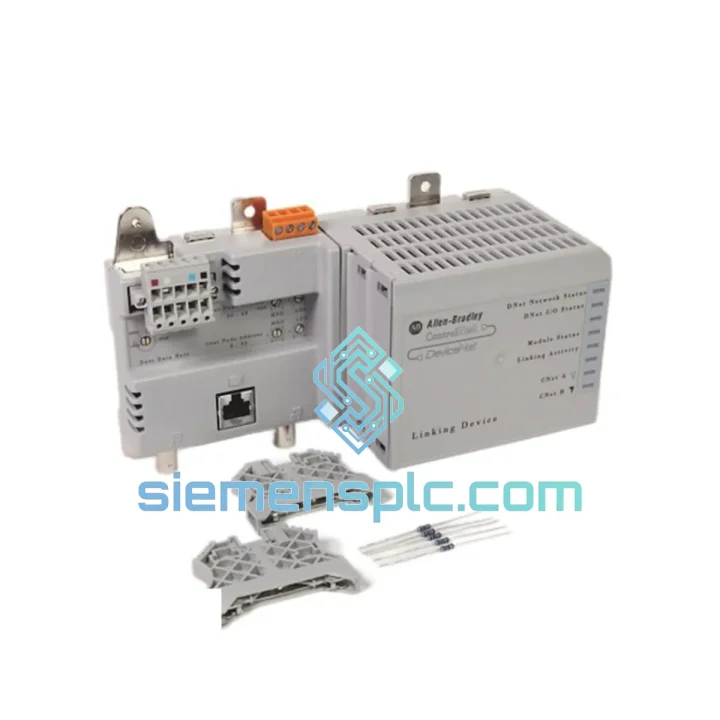
The Allen-Bradley 1788-CN2DN functions as a deterministic protocol gateway between a ControlNet supervisory backbone and a DeviceNet field-device layer. In a typical Rockwell Integrated Architecture deployment, the ControlNet segment carries scheduled, time-critical I/O data between the ControlLogix controller and remote I/O adapters at a fixed requested packet interval (RPI). Below that layer, DeviceNet handles the last-meter connectivity to sensors, variable-frequency drives, motor protection relays, and safety devices. The 1788-CN2DN sits at the boundary between these two network planes, translating ControlNet scheduled and unscheduled messaging into DeviceNet explicit messaging and polled/change-of-state/cyclic I/O messaging — without requiring any custom ladder logic or function block programming in the controller.
From the ControlNet scanner’s perspective (typically a 1756-CNB or 1756-CNBR module in a ControlLogix chassis), the 1788-CN2DN appears as a standard ControlNet node. From the DeviceNet side, it acts as a master scanner, polling up to 63 subordinate DeviceNet nodes per module instance. This dual-role architecture allows system integrators to extend an existing ControlNet backbone into DeviceNet field zones without redesigning the controller program or adding a separate DeviceNet scanner card to the chassis — a significant advantage in brownfield retrofit projects where chassis slots are already allocated.
The module mounts on a standard 35 mm DIN rail (EN 50022), drawing its operating power from the 24 V DC DeviceNet bus. Two BNC coaxial connectors on the ControlNet side support connection to both the primary and redundant ControlNet coax segments, enabling the module to participate in dual-media ControlNet topologies where the 1756-CNBR provides automatic media failover. The DeviceNet port uses a 5-pin open-style connector compatible with standard thick and thin DeviceNet cable assemblies.
Configuration is performed entirely within RSNetWorx for ControlNet and RSNetWorx for DeviceNet — the same tools used to configure 1756-CNB scanner modules and 1756-DNB DeviceNet scanner cards. No proprietary configuration utility is required. The module’s EDS (Electronic Data Sheet) file registers it in the RSNetWorx device library, and its I/O connection parameters are mapped directly into the controller’s I/O tree through the standard ControlNet scheduled connection mechanism.
Real-time Stock & RFQ: [email protected] | WhatsApp: +86 18359268345
| Parameter | Value |
|---|---|
| Part Number | 1788-CN2DN |
| Series | 1788 Linking Devices |
| Manufacturer | Allen-Bradley / Rockwell Automation |
| Function | ControlNet-to-DeviceNet Protocol Bridge / Scanner |
| ControlNet Interface | Dual BNC coaxial (primary + redundant media) |
| DeviceNet Interface | 5-pin open-style connector |
| Max DeviceNet Nodes | 63 nodes per module |
| DeviceNet Data Rate | 125 kbps / 250 kbps / 500 kbps (auto-detect or configured) |
| ControlNet Data Rate | 5 Mbps (fixed) |
| Operating Voltage | 24 V DC (DeviceNet bus-powered) |
| Operating Temperature | 0 °C to +60 °C |
| Storage Temperature | −40 °C to +85 °C |
| Relative Humidity | 5% to 95% non-condensing |
| Mounting | DIN rail EN 50022 – 35 mm |
| Approximate Weight | 700 g |
| Certifications | UL, CE, cUL |
| Configuration Software | RSNetWorx for ControlNet / RSNetWorx for DeviceNet |
| Warranty | 12 months from shipment date |
Dual-Port Media Architecture and EMC Isolation
The 1788-CN2DN implements galvanic isolation between its ControlNet coaxial interface and the internal logic bus. The BNC connectors feed into a transformer-coupled transceiver stage that decouples the module’s internal ground reference from the ControlNet coax shield potential. This isolation barrier — typically rated to withstand several hundred volts of common-mode transient — prevents ground loop currents induced by long cable runs in industrial environments from corrupting the 5 Mbps Manchester-encoded ControlNet signal. In dual-media configurations, the module’s internal arbitration logic monitors signal quality on both coax segments simultaneously and selects the higher-integrity path on a frame-by-frame basis, with no perceptible interruption to the scheduled data transfer cycle.
DeviceNet Master Scanner Logic
On the DeviceNet side, the module operates as a Class 1 master scanner. Its internal microcontroller maintains a polled I/O scan list for all 63 possible node addresses, executing the DeviceNet Group 2 Only Unconnected Message Manager (UCMM) protocol for explicit messaging and the predefined master/slave connection set for I/O messaging. The scan cycle time is a function of the aggregate I/O data volume across all active nodes and the configured DeviceNet baud rate. At 500 kbps with a moderate node count, the DeviceNet scan cycle typically completes well within the ControlNet RPI window, ensuring that the data presented to the ControlNet scanner reflects the most recent DeviceNet field state.
ControlNet Scheduled Connection Mechanism
ControlNet’s scheduled messaging uses a time-division multiple access (TDMA) scheme governed by the network update time (NUT), which is configured in RSNetWorx for ControlNet. The 1788-CN2DN is allocated a fixed time slot within each NUT cycle for its scheduled I/O data transfer. This deterministic slot allocation means that the latency between a DeviceNet field device changing state and that change appearing in the ControlLogix controller’s input image table is bounded and predictable — a property that is essential for closed-loop process control and safety interlock logic where worst-case response time must be calculable during the safety integrity level (SIL) assessment.
Diagnostic Register Architecture
The module exposes a set of diagnostic status registers accessible via ControlNet unscheduled messaging. These registers report per-node DeviceNet communication health (idle, faulted, inhibited), DeviceNet bus-off event counters, ControlNet connection timeout counts, and module self-diagnostic status. RSNetWorx for DeviceNet can read these registers during online diagnostics, and the controller program can map selected status bits into the I/O image for runtime fault annunciation without requiring a separate HMI data collection path.
Every Allen-Bradley 1788-CN2DN unit dispatched from our Xiamen, China facility undergoes a structured pre-shipment verification sequence. Visual inspection confirms label integrity, connector condition, and the absence of counterfeit indicators consistent with Rockwell Automation’s published anti-counterfeiting guidance. Where bench-test infrastructure is available, power-on self-test completion and basic ControlNet/DeviceNet communication handshake are verified before packaging.
Product condition — new-in-box, factory surplus, or tested used — is disclosed explicitly in the quotation document. Firmware revision is recorded during inspection and communicated to the buyer prior to shipment. Units are packed in anti-static bags with moisture barrier sealing, placed in shock-absorbing foam inserts, and shipped in double-wall corrugated cartons rated for international air freight handling.
Shipment is via DHL Express, FedEx International Priority, or UPS Worldwide Express, with full tracking from Xiamen to the destination address. Commercial invoice, packing list, and certificate of origin are provided as standard export documentation. Certificates of conformance and inspection reports are available upon request. Standard transit time to major industrial hubs in Europe, North America, Southeast Asia, and the Middle East is 3–5 business days from dispatch. A 12-month warranty covers manufacturing defects and verified functional failures under normal operating conditions.
Email: [email protected]
WhatsApp: +86 18359268345
Web: siemensplc.com
Location: Xiamen, China
© 2026
We check the full part number, brand, series and visible nameplate information before quotation.
Sales confirms stock path, condition option, quantity and realistic lead time for export dispatch.
DHL, FedEx, UPS or buyer courier arrangements can be reviewed with packing requirements.
Similar brand or category products for fast comparison and multi-item RFQ lists.