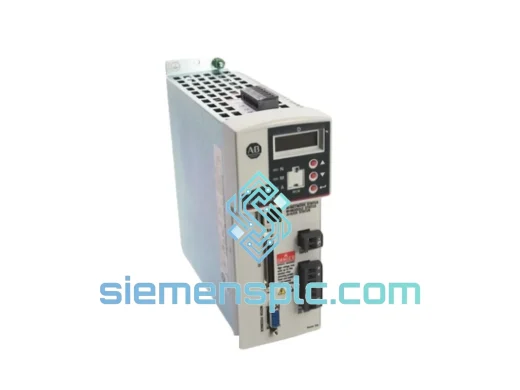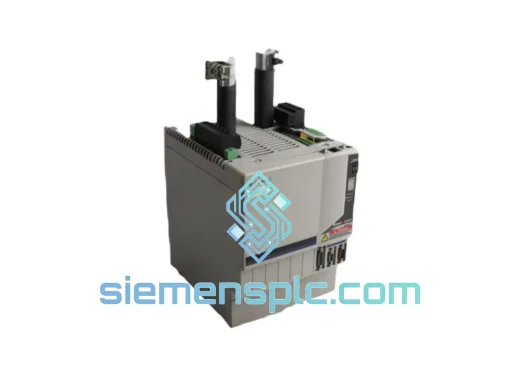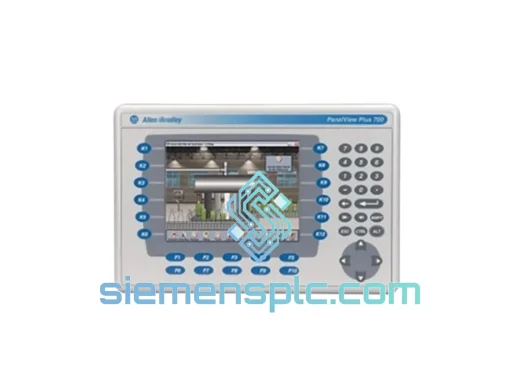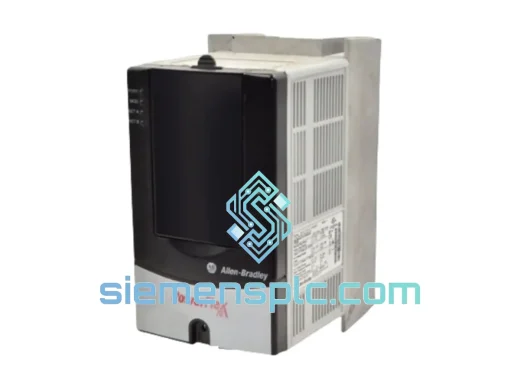
Allen-Bradley
RFQ Ready
Allen-Bradley 20AD3P4A0AYNNNC0 Variable Frequency Drive
PowerFlex
Origin US
Variable Frequency Drive
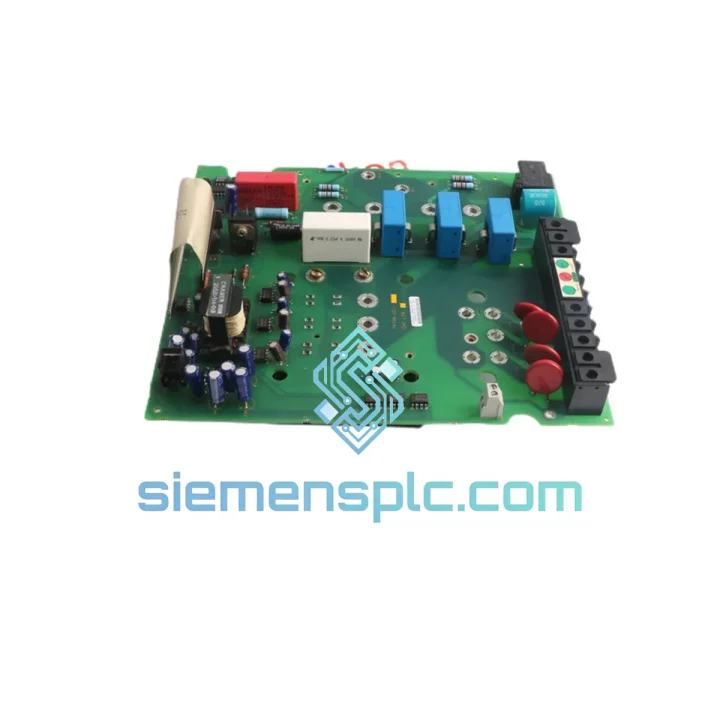
Request verified availability, condition, replacement risk review, packing options and courier lead time for A74104-231-53.
Click Request Quote and the part number is inserted into the inquiry form automatically.
Core fields for model confirmation and RFQ routing. Detailed product narrative remains below.
The A74104-231-53 is a servo drive control board manufactured by Allen-Bradley (Rockwell Automation), designed as the primary motion-regulation PCB within the 1394 General Motion Controller (GMC) drive chassis. Its function is not peripheral: this board occupies the signal-processing layer between the motion controller’s command stream and the power stage’s gate-drive circuitry. Every velocity loop correction, every torque-demand calculation, and every encoder feedback reconciliation passes through the logic implemented on this assembly. In multi-axis 1394 systems, the board operates in a coordinated timing domain synchronized to the chassis backplane clock, ensuring deterministic update rates across all active axes without inter-axis jitter accumulation.
In servo-intensive applications — CNC machining centers, robotic welding cells, high-speed packaging lines, and web-tension control systems — the control board’s ability to maintain loop closure at consistent cycle times directly determines contouring accuracy and throughput repeatability. The A74104-231-53 is not a generic drive PCB; it is a model-specific assembly matched to the 1394 chassis revision and firmware baseline, which means field replacement does not require drive re-parameterization in the majority of installations.
Real-time Stock & RFQ: [email protected] | WhatsApp: +86 18359268345
| Parameter | Specification |
|---|---|
| Part Number | A74104-231-53 |
| Manufacturer | Allen-Bradley / Rockwell Automation |
| Component Classification | Servo Drive Control Board (PCB Assembly) |
| Compatible Drive Platform | Allen-Bradley 1394 GMC Series Servo Drive Chassis |
| Form Factor | Plug-in PCB module, chassis-slot mounted |
| Control Loop Function | Velocity loop, torque loop, encoder feedback processing |
| Feedback Interface | Resolver / incremental encoder (per chassis configuration) |
| Logic Supply Voltage | +5 VDC / ±15 VDC (supplied by chassis backplane) |
| Operating Temperature | 0 °C to +55 °C (ambient, with adequate enclosure airflow) |
| Storage Temperature | -40 °C to +85 °C |
| Humidity | 5% to 95% RH, non-condensing |
| PCB Weight | Approx. 1,300 g (board assembly with connectors) |
| Compliance | CE Directive (Machinery, LVD); UL/cUL Recognition; IEC 61800 series |
| Warranty | 12 months against defects in material and workmanship |
The A74104-231-53 board implements the closed-loop servo algorithm in discrete hardware logic and DSP firmware rather than relying on a general-purpose microcontroller executing a polled software loop. This architectural choice has measurable consequences for loop performance. The velocity estimator operates on a fixed interrupt cadence derived from the chassis backplane clock, which means the derivative term in the PID compensator is computed against a time base that does not drift with processor load — a critical distinction in multi-axis systems where background diagnostics and communication tasks compete for CPU cycles on software-based controllers.
The board’s analog front-end for resolver-based feedback employs a dedicated resolver-to-digital converter (RDC) IC with a tracking loop bandwidth selected to match the mechanical bandwidth of the servo axis. This prevents aliasing of high-frequency vibration modes into the velocity feedback signal, which would otherwise manifest as audible motor noise and reduced position stability at low speeds. The RDC output feeds directly into the velocity estimator without passing through a general-purpose ADC, eliminating one quantization stage and the associated noise floor contribution.
EMC hardening on the A74104-231-53 follows Rockwell Automation’s standard for industrial drive PCBs: the board uses a multi-layer stackup with dedicated ground planes separating the analog feedback circuitry from the digital logic domain. Signal traces carrying resolver excitation and feedback signals are routed away from high-dV/dt switching node references. Connector pinouts assign shield grounds to dedicated pins tied directly to the chassis ground plane, not to the logic ground, preventing common-mode noise injected through cable shields from coupling into the feedback signal path. The result is a board that maintains specified velocity loop accuracy in environments with significant conducted and radiated interference — typical of the switchgear rooms and machine tool cabinets where 1394 drives are deployed.
The gate-drive interface between the A74104-231-53 control board and the power module uses an optically isolated signal path. This isolation barrier serves two functions: it prevents fault currents in the power stage from propagating back into the control logic during shoot-through or ground fault events, and it allows the control board to operate at logic-ground potential while the power stage references a floating DC bus ground. The isolation voltage rating exceeds the DC bus voltage by a margin consistent with IEC 61800-5-1 reinforced insulation requirements, providing protection against transient overvoltages generated by motor cable inductance during switching.
Every Allen-Bradley A74104-231-53 board dispatched from our Xiamen, China facility undergoes a structured inspection and verification process before shipment authorization is issued. Visual examination covers the full PCB surface: component seating, solder joint integrity, connector pin condition, and absence of physical damage or corrosion on the board edge fingers that mate with the chassis backplane. Boards that pass visual inspection proceed to functional bench testing against a reference 1394 chassis, where the velocity loop response and feedback signal processing are verified against baseline parameters.
Packaging follows ESD-safe protocols throughout: boards are placed in anti-static shielding bags, cushioned with conductive foam at the connector interfaces, and enclosed in double-wall corrugated cartons with void-fill material to prevent movement during transit. Carton labeling includes the part number, inspection date, and a unique shipment reference number that links to the retained inspection record.
Logistics from Xiamen reach major industrial hubs on the following typical transit schedules: DHL Express to Europe and North America in 3–5 business days; FedEx International Priority to Southeast Asia in 1–3 business days; sea freight consolidation available for volume orders with 15–25 day transit to most ports. Export documentation — commercial invoice, packing list, and certificate of origin — is prepared to the destination country’s import requirements. HS code classification and customs value declaration are handled by our logistics team to minimize clearance delays.
All units carry a 12-month warranty against defects in material and workmanship from the date of shipment. Warranty claims are processed with a target response time of 48 hours from receipt of the defective unit at our facility.
Email: [email protected]
WhatsApp: +86 18359268345
Web: siemensplc.com
Location: Xiamen, China
© 2026. All rights reserved.
We check the full part number, brand, series and visible nameplate information before quotation.
Sales confirms stock path, condition option, quantity and realistic lead time for export dispatch.
DHL, FedEx, UPS or buyer courier arrangements can be reviewed with packing requirements.
Similar brand or category products for fast comparison and multi-item RFQ lists.