Bently Nevada
RFQ Ready
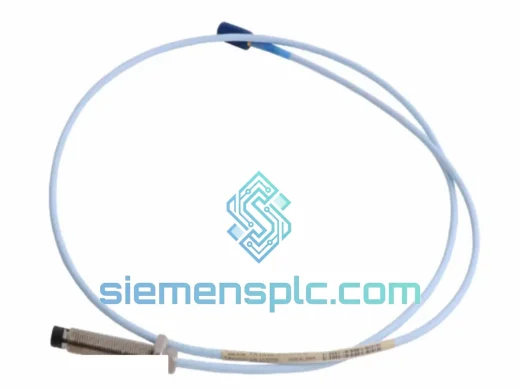
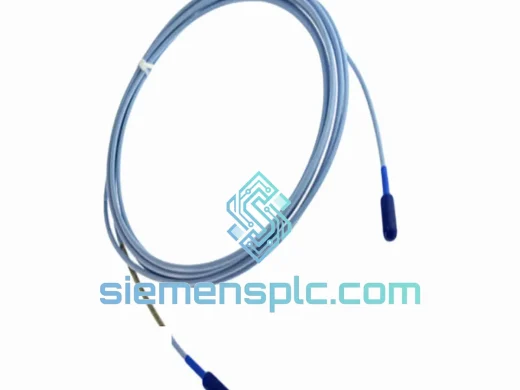
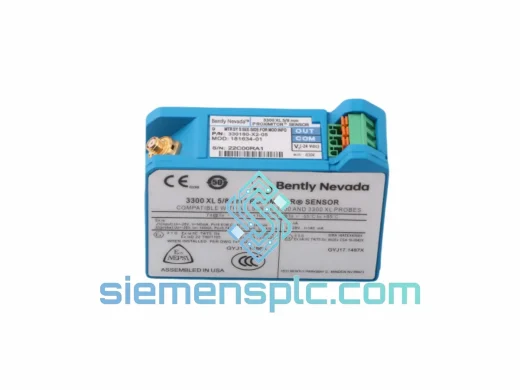
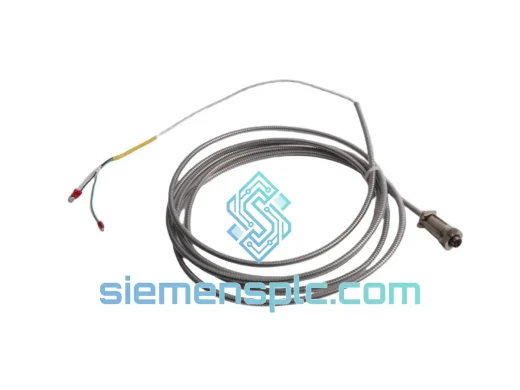
Bently Nevada 84661-12 Velomitor Interconnect Cable
3300 Series
Origin US
Vibration Monitoring Cable
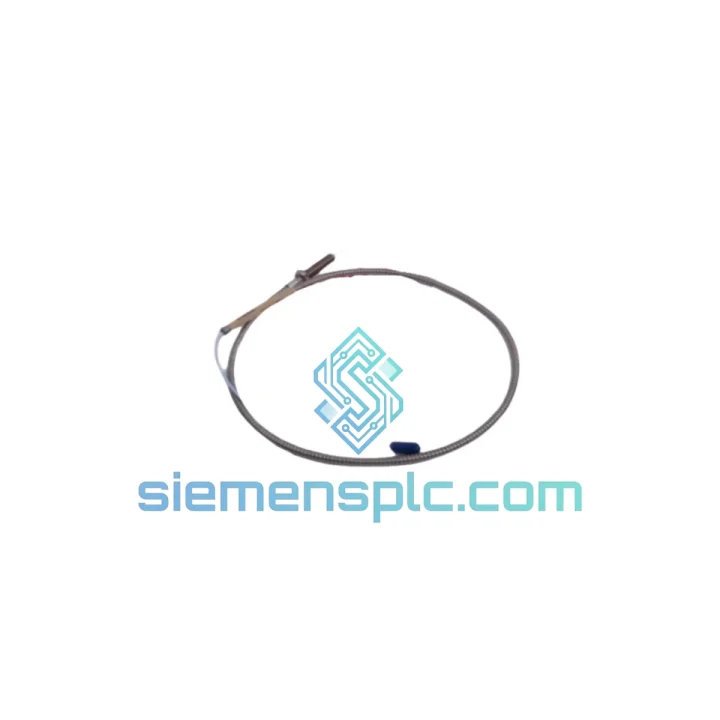
Request verified availability, condition, replacement risk review, packing options and courier lead time for 16710-32.
Click Request Quote and the part number is inserted into the inquiry form automatically.
Core fields for model confirmation and RFQ routing. Detailed product narrative remains below.
Every hour a turbine or compressor sits idle costs real money — in some facilities, that number runs five figures per hour before you’ve even called the maintenance supervisor. The Bently Nevada 16710-32 32 ft interconnect extension cable is one of those components that rarely fails, but when it does, the entire 3300 Series proximity measurement chain goes blind. No shaft position data. No vibration signal. No safe restart authorization. We stock this cable in Xiamen and can have it moving toward your site within hours of order confirmation.
This is not a generic coaxial cable. It is a system-matched, factory-terminated extension cable engineered specifically for the 3300 Series Proximity Transducer System. Impedance, capacitance, shielding coverage, and connector geometry are all tuned to the proximitor’s input requirements. Substituting an off-the-shelf cable introduces measurement error, false trip risk, and potential API 670 compliance violations — none of which you want to explain to your plant manager during an unplanned outage.
⚡ URGENT REQUIREMENT? Contact: [email protected] | WhatsApp: +86 18359268345
| Parameter | Specification |
|---|---|
| Part Number | 16710-32 |
| Manufacturer | Bently Nevada (Baker Hughes) |
| Compatible Series | 3300 Proximity Transducer System |
| Cable Length | 32 ft (9.75 m) |
| Cable Type | Low-capacitance coaxial, shielded |
| Connector Type | Bently Nevada proprietary coaxial (both ends) |
| Operating Temperature | –55°C to +125°C |
| Shield Coverage | ≥95% braid — EMI/RFI rejection |
| Compliance | API 670 (Machinery Protection Systems) |
| Weight | ~240 g |
| Stock Status | ✅ Ready to Ship — Xiamen Warehouse |
In ten years of field work, cable failures on 3300 Series systems almost always show up in one of three ways: intermittent gap voltage drift that the DCS logs as a slow trend, a hard –24 VDC rail fault that kills the proximitor output entirely, or a connector corrosion issue that produces a noisy, oscillating signal the rack monitor interprets as a real vibration event. Before you condemn the proximitor or the probe, pull the extension cable connectors and inspect them first — it’s a five-minute check that saves you from unnecessarily swapping a $600 proximitor.
Step-by-step replacement procedure:
Common fault codes associated with cable failure:
The 16710-32 is built for environments that destroy ordinary cables within months. The jacket compound maintains flexibility and insulation integrity across the full –55°C to +125°C operating range — relevant for hot-section turbine installations where cable trays run adjacent to exhaust casings. The ≥95% braid shield is not a marketing figure; it is a functional requirement in facilities where large motor drives, welding equipment, and high-voltage bus bars share the same cable tray infrastructure. Without that shielding density, the 3300 Series signal — which operates at millivolt levels — picks up interference that the proximitor cannot distinguish from real shaft motion.
Vibration resistance is equally critical. Compressor skids and turbine pedestals transmit broadband mechanical vibration directly into cable trays and conduit. Factory-terminated connectors on the 16710-32 are crimped and potted to maintain consistent contact resistance under continuous vibration loading — a failure mode that field-assembled connectors are particularly susceptible to. Humidity and condensation are addressed by the connector design: the mating interface is engineered to resist moisture ingress in environments where relative humidity cycles between 20% and 95% non-condensing, which covers most coastal and tropical plant sites.
Our dispatch warehouse is located in Xiamen, Fujian, China — one of the most logistics-connected export hubs on the southeast coast, with direct access to DHL Express, FedEx International Priority, and UPS Worldwide Express services operating daily flights to major industrial hubs across Asia-Pacific, the Middle East, Europe, and the Americas.
Standard export process for urgent orders:
For plant shutdowns with a hard restart deadline, tell us your required-on-site date when you contact us. We will confirm feasibility before you commit to the order — no surprises.
Email: [email protected]
WhatsApp: +86 18359268345
Web: siemensplc.com
© 2026 siemensplc.com. All rights reserved.
We check the full part number, brand, series and visible nameplate information before quotation.
Sales confirms stock path, condition option, quantity and realistic lead time for export dispatch.
DHL, FedEx, UPS or buyer courier arrangements can be reviewed with packing requirements.
Similar brand or category products for fast comparison and multi-item RFQ lists.