Bently Nevada
RFQ Ready
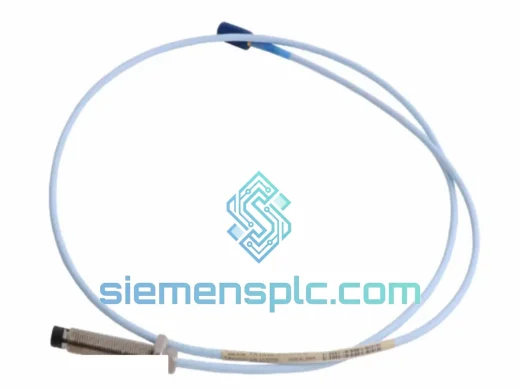
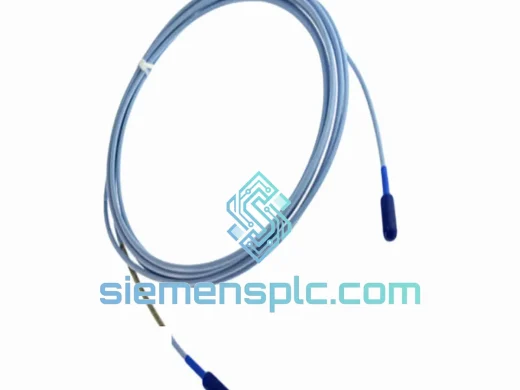
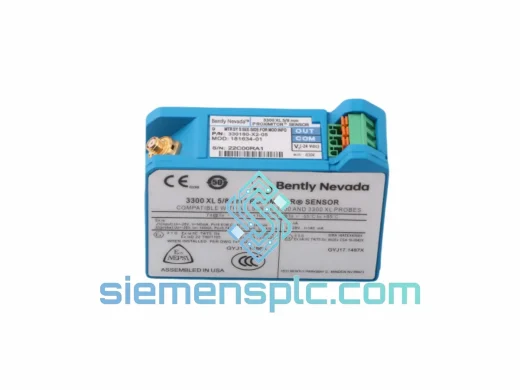
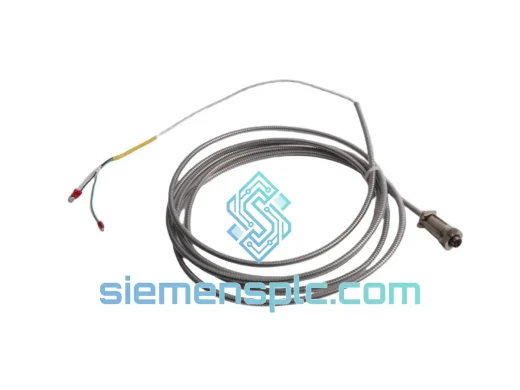
Bently Nevada 84661-12 Velomitor Interconnect Cable
3300 Series
Origin US
Vibration Monitoring Cable
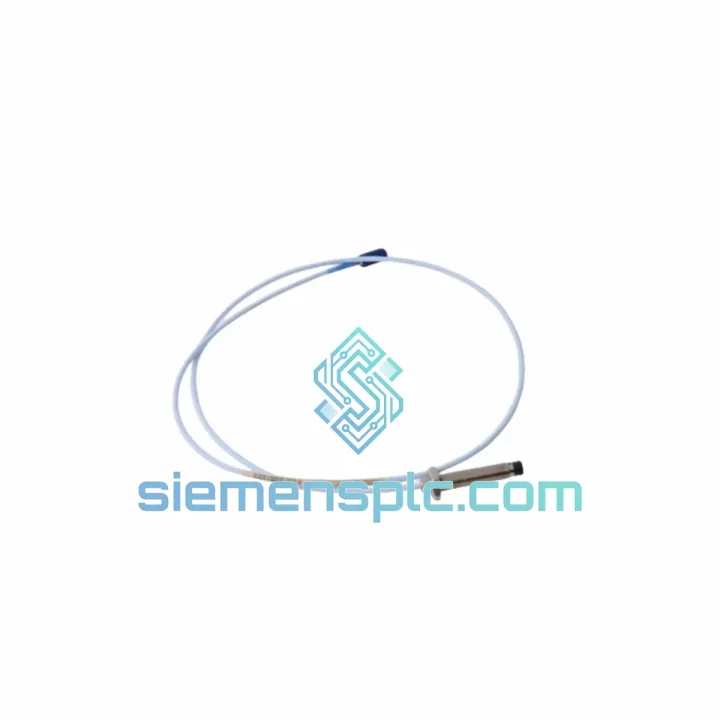
Request verified availability, condition, replacement risk review, packing options and courier lead time for 16710-35.
Click Request Quote and the part number is inserted into the inquiry form automatically.
Core fields for model confirmation and RFQ routing. Detailed product narrative remains below.
The Bently Nevada 16710-35 is a 35-foot (10.7 m) factory-standard coaxial interconnect cable engineered specifically for the 3300 XL proximity transducer system. Within a rotating machinery protection loop, this cable occupies the signal path between the proximitor output and the monitoring rack input — a segment where impedance discontinuity, ground-loop noise, or connector degradation directly translates into measurement error at the monitor. Its role is not passive: the cable’s characteristic impedance, shielding architecture, and connector metallurgy are all matched to the 3300 XL system’s DC-coupled, eddy-current signal chain to preserve the sub-millivolt resolution required for API 670-compliant shaft displacement and vibration measurement.
The “-35” suffix in the part number denotes the cable length in feet. Bently Nevada manufactures this cable family in discrete length variants (25 ft, 35 ft, 50 ft) to accommodate the physical distance between the proximitor housing — typically mounted at the machine bearing housing — and the junction box or marshalling panel feeding the 3500 or System 1 monitor rack. Selecting the correct length is not merely a convenience consideration: excess cable coiled in a conduit introduces distributed capacitance that shifts the proximitor’s operating point on its voltage-gap curve, potentially causing calibration offset. The 16710-35 is dimensioned for installations where the proximitor-to-panel run falls in the 9–11 m range after accounting for routing bends and conduit entry allowances.
Electrically, the cable is a low-noise, DC-coupled coaxial assembly. The center conductor carries the proximitor output signal — a negative DC voltage nominally in the −2 VDC to −18 VDC range, modulated by the gap between the probe tip and the target shaft. The outer shield serves as both the signal return and the EMC barrier. Bently Nevada specifies the shield as a 95%+ coverage braid, which provides adequate attenuation of radiated interference from variable-frequency drives, high-current bus bars, and motor starters commonly co-located in turbomachinery control rooms. The cable jacket is rated for continuous operation from −40 °C to +125 °C, covering the thermal envelope of most outdoor and near-bearing installations without requiring supplemental thermal protection.
Connector terminations at both ends are MIL-spec coaxial fittings, factory-crimped and tested for contact resistance and pull-out force. Field-assembled connectors on aftermarket cables are a documented source of intermittent faults in proximity systems: micro-arcing at a poorly crimped center pin introduces high-frequency noise that the 3500 monitor’s input filter cannot fully reject, producing spurious vibration alarms. The 16710-35’s factory terminations eliminate this failure mode and are dimensionally compatible with the TNC-style receptacles on 3300 XL proximitors and the panel-mount bulkhead connectors used in standard Bently Nevada junction boxes.
In turbomachinery protection applications — steam turbines, gas turbines, centrifugal compressors, and large pumps — the interconnect cable is a component that is rarely replaced on a scheduled basis but whose degradation is a known contributor to nuisance trips and missed alarms. Jacket cracking from thermal cycling, shield braid corrosion in humid or H₂S-bearing atmospheres, and connector oxidation from condensation ingress are the primary failure mechanisms. Maintaining a stocked spare of the 16710-35 is standard practice in facilities operating under API 670 or equivalent machinery protection standards, where unplanned downtime costs are measured in tens of thousands of dollars per hour.
Real-time Stock & RFQ: [email protected] | WhatsApp: +86 18359268345
| Parameter | Specification |
|---|---|
| Part Number | 16710-35 |
| Manufacturer | Bently Nevada (Baker Hughes) |
| Compatible System | 3300 XL 8 mm & 11 mm Proximity Transducer System |
| Cable Type | Low-noise coaxial, DC-coupled |
| Cable Length | 35 ft (10.7 m) |
| Connector Type | MIL-spec coaxial, factory-crimped, TNC-compatible |
| Shield Coverage | ≥ 95% braid coverage |
| Signal Range | −2 VDC to −18 VDC (proximitor output, DC-coupled) |
| Operating Temperature | −40 °C to +125 °C |
| Jacket Material | PVC / PTFE-rated outer jacket (per revision) |
| Approximate Weight | 210 g |
| Condition | New / Surplus New — OEM original |
| Compliance | API 670 compatible; SIL-rated system use supported |
| Warranty | 12 months from date of shipment |
The 16710-35 functions within an eddy-current proximity measurement chain whose signal integrity depends on three hardware-level properties: characteristic impedance matching, shield transfer impedance, and connector contact stability.
Impedance Matching: The 3300 XL proximitor presents a defined output impedance to the cable. Any deviation in the cable’s characteristic impedance — caused by non-standard dielectric material, inconsistent conductor geometry, or field-modified connectors — creates a reflection coefficient at the cable-to-proximitor interface. In a DC-coupled system, this does not produce standing waves in the RF sense, but it does alter the effective load seen by the proximitor’s output stage, shifting the voltage-gap transfer function by a measurable offset. The 16710-35 is manufactured to the impedance specification defined in Bently Nevada’s system drawings, ensuring the proximitor operates within its characterized linearity range.
EMC Shield Architecture: The ≥95% braid coverage provides a shield transfer impedance low enough to attenuate common-mode interference from 50/60 Hz power conductors and switching-frequency harmonics from VFDs (typically 2–20 kHz) to levels below the 3500 monitor’s input noise floor. The shield is grounded at one end only — at the junction box — to prevent ground-loop currents from flowing through the shield braid and appearing as a differential-mode noise voltage on the center conductor. This single-point grounding topology is specified in Bently Nevada installation drawings and must be preserved when replacing the cable.
Connector Contact Stability: The factory-crimped MIL-spec connectors maintain a contact resistance below 5 mΩ across the operating temperature range. Thermal cycling between −40 °C and +125 °C produces differential expansion between the connector body (typically brass or stainless) and the cable dielectric. Factory crimping applies a controlled deformation that accommodates this expansion without loosening the center-pin contact. Field-assembled connectors using hand tools cannot replicate this controlled deformation, which is why Bently Nevada specifies factory-terminated cables for API 670 installations.
Thermal and Chemical Resistance: The jacket compound is selected for resistance to the hydrocarbon vapors, lubricating oils, and cleaning solvents present in turbomachinery environments. At sustained temperatures above 100 °C — common near bearing housings on high-speed compressors — PVC jackets can plasticize and lose dimensional stability. Bently Nevada’s cable specification addresses this through jacket compound selection and wall thickness, maintaining mechanical protection of the braid and dielectric across the rated temperature range.
Every Bently Nevada 16710-35 unit supplied by siemensplc.com is sourced from verified OEM channels or authenticated surplus stock. Prior to dispatch, each cable undergoes a three-point inspection: visual examination of connector bodies and jacket integrity, continuity verification of center conductor and shield braid, and dimensional check of connector engagement length. Units that do not pass all three checks are quarantined and not offered for sale. Certificate of Conformance (COC) documentation is available upon request for units destined for API 670 or SIL-rated installations.
Logistics operations are based in Xiamen, China — a major port city with direct access to DHL Express, FedEx International Priority, and UPS Worldwide Expedited services. Standard export packaging uses anti-static foam inserts within a rigid outer carton, protecting connector terminations from mechanical shock during air freight handling. For urgent requirements, same-day dispatch is available for orders confirmed before 14:00 CST. Transit times to major industrial hubs: Europe 3–5 business days, North America 4–6 business days, Southeast Asia 2–3 business days, Middle East 4–7 business days. Sea freight consolidation is available for volume MRO orders where lead time permits. All shipments include commercial invoice, packing list, and HS code documentation for customs clearance. Import duty and VAT obligations are the responsibility of the consignee; siemensplc.com can provide DAP or DDP terms for qualified accounts upon request.
📧 Email: [email protected]
💬 WhatsApp: +86 18359268345
🌐 Web: siemensplc.com
📍 Location: Xiamen, China
© 2026 siemensplc.com. All rights reserved.
We check the full part number, brand, series and visible nameplate information before quotation.
Sales confirms stock path, condition option, quantity and realistic lead time for export dispatch.
DHL, FedEx, UPS or buyer courier arrangements can be reviewed with packing requirements.
Similar brand or category products for fast comparison and multi-item RFQ lists.