Bently Nevada
RFQ Ready
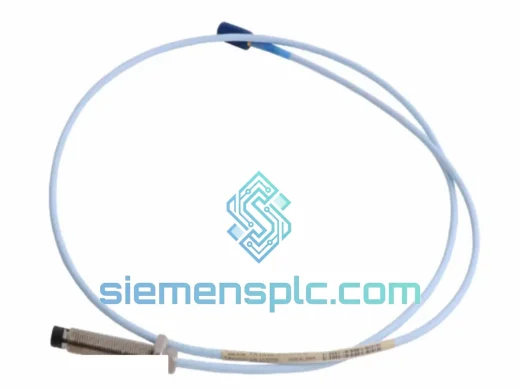
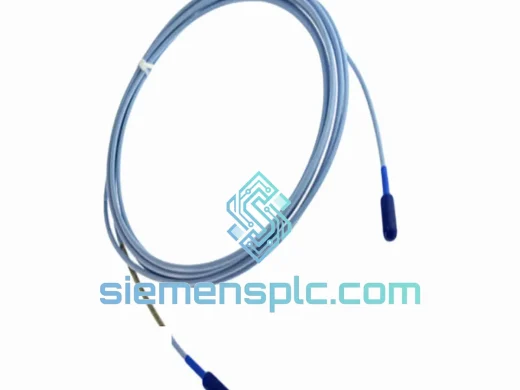
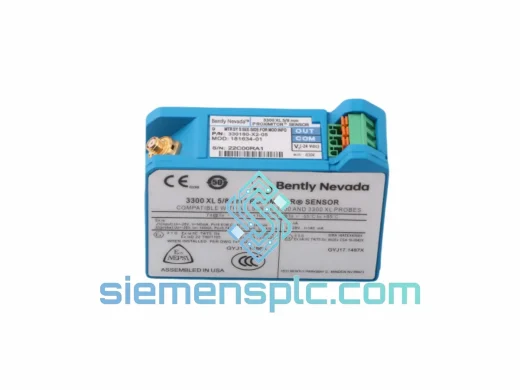
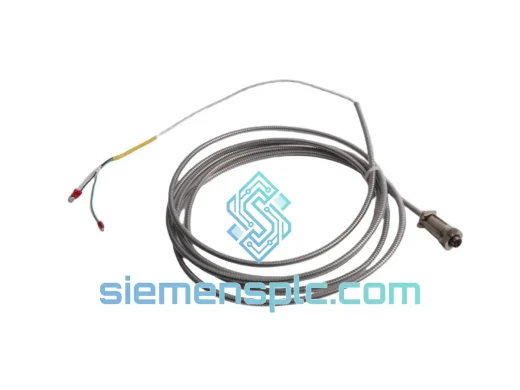
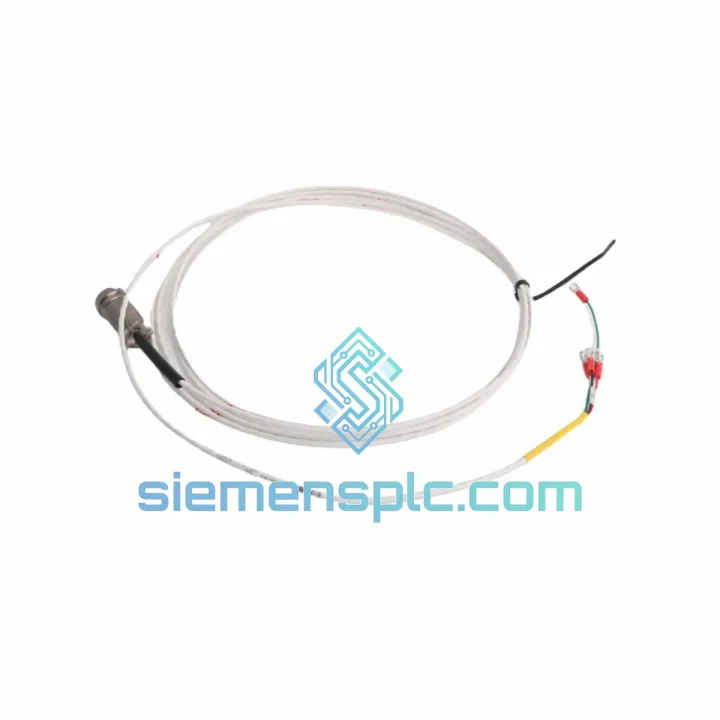
Bently Nevada 84661-12 Velomitor Interconnect Cable
3300 Series
Origin US
Vibration Monitoring Cable
Request verified availability, condition, replacement risk review, packing options and courier lead time for 16925-15.
Click Request Quote and the part number is inserted into the inquiry form automatically.
Core fields for model confirmation and RFQ routing. Detailed product narrative remains below.
The Bently Nevada 16925-15 is a factory-specified interconnect cable that occupies the first signal-transmission segment in a proximity transducer chain. Its function is deceptively simple in description but mechanically and electrically precise in execution: it bridges the proximity probe body to the extension cable or proximitor/driver module, maintaining the eddy-current signal path with sub-millivolt noise margins across the full operating bandwidth. In rotating machinery protection systems governed by API 670, this cable is not a passive conductor — it is a calibrated component whose impedance, shielding geometry, and connector interface are integral to the system’s overall scale factor and gap voltage accuracy.
Bently Nevada’s 3300 and 7200 series proximity transducer platforms are deployed globally in steam turbines, gas turbines, centrifugal compressors, and large-frame pumps where continuous shaft vibration and axial position data feed directly into machinery protection logic. Any degradation in the interconnect cable — whether from connector oxidation, shield discontinuity, or mechanical fatigue at the probe collar — introduces noise into the signal chain that can manifest as false trips or, more critically, masked fault conditions. The 16925-15 is the OEM-specified solution to eliminate this variable.
Real-time Stock & RFQ: [email protected] | WhatsApp: +86 18359268345
| Part Number | 16925-15 |
| Manufacturer | Bently Nevada (Baker Hughes) |
| Component Classification | Proximity Transducer Interconnect Cable |
| Compatible Platforms | Bently Nevada 3300 Series, 3300 XL, 7200 Series |
| Signal Type | Eddy-current proximity (analog, low-impedance, DC-coupled) |
| Connector Interface | Bently Nevada proximity transducer system standard (coaxial, threaded) |
| Shield Construction | Continuous coaxial braid shield, 95%+ coverage |
| Operating Temperature | –40 °C to +85 °C (cable body); probe-end per system specification |
| Compliance Standard | API 670 (Machinery Protection Systems), Bently Nevada OEM specification |
| Weight (as shipped) | 180 g |
| Packaging | Anti-static, moisture-barrier sealed bag with individual part labeling |
| Warranty | 12 months from date of shipment |
The eddy-current proximity transducer system operates on a resonant oscillator principle. The proximitor/driver generates a high-frequency carrier signal (typically 200 kHz for 3300 series, 1 MHz for 7200 series) that is transmitted down the cable to the probe coil. The probe coil induces eddy currents in the target shaft surface; the resulting change in coil impedance modulates the oscillator, and the demodulated output is a DC voltage proportional to the gap between probe tip and shaft — typically –200 mV/mil (–7.87 V/mm) for standard 3300 XL probes.
The 16925-15 interconnect cable must preserve this carrier signal with minimal attenuation and phase distortion across its length. The coaxial construction achieves this through a controlled characteristic impedance matched to the system’s transmission line requirements. The outer braid shield serves a dual function: it provides a low-impedance return path for the carrier signal and simultaneously attenuates external electromagnetic interference. In plant environments where variable-frequency drives, high-current bus bars, and RF sources coexist within meters of the transducer installation, shield continuity at both connector terminations is the primary EMC defense mechanism.
Connector integrity is the most failure-prone element in long-service installations. The 16925-15 uses threaded coaxial connectors with defined torque specifications. Undertorqued connections introduce intermittent contact resistance that appears in the signal as broadband noise — indistinguishable from genuine mechanical vibration at low amplitudes. Overtorqued connections risk thread damage and shield pigtail fracture. The OEM connector geometry on the 16925-15 is dimensionally controlled to maintain contact force within the specified range across the full thermal cycle of the installation environment, a tolerance that generic aftermarket cables frequently fail to replicate.
The cable’s dielectric material between center conductor and shield determines the velocity of propagation and the distributed capacitance per unit length. Deviations in dielectric constant shift the cable’s electrical length, which at 1 MHz carrier frequencies can introduce measurable phase error in the demodulated position signal. Bently Nevada’s manufacturing specification controls dielectric consistency to maintain system scale factor accuracy within ±1% of nominal — a requirement that becomes critical in axial position monitoring applications where trip setpoints may be set as tight as ±0.5 mm from the alarm threshold.
Every 16925-15 unit offered through siemensplc.com is sourced from verified supply channels with full part number traceability. Pre-shipment inspection covers visual examination of connector bodies, shield termination integrity, and cable jacket condition. Units that do not meet OEM cosmetic and dimensional standards are rejected prior to listing.
Our logistics operation is based in Xiamen, China — a major international port city with direct air freight connections to Singapore, Dubai, Frankfurt, Los Angeles, and Tokyo. Standard in-stock orders are dispatched within 1–3 business days via DHL Express, FedEx International Priority, or UPS Worldwide Expedited, depending on destination and customer preference. Typical transit times are 3–5 business days to Europe and North America, 2–4 days to Southeast Asia and the Middle East.
Export documentation — commercial invoice, packing list, and Certificate of Origin — is prepared as standard for all international shipments. For facilities requiring additional documentation (COC, material test reports, or customs pre-clearance paperwork), these are prepared upon request prior to dispatch. All shipments are tracked end-to-end with tracking numbers provided at time of dispatch.
The 12-month warranty covers manufacturing defects and OEM specification non-conformance. Warranty claims are processed with a replacement-first policy: a replacement unit is dispatched upon receipt of the defective item and photographic evidence of the failure mode, minimizing the administrative cycle time for maintenance teams operating under tight outage schedules.
Email: [email protected]
WhatsApp: +86 18359268345
Web: siemensplc.com
Location: Xiamen, China
© 2026 siemensplc.com. All rights reserved.
We check the full part number, brand, series and visible nameplate information before quotation.
Sales confirms stock path, condition option, quantity and realistic lead time for export dispatch.
DHL, FedEx, UPS or buyer courier arrangements can be reviewed with packing requirements.
Similar brand or category products for fast comparison and multi-item RFQ lists.