Bently Nevada
RFQ Ready
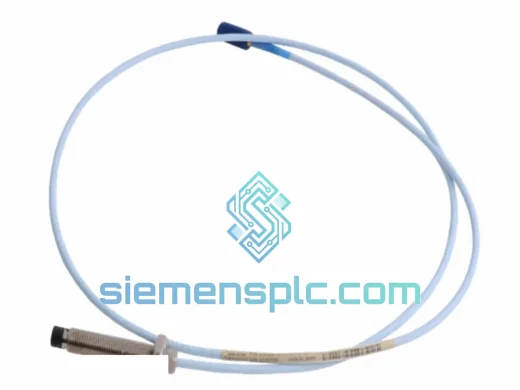
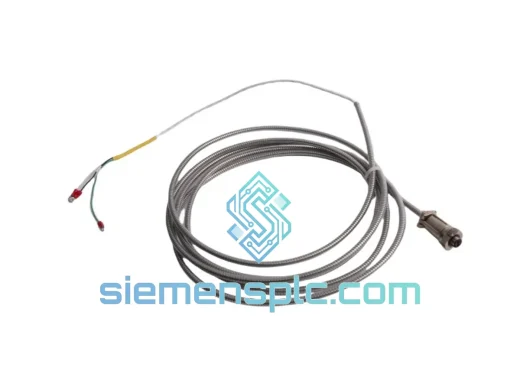
Bently Nevada 84661-12 Velomitor Interconnect Cable
3300 Series
Origin US
Vibration Monitoring Cable
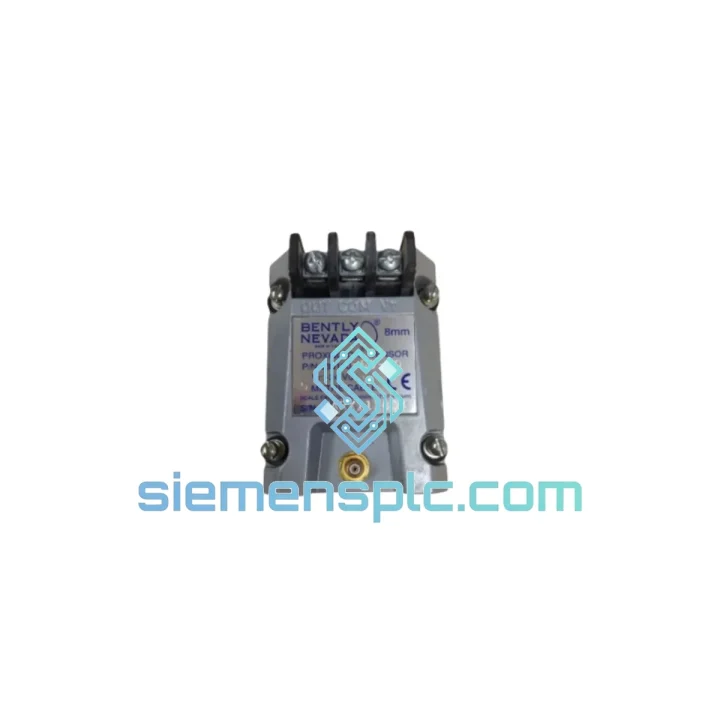
Request verified availability, condition, replacement risk review, packing options and courier lead time for 330100-90-00.
Click Request Quote and the part number is inserted into the inquiry form automatically.
Core fields for model confirmation and RFQ routing. Detailed product narrative remains below.
Your turbine tripped at 02:00. The DCS is screaming a Proximitor Not OK fault. Maintenance has isolated the measurement chain to the sensor — and now every hour of downtime is bleeding production revenue. You need a verified 330100-90-00 in your hands, not a lead-time quote that stretches three weeks. We stock it. We ship it today.
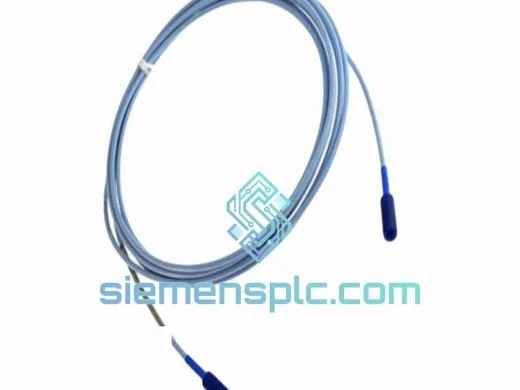
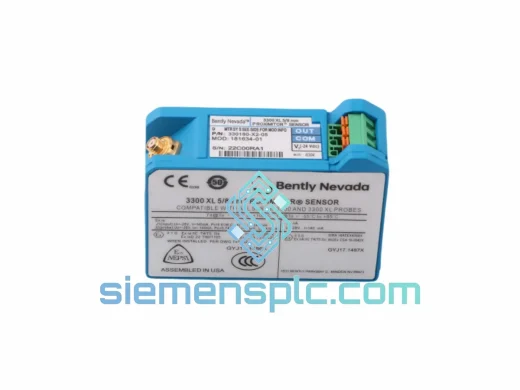
The Bently Nevada 330100-90-00 is the field-side transducer of the 3300 XL eddy-current measurement chain. It converts shaft displacement into a precision DC voltage signal that feeds your 3300/16 or 3300/20 monitor — the last line of defense before a catastrophic bearing failure. When this sensor fails, nothing downstream matters. Get it replaced right.
URGENT REQUIREMENT? Contact: [email protected] | WhatsApp: +86 18359268345
| Part Number | 330100-90-00 |
| Brand | Bently Nevada |
| Series / Platform | 3300 XL / 3300 Series |
| Sensing Technology | Eddy-current, non-contact |
| Measurement Range | 0 – 90 mil pp (0 – 2.286 mm pp) |
| Nominal Gap Voltage | −10 VDC @ 50 mil / 1.27 mm gap (AISI 4140 target) |
| Scale Factor | 200 mV/mil (7.87 V/mm) ± 1% |
| Frequency Response | DC – 10,000 Hz (−3 dB) |
| Operating Temperature | −35 °C to +121 °C |
| Integral Cable Length | 90 cm (0.9 m), armored stainless braid |
| Connector | 3-pin MIL-C-5015 style |
| Supply Voltage | −24 VDC (from Proximitor driver / monitor) |
| Thread | 3/8–24 UNF-2A |
| Housing | Stainless steel, hermetically sealed |
| Certifications | CE, CSA, ATEX |
| Compatible Monitors | 3300/16, 3300/20, 3500/42 (with matched driver) |
| API Standard | API 670 5th Edition |
| Origin | United States |
| Stock Status | ✅ Ready to Ship — Xiamen Warehouse |
Fault Code: Proximitor Not OK (OK relay de-energized)
Before condemning the 330100-90-00, work through the measurement chain systematically. The OK relay drops when the gap voltage falls outside the −2 VDC to −18 VDC window. That can be a dead sensor, a shorted extension cable, or a failed driver card — not always the probe itself.
Step 1 — Isolate the sensor. Disconnect the extension cable at the field junction box. Measure DC voltage between the center pin (signal) and the shield (common) of the sensor connector using a calibrated DVM. With the sensor powered from a bench supply at −24 VDC, you should read approximately −10 VDC when a steel target is held at 50 mil (1.27 mm) from the probe tip. A reading of 0 VDC or rail voltage (−24 VDC) confirms sensor failure.
Step 2 — Check the extension cable. Measure resistance between the signal conductor and shield at the monitor end with the sensor disconnected. Any reading below 1 MΩ indicates cable insulation breakdown — common in high-vibration environments where the cable armor has chafed through conduit edges.
Step 3 — Verify total system cable length. The 330100-90-00 has a 0.9 m integral cable. Your extension cable (330130-XX-00 series) must bring the total to either 5 m or 9 m — the two calibrated system lengths. Mixing lengths invalidates the scale factor and will cause persistent gap errors even with a new sensor installed.
Step 4 — Gap setting on reinstallation. Thread the new 330100-90-00 into the probe holder. Using a calibrated gap meter or the monitor’s gap voltage readout, set the probe tip gap to 50 mil (1.27 mm) — target gap voltage −10 VDC ± 0.5 VDC. Lock the probe with the jam nut to 20–25 N·m. Do not over-torque; the stainless housing is precision-machined and thread damage will shift the calibration curve.
Step 5 — Target material correction. Standard calibration is for AISI 4140 steel. If your shaft is Inconel 718, 17-4 PH, or titanium, apply the material correction factor from Bently Nevada Application Note AN-028 before setting alarm and trip setpoints. Skipping this step on exotic alloy shafts is a common source of nuisance trips post-replacement.
Step 6 — System verification. After installation, perform a slow-roll check (shaft speed <600 RPM) and verify the 1× vibration vector is within historical baseline ± 10%. A sudden phase shift of more than 30° compared to pre-outage data suggests a probe orientation error — recheck the angular position of the probe in the bearing housing.
Common mistake: Technicians sometimes replace the sensor without verifying the driver card’s OK threshold potentiometer setting. If a previous technician adjusted the pot to mask a marginal sensor, the new sensor may trip the OK relay at a perfectly valid gap. Reset the pot to factory default (center position) after installing a new 330100-90-00.
The 330100-90-00 is not a lab instrument. It lives inside bearing housings where temperatures swing from cold startup to 121 °C continuous, where lube oil mist coats every surface, and where the shaft it monitors is generating broadband vibration energy 24 hours a day. Bently Nevada engineered this sensor to survive exactly that environment — and our pre-shipment inspection confirms it still does.
The hermetically sealed stainless steel housing provides IP67-equivalent ingress protection. Process fluids, steam condensate, and cleaning solvents cannot reach the internal coil assembly. The integral armored cable uses a stainless steel braid over a PTFE-insulated conductor — resistant to the petroleum-based lubricants and hydraulic fluids present in most turbomachinery environments.
Vibration immunity is inherent in the non-contact measurement principle. Unlike accelerometers or velocity transducers, the eddy-current probe has no moving parts, no piezoelectric crystal to fatigue, and no mechanical resonance to worry about. The sensor’s own structural resonance is well above 10 kHz — far outside the measurement bandwidth — so the probe does not self-excite under the very vibration it is measuring.
Thermal cycling is the primary long-term degradation mechanism. The coil assembly is potted in a thermally stable compound that maintains dimensional stability across the full −35 °C to +121 °C operating range. Units that have been in service for more than 10 years in high-cycle thermal environments should be replaced proactively during planned outages — do not wait for an OK fault during a critical production run.
Every unit we dispatch has passed a bench-level electrical verification: scale factor, gap voltage linearity, and OK relay threshold are confirmed against OEM specification before the unit leaves our Xiamen facility. You are not receiving a unit pulled from an unknown shelf — you are receiving a sensor that has been tested and is ready to install.
Our Xiamen warehouse operates on a same-day dispatch model for in-stock items ordered before 15:00 CST. Here is exactly what happens after you confirm your purchase order:
Hour 0–2: Order confirmed, unit pulled from bonded stock, final inspection completed, commercial invoice and packing list generated. Export classification: HS 9031.80 (precision instruments). No export license required for standard destinations.
Hour 2–4: Unit packed in anti-static foam insert, outer carton sealed and labeled with part number, serial number, and destination. DHL Express or FedEx International Priority waybill generated. Tracking number issued to buyer via email.
Hour 4–6: Shipment collected by courier. Customs pre-clearance data transmitted electronically to destination country customs authority.
Transit times from Xiamen:
For genuine emergency shutdowns, we offer DHL Express Worldwide Next Flight Out service on request. Contact us directly — we will coordinate with the courier for the earliest available flight departure from Xiamen Gaoqi International Airport. Additional freight charges apply; we will quote before confirming.
All shipments include a commercial invoice, packing list, and our inspection certificate. For destinations requiring a Certificate of Origin, we can provide a China Chamber of Commerce CO. For ATEX-certified installations, the original Bently Nevada documentation is included where available in the original packaging.
Email: [email protected]
WhatsApp: +86 18359268345
Web: siemensplc.com
© 2026 siemensplc.com. All rights reserved.
We check the full part number, brand, series and visible nameplate information before quotation.
Sales confirms stock path, condition option, quantity and realistic lead time for export dispatch.
DHL, FedEx, UPS or buyer courier arrangements can be reviewed with packing requirements.
Similar brand or category products for fast comparison and multi-item RFQ lists.