Bently Nevada
RFQ Ready
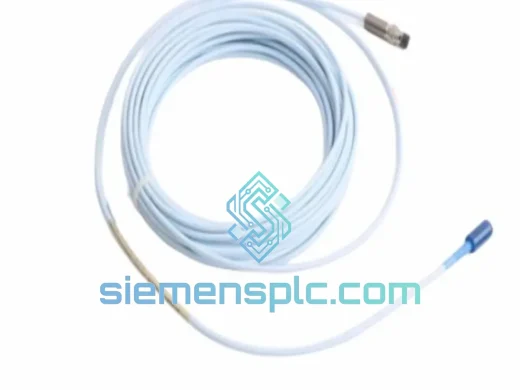
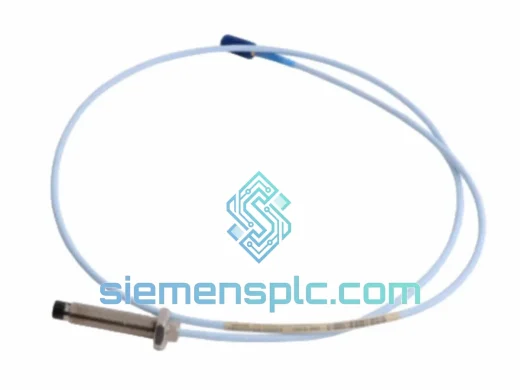
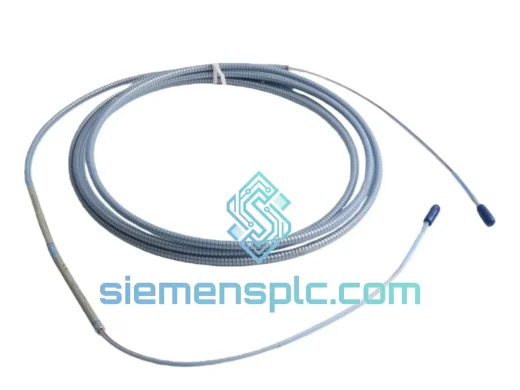
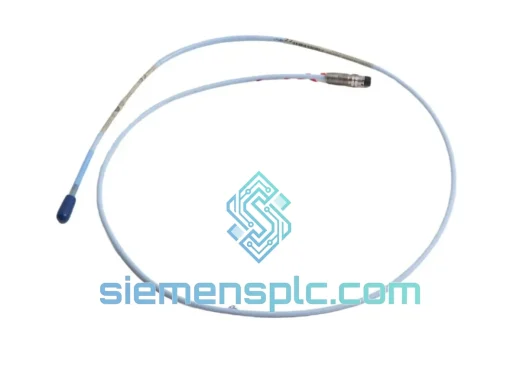
Bently Nevada 330196-05-30-10-00 Proximity Probe – 3300 XL ETR
3301
Origin US
Proximity Probe
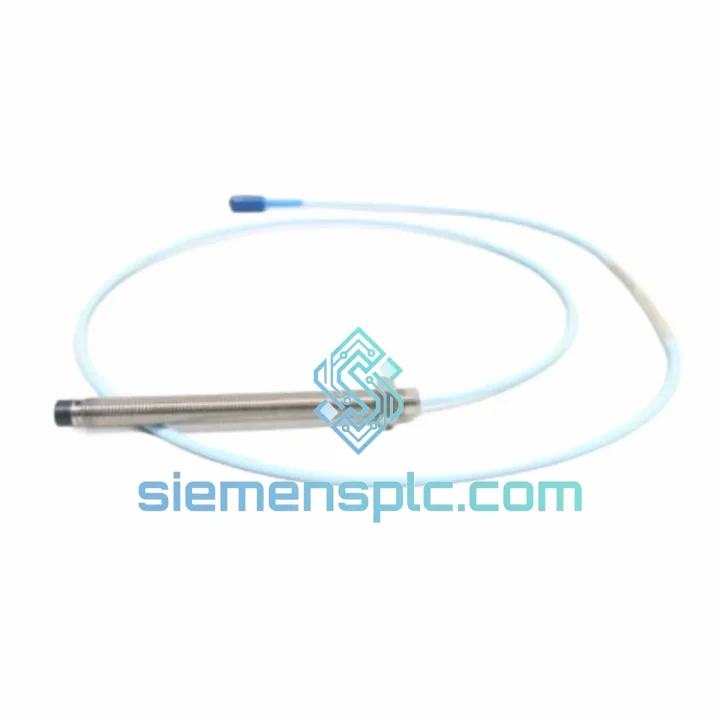
Request verified availability, condition, replacement risk review, packing options and courier lead time for 330101-00-40-10-02-00.
Click Request Quote and the part number is inserted into the inquiry form automatically.
Core fields for model confirmation and RFQ routing. Detailed product narrative remains below.
A tripped vibration channel at 02:00 on a Tuesday is not a maintenance event — it is a production crisis. The Bently Nevada 330101-00-40-10-02-00 is the 8mm eddy-current proximity probe at the heart of the 3300 XL transducer system, and when it fails, your 3500 monitor goes NOT OK, the machine trips, and every minute of idle time converts directly into lost revenue. We maintain verified, traceable stock of this probe in Xiamen and dispatch same-day on confirmed orders received before 14:00 CST. No lead time negotiation. No back-order promises. The unit leaves our warehouse today.
Every probe we supply is sourced through documented supply channels, cross-checked against Bently Nevada factory dimensional and electrical specifications, and shipped with a full commercial package — invoice, packing list, certificate of origin. If your plant is down right now, go straight to the contact block below. The datasheet and engineering notes will still be here when the machine is back online.
URGENT REQUIREMENT? Contact: [email protected] | WhatsApp: +86 18359268345
| Parameter | Specification | Availability |
|---|---|---|
| Part Number | 330101-00-40-10-02-00 | ✔ Ready to Ship |
| Manufacturer | Bently Nevada (Baker Hughes) | |
| Series | 3300 XL Proximity Transducer System | |
| Sensing Technology | Eddy-current, non-contact | |
| Probe Tip Diameter | 8 mm | |
| Integral Cable Length | 1.0 m (40 inches) | |
| Cable Jacket / Armour | Stainless steel braid (-02-00 suffix) | |
| Mounting Thread | M10 × 1.0 metric | |
| Connector | 10-32 UNF coaxial (probe end) | |
| Linear Range | 0.25 mm – 2.29 mm (10 – 90 mil) | |
| Optimal Gap | 1.27 mm (50 mil) | |
| Scale Factor | 7.87 V/mm (200 mV/mil) | |
| Gap Voltage at Optimal Gap | −10 VDC ± 0.5 V | |
| Supply Voltage | −24 VDC (via 3300 XL Proximitor) | |
| Operating Temperature | −35 °C to +177 °C | |
| Target Material (Nominal) | AISI 4140 / 4340 alloy steel | |
| Compliance | API 670 5th Ed., CE, CSA, FM | |
| Country of Origin | United States | |
| Dispatch Hub | Xiamen, Fujian, China | ✔ Ready to Ship |
Ten years of field work on rotating machinery teaches you that most 330101-00-40-10-02-00 failures fall into three categories. Knowing which one you are dealing with before you pull the probe saves time and prevents a second trip to the machine.
Failure Mode 1 — DC Gap Voltage Drift Without Mechanical Change
If your 3500 monitor channel shows a gap voltage that has shifted more than ±1 V from the −10 VDC baseline without any change in bearing clearance, suspect the probe tip first. Conductive contamination — oil carbon deposits, metallic fines from bearing wear, or process fluid residue — changes the effective permeability at the tip face and shifts the output. Shut down the Proximitor, remove the probe, clean the tip with isopropyl alcohol and a lint-free swab, reinstall, re-gap to 1.27 mm, and re-energise. If the gap voltage does not return to −10 VDC ± 0.5 V, the probe coil is damaged and the unit must be replaced.
Failure Mode 2 — Intermittent High-Frequency Noise on Vibration Channel
The -02-00 stainless braid armour is the probe’s strongest mechanical feature, but it has one vulnerability: the transition point where the cable exits the probe body. Thermal cycling — particularly on machines that start and stop frequently — causes the cable to work-harden at this bend radius. A cracked shield at this location injects high-frequency electrical noise that the 3500 monitor interprets as vibration spikes. The alarm is real; the vibration is not. Inspect this zone under magnification before condemning the bearing. If you see cracking or fraying of the braid within 50 mm of the probe body, replace the probe. Do not attempt to repair the cable — the coaxial geometry is critical to scale factor accuracy.
Failure Mode 3 — Connector Corrosion and Sensitivity Drift
The 10-32 UNF coaxial connector at the probe-to-extension-cable junction is the most corrosion-vulnerable point in the transducer chain. In offshore, coastal, or wash-down environments, moisture ingress at this junction causes the centre pin to oxidise, increasing contact resistance and reducing the effective scale factor. The monitor will read lower vibration than is actually present — a dangerous failure mode because it suppresses alarms. Torque the connector to 0.9 N·m (8 in-lb) and apply silicone sealant around the mating face. If sensitivity has already drifted, replace the probe and recalibrate the full transducer chain.
Field Replacement Checklist:
3500 Monitor Fault Codes — What They Mean for This Probe:
The 3300 XL probe series was not designed for controlled environments. It was designed for the bearing housings of gas turbines running at 3,600 RPM in tropical heat, for the gearbox pedestals of offshore compressors in salt-laden air, and for the hot-end shaft positions of steam turbines where ambient temperatures exceed 150 °C. The 330101-00-40-10-02-00 carries a rated operating range of −35 °C to +177 °C — a specification that covers Arctic LNG facilities at one extreme and hot-section turbine bearing housings at the other.
The stainless steel braid armour on the -02-00 cable variant is not cosmetic. In installations where the cable runs adjacent to vibrating pipework, across cable trays subject to mechanical shock, or through areas with frequent maintenance foot traffic, the armour absorbs abrasion and impact loads that would destroy an unarmoured cable within a single maintenance cycle. On reciprocating compressors with pulsating foundations — where the cable anchor points move relative to each other at 5–10 Hz — the armoured construction resists fatigue cracking that is the primary failure mechanism for standard cables in this application.
The probe body is machined from corrosion-resistant alloy and the tip face is sealed against process fluid ingress. In petrochemical environments where H₂S, chlorides, and hydrocarbon condensate are routine atmospheric contaminants, this construction prevents the tip-face corrosion that degrades scale factor accuracy over time. Units recovered from continuous service in offshore platform environments after 8–12 years of operation have returned calibration values within 2% of factory specification — provided the connector and cable were maintained correctly.
The eddy-current sensing principle itself contributes to long service life. There are no moving parts, no contact wear, no lubrication requirements, and no consumable elements. The probe does not degrade from normal operation. When it fails, the root cause is almost always an external factor: mechanical damage to the cable, connector corrosion from moisture ingress, or probe tip contamination from process fluids. Eliminate those installation and maintenance factors and a replacement 330101-00-40-10-02-00 will deliver the same service life as the original — measured in years, not months.
Our warehouse and dispatch hub is in Xiamen, Fujian Province, China — a tier-one export city with direct daily freight connections to DHL Express, FedEx International Priority, and UPS Worldwide Express. We do not route through consolidators or third-party freight forwarders for express shipments. Your order goes directly from our shelf to the courier’s aircraft.
Estimated transit times from order confirmation:
Every shipment includes a commercial invoice, packing list, and certificate of origin. For orders requiring specific HS code declarations (HS 9031.80 applies to eddy-current proximity transducers in most jurisdictions), ATA Carnet documentation, or pre-clearance paperwork for plant security coordination, contact us before placing the order. We prepare customs documentation in advance to prevent holds at the destination port — a delay at customs is as costly as a delay in dispatch.
Tracking AWB numbers are sent to your registered email within 2 hours of dispatch. For plant maintenance teams that need to coordinate delivery with site security or crane availability, we can provide the estimated delivery window and courier contact details in advance on request.
For situations where standard express is not fast enough — machine down, production penalty clauses running, no spare on site — contact us directly by WhatsApp. Charter courier options for single-unit critical shipments are available. We have moved single probes to offshore platforms and remote mining sites on dedicated courier runs. If there is a faster way to get the part to you, we will find it.
Email: [email protected]
WhatsApp: +86 18359268345
Web: siemensplc.com
© 2026 siemensplc.com. All rights reserved.
We check the full part number, brand, series and visible nameplate information before quotation.
Sales confirms stock path, condition option, quantity and realistic lead time for export dispatch.
DHL, FedEx, UPS or buyer courier arrangements can be reviewed with packing requirements.
Similar brand or category products for fast comparison and multi-item RFQ lists.