Bently Nevada
RFQ Ready
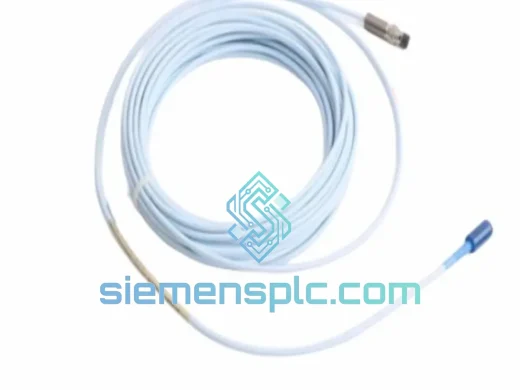
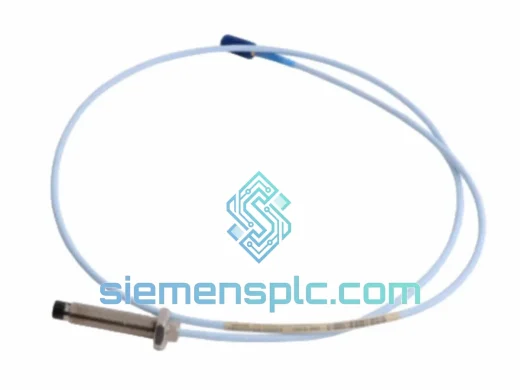
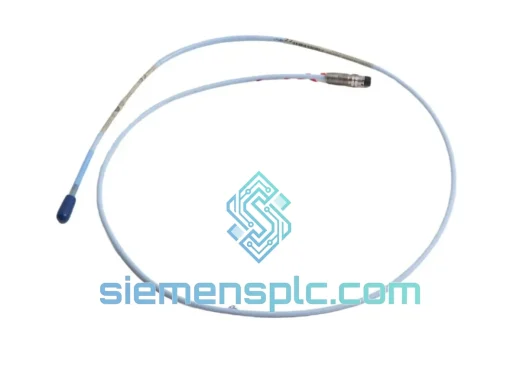
Bently Nevada 330196-05-30-10-00 Proximity Probe – 3300 XL ETR
3301
Origin US
Proximity Probe
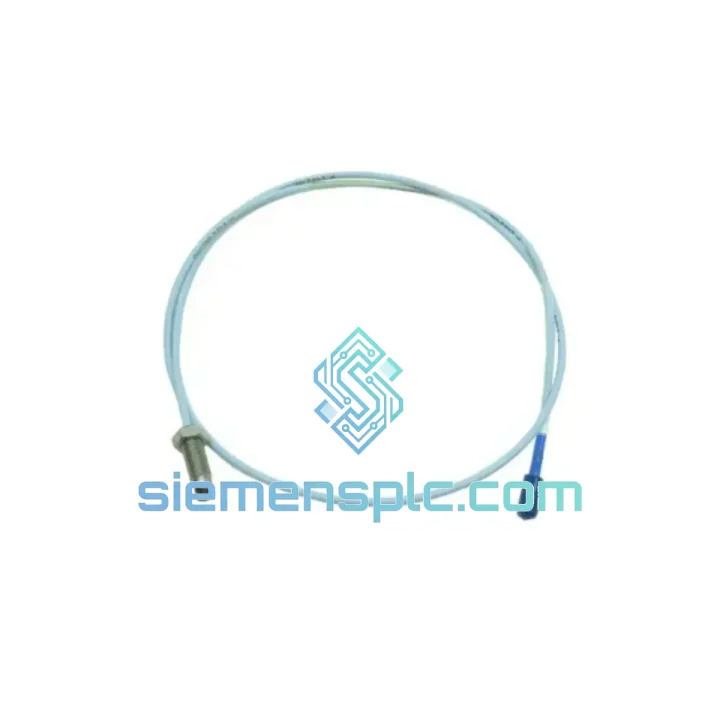
Request verified availability, condition, replacement risk review, packing options and courier lead time for 330101-36-80-10-02-00.
Click Request Quote and the part number is inserted into the inquiry form automatically.
Core fields for model confirmation and RFQ routing. Detailed product narrative remains below.
Your turbine is down. The vibration monitor is dark. Every hour of unplanned outage on a gas compressor or steam turbine train costs anywhere from $50,000 to $250,000 in lost production — and that number climbs fast. The Bently Nevada 330101-36-80-10-02-00 is the exact 8mm eddy-current proximity probe your 3300 XL system needs to get back online. We stock it in Xiamen. We ship it today.
This is not a generic sensor. The 330101-36-80-10-02-00 is a factory-configured, OEM-spec component: 36-inch probe cable, 80-inch extension cable, 10-32 UNF reverse-mount connector. It slots directly into your existing 3300 XL Proximitor® installation without any driver recalibration, without any system re-ranging, and without any paperwork headaches. Plug it in, verify the gap voltage, and restart your machine.
URGENT REQUIREMENT? Contact: [email protected] | WhatsApp: +86 18359268345
| Parameter | Specification |
|---|---|
| Part Number / SKU | 330101-36-80-10-02-00 |
| Brand | Bently Nevada (Baker Hughes) |
| Series | 3300 XL 8mm Proximity Transducer System |
| Probe Tip Diameter | 8 mm |
| Probe Cable Length | 36 inches (914 mm) |
| Extension Cable Length | 80 inches (2032 mm) |
| Connector Type | 10-32 UNF Reverse Mount |
| Sensing Technology | Eddy-Current (Non-contact) |
| Linear Range | 0 – 80 mil (0 – 2.032 mm) typical |
| Scale Factor | 200 mV/mil (7.87 V/mm) nominal |
| Operating Temperature (Probe) | -35°C to +177°C |
| Operating Temperature (Driver) | -35°C to +66°C |
| Target Material | AISI 4140 steel or equivalent |
| Certifications | CE, ATEX, FM, CSA (system-level) |
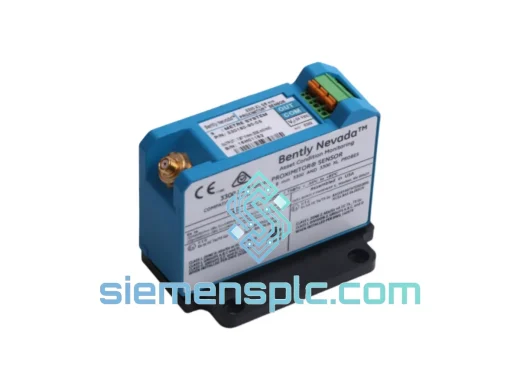
| Compatible Proximitor | 3300 XL Proximitor® Sensor |
| Weight | ~220 g |
| Stock Status | ✅ Ready to Ship — Xiamen Warehouse |
After ten years of field work on rotating machinery, here are the failure modes and replacement pitfalls that actually matter for this probe:
Most Common Failure Modes:
Step-by-Step Replacement Procedure:
Configuration Notes: The 3300 XL system does not use DIP switches or firmware settings at the probe level — all configuration is handled in the 3500 rack monitor cards. However, if you are replacing a probe in a system that uses the 3300 XL Proximitor® with an integral barrier (for IS applications), verify that the barrier model matches the probe impedance specification. Mismatched barriers will cause the system to report a probe fault even with a new, functional probe installed.
The 330101-36-80-10-02-00 is built for environments that destroy ordinary sensors. The probe body is machined from 316 stainless steel with a hermetically sealed tip assembly — no epoxy fill, no exposed coil winding. This construction method eliminates the primary failure mechanism seen in lower-grade proximity probes: moisture wicking into the coil through the tip seal.
In gas turbine bearing housings, the probe routinely operates at continuous temperatures above 150°C with intermittent excursions to 177°C. The probe cable uses a PTFE-insulated, stainless-steel-armored construction that resists both the thermal degradation and the oil mist exposure common in turbomachinery environments. Vibration endurance testing per API 670 requirements covers continuous sinusoidal vibration at 5g from 10 Hz to 2000 Hz — the probe does not drift, does not detune, and does not generate false alarms under these conditions.
In offshore and coastal installations where salt-laden air accelerates corrosion, the stainless housing and gold-plated connector contacts maintain signal integrity over multi-year service intervals. We have supplied this probe to petrochemical plants in Southeast Asia, the Middle East, and South America where ambient humidity exceeds 90% RH year-round — field feedback consistently confirms probe service life exceeding five years in continuous operation without recalibration.
Our warehouse is located in Xiamen, Fujian Province — one of China’s primary export hubs with direct access to international freight lanes via Xiamen Gaoqi International Airport and Xiamen Port. This geography is not accidental: it gives us the fastest possible transit times to Southeast Asia, the Middle East, Europe, and the Americas.
Standard Express Shipping (DHL / FedEx Priority):
Every shipment includes a commercial invoice, packing list, and country-of-origin certificate. For orders requiring ATEX or FM documentation, we prepare the relevant certification package in advance so your receiving inspection team can clear the shipment without delay. Customs HS code for this product is 9031.80 (precision measuring instruments) — we pre-declare this on all export documents to avoid customs holds at major ports of entry.
For emergency shutdown situations where every hour counts, contact us directly via WhatsApp. We can arrange same-day dispatch for orders confirmed before 14:00 CST, with DHL Express tracking number issued within two hours of shipment.
📧 Email: [email protected]
💬 WhatsApp: +86 18359268345
🌐 Web: siemensplc.com
© 2026 siemensplc.com. All rights reserved.
We check the full part number, brand, series and visible nameplate information before quotation.
Sales confirms stock path, condition option, quantity and realistic lead time for export dispatch.
DHL, FedEx, UPS or buyer courier arrangements can be reviewed with packing requirements.
Similar brand or category products for fast comparison and multi-item RFQ lists.