Bently Nevada
RFQ Ready
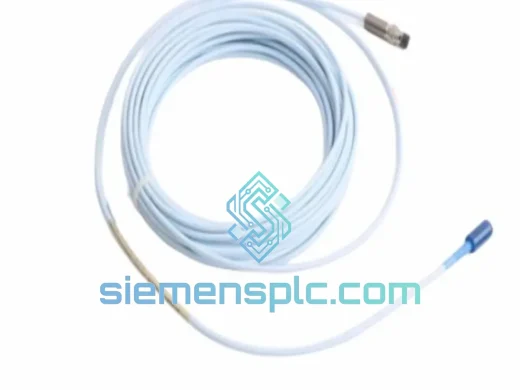
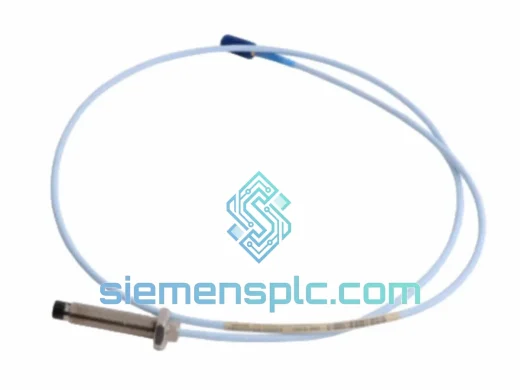
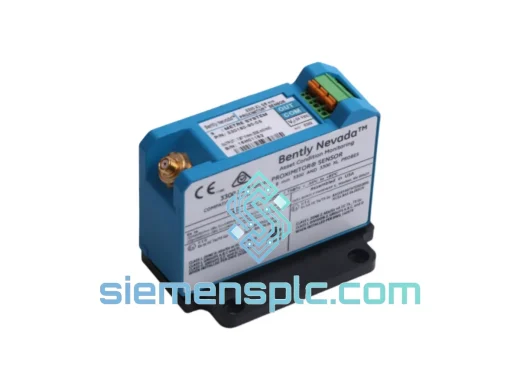
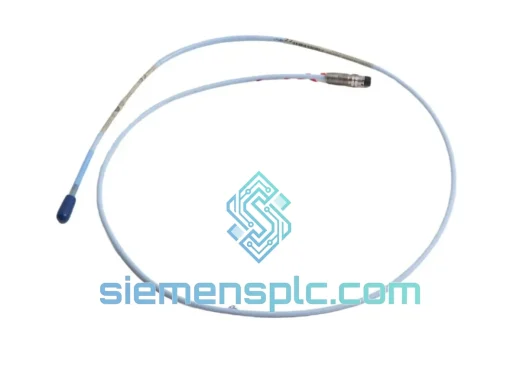
Bently Nevada 330196-05-30-10-00 Proximity Probe – 3300 XL ETR
3301
Origin US
Proximity Probe
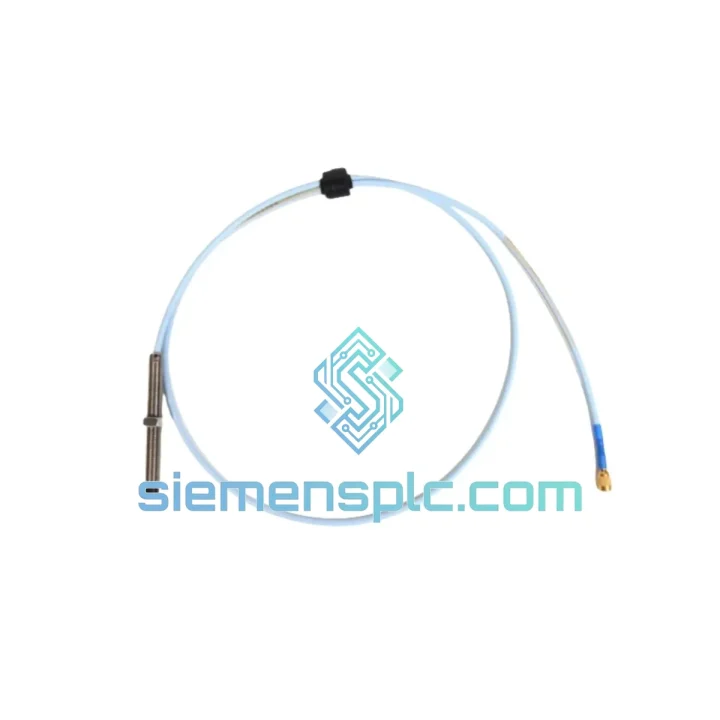
Request verified availability, condition, replacement risk review, packing options and courier lead time for 330103-00-06-05-02-05.
Click Request Quote and the part number is inserted into the inquiry form automatically.
Core fields for model confirmation and RFQ routing. Detailed product narrative remains below.
Your shaft monitoring just went dark. The DCS is throwing Alert 1 or worse — Danger — and the control room is waiting. You already know the 3300 XL proximity transducer is the weak link: the probe tip is shorted, the cable is severed, or the proximitor output has flatlined at –24 VDC with zero AC component. You don’t need a lecture on eddy-current physics right now. You need a confirmed-in-stock 330103-00-06-05-02-05 on a plane out of Xiamen today.
We stock it. We ship it. DHL Express door-to-door, tracked from our warehouse to your site. One email or WhatsApp message is all it takes to get a proforma invoice and an ETA within the hour.
URGENT REQUIREMENT? Contact: [email protected] | WhatsApp: +86 18359268345
| Parameter | Specification |
|---|---|
| Part Number / SKU | 330103-00-06-05-02-05 |
| Brand | Bently Nevada (Baker Hughes) |
| Series | 3300 XL 8mm Proximity Transducer System |
| Sensing Technology | Eddy-current, non-contact |
| Probe Tip Diameter | 8 mm |
| Nominal Output | –24 VDC bias; –200 mV/mil (–7.87 V/mm) sensitivity |
| Linear Range | 0.25 mm – 2.26 mm (10 – 89 mil) |
| Frequency Response | DC – 10,000 Hz (–3 dB) |
| Operating Temperature | –35 °C to +177 °C (probe); –35 °C to +85 °C (proximitor) |
| Target Material | AISI 4140 steel (standard); other alloys require recalibration |
| System Components | Probe + Extension Cable + Proximitor/Oscillator (3-piece matched set) |
| Compatible Monitors | 3300 XL, 3500/40M, 3500/42M, 3500/45 |
| Compliance | API 670, CE, ATEX (zone-dependent) |
| Country of Origin | USA |
| Stock Status | ✅ Ready to Ship — Xiamen, China |
Fault Isolation Before You Pull the Probe
Before condemning the 330103-00-06-05-02-05 probe itself, isolate the fault systematically. Measure the DC bias voltage at the proximitor output with the probe installed and the machine at rest. A healthy system reads between –10.0 VDC and –18.0 VDC (gap-dependent). If you read exactly 0 VDC or the supply rail (–24 VDC with no AC), the fault is almost certainly in the probe or extension cable — not the proximitor. Swap the extension cable first; it fails more often than the probe due to connector corrosion and jacket abrasion at conduit entry points.
Common Fault Codes on 3500 Rack Systems
Replacement Procedure — Field Checklist
Configuration Notes
The 330103-00-06-05-02-05 does not have DIP switches or firmware — it is a passive sensing element. However, the 3500 rack monitor card (e.g., 3500/42M) requires configuration verification after any transducer replacement: confirm the channel’s transducer type is set to 3300 XL 8mm, sensitivity is set to 7.87 V/mm, and the gap OK limits match your installation drawing. These settings are held in the monitor’s non-volatile memory and survive power cycling, but a rack firmware update or card swap can reset them to defaults.
The 3300 XL 8mm probe is not a laboratory instrument. It was designed from the ground up for the environments where machinery protection matters most — and where failure is not an option.
The probe body is machined from 316 stainless steel with a PEEK (polyether ether ketone) tip housing, giving it chemical resistance against H₂S, hydrocarbon condensate, and aggressive cleaning agents common in refinery and offshore environments. The cable jacket is rated for continuous immersion and resists UV degradation, making it suitable for outdoor installations on open-deck compressor trains.
Vibration resistance is validated to 20 g continuous (10–2,000 Hz), which covers the harmonic excitation seen on high-speed centrifugal compressors running at 10,000–15,000 RPM. The probe coil assembly is epoxy-potted, eliminating the resonance failures that plague cheaper transducers at high-frequency excitation.
Thermal performance is equally robust. The probe itself operates continuously at up to 177 °C — sufficient for hot-section installations on gas turbines and steam turbine bearing pedestals where ambient temperatures routinely exceed 120 °C. The proximitor is rated to 85 °C and should be mounted in a cooler location (junction box, instrument shelter) if ambient exceeds this threshold.
In high-humidity environments — coastal plants, offshore platforms, tropical process facilities — the primary failure mode is connector corrosion at the probe-to-extension-cable junction. Bently Nevada’s bayonet-lock connector design minimizes ingress, but field experience shows that applying a thin bead of silicone sealant around the mated connector significantly extends service life in salt-laden atmospheres. This is a standard practice on offshore installations and adds less than two minutes to the installation procedure.
Our warehouse is located in Xiamen, Fujian Province — one of China’s primary export hubs with direct access to international freight lanes via Xiamen Gaoqi International Airport and Xiamen Port. This geography is not incidental: it means your emergency order moves fast.
Standard Express Routing (DHL / FedEx International Priority):
Every shipment includes a commercial invoice, packing list, and certificate of origin. For ATEX-certified units, we provide the EU Declaration of Conformity. For customers requiring import clearance support, we can provide HS code documentation (HS 9031.80) and manufacturer datasheet packages to expedite customs processing.
Orders confirmed before 14:00 CST are dispatched same day. Tracking numbers are issued within 2 hours of dispatch. We do not consolidate emergency orders with regular freight — your part ships alone, on the first available flight.
For destinations with known customs delays (Brazil, India, certain African markets), we recommend declaring the shipment under the correct HS code from the outset and providing your import license number at the time of order. We have handled hundreds of shipments to these markets and can advise on documentation requirements specific to your country.
Email: [email protected]
WhatsApp: +86 18359268345
Web: siemensplc.com
© 2026 siemensplc.com. All rights reserved.
We check the full part number, brand, series and visible nameplate information before quotation.
Sales confirms stock path, condition option, quantity and realistic lead time for export dispatch.
DHL, FedEx, UPS or buyer courier arrangements can be reviewed with packing requirements.
Similar brand or category products for fast comparison and multi-item RFQ lists.