Bently Nevada
RFQ Ready
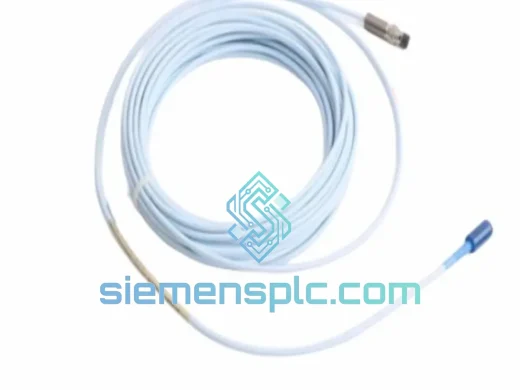
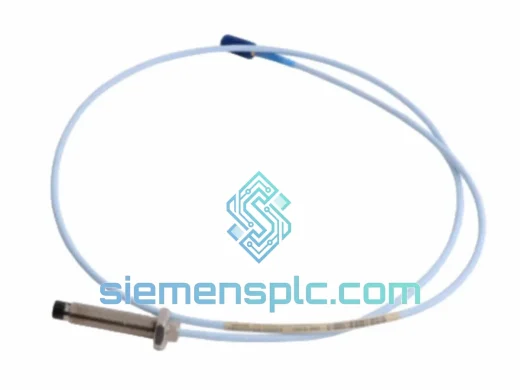
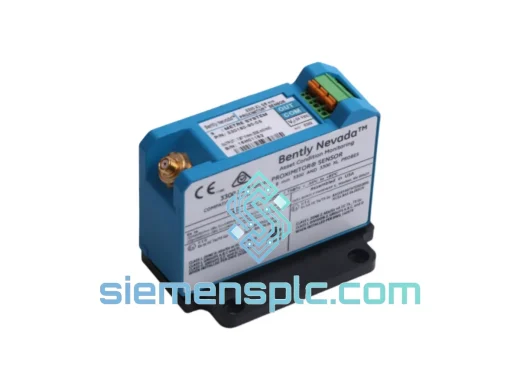
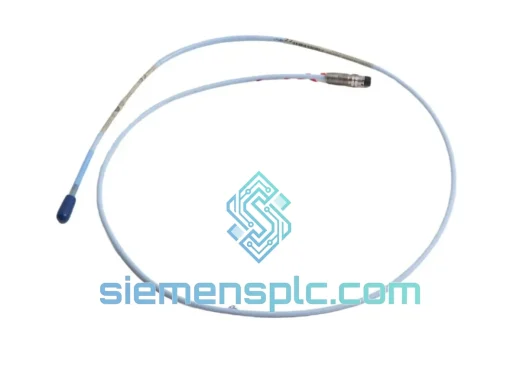
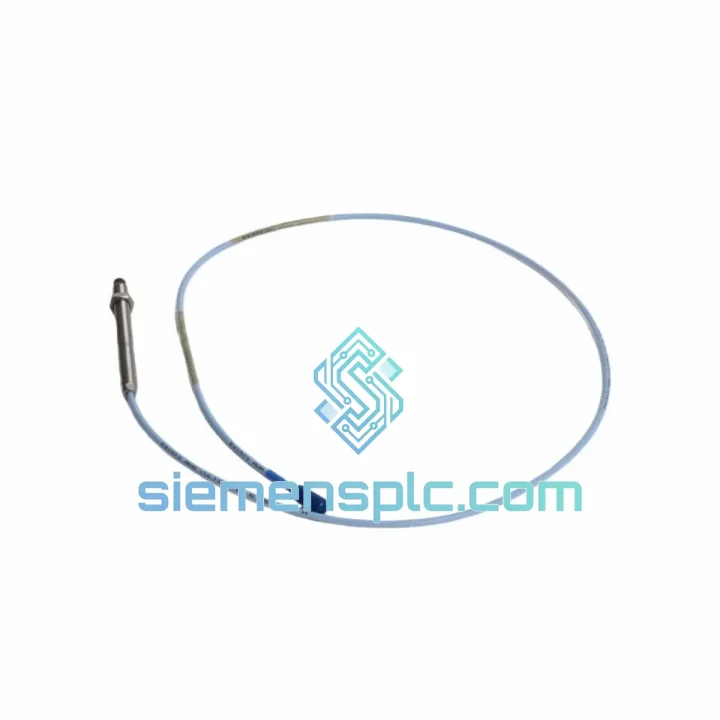
Bently Nevada 330196-05-30-10-00 Proximity Probe – 3300 XL ETR
3301
Origin US
Proximity Probe
Request verified availability, condition, replacement risk review, packing options and courier lead time for 330103-00-09-50-02-CN.
Click Request Quote and the part number is inserted into the inquiry form automatically.
Core fields for model confirmation and RFQ routing. Detailed product narrative remains below.
You already know the damage: a tripped proximity loop on a critical rotating machine means production loss that compounds by the hour. The Bently Nevada 330103-00-09-50-02-CN is the 9-inch integral-cable variant of the 3300 XL NSv eddy-current proximity transducer — a workhorse in turbine, compressor, and pump monitoring loops worldwide. Cable fatigue at the probe body, connector corrosion on the CN-suffix mating half, and tip damage from rotor contact are the three failure modes that put this part number on emergency requisitions. We carry verified stock in Xiamen. Order before 14:00 CST and it ships today.
URGENT REQUIREMENT? Contact: [email protected] | WhatsApp: +86 18359268345
| Parameter | Specification | Status |
|---|---|---|
| Part Number | 330103-00-09-50-02-CN | ✔ Ready to Ship |
| Brand | Bently Nevada (Baker Hughes) | |
| Series | 3300 XL NSv | |
| Sensor Type | Eddy-Current Proximity Transducer | |
| Integral Cable Length | 9 in (229 mm) | |
| Extension Cable | 5.0 m (50 ft) — ordered separately (330130 series) | |
| Scale Factor | 200 mV/mil (7.87 V/mm) | |
| Frequency Response | DC to 10,000 Hz | |
| Supply Voltage | –24 VDC nominal (–18 to –26 VDC range) | |
| Probe Operating Temp | –35 °C to +177 °C | |
| Proximitor Operating Temp | –35 °C to +85 °C | |
| Target Material (standard) | AISI 4140 steel | |
| Connector Variant | CN (China domestic market) | |
| Ingress Protection | IP67 (probe body with CN connector seated) | |
| Certifications | CE, ATEX Zone 1/2, IECEx, FM, RoHS | |
| Compatible Monitor Cards | 3500/40M, 3500/42M, 3500/45 | |
| Probe Coil Impedance | 7–9 Ω (nominal, at room temp) | |
| Weight (probe assembly) | ≈ 40 g | |
| Country of Origin | USA |
Ten years of field calls distilled into what actually matters when the clock is running:
Step 1 — Confirm the probe is the fault, not the extension cable.
Disconnect the extension cable at the Proximitor junction box. Measure impedance across the probe coil pins with a calibrated LCR meter or a quality DMM on the resistance range. Healthy 330103 coil reads 7–9 Ω. Below 5 Ω = shorted coil (probe failed). Above 15 Ω = open circuit, usually a cable break within 50 mm of the probe body where the armour terminates. Do not order a replacement until you have confirmed this reading — extension cable failures are three times more common than probe failures and cost a fraction of the price.
Step 2 — Check the –24 VDC supply rail before condemning the Proximitor.
A rail that sags below –21 VDC under load will cause the Proximitor OK relay to drop out and mimic a probe fault. Measure at the Proximitor terminal strip, not at the rack power supply output. Voltage drop across long cable runs in large plants is a real factor. If the rail is low, address the power supply before swapping hardware.
Step 3 — Set bypass before pulling the probe.
In System 1 or via the 3500 rack front-panel keyswitch, place the affected channel in Bypass mode. This suppresses spurious alarms and prevents a false machine trip during the swap. Log the bypass action in your permit-to-work system — this is an audit requirement in most facilities.
Step 4 — Count the turns on removal.
Back the probe out slowly and count the number of turns from the locked position. Record this number. When installing the 330103-00-09-50-02-CN replacement, thread in to the same turn count first. This gets you close to the correct gap voltage before fine-tuning and avoids the risk of the probe tip contacting the shaft during initial energisation.
Step 5 — Set and verify gap voltage.
For AISI 4140 steel at a 4 mil (100 µm) air gap, the Proximitor output should read approximately –10.4 VDC. Adjust the probe axially until the output sits within the linear range centre, typically –10.0 to –11.0 VDC. Tighten the locknut to 1.1 N·m — do not exceed this torque or you risk cracking the PEEK thread insert in the probe body. Apply thread-locking compound only if specified in the OEM machinery manual; many installations run without it to allow future gap adjustments.
Step 6 — Target material mismatch warning.
If the shaft material is not AISI 4140 (common alternatives: 17-4 PH stainless, Inconel 718, titanium alloy), the scale factor shifts. A 17-4 PH shaft can shift the output by up to 12% relative to the 4140 calibration curve. Recalibrate using Bently Nevada calibration document 141536-01 before returning the machine to service. Skipping this step is the leading cause of repeat nuisance trips after a probe replacement.
Step 7 — CN connector corrosion check.
The CN-suffix connector is optimised for Chinese domestic junction boxes. In coastal or tropical installations, inspect the mating connector half for green oxidation on the contact pins. Clean with isopropyl alcohol and a fine brass brush. Apply Dow Corning DC-4 silicone compound to the connector threads before reassembly. Torque to 0.5 N·m — overtightening fractures the PEEK insulator and creates a new failure point.
Firmware note: A like-for-like 330103 probe swap requires no firmware changes. If you are simultaneously replacing the Proximitor (330180 series), verify the firmware revision matches the existing 3500 rack configuration. A firmware mismatch causes the OK relay to chatter on power-up — a symptom that is frequently misdiagnosed as a wiring fault.
Common fault codes on the 3500/40M and 3500/42M monitor cards:
The 330103-00-09-50-02-CN is not a laboratory instrument — it is built to run continuously in environments that destroy conventional sensors. The stainless-steel probe housing withstands direct immersion in turbine lube oil, process gas condensate, and high-pressure steam atmospheres without degradation of the sensing element or cable jacket. The PTFE-jacketed, armoured integral cable maintains flexibility at –35 °C, which matters for outdoor compressor stations in northern China, Kazakhstan, and Siberian installations where ambient temperatures drop well below freezing during winter startups.
Vibration endurance is validated to 20 g RMS broadband per IEC 60068-2-64, covering the full frequency spectrum from slow-speed reciprocating compressors at 300 RPM to high-speed centrifugal units running at 20,000 RPM. The eddy-current sensing principle has no moving parts, no wear surfaces, and no consumable elements — MTBF exceeds 100,000 hours under typical plant conditions. The CN connector variant adds a secondary O-ring seal at the probe body thread, delivering IP67 ingress protection against water jets and condensation in tropical and coastal installations including offshore platforms and LNG terminals.
ATEX and IECEx certifications cover Zone 1 and Zone 2 hazardous area classifications. This probe can be installed directly in gas compressor buildings, hydrogen production facilities, and offshore machinery spaces without additional intrinsic safety barriers or enclosures — a significant installation cost saving compared to non-certified alternatives.
Thermal cycling performance is validated across the full –35 °C to +177 °C probe operating range. The coil assembly uses a hermetically sealed construction that prevents moisture ingress during temperature cycling — a failure mode that affects lower-cost proximity probes and causes progressive drift in the scale factor over months of operation.
Our warehouse is in Xiamen, Fujian, China — a tier-one export hub with direct DHL Express and FedEx International Priority linehaul flights to industrial centres across Southeast Asia, the Middle East, Europe, and the Americas. We do not consolidate shipments or hold orders for batch processing. Every order ships as a dedicated consignment.
Export process, step by step:
For critical shutdowns requiring next-flight-out courier or hand-carry arrangements, contact us directly on WhatsApp. We have coordinated emergency deliveries to Singapore, Dubai, Rotterdam, and Houston within 24 hours of order confirmation. Both EXW Xiamen and DDP (Delivered Duty Paid) Incoterms are available — specify your preference at the time of order.
Email: [email protected]
WhatsApp: +86 18359268345
Web: siemensplc.com
© 2026 siemensplc.com. All rights reserved.
We check the full part number, brand, series and visible nameplate information before quotation.
Sales confirms stock path, condition option, quantity and realistic lead time for export dispatch.
DHL, FedEx, UPS or buyer courier arrangements can be reviewed with packing requirements.
Similar brand or category products for fast comparison and multi-item RFQ lists.