Bently Nevada
RFQ Ready
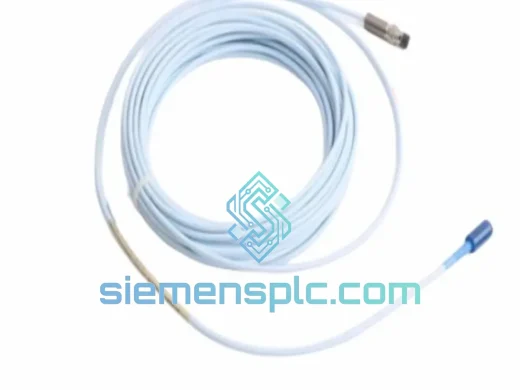
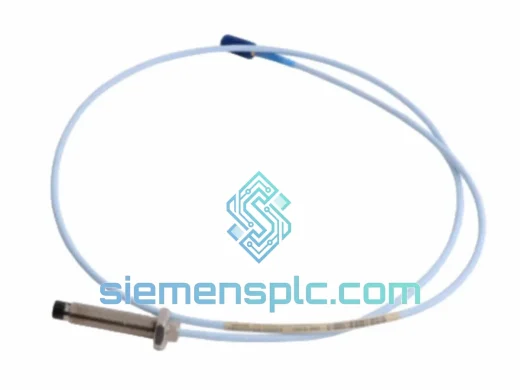
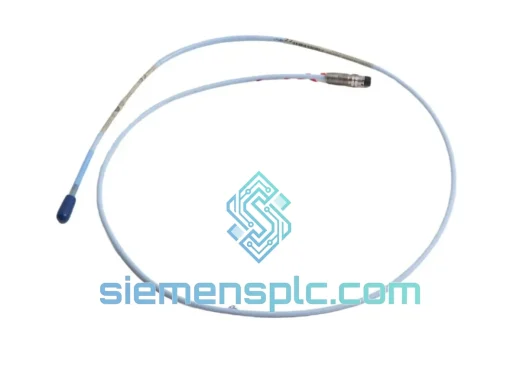
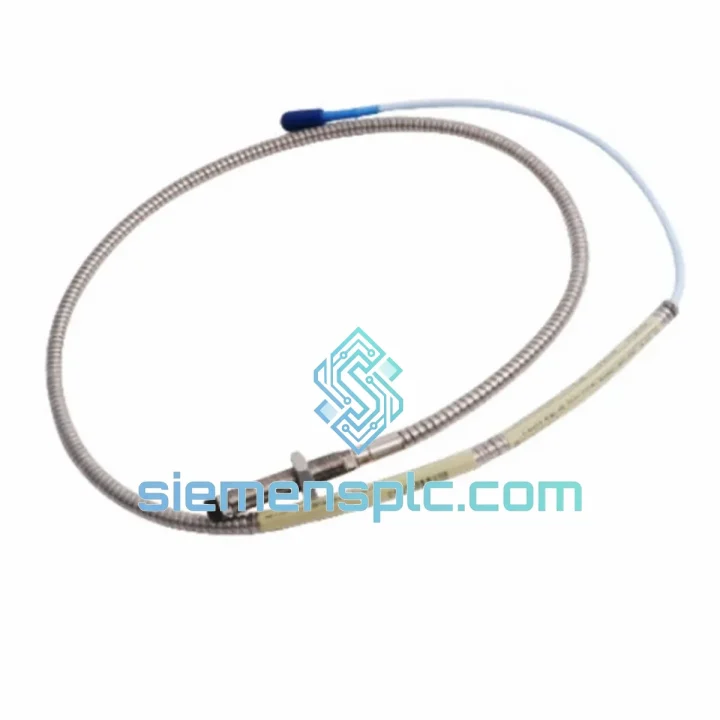
Bently Nevada 330196-05-30-10-00 Proximity Probe – 3300 XL ETR
3301
Origin US
Proximity Probe
Request verified availability, condition, replacement risk review, packing options and courier lead time for 330104-00-02-10-02-00.
Click Request Quote and the part number is inserted into the inquiry form automatically.
Core fields for model confirmation and RFQ routing. Detailed product narrative remains below.
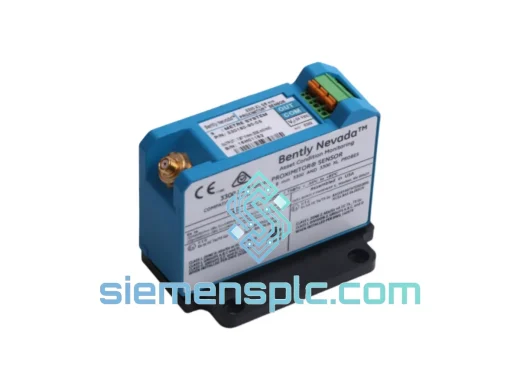
The 330104-00-02-10-02-00 is an 8 mm eddy current proximity probe manufactured by Bently Nevada (a Baker Hughes business) and is the primary sensing element within the 3300 XL Proximity Transducer System. In a machinery protection architecture, this probe occupies the first stage of a three-component signal chain: it generates a high-frequency electromagnetic field, detects the impedance perturbation caused by a conductive target surface, and passes that raw RF signal downstream to a matched proximitor for demodulation into a calibrated DC voltage. The output of that chain feeds directly into API 670-compliant monitoring racks — including the Bently Nevada 3500 series — where it drives alarm, trip, and condition-monitoring logic for rotating machinery assets.
This specific part number encodes a defined mechanical and electrical configuration: 8 mm probe tip diameter, 2.0 m integral cable, standard armored construction, and factory calibration for a nominal scale factor of 7.87 V/mm (200 mV/mil). The probe is designed for continuous, non-contact operation in environments where bearing journal orbits, shaft axial position, differential expansion, and rotor eccentricity must be measured without introducing any mechanical loading on the observed shaft. Non-contact measurement eliminates wear as a failure mode for the sensor itself, making this probe suitable for indefinite service life under normal operating conditions.
Deployment environments include steam turbines, gas turbines, centrifugal and axial compressors, large pumps, gearboxes, and hydro turbines — any rotating asset where API 670 machinery protection is specified or where continuous vibration surveillance is required by insurance, regulatory, or OEM maintenance standards. The probe’s rated operating temperature of –35 °C to +177 °C covers hot-section bearing-proximity installations and cold-climate outdoor machinery without derating.
Real-time Stock & RFQ: [email protected] | WhatsApp: +86 18359268345
| Part Number | 330104-00-02-10-02-00 |
| Manufacturer | Bently Nevada (Baker Hughes) |
| Series | 3300 XL 8 mm Proximity Transducer System |
| Sensing Principle | Eddy current (non-contact inductive impedance) |
| Probe Tip Diameter | 8 mm |
| Linear Measurement Range | 0.25 mm – 2.26 mm (10 mil – 90 mil) |
| Nominal Scale Factor | 7.87 V/mm (200 mV/mil) |
| Scale Factor Tolerance | ±0.5% of nominal (factory calibrated) |
| Frequency Response | DC to 10,000 Hz (–3 dB) |
| Supply Voltage | –24 VDC (supplied via proximitor) |
| Output Signal | DC voltage, negative-going with decreasing gap |
| Integral Cable Length | 2.0 m (armored) |
| Connector | Standard Bently Nevada coaxial, integral armored cable |
| Operating Temperature | –35 °C to +177 °C (–31 °F to +351 °F) |
| Target Material (Reference) | AISI 4140 steel per API 670 Annex D |
| Ingress Protection | IP67 (probe body and cable entry) |
| Compliance | API 670 (4th & 5th Ed.), CE, RoHS |
| Approximate Weight | 500 g (probe + 2.0 m cable assembly) |
| Warranty | 12 months from date of shipment |
The eddy current sensing mechanism in the 330104-00-02-10-02-00 operates on the principle of mutual inductance perturbation. The probe coil, embedded in the tip assembly and potted in a chemically resistant compound, is driven by the proximitor’s oscillator at a fixed frequency — typically in the range of 500 kHz to 2 MHz depending on the 3300 XL system variant. When the probe tip is positioned within its linear range of a conductive target, eddy currents are induced in the target surface. These eddy currents generate a counter-magnetic field that reduces the effective inductance of the probe coil. The proximitor’s demodulator circuit measures this inductance change as a voltage shift, producing the calibrated output signal.
EMC Design: The armored cable construction provides a continuous Faraday shield from the probe body to the proximitor input, suppressing capacitively coupled interference from adjacent high-voltage cables, variable-frequency drives, and ignition systems common in turbomachinery enclosures. The coaxial signal path maintains a controlled characteristic impedance, preventing reflections that would introduce measurement error at high shaft rotational frequencies. The probe body itself is constructed from 316 stainless steel, which is non-magnetic and does not perturb the eddy current field, ensuring that the probe housing does not contribute to measurement offset.
Thermal Stability: The probe coil winding uses a temperature-compensated wire alloy, and the potting compound has a coefficient of thermal expansion matched to the coil former material. This minimizes thermally induced dimensional changes in the coil geometry that would otherwise shift the scale factor across the operating temperature range. The result is a scale factor drift specification that remains within the ±0.5% tolerance band from –35 °C to +177 °C without field recalibration.
Target Material Sensitivity: The eddy current field penetration depth (skin depth) is a function of target material conductivity and permeability. The 3300 XL system is factory calibrated against AISI 4140 steel per API 670 Annex D. When the target material deviates from this reference — for example, when monitoring titanium impellers or Inconel shafts — a material correction factor must be applied. The proximitor’s calibration curve is specific to the probe-cable-proximitor system length; mixing components from different system length configurations introduces a systematic scale factor error that cannot be corrected by gap adjustment alone.
Redundancy Architecture Compatibility: In dual-voting or 2-of-3 protection architectures, multiple 330104-00-02-10-02-00 probes are mounted at 90° intervals around the shaft journal. Each probe feeds an independent proximitor and monitor channel. The monitor’s voting logic compares the three channel outputs; a single probe failure or signal dropout triggers a maintenance alert without initiating a spurious trip, preserving plant availability while maintaining protection integrity. This probe’s consistent scale factor across units — ensured by individual factory calibration — is a prerequisite for accurate voting logic operation.
Every 330104-00-02-10-02-00 unit dispatched from our Xiamen, China facility is a genuine Bently Nevada (Baker Hughes) component sourced through verified supply channels. Prior to dispatch, each unit undergoes a multi-point inspection protocol: physical integrity of the probe body and tip, connector geometry verification against OEM dimensional drawings, cable armor continuity check, and label authenticity screening including date code and serial number cross-reference. Units that do not pass all inspection criteria are quarantined and not offered for sale.
Packaging follows anti-static and mechanical protection standards appropriate for precision instrumentation: individual probe assemblies are wrapped in anti-static foam, placed in rigid-wall cartons, and sealed with tamper-evident tape. The original factory label, serial number, and calibration documentation are preserved inside the package. For international shipments, export documentation — including commercial invoice, packing list, and HS code declaration — is prepared in compliance with Chinese customs regulations and the import requirements of the destination country.
Logistics partners include DHL Express, FedEx International Priority, and UPS Worldwide Express, with typical transit times of 3–5 business days to Europe, North America, Southeast Asia, and the Middle East. For time-critical plant shutdowns, same-day dispatch is available for orders confirmed before 14:00 CST. All shipments are fully insured and tracked from dispatch to delivery confirmation.
The 12-month warranty covers manufacturing defects and verifiable performance deviations from the published specification. Warranty claims are processed with a target response time of 48 hours from receipt of the defective unit and supporting documentation.
Email: [email protected]
WhatsApp: +86 18359268345
Web: siemensplc.com
Location: Xiamen, China
© 2026 siemensplc.com. All rights reserved.
We check the full part number, brand, series and visible nameplate information before quotation.
Sales confirms stock path, condition option, quantity and realistic lead time for export dispatch.
DHL, FedEx, UPS or buyer courier arrangements can be reviewed with packing requirements.
Similar brand or category products for fast comparison and multi-item RFQ lists.