Bently Nevada
RFQ Ready
Bently Nevada 330196-05-30-10-00 Proximity Probe – 3300 XL ETR
3301
Origin US
Proximity Probe
Request verified availability, condition, replacement risk review, packing options and courier lead time for 330104-00-19-10-01-05.
Click Request Quote and the part number is inserted into the inquiry form automatically.
Core fields for model confirmation and RFQ routing. Detailed product narrative remains below.
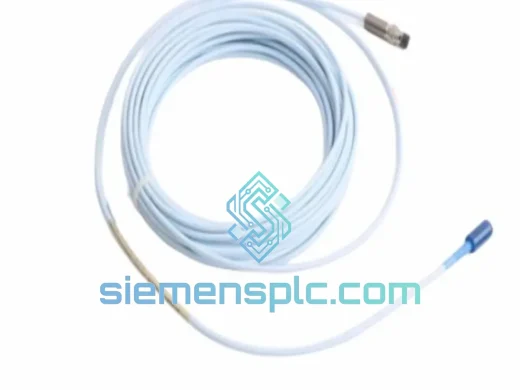
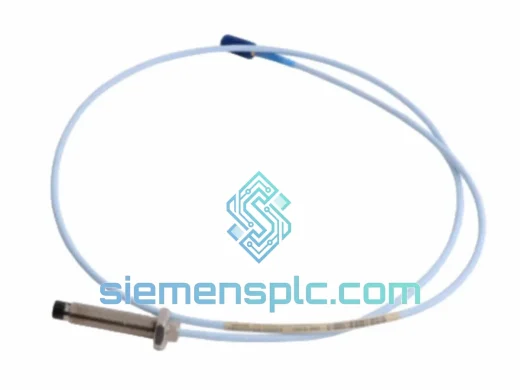
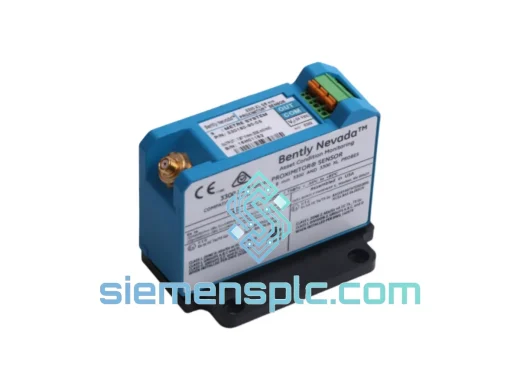
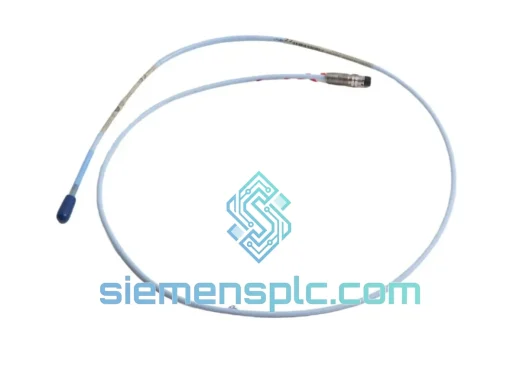
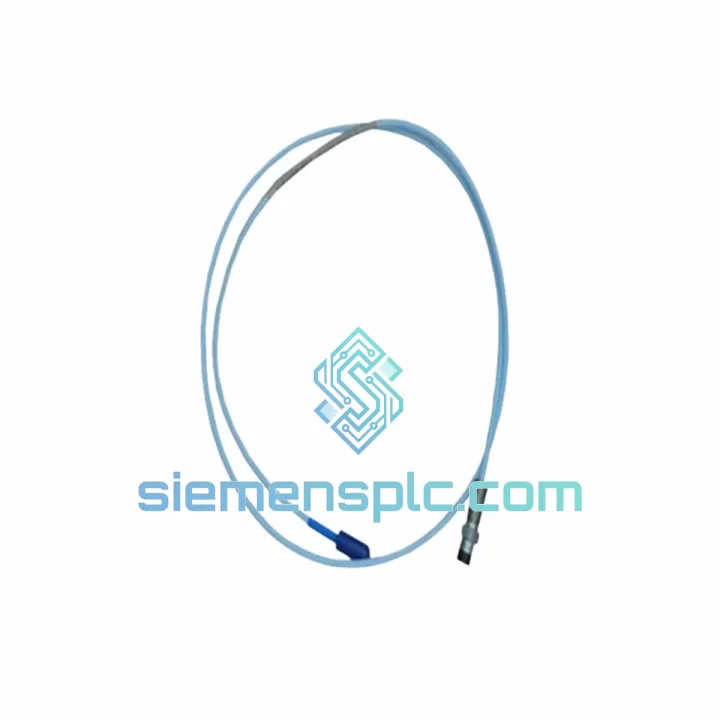
The 330104-00-19-10-01-05 is a factory-original Bently Nevada 8mm eddy current proximity probe designed for continuous, non-contact shaft displacement measurement in critical rotating machinery. It operates as the primary sensing element within the 3300 XL measurement chain — a three-component architecture comprising the probe, an extension cable, and a proximitor/driver. Together, these components deliver calibrated radial vibration, axial position, and differential expansion data to plant-level protection and control systems. Typical deployment environments include gas turbines, steam turbines, centrifugal compressors, boiler feed pumps, and large induction motors across oil & gas, power generation, and petrochemical facilities.
The probe tip generates a nominally 1 MHz oscillating electromagnetic field. When a conductive shaft surface enters the field boundary, eddy currents are induced proportional to the probe-to-target gap. The resulting energy absorption modulates the oscillator amplitude; this modulated signal travels through the 5-meter (19-foot) integral armored coaxial cable to the 3300 XL proximitor, which demodulates it into a DC voltage output spanning −2 VDC to −18 VDC. Nominal sensitivity is 200 mV/mil (7.87 V/mm), with a calibrated linear range of 0.25 mm to 2.25 mm (10 to 90 mil) against AISI 4140 steel targets. The flat frequency response from DC to 10,000 Hz ensures that both synchronous (1×) shaft bow and high-order components such as blade-pass or gear-mesh frequencies are captured without amplitude roll-off.
In the context of a machinery protection loop, the 330104-00-19-10-01-05 sits at the boundary between the mechanical domain and the electronic signal chain. Its measurement accuracy directly determines the fidelity of alarm and trip setpoints configured in the 3300 XL monitor. A 1% linearity error at this stage propagates through the entire protection chain, potentially shifting a vibration trip threshold by several mils — a margin that can be the difference between a controlled shutdown and a bearing failure event. The probe’s factory calibration and matched-impedance coaxial architecture are therefore not incidental features but structural requirements of a compliant API 670 protection system.
Real-time Stock & RFQ: [email protected] | WhatsApp: +86 18359268345
| Parameter | Specification |
|---|---|
| Part Number | 330104-00-19-10-01-05 |
| Platform / Series | Bently Nevada 3300 XL |
| Sensor Technology | Eddy Current, Non-Contact |
| Probe Tip Diameter | 8 mm |
| Integral Cable Length | 5 m (19 ft), armored coaxial |
| Oscillator Frequency | ~1 MHz (nominal) |
| Nominal Sensitivity | 200 mV/mil (7.87 V/mm) |
| Calibrated Linear Range | 0.25 mm – 2.25 mm (10 – 90 mil) |
| Linearity | ±1% of full-scale range |
| Supply Voltage | −24 VDC (nominal, supplied by proximitor) |
| Output Voltage Range | −2 VDC to −18 VDC |
| Frequency Response (−3 dB) | DC to 10,000 Hz |
| Probe Tip Operating Temperature | −35°C to +177°C |
| Cable Operating Temperature | −35°C to +121°C |
| Standard Target Material | AISI 4140 steel (ferrous and non-ferrous compatible with correction factors) |
| Connector Type | Integral coaxial, 3300 XL system-matched |
| Maximum System Cable Length | 9 m total (probe integral + extension cable) |
| Probe Body Material | Stainless steel |
| Cable Jacket Material | PTFE over stainless steel braid armor |
| Certifications | CE, CSA, ATEX (zone classification per product datasheet) |
| Compliance Standard | API 670 4th Edition |
| Assembly Weight | ~230 g (probe + integral cable) |
| Warranty | 12 months from date of shipment |
The physical architecture of the 330104-00-19-10-01-05 reflects deliberate engineering decisions for sustained accuracy in high-vibration, thermally aggressive plant environments. The following hardware-level characteristics define its performance envelope:
Matched-Impedance Coaxial Transmission Line: The probe tip coil, integral cable, and output connector form a continuous matched-impedance coaxial path. Impedance discontinuities along this path would generate signal reflections that introduce amplitude errors at shaft rotational frequencies above 6,000 RPM. The factory-assembled, characterized cable eliminates field-introduced impedance mismatches — a failure mode common when field technicians substitute non-OEM extension cables.
Stainless Steel Braid Armor with PTFE Dielectric: The integral cable construction provides three simultaneous functions: mechanical protection against abrasion and crush loads in cable trays and conduit; EMC shielding that attenuates radiated interference from adjacent variable-frequency drives, bus bars, and power cables; and chemical resistance to hydrocarbon fluids, steam condensate, and industrial cleaning agents. The PTFE dielectric maintains stable permittivity across the full cable temperature range, preventing sensitivity drift caused by dielectric constant variation.
Passive Thermal Compensation Network: The oscillator circuit embedded in the probe body incorporates passive compensation elements that counteract the temperature coefficient of the coil inductance. Without compensation, a 100°C temperature excursion at the probe tip would shift the effective sensitivity by several percent — sufficient to displace a gap measurement by multiple mils and trigger false alarm or missed-trip conditions. The compensation network holds sensitivity within ±1% across the full −35°C to +177°C probe tip range.
Single-Point Grounding Topology: The probe body is electrically isolated from its mounting thread through an insulation sleeve. The coaxial shield is grounded exclusively at the proximitor chassis, consistent with ISA-77.43.01 and API 670 grounding requirements. This topology prevents ground loop currents — driven by potential differences between machine frame and control cabinet ground references — from superimposing 50/60 Hz interference on the measurement signal. In plants with poor power system grounding, this design choice can reduce noise floor by 20–30 dB compared to dual-grounded sensor installations.
Target Material Correction Architecture: Factory calibration is performed against AISI 4140 steel. For shafts of differing electrical conductivity or magnetic permeability — 316 stainless steel, titanium alloys, or nickel-based superalloys — the effective sensitivity deviates from 200 mV/mil. The 3300 XL proximitor accommodates this through documented target material correction factors, allowing accurate measurement on non-standard shaft materials without probe replacement or field recalibration hardware.
Every 330104-00-19-10-01-05 unit held in inventory at siemensplc.com is sourced through verified supply channels and subjected to a structured incoming inspection protocol before entering stock. Physical inspection covers probe body dimensional integrity, connector pin geometry and plating condition, coaxial cable armor continuity, PTFE jacket surface condition, and factory label legibility. Serial numbers and date codes are cross-referenced against Bently Nevada manufacturing records where documentation is available. Original factory packaging, part number markings, and accompanying documentation are preserved without alteration.
Inventory is stored in ESD-safe, climate-controlled warehouse conditions in Xiamen, China, preventing connector contact oxidation and cable jacket degradation during storage. For new-in-box units, factory calibration certificates and test records are available upon request and can be included in the shipment documentation package at no additional charge.
International shipments are dispatched via DHL Express, FedEx International Priority, and UPS Worldwide Expedited, with carrier selection based on destination country transit time requirements. Standard export documentation — commercial invoice, packing list, certificate of origin, and HS classification declaration — is prepared for every international order. In-stock orders are typically dispatched within 2 to 3 business days of payment confirmation. Full end-to-end shipment tracking is provided from warehouse dispatch through final delivery confirmation.
A 12-month warranty from the date of shipment covers manufacturing defects and verified deviations from published performance specifications. Warranty claims are acknowledged within 48 business hours. Resolution — replacement unit or credit — is issued following technical review of the returned assembly. Customers requiring expedited replacement can arrange advance shipment against a deposit, with credit applied upon receipt of the returned unit.
Email: [email protected]
WhatsApp: +86 18359268345
Web: siemensplc.com
Location: Xiamen, China
© 2026 siemensplc.com. All rights reserved.
We check the full part number, brand, series and visible nameplate information before quotation.
Sales confirms stock path, condition option, quantity and realistic lead time for export dispatch.
DHL, FedEx, UPS or buyer courier arrangements can be reviewed with packing requirements.
Similar brand or category products for fast comparison and multi-item RFQ lists.