Bently Nevada
RFQ Ready
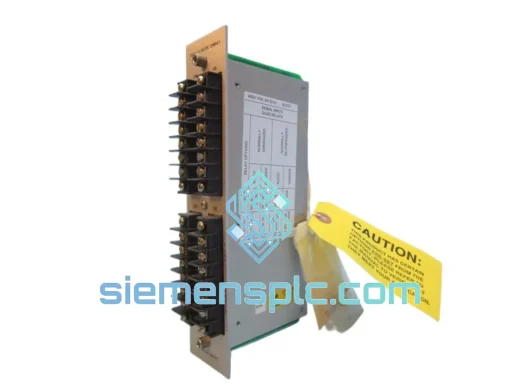
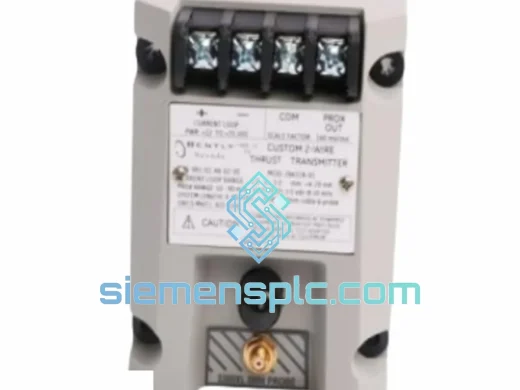
Bently Nevada 991-06-XX-01-00 Thrust Position Transmitter
3500 Series
Origin US
Thrust Position Transmitter
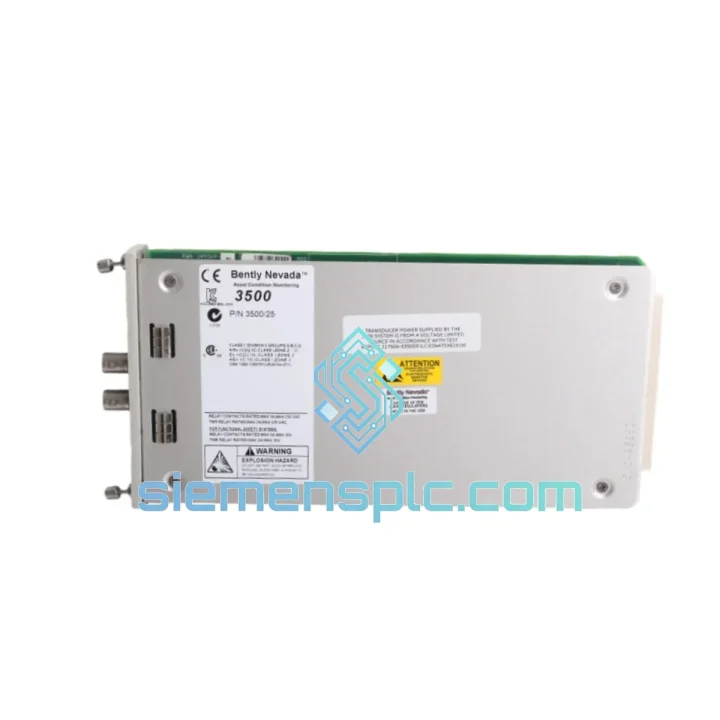
Request verified availability, condition, replacement risk review, packing options and courier lead time for 3500/25.
Click Request Quote and the part number is inserted into the inquiry form automatically.
Core fields for model confirmation and RFQ routing. Detailed product narrative remains below.
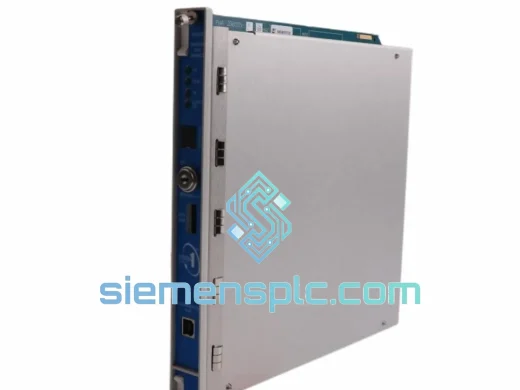
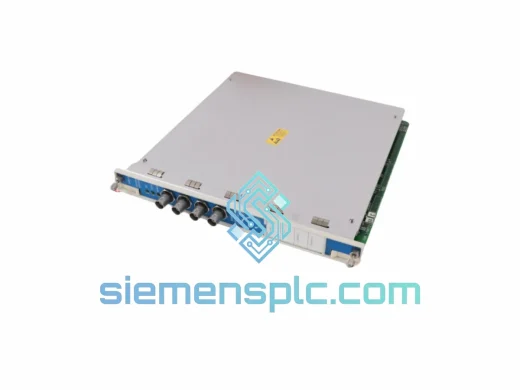
In any rotating machinery protection system, the integrity of the phase reference signal determines the analytical resolution of every downstream measurement. The Bently Nevada 3500/25 Enhanced Keyphasor Module occupies a single slot in the 3500 Series rack and performs one function with absolute determinism: it accepts raw shaft-synchronous signals from proximity probes or variable-reluctance magnetic pickups, conditions them into clean once-per-revolution TTL-compatible pulses, and distributes that reference across the rack backplane to every monitoring module simultaneously. Without this signal, 1X and 2X vibration vectors cannot be resolved, orbit plots lose their angular reference, and dynamic balancing procedures become geometrically undefined. The 3500/25 is not a peripheral — it is the timing backbone of the entire protection rack.
The module supports two fully independent Keyphasor input channels, each with its own signal conditioning chain. This dual-channel architecture allows a single 3500/25 to serve multi-shaft machine trains — for example, a gas turbine driving a centrifugal compressor through a gearbox — where each shaft requires its own phase reference. Both channels share a common backplane output bus, and the rack’s monitoring modules can be individually configured to reference either channel, providing the flexibility required in complex turbomachinery protection schemes without adding rack slots or external signal routing hardware.
Signal conditioning within the 3500/25 handles the full dynamic range of both sensor types. For eddy-current proximity probes (typically Bently Nevada 3300 XL or 7200 Series), the module accepts the negative DC-biased output directly, with internal threshold detection set to trigger on the once-per-revolution notch or keyway. For magnetic pickups, the module’s input stage manages the variable-amplitude sinusoidal output — which changes significantly with shaft speed — through an adaptive threshold circuit that maintains reliable triggering from low-speed roll-up through full operating RPM. This eliminates the false triggering and missed pulses that degrade phase accuracy in systems using fixed-threshold conditioning.
The backplane distribution architecture of the 3500/25 is a critical design element. Rather than routing Keyphasor signals through field wiring to each monitoring module, the 3500/25 places the conditioned pulse directly onto the rack’s internal communication bus. This approach eliminates ground loop exposure, reduces cable count in the junction box, and ensures that all monitoring modules receive a phase-coherent reference with sub-microsecond skew between channels. In high-speed applications — steam turbines operating above 3,000 RPM, for instance — this timing precision is the difference between accurate vector resolution and systematic phase error that corrupts alarm setpoints.
The 3500/25 is fully compliant with API Standard 670, Fifth Edition, which governs machinery protection systems for critical rotating equipment in the petroleum, petrochemical, and natural gas industries. API 670 mandates that Keyphasor signals be available to all monitoring modules in the protection rack, and the 3500/25’s backplane distribution architecture satisfies this requirement by design. The module also supports the 3500 rack’s self-test and diagnostic framework: the system continuously monitors Keyphasor signal presence and quality, and will assert a system alert if the phase reference is lost or falls outside configured speed limits, providing operators with early warning before protection logic is compromised.
Real-time Stock & RFQ: [email protected] | WhatsApp: +86 18359268345
| Parameter | Specification |
|---|---|
| Model / SKU | 3500/25 |
| Module Designation | Enhanced Keyphasor Module |
| Platform | Bently Nevada 3500 Series Machinery Protection System |
| Manufacturer | Bently Nevada (Baker Hughes) |
| Form Factor | Single-slot 3500 rack card |
| Keyphasor Input Channels | 2 independent channels |
| Accepted Sensor Types | Eddy-current proximity probes; variable-reluctance magnetic pickups |
| Proximity Probe Input Bias | Negative DC bias (compatible with 3300 XL, 7200 Series transducers) |
| Magnetic Pickup Input | Adaptive threshold; handles variable-amplitude sinusoidal signal across full speed range |
| Output Signal Type | TTL-compatible once-per-revolution pulse distributed via rack backplane |
| Backplane Distribution | Phase reference shared to all monitoring modules in rack; sub-microsecond inter-module skew |
| Speed Range | Compatible with low-speed roll-up through rated operating RPM (application-dependent) |
| Power Source | Rack backplane (no external power wiring required) |
| Standards Compliance | API 670, Fifth Edition |
| Rack Compatibility | All standard Bently Nevada 3500 rack configurations |
| Module Weight | Approx. 460 g |
| Warranty | 12 months against defects in materials and workmanship |
The signal path inside the 3500/25 follows a three-stage architecture: input conditioning, threshold detection, and backplane drive. At the input stage, the module presents a high-impedance differential input to the field wiring, which serves two purposes. First, it rejects common-mode noise induced by the electromagnetic environment typical of turbomachinery installations — motor drives, high-current bus bars, and RF sources from wireless instrumentation all contribute to the noise floor on long cable runs. Second, the differential topology allows the module to accept signals from sensors located up to several hundred meters from the rack without signal integrity degradation, a practical requirement in large compressor stations where the control room is physically separated from the machine deck.
The threshold detection stage uses a hysteresis comparator rather than a simple level trigger. The hysteresis band — the voltage difference between the trigger-on and trigger-off thresholds — prevents multiple pulses from being generated by a single shaft event when the input signal has slow edges or superimposed noise. For proximity probe inputs, the threshold is set relative to the DC gap voltage, so the trigger point tracks changes in average gap caused by shaft thermal growth or slow runout without requiring manual recalibration. For magnetic pickup inputs, the adaptive threshold circuit samples the peak amplitude of each cycle and sets the trigger threshold as a fixed percentage of that peak, maintaining consistent pulse timing across the speed range from initial roll-up to full load.
The backplane drive stage converts the conditioned pulse into the logic levels required by the 3500 rack’s internal bus and asserts the signal simultaneously to all module slots. The drive circuit includes short-circuit protection and bus contention detection, ensuring that a fault in one module cannot corrupt the Keyphasor reference seen by other modules in the rack. This isolation is particularly important in safety-instrumented system (SIS) applications where the 3500 rack may be integrated with a SIL-rated shutdown system: the Keyphasor signal must remain valid even if an individual monitoring module develops a fault condition.
EMC performance of the 3500/25 is achieved through a combination of board-level filtering, shielded enclosure design, and careful PCB layout. Decoupling capacitors are placed at each power supply pin of the active components, and the analog input traces are routed away from digital switching nodes to minimize capacitive coupling. The module’s front panel connector uses a shielded backshell that bonds the cable shield to chassis ground at the rack, completing the shield termination scheme required for effective rejection of radiated interference in industrial environments.
Every 3500/25 unit dispatched from our Xiamen, China facility undergoes a structured pre-shipment verification protocol. Visual inspection covers the PCB surface, edge connector contacts, front panel labeling, and housing integrity, with specific attention to counterfeit indicators including label font consistency, PCB silkscreen quality, and component date codes. Functional verification powers the module in a 3500 rack test fixture and confirms correct signal conditioning behavior on both input channels using calibrated proximity probe simulator signals. Backplane output pulse timing is verified against a reference standard. Serial numbers are recorded and cross-referenced against available manufacturer traceability data.
Packaging follows ESD-safe handling protocols throughout: modules are placed in anti-static bags, cushioned with closed-cell foam inserts, and shipped in double-wall corrugated cartons rated for international air freight handling. Export documentation — commercial invoice, packing list, and certificate of conformance — is prepared for every shipment. Country-specific documentation requirements, including CITES declarations, end-user certificates, or import permits, can be accommodated upon request.
Logistics are executed via DHL Express, FedEx International Priority, or UPS Worldwide Express, with full shipment tracking provided at time of dispatch. Transit times to major industrial hubs in Europe, the Middle East, Southeast Asia, and the Americas are typically 3–5 business days from Xiamen. For urgent plant shutdown situations, same-day dispatch is available for in-stock units when orders are confirmed before 14:00 CST. All units carry a 12-month warranty against defects in materials and workmanship from the date of shipment.
Email: [email protected]
WhatsApp: +86 18359268345
Web: siemensplc.com
Location: Xiamen, China
© 2026 siemensplc.com. All rights reserved.
We check the full part number, brand, series and visible nameplate information before quotation.
Sales confirms stock path, condition option, quantity and realistic lead time for export dispatch.
DHL, FedEx, UPS or buyer courier arrangements can be reviewed with packing requirements.
Similar brand or category products for fast comparison and multi-item RFQ lists.