Bently Nevada
RFQ Ready
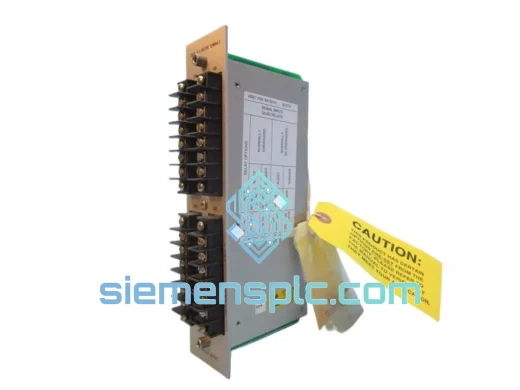
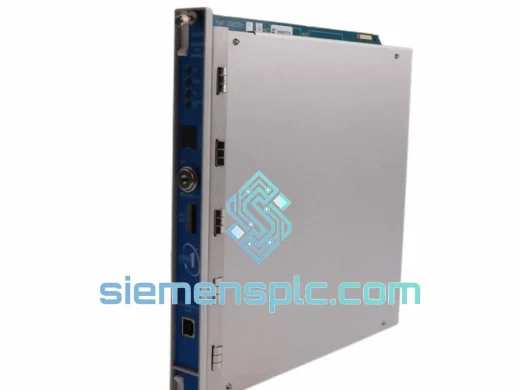
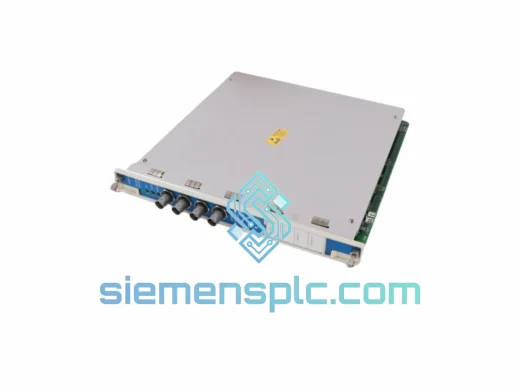
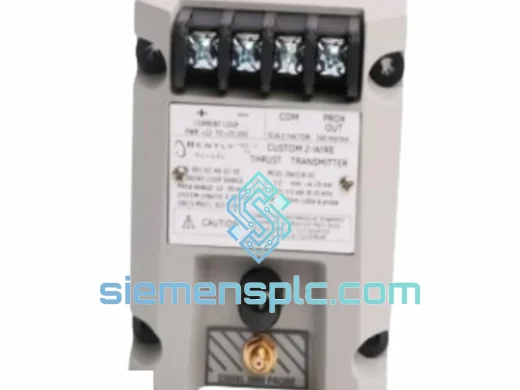
Bently Nevada 991-06-XX-01-00 Thrust Position Transmitter
3500 Series
Origin US
Thrust Position Transmitter
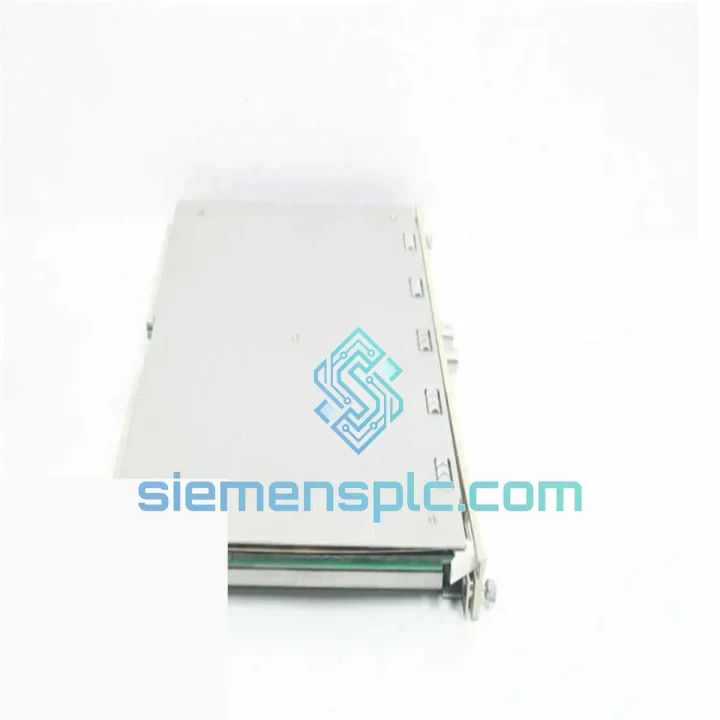
Request verified availability, condition, replacement risk review, packing options and courier lead time for 3500/50.
Click Request Quote and the part number is inserted into the inquiry form automatically.
Core fields for model confirmation and RFQ routing. Detailed product narrative remains below.
The 3500/50 (P/N 133388-02) occupies a single I/O slot within the Bently Nevada 3500 rack and serves as the primary speed-sensing node for rotating machinery protection systems built to API 670. Unlike software-polled speed acquisition cards found in general-purpose DCS platforms, this module implements a dedicated hardware comparator circuit that evaluates shaft rotational frequency against latched setpoints entirely in silicon — decoupled from the rack’s firmware execution cycle. The result is a deterministic overspeed trip response that cannot be delayed by CPU scheduling, communication bus arbitration, or software exception handling. In turbine protection applications where a 2 ms delay in trip output can translate to catastrophic mechanical failure, this architectural separation between measurement and protection logic is not a feature preference — it is an engineering requirement.
The module accepts signals from both eddy-current proximity probes (Bently Nevada 3300/3500 series, 8 mm or 11 mm tip diameter) and passive magnetic pickups, covering the full spectrum of industrial tachometer transducer types. Input conditioning circuitry applies Schmitt-trigger hysteresis to suppress contact bounce and electromagnetic noise on the signal line before the zero-crossing detector converts the analog waveform into a clean TTL pulse train. Period measurement is performed on each pulse interval using a high-resolution internal counter, yielding a speed value that is updated on every shaft revolution rather than averaged over a fixed sampling window — a distinction that matters during rapid acceleration or coast-down transients.
Real-time Stock & RFQ: [email protected] | WhatsApp: +86 18359268345
| Manufacturer | Bently Nevada (Baker Hughes) |
| Part Number | 133388-02 |
| Model | 3500/50 |
| Module Function | Dual-channel tachometer & speed monitor |
| Platform | 3500 Series Machinery Protection System |
| Input Transducer Types | Eddy-current proximity probe (3300/3500 series) or passive magnetic pickup |
| Measurement Range | 0 – 99,999 RPM (configurable per channel) |
| Speed Channels | 2 independent channels per module slot |
| Relay Outputs | Alert (SPDT) + Danger (SPDT) per channel; hardware-latched on overspeed |
| Overspeed Trip Logic | Hardware comparator, independent of firmware execution |
| Zero-Speed Detection | Configurable timeout (pulse absence detection) |
| Backplane Communication | 3500 proprietary rack bus; Modbus RTU via rack interface; System 1 compatible |
| Power Source | 3500 rack backplane, 24 VDC nominal |
| Operating Temperature | 0 °C to +65 °C |
| Storage Temperature | −40 °C to +85 °C |
| Relative Humidity | 5 % to 95 % RH, non-condensing |
| Form Factor | Single-slot 3500 rack module |
| Approx. Weight | 400 g |
| Compliance Standards | API 670, CE, UL/CSA |
| Configuration Tool | Bently Nevada Rack Configuration Software (RCS) |
| Warranty | 12 months against manufacturing defects |
The internal signal chain of the 3500/50 begins at the I/O module terminal block, where the transducer output — typically a −24 VDC bias proximity probe signal with a superimposed AC component proportional to shaft gap variation — is routed through a passive input protection network rated for transient suppression up to ±1,500 V peak. This front-end protection is not incidental; in field installations adjacent to large motor drives or switchgear, common-mode transients on instrument cable shields routinely exceed 500 V without proper suppression.
Following the protection stage, the signal passes through a differential amplifier with programmable gain, allowing the module to accommodate both the low-amplitude output of a magnetic pickup at low shaft speeds (as low as 100 mV peak-to-peak at 1 RPM) and the full-swing output of a proximity probe at rated gap. The Schmitt-trigger comparator downstream applies a fixed hysteresis band — typically 20 % of the detected signal amplitude — to prevent multiple zero-crossing events from a single shaft tooth passing, which would otherwise generate false high-speed readings.
The period counter operates at a clock frequency sufficient to resolve speed differences of less than 1 RPM across the full 0–99,999 RPM range. Each measured period is compared against two independently configurable threshold registers: the Alert setpoint and the Danger setpoint. The Danger comparator drives a dedicated hardware flip-flop whose output directly controls the Danger relay coil driver — this path has no software interrupt, no RTOS task switch, and no network packet dependency. The relay energizes within the hardware propagation delay of the comparator and flip-flop chain, measured in microseconds, not milliseconds.
EMC performance is achieved through a combination of board-level design choices: ground plane partitioning separates the analog input section from the digital processing section, ferrite beads suppress high-frequency conducted emissions on the backplane power rails, and the relay output drivers include arc suppression networks to prevent re-radiated interference from relay switching transients from coupling back into the analog input stage. The module’s metal front panel provides additional shielding continuity when seated in the rack.
Each 3500/50 133388-02 unit dispatched from our Xiamen facility is sourced directly from verified Bently Nevada (Baker Hughes) authorized distribution channels or decommissioned plant inventory with traceable maintenance records. Before packaging, every module undergoes a structured pre-shipment inspection protocol: visual examination of the PCB for corrosion, damaged components, or connector pin deformation; firmware label verification against the 133388-02 revision matrix; and a functional power-on test confirming backplane communication handshake and relay output continuity.
Units are packaged in anti-static ESD bags, seated in custom-cut conductive foam, and double-boxed in corrugated cartons rated for international air freight handling. Export documentation — including commercial invoice, packing list, and certificate of conformance — is prepared to DHL/FedEx/UPS customs requirements for CN HS Code 9031.80 (electronic measuring instruments), minimizing clearance delays at destination ports.
Standard dispatch from Xiamen to major industrial hubs: Europe 3–5 business days, North America 4–6 business days, Southeast Asia 2–3 business days, Middle East 4–7 business days via express courier. EXW Xiamen and CIF destination Incoterms both available. A 12-month warranty against manufacturing defects is included with every unit; warranty claims are processed within 5 business days of receipt of the returned module.
Email: [email protected]
WhatsApp: +86 18359268345
Web: siemensplc.com
Location: Xiamen, China
© 2026 siemensplc.com. All rights reserved.
We check the full part number, brand, series and visible nameplate information before quotation.
Sales confirms stock path, condition option, quantity and realistic lead time for export dispatch.
DHL, FedEx, UPS or buyer courier arrangements can be reviewed with packing requirements.
Similar brand or category products for fast comparison and multi-item RFQ lists.