Bently Nevada
RFQ Ready
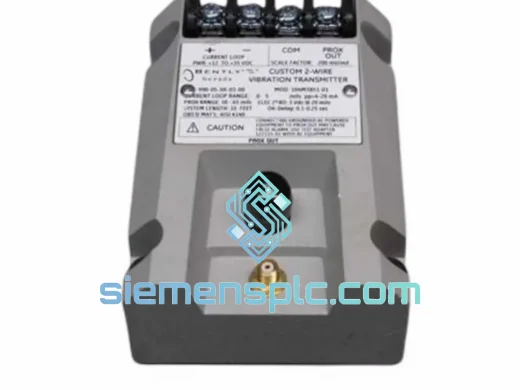
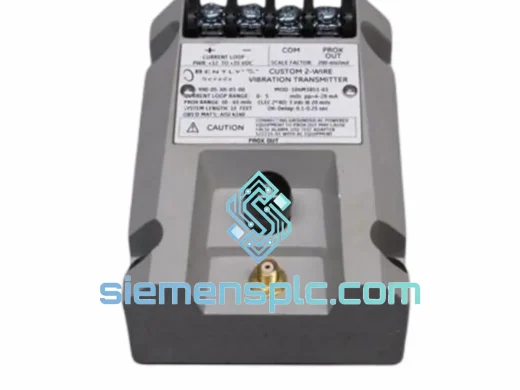
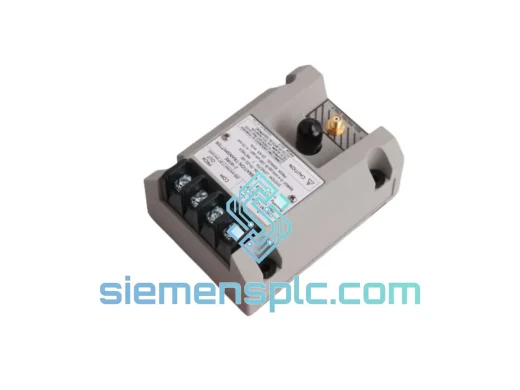
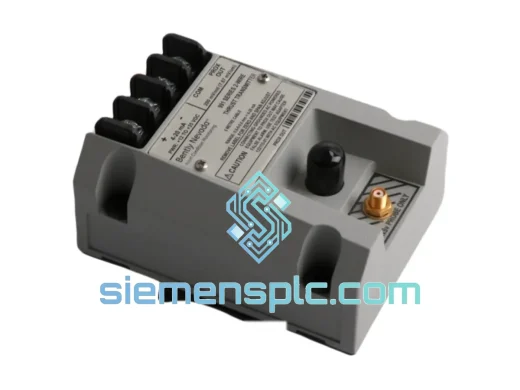
Bently Nevada 991-06-50-01-05 Proximity Probe
990 Series
Origin US
Proximity Probe
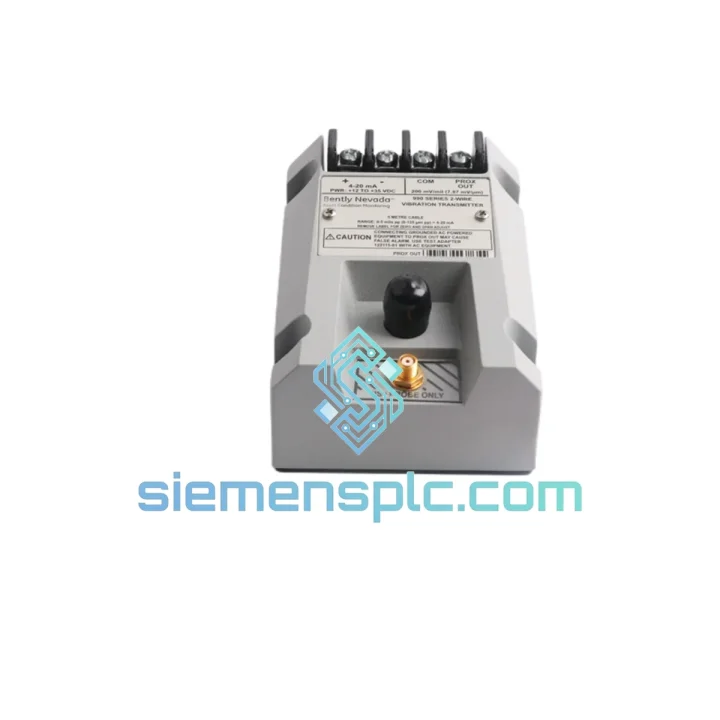
Request verified availability, condition, replacement risk review, packing options and courier lead time for 990-04-70-01-05.
Click Request Quote and the part number is inserted into the inquiry form automatically.
Core fields for model confirmation and RFQ routing. Detailed product narrative remains below.
Every hour your rotating equipment sits idle, the losses compound. A failed vibration transmitter on a critical compressor or turbine train isn’t a maintenance ticket — it’s a production crisis. The Bently Nevada 990-04-70-01-05 is a 2-wire, loop-powered vibration transmitter built for exactly these moments. We stock it. We ship it fast. From Xiamen to your site via DHL or FedEx, typically within 24–72 hours of order confirmation.
This isn’t a listing. It’s a lifeline.
URGENT REQUIREMENT? Contact: [email protected] | WhatsApp: +86 18359268345
| Parameter | Specification |
|---|---|
| Part Number | 990-04-70-01-05 |
| Manufacturer | Bently Nevada (Baker Hughes) |
| Series | 990 Vibration Transmitter Series |
| Transmitter Type | 2-Wire Loop-Powered |
| Output Signal | 4–20 mA (HART-compatible) |
| Measurement Mode | Absolute vibration — velocity or acceleration (jumper-selectable) |
| Supply Voltage | 18–30 VDC (loop-powered, no separate supply needed) |
| Operating Temperature | -40°C to +85°C |
| Transducer Input | Bently Nevada accelerometers / velocity transducers (330xxx series) |
| Weight | 440 g |
| Mounting | DIN-rail or panel-mount |
| Stock Status | ✔ Ready to Ship — Xiamen Warehouse |
Ten years of field work teaches you that most 990-04-70-01-05 failures fall into three buckets. Here’s what to check before you pull the trigger on a swap — and what to watch when you install the replacement.
Fault Pattern 1 — Output Frozen at 4 mA or 20 mA Rail: This is almost always a dead input stage. The transmitter has lost its transducer signal — check the cable from the accelerometer or velocity probe first. Measure continuity and insulation resistance on the transducer cable before condemning the transmitter. If the cable checks out and the transmitter still rails, the internal signal conditioning board has failed. Replace the 990-04-70-01-05.
Fault Pattern 2 — Erratic or Noisy 4–20 mA Output: Ground loops are the usual culprit in 2-wire installations. Verify that the loop ground is established at one point only — typically at the DCS/PLC analog input card. If you’re seeing 50/60 Hz interference riding on the signal, check cable routing — vibration transmitter cables should never share conduit with power wiring. Also verify the supply voltage is stable between 18–30 VDC under load; a sagging loop supply will cause output instability.
Fault Pattern 3 — Transmitter Passes Bench Test but Fails In-Situ: This is a configuration mismatch. The 990-04-70-01-05 has internal jumpers that select between velocity and acceleration measurement modes, and set the full-scale output range. If the replacement unit ships in a different factory default than your failed unit, your DCS engineering unit scaling will be wrong. Before installation, confirm jumper positions against your original system documentation or the Bently Nevada 990 Series installation manual (document 141536-01).
Replacement Checklist:
The 990 Series was not designed for a climate-controlled instrument room. It was designed for the field — compressor decks, turbine baseplates, pump skids, and motor bearing housings where the environment is hostile by definition.
The 990-04-70-01-05 enclosure is rated for continuous operation from -40°C to +85°C ambient. In practice, this covers the full range from arctic upstream oil and gas installations to tropical petrochemical plants where ambient temperatures routinely exceed 45°C and humidity sits above 90% RH. The housing is sealed against moisture ingress, and the internal electronics are conformally coated to resist condensation-driven corrosion on the PCB.
Vibration immunity is a core design requirement for a transmitter that sits on rotating machinery. The 990 Series is qualified to withstand the mechanical vibration environment it monitors — a design philosophy that eliminates the irony of a vibration transmitter failing due to vibration. The unit is also designed for EMI-dense environments; the 2-wire 4–20 mA architecture is inherently more noise-immune than voltage-output alternatives, and the HART protocol layer adds a further diagnostic channel without compromising signal integrity.
For installations in classified hazardous areas, verify the specific approval markings on your unit against your area classification documentation. The 990 Series is available in variants with ATEX, IECEx, and FM/CSA approvals — confirm your unit’s nameplate before installation in Zone 1/2 or Division 1/2 areas.
Our dispatch hub is in Xiamen, China — one of the most logistics-connected export cities on the mainland, with direct DHL and FedEx gateway access. When you place an urgent order, here’s exactly what happens:
For truly critical shutdowns where every hour counts, contact us directly on WhatsApp — we can arrange same-day dispatch for orders confirmed before 14:00 CST.
Ready to order or need a technical consultation before you commit?
© 2026 siemensplc.com. All rights reserved.
We check the full part number, brand, series and visible nameplate information before quotation.
Sales confirms stock path, condition option, quantity and realistic lead time for export dispatch.
DHL, FedEx, UPS or buyer courier arrangements can be reviewed with packing requirements.
Similar brand or category products for fast comparison and multi-item RFQ lists.