Bently Nevada
RFQ Ready
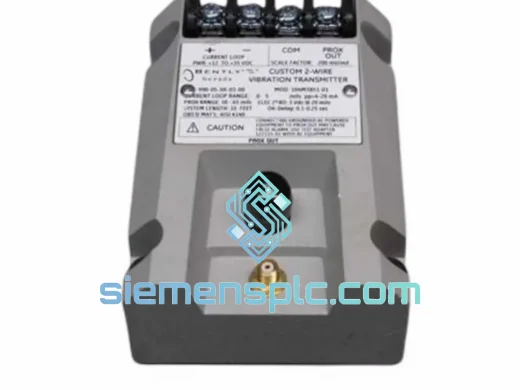
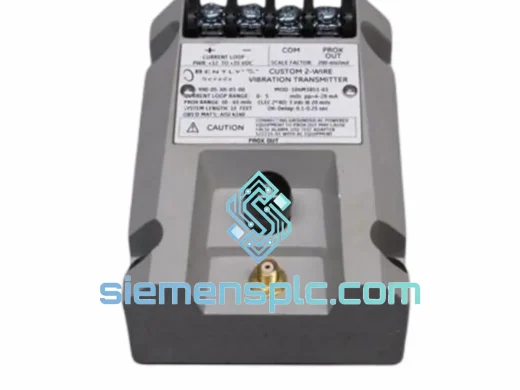
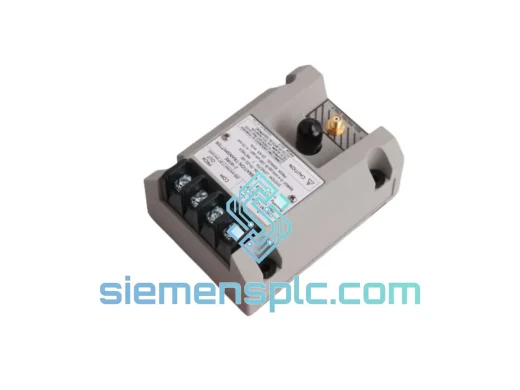
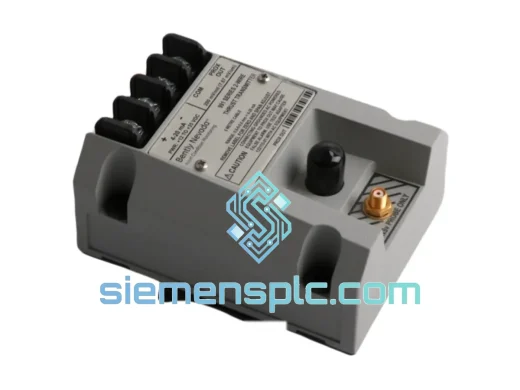
Bently Nevada 991-06-50-01-05 Proximity Probe
990 Series
Origin US
Proximity Probe
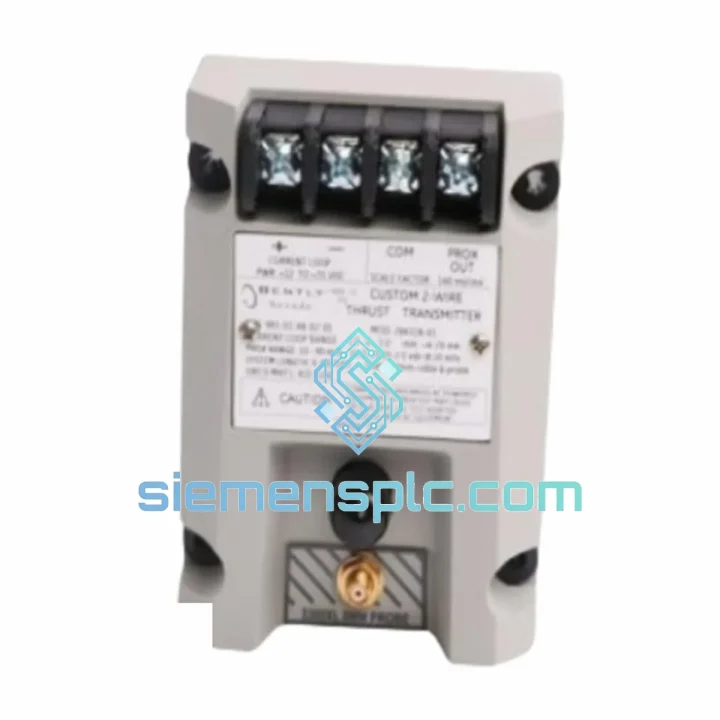
Request verified availability, condition, replacement risk review, packing options and courier lead time for 990-04-XX-01-CN.
Click Request Quote and the part number is inserted into the inquiry form automatically.
Core fields for model confirmation and RFQ routing. Detailed product narrative remains below.
Your turbine is down. The control room is showing a bad PV on the radial vibration channel. Maintenance has already pulled the suspect transmitter and confirmed it’s the 990-04-XX-01-CN. Now the clock is running — and every hour that shaft sits unmonitored is an hour you can’t restart, can’t produce, and can’t bill. We stock this unit in Xiamen specifically because this call happens at 02:00 on a Tuesday. Order confirmed before 18:00 CST and it ships today. No exceptions, no excuses.
URGENT REQUIREMENT? Contact: [email protected] | WhatsApp: +86 18359268345
| Parameter | Specification | Availability |
|---|---|---|
| Part Number | 990-04-XX-01-CN | ✔ Ready to Ship |
| Manufacturer | Bently Nevada (Baker Hughes) | — |
| Product Series | 990 Proximity Transducer System | — |
| Primary Function | Radial Vibration & Axial Position Transmitter | — |
| Signal Output | 4–20 mA, 2-wire loop-powered | — |
| Compatible Driver | Bently Nevada 3300 XL / 7200 Series Proximitor | — |
| Measurement Span | 0–25 mil pp (0–635 µm pp), factory-calibrated | — |
| Loop Supply Voltage | 18–30 VDC | — |
| Fault Current Low | 3.6 mA (hardware fault / power loss) | — |
| Fault Current High | 21.0 mA (input out of calibrated range) | — |
| Operating Temperature | –40°C to +85°C | — |
| Ingress Protection | IP66 / NEMA 4X | — |
| Hazardous Area Rating | ATEX / IECEx Zone 1 (verify suffix for Ex variant) | — |
| Configuration | Fixed-range, fixed-output — no DIP switches, no HART | — |
| Mounting | DIN rail or panel mount | — |
| Country of Origin | USA (–CN suffix = China-market configuration) | — |
| Compliance | CE, RoHS | — |
| Condition | 100% Original, New-in-Box | ✔ Ready to Ship |
Ten years of field calls on Bently Nevada 990-series transmitters teaches you one thing fast: most condemned units are not actually faulty. Before you commit to a replacement, run this diagnostic sequence. It takes 15 minutes and will save you from swapping a good transmitter into a loop that still has the original fault.
Step 1 — Verify the Proximitor driver output, not the transmitter input.
Measure DC voltage at the 990-04-XX-01-CN input terminals. A healthy 3300 XL 8mm driver with the probe at nominal gap (50 mil / 1.27 mm) should read approximately –10.5 VDC. Flat zero or a voltage outside the –2 to –18 VDC window means the driver or probe cable is the fault source. Replacing the transmitter will not resolve it.
Step 2 — Decode the fault current before pulling the unit.
The 990-04 drives to defined fault states on internal error. A loop current locked at 3.6 mA indicates a hardware fault or loss of loop power — check the fuse, Zener barrier, and terminal continuity first. A current locked at 21.0 mA means the Proximitor input voltage is outside the transmitter’s calibrated span — the probe gap is wrong, not the transmitter. Only a current that is erratic, frozen mid-range, or absent with confirmed good power and driver signal points to a failed transmitter.
Step 3 — Confirm loop supply voltage under load.
Loop-powered transmitters require a minimum of 18 VDC across the transmitter terminals with the loop energized. Long cable runs, undersized conductors, or a marginal Zener barrier can drop this below threshold. Measure at the transmitter terminals, not at the barrier output. A reading below 18 VDC explains erratic output without any transmitter fault.
Replacement procedure — field-verified sequence:
DCS alarm codes — what they actually mean on the 990-04-XX-01-CN loop:
The 990-04-XX-01-CN is not a panel instrument. It was designed to live on the skid — bolted to a compressor baseplate, exposed to the full thermal swing between a winter cold-start and a summer full-load run, sitting in the spray zone of a water-cooled intercooler, and absorbing the broadband vibration of the machine it is measuring. The design margins reflect that reality.
The IP66 / NEMA 4X enclosure rating means direct water jet from any direction does not compromise the internal electronics. In practice, this covers steam cleaning of the skid during maintenance outages — a scenario that destroys transmitters with lesser enclosure ratings. The –40°C lower operating limit eliminates the need for transmitter winterization at compressor stations in northern China, Kazakhstan, or Siberia. The +85°C upper limit covers direct solar exposure on an outdoor skid in a Middle Eastern summer without derating the output accuracy.
EMI immunity is not an afterthought on this design. The shielded input circuit meets IEC 61000-4-3 for radiated immunity and IEC 61000-4-6 for conducted immunity at the levels required for heavy industrial environments. Galvanic isolation between the Proximitor input circuit and the 4–20 mA output loop is built in — this is what prevents ground loop interference when the Bently Nevada hardware shares a DCS cabinet with third-party analog inputs that reference a different common potential. Without this isolation, the output noise floor rises to the point where the DCS alarm system generates nuisance trips on every machine start.
Mechanical qualification covers IEC 60068-2-6 sinusoidal vibration and IEC 60068-2-27 mechanical shock. In field terms, this means the transmitter can be mounted directly on the compressor skid baseplate — not on a remote instrument stand isolated from the machine vibration. Units returned from continuous service in offshore gas compression applications after 10+ years of operation have shown no measurable drift in zero or span calibration. That is the standard this transmitter is built to.
Our warehouse is in Xiamen, Fujian — a primary export hub with direct DHL Express and FedEx International Priority service to over 220 countries. The process from your order confirmation to the unit leaving our facility is tightly controlled and takes less than four hours during business hours.
Email: [email protected]
WhatsApp: +86 18359268345
Web: siemensplc.com
© 2026 siemensplc.com. All rights reserved.
We check the full part number, brand, series and visible nameplate information before quotation.
Sales confirms stock path, condition option, quantity and realistic lead time for export dispatch.
DHL, FedEx, UPS or buyer courier arrangements can be reviewed with packing requirements.
Similar brand or category products for fast comparison and multi-item RFQ lists.