Bently Nevada
RFQ Ready
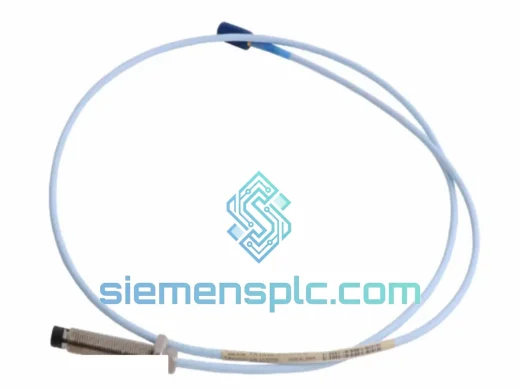
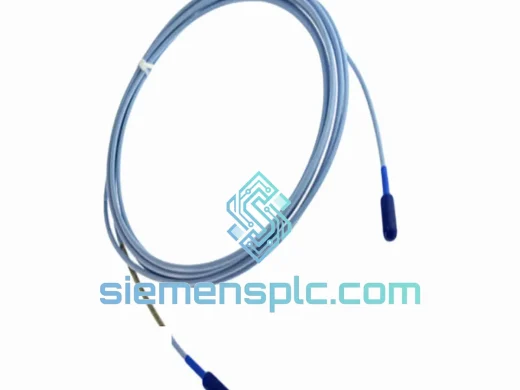
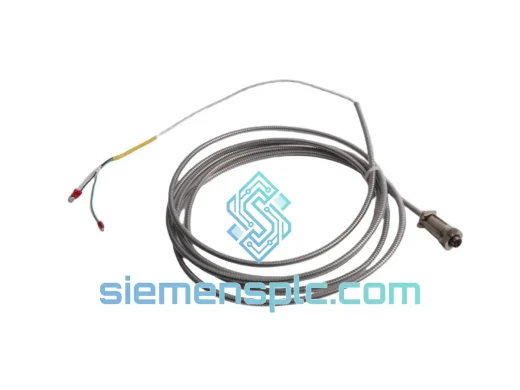
Bently Nevada 84661-12 Velomitor Interconnect Cable
3300 Series
Origin US
Vibration Monitoring Cable
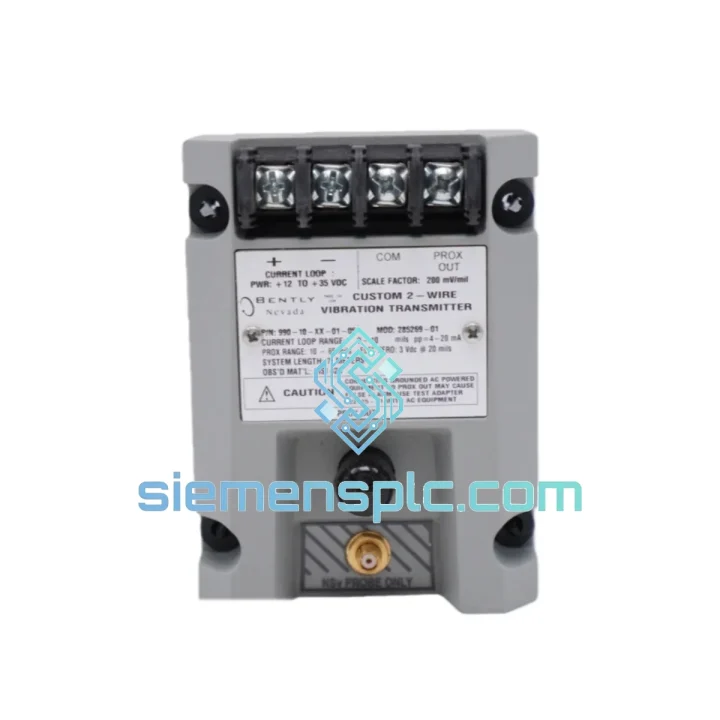
Request verified availability, condition, replacement risk review, packing options and courier lead time for 990-10-XX-01-05.
Click Request Quote and the part number is inserted into the inquiry form automatically.
Core fields for model confirmation and RFQ routing. Detailed product narrative remains below.
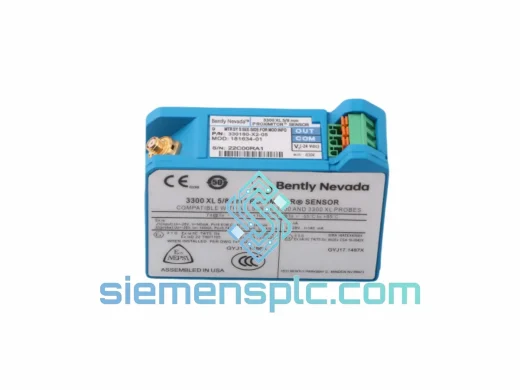
The Bently Nevada 990-10-XX-01-05 MOD:165353-01 is a dedicated vibration transmitter within the 3300 XY Series condition monitoring platform. Its primary function in a rotating machinery protection loop is to accept the high-impedance, gap-voltage output from a 3300 Series eddy-current proximity probe and convert it into a galvanically isolated, industry-standard 4–20 mA analog signal suitable for direct termination at a DCS analog input card, a safety instrumented system (SIS), or a standalone PLC analog module. This signal chain — probe → extension cable → transmitter → control system — forms the backbone of API 670-compliant machinery protection for turbines, compressors, and pumps operating in continuous-duty industrial service.
The MOD:165353-01 hardware revision designates a specific internal circuit board assembly and component specification applied by Bently Nevada engineering. This revision code is not cosmetic: it governs the internal op-amp gain stage topology, the output filter corner frequency, and the power supply rejection ratio (PSRR) of the signal conditioning circuit. When replacing a unit in an existing installation, the MOD code must match or be confirmed compatible by the OEM to avoid calibration offset errors at the receiving DCS input card.
In a typical XY radial vibration measurement arrangement, two of these transmitters are deployed 90° apart around the shaft centerline. Each transmitter processes one axis of shaft displacement. The DCS or vibration monitor then computes the orbital trajectory of the shaft within its bearing clearance envelope. This dual-channel architecture allows plant engineers to distinguish between synchronous vibration (1× running speed, indicative of imbalance or misalignment) and sub-synchronous instability (oil whirl, surge), which are mechanically distinct failure modes requiring different corrective actions.
Real-time Stock & RFQ: [email protected] | WhatsApp: +86 18359268345
| Parameter | Specification |
|---|---|
| Part Number | 990-10-XX-01-05 MOD:165353-01 |
| Brand | Bently Nevada (Baker Hughes) |
| Series | 3300 XY / 990 Series |
| Output Signal | 4–20 mA, two-wire loop-powered |
| Measurement Axis | Radial shaft vibration, XY plane |
| Input Compatibility | Bently Nevada 3300 Series proximity probes & extension cables |
| Supply Voltage | 18–30 VDC (nominal 24 VDC) |
| Output Load Resistance | ≤ 600 Ω at 24 VDC supply |
| Frequency Response (–3 dB) | DC to 1,000 Hz |
| Operating Temperature | –40°C to +85°C |
| Storage Temperature | –55°C to +105°C |
| Enclosure / Mounting | DIN-rail, industrial-grade housing |
| Isolation | Galvanic isolation, input-to-output |
| Approvals | CE, cULus (verify per datasheet revision) |
| Weight | Approx. 500 g |
| Warranty | 12 months from date of shipment |
The 990-10-XX-01-05 MOD:165353-01 operates on a demodulation-and-scaling architecture. The proximity probe generates a DC gap voltage proportional to the physical distance between the probe tip and the shaft surface, typically in the range of –2 VDC to –18 VDC for a standard 3300 8 mm probe with a 200 mV/mil (7.87 V/mm) scale factor. The transmitter’s input stage buffers this signal through a high-input-impedance differential amplifier, rejecting common-mode noise induced by long cable runs through electrically noisy machinery spaces.
The internal signal path then applies a precision gain stage calibrated to the probe’s scale factor, translating the –2 to –18 VDC probe output into the 4–20 mA transmitter output range. The zero and span are factory-set to correspond to the probe’s linear operating range, eliminating the need for field calibration in standard installations. The output stage drives a current loop through a voltage-to-current converter with a load compliance range of 0–600 Ω, compatible with the input impedance of virtually all industrial DCS analog input cards.
EMC performance is addressed through multi-layer filtering at both the input and output terminals. The input filter suppresses RF interference from variable-frequency drives (VFDs) and high-voltage switchgear — common noise sources in compressor and turbine halls. The output filter limits the bandwidth to the measurement-relevant range (DC to 1 kHz), attenuating high-frequency noise that would otherwise alias into the DCS’s analog-to-digital conversion process. The galvanic isolation barrier between the probe circuit and the 4–20 mA loop prevents ground loop currents from corrupting the measurement signal, a critical design requirement in large rotating machinery installations where ground potential differences between the machine frame and the control room can reach several volts.
The MOD:165353-01 revision specifically addresses long-term component drift in the gain stage by using precision metal-film resistors with a temperature coefficient of ≤ 25 ppm/°C, maintaining measurement accuracy across the full –40°C to +85°C operating range without field recalibration. This is particularly relevant for outdoor installations in arctic or desert environments where ambient temperature swings of 60°C or more are routine.
Every Bently Nevada 990-10-XX-01-05 MOD:165353-01 unit supplied by siemensplc.com is sourced through verified industrial supply channels and subjected to a structured pre-shipment inspection protocol. Visual inspection covers enclosure integrity, terminal block condition, label legibility, and the absence of physical damage consistent with improper storage or handling. Functional verification confirms that the unit powers up correctly and that the output current responds to a simulated input signal within OEM-specified tolerances. Serial numbers and MOD revision codes are cross-referenced against OEM documentation to confirm genuine Bently Nevada provenance.
Units are packaged in anti-static, moisture-barrier sealed packaging with foam cushioning rated for international air and sea freight. Export documentation — commercial invoice, packing list, and certificate of origin — is prepared for all international shipments. Our logistics operations are based in Xiamen, China, a major international port city with direct air freight connections to Europe, North America, Southeast Asia, and the Middle East. Standard international delivery times are 3–7 business days by air freight, with express options available for urgent plant maintenance requirements. All shipments are tracked end-to-end, with tracking numbers provided at the time of dispatch. A 12-month warranty covers all units against manufacturing defects and functional failure under normal operating conditions.
Email: [email protected]
WhatsApp: +86 18359268345
Web: siemensplc.com
Location: Xiamen, China
© 2026 siemensplc.com. All rights reserved.
We check the full part number, brand, series and visible nameplate information before quotation.
Sales confirms stock path, condition option, quantity and realistic lead time for export dispatch.
DHL, FedEx, UPS or buyer courier arrangements can be reviewed with packing requirements.
Similar brand or category products for fast comparison and multi-item RFQ lists.