B&R
In Stock OK
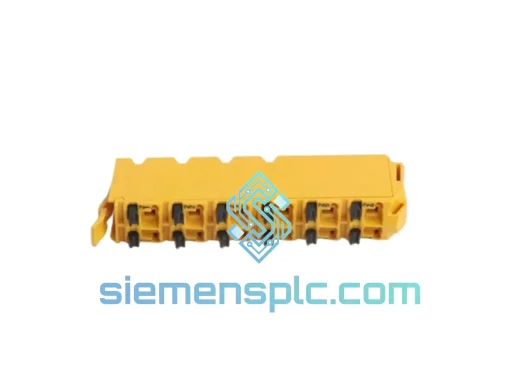
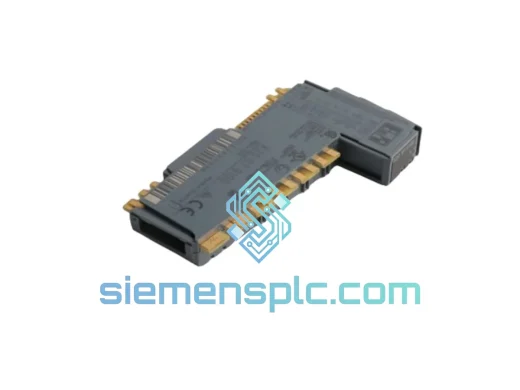
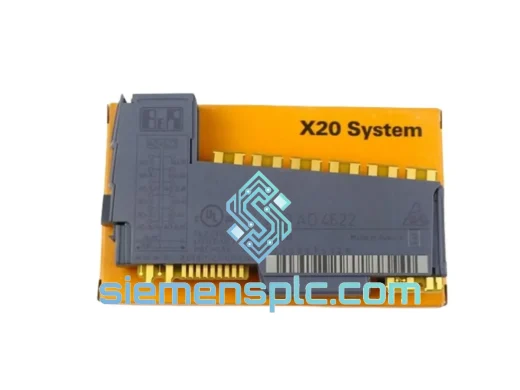
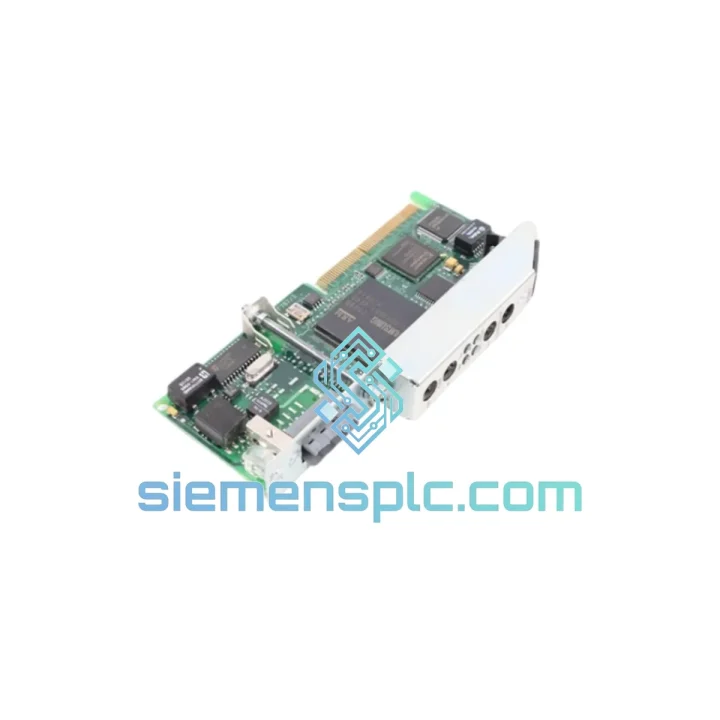
B&R 3IF787.9 Fieldbus Interface Module – POWERLINK Series
Request verified availability, condition, replacement risk review, packing options and courier lead time for 3IF787.9.
BrandB&R
Part Number3IF787.9
ConditionAvailability Check
Lead TimeRFQ Confirmation
DocumentsDatasheet / photos by RFQ
ShippingExport packing available
Auto-filled RFQ
3IF787.9
Click Request Quote and the part number is inserted into the inquiry form automatically.
- Reply by email: [email protected]
- WhatsApp / Tel: +86 18359268345
- Mon-Sat 9:00-18:00 GMT+8
Procurement Data
Key Product Information
Core fields for model confirmation and RFQ routing. Detailed product narrative remains below.
- Brand
- B&R
- Primary Part Number
- 3IF787.9
- Product Type
- Fieldbus Interface Module
- Product Family
- Other series
- Manufacturer
- B&R Industrial Automation GmbH (Austria)
- Country of Origin
- AT
- Catalog Category
- I/O Modules
- Operating Temp.
- 0 °C to +55 °C
- Warranty
- 12 months against manufacturing defects
Model confirmed for inquiry
3IF787.9
Send quantity, destination and urgency. The RFQ form keeps this part number attached.
Request Quote
Product Overview
B&R 3IF787.9: POWERLINK Controlled Node Interface for Deterministic X20 Network Architectures
The B&R 3IF787.9 is a POWERLINK V2 Controlled Node (CN) interface module designed for deployment within the B&R X20 modular I/O platform. Its architectural role is precise: it terminates the X20 backplane bus on one side and presents a 100BASE-TX Fast Ethernet port on the other, operating as a protocol-compliant node on an IEC 61158 / IEC 61784-2 POWERLINK segment managed by an upstream Managing Node (MN). This boundary function is not passive — the module executes the full POWERLINK CN state machine in on-board firmware, handling SoC (Start of Cycle) frame reception, isochronous PDO exchange, and asynchronous SDO servicing without consuming CPU task cycles on the host X20 controller.
In process control and motion coordination applications, the 3IF787.9 enables the X20 I/O station to participate in a time-slotted, collision-free network cycle. Each node is assigned a fixed transmit window by the MN during the isochronous phase; the 3IF787.9 transmits its PRes (Poll Response) frame within that window with a bounded response latency. This architecture eliminates the probabilistic delay inherent in CSMA/CD Ethernet and produces a worst-case cycle jitter that is a function of node count and configured cycle time — not of network load or contention. For multi-axis servo systems or tightly coupled process loops, this property is not optional; it is a hard requirement for maintaining phase coherence across distributed actuators.
Real-time Stock & RFQ: [email protected] | WhatsApp: +86 18359268345
Technical Parameters
| Parameter | Specification |
|---|---|
| Part Number | 3IF787.9 |
| Manufacturer | B&R Industrial Automation GmbH (Austria) |
| Product Series | X20 System / POWERLINK |
| Module Function | POWERLINK V2 Controlled Node (CN) Interface |
| Network Protocol | POWERLINK V2 — IEC 61158 Type 13, IEC 61784-2 |
| Physical Layer | 100BASE-TX Fast Ethernet, RJ45 connector |
| Minimum Cycle Time | 400 µs (topology and node-count dependent) |
| PDO Mapping | Configurable via B&R Automation Studio XDD/XDC |
| Backplane Supply Voltage | 24 V DC (X20 internal bus) |
| Backplane Current Draw | ≤ 120 mA @ 24 V DC |
| Operating Temperature | 0 °C to +55 °C |
| Storage Temperature | −25 °C to +70 °C |
| Relative Humidity | 5 % to 95 %, non-condensing (IEC 60068-2-78) |
| Mounting Interface | X20 backplane slot via X20 base module |
| Enclosure Protection | IP20 (IEC 60529) |
| Approx. Weight | 200 g |
| Regulatory Compliance | CE, RoHS 2011/65/EU, IEC 61131-2 |
| Warranty | 12 months against manufacturing defects |
Hardware Logical Analysis
Protocol Stack Offload Architecture
The 3IF787.9 hosts the POWERLINK CN protocol stack in dedicated module firmware rather than delegating it to the X20 CPU’s application runtime. This offload model has a measurable impact on system determinism: the CPU’s cyclic task scheduler operates without interruption from Ethernet frame timing, MAC-layer acknowledgment handling, or PDO assembly overhead. In high-channel-count X20 stations where the CPU is already managing local I/O refresh, analog scaling, and PID computation, this separation prevents protocol latency from accumulating into the application cycle budget.
Galvanic Isolation at the Ethernet Port
The RJ45 interface incorporates a pulse transformer between the Ethernet PHY and the module’s internal logic ground. This transformer-coupled isolation provides a galvanic barrier that attenuates common-mode transients — typically induced by ground potential differences between cabinet sections or by variable-frequency drive (VFD) switching noise coupled onto cable shields. The isolation barrier is rated to withstand the common-mode voltage differentials typical of industrial panel environments without requiring external surge protection on the network port.
Isochronous Phase Arbitration and Jitter Suppression
POWERLINK’s time-slot arbitration is enforced at the MN level. The 3IF787.9 receives the SoC broadcast frame and uses its timestamp to synchronize its internal cycle counter. Each subsequent PReq (Poll Request) addressed to this CN triggers a PRes transmission within a deterministic inter-frame gap. Because no two nodes transmit simultaneously — the MN serializes all PReq frames — the network is free of collision-domain contention. The 3IF787.9’s firmware implements the CN state machine transitions (STOPPED → PRE-OPERATIONAL → OPERATIONAL) with hardware-timed precision, ensuring that the module enters the isochronous exchange phase within the MN’s configured node response timeout.
Watchdog-Enforced Fail-Safe Output Behavior
An independent hardware watchdog on the 3IF787.9 monitors the freshness of output PDO data received from the MN. If the isochronous cycle is interrupted — due to cable fault, MN failure, or network reconfiguration — and the output PDO is not refreshed within the configured watchdog timeout, the module drives its associated X20 output modules to a pre-defined safe state. This transition is executed in hardware firmware, independent of the X20 CPU application program. The safe-state values are configurable per output channel during commissioning in Automation Studio, allowing the integrator to define whether outputs de-energize, hold last value, or adopt a specific fallback setpoint.
System Integration Benefits
- Sub-microsecond cycle synchronization: The 3IF787.9 locks its internal clock to the MN’s SoC frame timestamp, achieving cycle-to-cycle jitter below 1 µs across all nodes on the segment — a prerequisite for coordinated multi-axis motion where phase error between drives accumulates into contour deviation.
- Non-intrusive SDO diagnostics: Node diagnostic objects (error counters, link state, PDO mapping faults) are accessible via SDO channels during the asynchronous POWERLINK phase, allowing Automation Studio to read live diagnostic data without pausing or interrupting the isochronous process data exchange.
- Reduced panel wiring complexity: A single RJ45 cable replaces the multi-conductor fieldbus wiring required by legacy protocols such as PROFIBUS DP or DeviceNet, reducing terminal block count, cable tray fill, and installation labor in new panel builds.
- Scalable node addressing without firmware changes: Node ID assignment via rotary switch or software parameter allows the same 3IF787.9 hardware to be repositioned within the network topology without reflashing firmware — a practical advantage for spare-parts standardization across multi-machine installations.
- Configurable PDO payload per application: Process data object mapping is defined per project in Automation Studio, allowing the integrator to include only the process variables required for the specific application. Unused channel data is excluded from the cyclic exchange, reducing bus load and enabling shorter cycle times on dense networks.
- Ring topology with automatic redundancy: POWERLINK supports cable-redundant ring configurations. In ring mode, a single cable break does not interrupt communication — the MN detects the fault and reroutes traffic within one cycle. The 3IF787.9 participates in this redundancy scheme without additional hardware or configuration beyond the physical ring wiring.
- Unified commissioning in Automation Studio: All configuration — PDO mapping, node ID, watchdog timeout, safe-state values — is managed within a single B&R Automation Studio project. No separate network configuration utility, GSD file import, or third-party commissioning tool is required, reducing engineering version-control complexity.
- Open standard interoperability: POWERLINK’s IEC 61158 Type 13 classification means the 3IF787.9 can exchange process data with third-party POWERLINK CN devices from other manufacturers on the same network segment, supporting heterogeneous machine architectures without protocol gateway hardware or additional licensing.
Quality Assurance & Global Logistics
All B&R 3IF787.9 units supplied through siemensplc.com are genuine OEM hardware procured through verified supply channels. No refurbished, remanufactured, or third-party-relabeled units are offered. Each module is inspected prior to dispatch: housing integrity, connector pin condition, label authenticity, and anti-counterfeit marking are verified against OEM reference standards. Where test infrastructure permits, functional verification of backplane power-up and POWERLINK communication handshake is performed before packaging.
Export operations are based in Xiamen, China. Standard in-stock orders are dispatched within 1–3 business days via DHL Express, FedEx International Priority, or UPS Worldwide Expedited, with shipment tracking numbers issued within 24 hours of dispatch. Full export documentation accompanies every consignment: commercial invoice, packing list, certificate of origin, and HS code declaration (HS 8537.10). For bulk procurement (5 units or more), sea freight consolidation and volume-based pricing are available — submit an RFQ to [email protected] for a formal quotation with lead time confirmation. A 12-month warranty against manufacturing defects applies to all units; DOA claims are processed within 30 days of confirmed delivery.
Contact Information
Email: [email protected]
WhatsApp: +86 18359268345
Web: siemensplc.com
Location: Xiamen, China
© 2026
Ready to quote
[email protected]
Send This Part Number to Sales
RFQ workflow
Quality workflow ->
Confirmation Process
01Model confirmation
We check the full part number, brand, series and visible nameplate information before quotation.
02Availability reply
Sales confirms stock path, condition option, quantity and realistic lead time for export dispatch.
03Packing & courier
DHL, FedEx, UPS or buyer courier arrangements can be reviewed with packing requirements.
Continue sourcing
Browse full catalog ->
Related Automation Parts
Similar brand or category products for fast comparison and multi-item RFQ lists.