B&R
In Stock OK
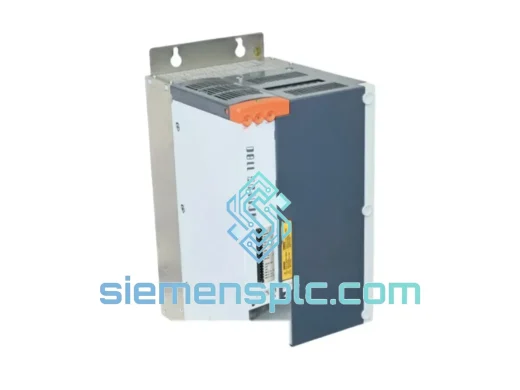
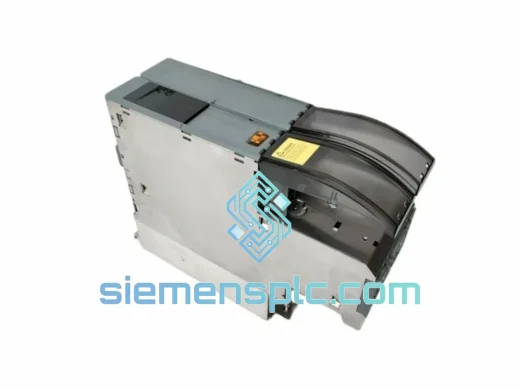
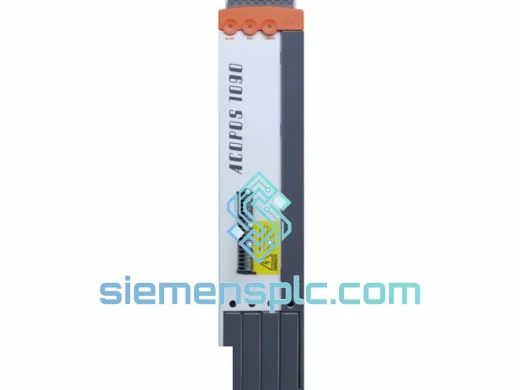
B&R E1696.31 Servo Drive Control Board – ACOPOS Series
Request verified availability, condition, replacement risk review, packing options and courier lead time for E1696.31.
BrandB&R
Part NumberE1696.31
ConditionAvailability Check
Lead TimeRFQ Confirmation
DocumentsDatasheet / photos by RFQ
ShippingExport packing available
Auto-filled RFQ
E1696.31
Click Request Quote and the part number is inserted into the inquiry form automatically.
- Reply by email: [email protected]
- WhatsApp / Tel: +86 18359268345
- Mon-Sat 9:00-18:00 GMT+8
Procurement Data
Key Product Information
Core fields for model confirmation and RFQ routing. Detailed product narrative remains below.
- Brand
- B&R
- Primary Part Number
- E1696.31
- Product Type
- Servo Drive Control Board
- Product Family
- Other series
- Manufacturer
- B&R Industrial Automation GmbH
- Country of Origin
- AT
- Catalog Category
- Motor Drives
- Operating Temp.
- 0 °C to +55 °C (ambient, forced-air cooling)
- Humidity
- 5 % to 95 % RH, non-condensing
- Warranty
- 12 months from date of shipment
Model confirmed for inquiry
E1696.31
Send quantity, destination and urgency. The RFQ form keeps this part number attached.
Request Quote
Product Overview
B&R E1696.31 ACOPOS Servo Drive Control Board – Axis-Level Motion Processing Architecture
The B&R E1696.31 is a dedicated control board designed for integration within the ACOPOS family of servo drive inverters, specifically the 8V-series single-axis and multi-axis drive platforms. Its primary function is to execute closed-loop position, velocity, and torque regulation at the axis level, offloading real-time motion computation from the central CPU and enabling deterministic cycle times as low as 400 µs per axis. The board interfaces directly with the ACOPOS power stage via an internal parallel bus, handling encoder signal conditioning, current loop feedback, and POWERLINK cycle synchronization simultaneously.
Unlike generic motion controllers that rely on software interpolation, the E1696.31 implements hardware-based commutation logic. The FPGA fabric on the board processes incremental encoder quadrature signals at up to 4 MHz input frequency, applies digital filtering with configurable bandwidth, and feeds corrected position data into the PID cascade within a single servo cycle. This architecture eliminates the latency introduced by OS scheduling and ensures that position error correction is applied within the same 400 µs window regardless of network load.
Real-time Stock & RFQ: [email protected] | WhatsApp: +86 18359268345
Technical Parameters
| Parameter | Value |
|---|---|
| Part Number / SKU | E1696.31 |
| Manufacturer | B&R Industrial Automation GmbH |
| Product Series | ACOPOS (8V Series) |
| Module Classification | Servo Drive Control Board |
| Axis Configuration | Single-axis control board |
| Encoder Interface | Incremental / EnDat 2.1 / SSI (configurable) |
| Encoder Input Frequency | Up to 4 MHz (quadrature) |
| Minimum Servo Cycle Time | 400 µs |
| Communication Protocol | POWERLINK V2 (isochronous, jitter < 1 µs) |
| Internal Bus Interface | ACOPOS parallel backplane bus |
| Operating Voltage (Logic) | 3.3 V / 5 V (supplied by drive backplane) |
| Operating Temperature | 0 °C to +55 °C (ambient, forced-air cooling) |
| Storage Temperature | -25 °C to +70 °C |
| Humidity | 5 % to 95 % RH, non-condensing |
| EMC Compliance | EN 61800-3 Category C2 / C3 |
| Safety Standard | EN ISO 13849-1 (drive-level, via ACOPOS SafeMOTION) |
| Weight | 260 g |
| Country of Origin | Austria |
| Warranty | 12 months from date of shipment |
Hardware Logical Analysis
The E1696.31 board is built around a dual-processor architecture: a DSP core dedicated to current-loop and torque regulation, and a secondary RISC processor managing POWERLINK frame parsing, diagnostic data aggregation, and parameter management. Both processors share a dual-port RAM (DPRAM) block, which allows zero-wait-state data exchange between the two execution domains without bus arbitration overhead.
EMC Design: The PCB layout employs a six-layer stackup with dedicated ground planes separating the analog encoder signal traces from the digital logic domain. Differential pair routing is used for all encoder lines, with matched-length constraints to within ±0.1 mm. Ferrite bead arrays are placed at every inter-domain crossing to suppress common-mode noise above 10 MHz. The board passes EN 61800-3 Category C3 radiated emission limits without external shielding, which is significant for installations in open control cabinets.
Encoder Signal Conditioning: The analog front-end for incremental encoder inputs uses a dedicated ASIC that performs hardware quadrature decoding, index pulse capture with 10 ns timestamp resolution, and automatic signal amplitude monitoring. If encoder signal amplitude drops below a configurable threshold (typically 0.5 V peak), the ASIC asserts a hardware fault flag within one encoder period — before the DSP’s software watchdog would detect the anomaly. This sub-cycle fault detection prevents position data corruption during encoder cable degradation.
POWERLINK Synchronization: The E1696.31 implements a hardware-based POWERLINK Managing Node (MN) clock recovery circuit. A dedicated PLL locks to the MN’s SoC (Start of Cycle) frame with a hold-in range of ±200 ppm, maintaining isochronous synchronization even during brief network disturbances. The jitter on the servo task trigger derived from this PLL is specified at less than 1 µs, which is a prerequisite for multi-axis electronic gearing applications where phase alignment between axes must be maintained to within fractions of an encoder count.
Thermal Management: The board’s power dissipation is dominated by the DSP core at approximately 1.8 W under full computational load. The PCB copper pours on layers 2 and 5 act as thermal spreaders, conducting heat to the drive chassis via a compliant thermal interface pad. No active cooling is required on the board itself; the drive’s forced-air system handles ambient thermal management.
System Integration Benefits
- Deterministic real-time response: Hardware-based servo loop execution at 400 µs cycle time is independent of CPU load or network traffic, ensuring consistent axis response under all operating conditions.
- Diagnostic transparency: The board continuously logs encoder signal quality, current loop deviation, POWERLINK cycle jitter, and thermal status into a circular buffer accessible via Automation Studio’s online diagnostic view without interrupting production.
- Plug-and-play axis replacement: Parameter sets are stored on the ACOPOS drive’s non-volatile memory, not on the E1696.31 board itself. Replacing the control board does not require re-commissioning the axis — the drive reloads all parameters automatically on the next power cycle.
- Multi-encoder protocol support: A single firmware image supports incremental TTL, EnDat 2.1, SSI, and Hiperface encoder protocols, selectable via Automation Studio parameter without hardware modification. This reduces spare-parts inventory complexity for mixed-encoder machine designs.
- Electronic gearing and camming: The POWERLINK synchronization architecture allows the E1696.31 to participate in electronic gearing relationships with sub-microsecond phase alignment, enabling high-speed registration control in printing, converting, and packaging applications.
- Safe motion integration: When paired with the ACOPOS SafeMOTION option board, the E1696.31 provides the position feedback channel for SLS (Safely Limited Speed) and SOS (Safe Operating Stop) functions per EN ISO 13849-1 PLd, without requiring a separate safety encoder.
- Reduced wiring complexity: The POWERLINK daisy-chain topology eliminates the star-wired fieldbus infrastructure required by older drive systems. A single Ethernet cable connects up to 240 ACOPOS drives in a ring, with the E1696.31 handling all node-level protocol processing locally.
- Automation Studio integration: Full parameter access, oscilloscope trace recording, and firmware update are performed through B&R Automation Studio 4.x without any additional software tools. The E1696.31 exposes a standardized object dictionary compatible with AS versions 4.2 and above.
Quality Assurance & Global Logistics
Every B&R E1696.31 unit supplied by siemensplc.com is sourced through verified procurement channels with full batch traceability to B&R’s manufacturing records in Eggelsberg, Austria. Units are inspected upon receipt for label integrity, PCB cosmetic condition, connector pin alignment, and firmware version marking. Where test fixtures are available, boards undergo a powered functional check against B&R factory acceptance criteria before being added to available stock.
Shipments originate from our warehouse in Xiamen, China, a major export hub with direct access to international express carriers. Standard dispatch is within 1–3 business days for in-stock units. Shipping options include DHL Express (2–5 business days to most destinations), FedEx International Priority, and UPS Worldwide Express. For bulk procurement, sea freight consolidation from Xiamen Port is available with full export documentation: commercial invoice, packing list, certificate of origin, and HS code 8537.10 classification support for customs clearance in EU, US, and ASEAN markets.
All units ship in ESD-safe anti-static bags within rigid foam-lined cartons. A 12-month warranty covers manufacturing defects and verified functional failures from the date of shipment. DOA (Dead on Arrival) claims are processed within 48 hours of receipt confirmation.
Contact Information
Email: [email protected]
WhatsApp: +86 18359268345
Web: siemensplc.com
Location: Xiamen, China
© 2026 siemensplc.com. All rights reserved.
Ready to quote
[email protected]
Send This Part Number to Sales
RFQ workflow
Quality workflow ->
Confirmation Process
01Model confirmation
We check the full part number, brand, series and visible nameplate information before quotation.
02Availability reply
Sales confirms stock path, condition option, quantity and realistic lead time for export dispatch.
03Packing & courier
DHL, FedEx, UPS or buyer courier arrangements can be reviewed with packing requirements.
Continue sourcing
Browse full catalog ->
Related Automation Parts
Similar brand or category products for fast comparison and multi-item RFQ lists.
B&R
RFQ Ready
B&R 8V1090.00-2 Servo Drive Power Supply Module
Origin AT
Servo Drive Power Supply Module