Deep Sea Electronics
RFQ Ready
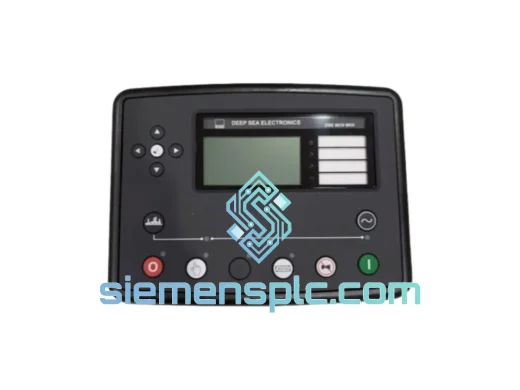
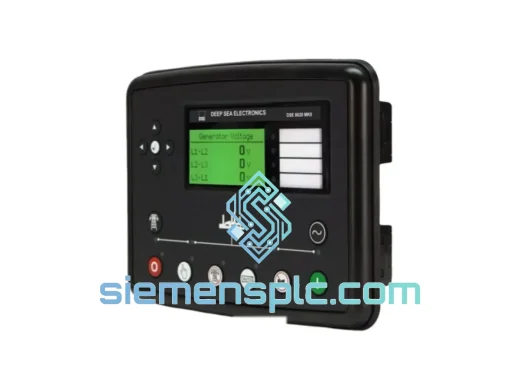
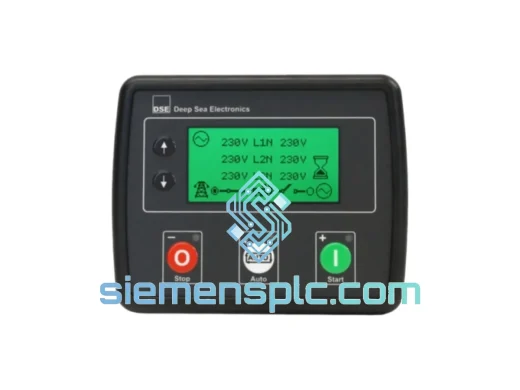
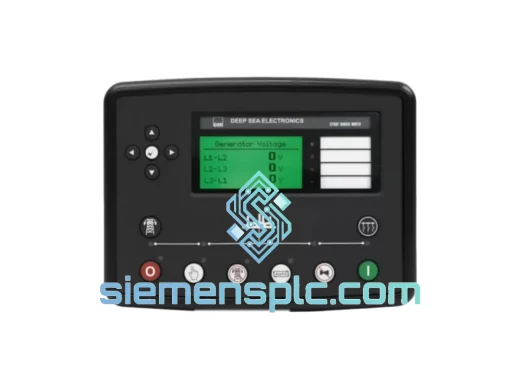
Deep Sea Electronics DSE8660 MKII Generator Control Module
Sea Electronics 8000 Series
Origin GB
Generator Control Module
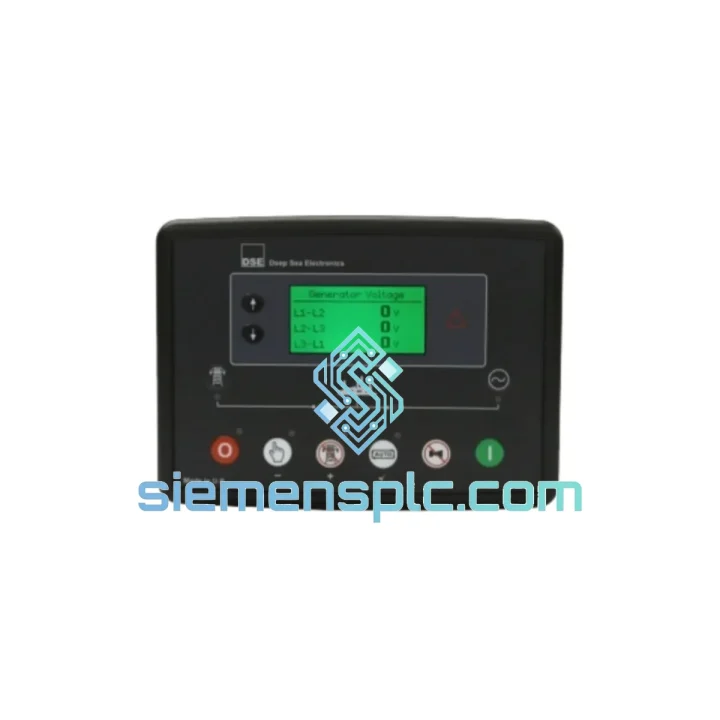
Request verified availability, condition, replacement risk review, packing options and courier lead time for DSE6120-MKII.
Click Request Quote and the part number is inserted into the inquiry form automatically.
Core fields for model confirmation and RFQ routing. Detailed product narrative remains below.
The DSE6120-MKII occupies a well-defined functional position in any standby power control loop: it continuously monitors the utility supply across all three phases, executes a timed start sequence upon confirmed mains failure, supervises generator run-up to rated voltage and frequency, commands the transfer switch to close onto generator, and reverses the entire sequence once the utility recovers within programmed thresholds. Every timing interval, voltage window, and frequency band is field-configurable via DSE Configuration Suite software, giving commissioning engineers precise control over transfer behavior without modifying hardware or relay wiring.
Unlike discrete relay-based AMF schemes that require separate voltage-sensing relays, timers, and interposing contactors, the DSE6120-MKII consolidates all AMF logic into a single 240 × 180 mm panel-mounted unit. This integration reduces panel wiring complexity, eliminates inter-relay timing drift, and provides a single point of event logging for post-fault analysis. The module operates from an 8–35 V DC supply, making it directly compatible with both 12 V and 24 V generator starting battery systems without auxiliary voltage regulators.
Real-time Stock & RFQ: [email protected] | WhatsApp: +86 18359268345
| Parameter | Specification |
|---|---|
| Model | DSE6120-MKII |
| Series | DSE6000 |
| Manufacturer | Deep Sea Electronics (DSE), United Kingdom |
| Primary Function | Automatic Mains Failure (AMF) Detection & Generator Transfer Control |
| DC Supply Voltage | 8–35 V DC (continuous operating range) |
| Quiescent Current Draw | ≤ 150 mA @ 12 V DC (standby) |
| Mains Sensing Input | Single-phase and three-phase, up to 415 V AC L-N / 720 V AC L-L |
| Generator Sensing Input | Single-phase and three-phase, up to 415 V AC L-N / 720 V AC L-L |
| Voltage Sensing Accuracy | ±1% of full scale |
| Frequency Sensing Range | 45–65 Hz |
| Frequency Sensing Accuracy | ±0.1 Hz |
| Configurable Outputs | Fuel, Start, Auxiliary (volt-free relay contacts, 10 A @ 28 V DC) |
| Digital Inputs | 8 configurable inputs (active low, 0–35 V DC compatible) |
| Display | 132 × 64 pixel graphical LCD with LED status indicators |
| Communication Ports | RS-232 (front panel), RS-485 (rear terminal, Modbus RTU) |
| PC Configuration | DSE Configuration Suite (Windows, free download) |
| Operating Temperature | −30 °C to +70 °C |
| Storage Temperature | −40 °C to +80 °C |
| Humidity | 93% RH non-condensing (IEC 60068-2-78) |
| Front Panel Protection | IP65 (IEC 60529) |
| Panel Cut-Out Dimensions | 220 × 160 mm |
| Overall Dimensions | 240 × 180 × 47 mm |
| Weight | Approx. 500 g |
| Certifications | CE (LVD + EMC Directives), RoHS compliant |
| Warranty | 12 months from date of dispatch |
The DSE6120-MKII implements mains and generator sensing through isolated voltage measurement circuits on each phase input. Optical isolation between the high-voltage sensing network and the low-voltage microcontroller bus prevents conducted transients—common in generator environments during load switching—from propagating into the logic section. The module’s EMC design follows IEC 61000-4 series test criteria, including 4 kV contact discharge (ESD), 2 kV fast transient burst (EFT), and 2 kV surge immunity, which are the dominant interference mechanisms in switchgear panels.
The AMF decision logic operates on a rolling window of voltage and frequency samples. A mains failure is declared only when measured values fall outside the configured thresholds for the full programmed loss-of-mains delay period—typically 3–10 seconds—preventing nuisance starts caused by momentary voltage dips or frequency excursions during grid disturbances. This hysteresis-based detection approach is architecturally superior to single-sample threshold comparators used in simpler relay schemes.
Output relay contacts are rated at 10 A resistive, with suppression diodes across inductive coil loads on the fuel solenoid and starter motor circuits. The start output incorporates a configurable crank disconnect function: once generator voltage and frequency reach the programmed acceptance window, the start relay de-energizes within one measurement cycle, protecting the starter motor from over-run. The module also monitors for engine over-speed and under-speed conditions via the generator sensing inputs, triggering a configurable shutdown alarm if frequency deviates beyond the programmed band during run.
The RS-485 Modbus RTU port supports multi-drop wiring at baud rates from 9,600 to 115,200 bps, with configurable parity and stop bits. The register map exposes all measured values—mains voltage per phase, generator voltage per phase, frequency, DC supply voltage, engine run hours, and alarm status bits—as 16-bit holding registers, enabling direct integration with SCADA systems, building management systems (BMS), and remote monitoring platforms without protocol conversion gateways.
The DSE6120-MKII delivers measurable engineering value across eight distinct integration dimensions:
Every DSE6120-MKII unit supplied through siemensplc.com is sourced from verified Deep Sea Electronics distribution channels and carries full manufacturer traceability. Each unit is inspected upon receipt: physical condition and label authenticity are verified against DSE’s current production standards, firmware version is confirmed against the DSE release schedule, and a functional power-on test validates display operation, input sensing, and output relay continuity before dispatch.
Original manufacturer packaging with intact serial number labels is maintained throughout the storage and dispatch process. Certificates of conformity and supply chain documentation are available upon request for projects requiring procurement audit trails.
Dispatch is handled from our Xiamen, China operations center. Standard international shipments reach Southeast Asia within 3–5 business days, Europe within 5–8 business days, and North America within 6–10 business days via DHL Express, FedEx International Priority, or UPS Worldwide Expedited, depending on destination and urgency. Expedited same-day dispatch is available for orders confirmed before 14:00 CST. All shipments include tracking numbers issued within 24 hours of dispatch confirmation. Customs documentation—commercial invoice, packing list, and HS code declaration—is prepared to destination-country import requirements to minimize clearance delays.
Email: [email protected]
WhatsApp: +86 18359268345
Web: siemensplc.com
Location: Xiamen, China
© 2026 siemensplc.com. All rights reserved.
We check the full part number, brand, series and visible nameplate information before quotation.
Sales confirms stock path, condition option, quantity and realistic lead time for export dispatch.
DHL, FedEx, UPS or buyer courier arrangements can be reviewed with packing requirements.
Similar brand or category products for fast comparison and multi-item RFQ lists.