
Delta Tau
In Stock OK
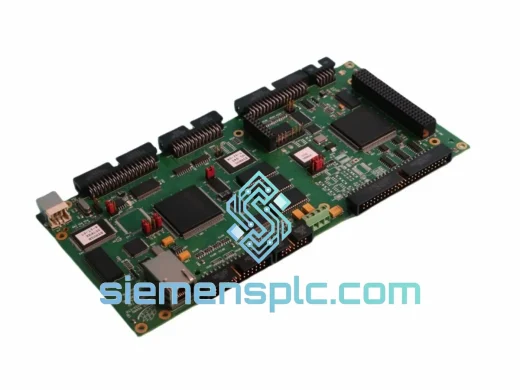
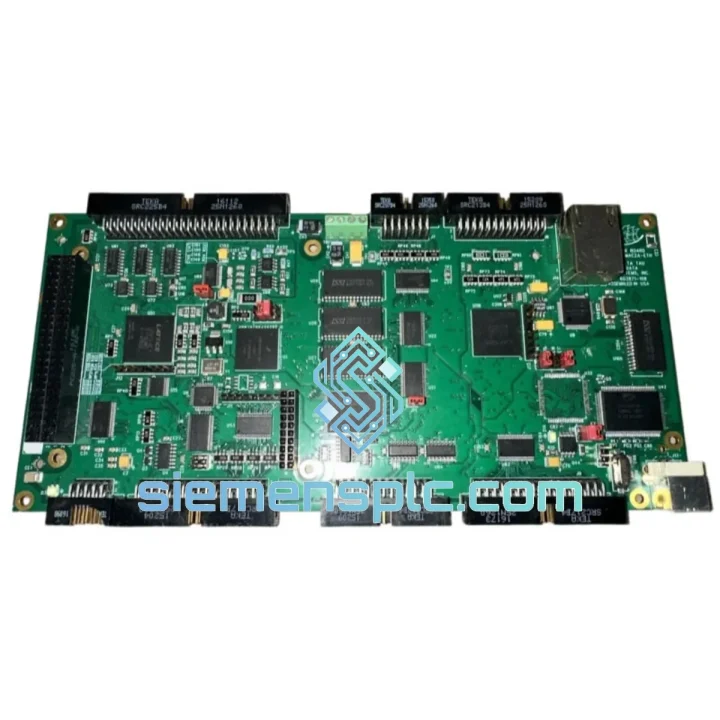
Delta Tau PMAC2A-ETH 603871-108 Motion Controller – PMAC2A Series
Request verified availability, condition, replacement risk review, packing options and courier lead time for PMAC2A-ETH.
BrandDelta Tau
Part NumberPMAC2A-ETH
ConditionAvailability Check
Lead TimeRFQ Confirmation
DocumentsDatasheet / photos by RFQ
ShippingExport packing available
Auto-filled RFQ
PMAC2A-ETH
Click Request Quote and the part number is inserted into the inquiry form automatically.
- Reply by email: [email protected]
- WhatsApp / Tel: +86 18359268345
- Mon-Sat 9:00-18:00 GMT+8
Procurement Data
Key Product Information
Core fields for model confirmation and RFQ routing. Detailed product narrative remains below.
- Brand
- Delta Tau
- Primary Part Number
- PMAC2A-ETH
- Product Type
- Motion Controller
- Product Family
- Other series
- Manufacturer
- Delta Tau Data Systems
- Country of Origin
- United States
- Catalog Category
- Communication
- Operating Temp.
- 0 °C to +60 °C
- Warranty
- 12 months (manufacturing defects and functional failures)
Model confirmed for inquiry
PMAC2A-ETH
Send quantity, destination and urgency. The RFQ form keeps this part number attached.
Request Quote
Product Overview
Delta Tau PMAC2A-ETH 603871-108: Ethernet-Enabled Multi-Axis Motion Controller for Deterministic Industrial Servo Systems
The PMAC2A-ETH 603871-108 is a board-level Ethernet motion controller manufactured by Delta Tau Data Systems, engineered for applications where coordinated multi-axis servo control must operate with sub-millisecond determinism over standard TCP/IP infrastructure. Unlike fieldbus-dependent architectures that impose proprietary cabling constraints, this controller integrates a 10/100 Base-T Ethernet port directly onto the PMAC2A platform, allowing plant engineers to route motion commands and status telemetry through existing network switches without dedicated motion-bus wiring.
At its computational core, the board deploys a Motorola 56000-series fixed-point DSP running at clock rates sufficient to close servo position loops at 2.26 kHz per axis — a figure that translates to a 442 µs position-loop sample period under full 8-axis load. This architecture separates the real-time servo kernel from the host communication stack: the DSP executes foreground motion programs and PLC ladder logic in parallel, while the Ethernet subsystem handles asynchronous host queries without introducing jitter into the servo interrupt service routine. The result is a controller that maintains positional repeatability even when the host PC is under heavy computational load or network latency spikes.
The 603871-108 revision integrates flash-based non-volatile storage for motion programs, I-variable parameter sets, and M-variable definitions. On power-up, the controller self-initializes from flash without requiring host download, enabling autonomous machine restart after power interruption — a critical requirement in unattended manufacturing cells. SRAM provides the working memory for real-time variable manipulation during program execution.
Encoder feedback is accepted in quadrature incremental format (A, B, Index) with hardware interpolation, and the board supports SSI (Synchronous Serial Interface) absolute encoder input for applications requiring absolute position retention across power cycles. Each axis generates a ±10 V analog command output via a 16-bit DAC, providing 305 µV resolution per LSB — sufficient for driving high-bandwidth linear servo amplifiers without quantization-induced velocity ripple at low speeds.
The onboard digital I/O subsystem interfaces with machine peripherals including hardware limit switches, home sensors, registration inputs, and auxiliary relay outputs. The PMAC2A-ETH supports hardware-triggered position capture on encoder index or external trigger inputs, enabling precise registration and flying-shear synchronization without software latency. Background PLC programs execute at configurable scan rates independent of the foreground motion program, allowing complex interlocking logic to run concurrently with coordinated path motion.
From a system integration perspective, the PMAC2A-ETH 603871-108 is a direct functional upgrade for existing PMAC2A installations. The Ethernet interface replaces legacy serial and USB connections while preserving full backward compatibility with PEWIN32PRO2 programming environments and PCOMM32PRO host communication libraries. Existing motion programs, I-variable tuning sets, and PLC ladder files transfer without modification, reducing re-commissioning time to network configuration and IP address assignment.
This unit is sourced as genuine Delta Tau surplus, inspected, and verified functional prior to dispatch from Xiamen, China. A 12-month warranty covers manufacturing defects and functional failures under normal operating conditions.
Real-time Stock & RFQ: [email protected] | WhatsApp: +86 18359268345
Technical Parameters
| Parameter | Specification |
|---|---|
| Part Number | PMAC2A-ETH 603871-108 |
| Manufacturer | Delta Tau Data Systems |
| Platform / Series | PMAC2A |
| Communication Interface | Ethernet 10/100 Base-T (RJ-45) |
| Protocol Support | TCP/IP, UDP; PCOMM32PRO socket API |
| Motion Axes | Up to 8 axes coordinated (expandable via MACRO ring) |
| Servo Loop Rate | Up to 2.26 kHz per axis (442 µs sample period) |
| DSP Core | Motorola 56000-series fixed-point DSP |
| Analog Command Output | ±10 V, 16-bit DAC per axis (305 µV/LSB resolution) |
| Encoder Input Types | Quadrature incremental (A/B/Index), SSI absolute |
| Digital I/O | Onboard general-purpose digital I/O; hardware trigger capture |
| Non-Volatile Storage | Flash (programs, I-variables, M-variables) |
| Working Memory | SRAM (real-time variable execution) |
| Operating Temperature | 0 °C to +60 °C |
| Power Supply | Via host backplane or regulated external DC |
| Form Factor | PCB card (board-level module) |
| Weight | Approx. 200 g |
| Software Environment | PEWIN32PRO2, PCOMM32PRO, Delta Tau PLC ladder logic |
| Country of Origin | United States |
| Warranty | 12 months (manufacturing defects and functional failures) |
Hardware Logical Analysis
The PMAC2A-ETH 603871-108 implements a dual-processor architecture that physically separates the real-time servo computation domain from the network communication domain. The DSP core operates on a dedicated interrupt-driven execution model: the servo interrupt fires at the configured sample rate, preempts all background tasks, executes the PID-plus-feedforward algorithm for each active axis, updates DAC output registers, and reads encoder counters — all within a fixed, bounded time window. This hard real-time partition is immune to Ethernet stack processing delays, which are handled by a secondary communication processor operating asynchronously.
EMC design on the PMAC2A platform addresses the high-frequency noise environment typical of servo drive installations. The analog ±10 V command outputs are routed through differential line drivers with common-mode rejection, reducing susceptibility to ground-loop interference between the controller and remote servo amplifiers. Encoder input receivers implement differential line reception (RS-422 compatible) with hardware hysteresis, preventing false count generation from noise transients on long cable runs. The board’s power supply filtering uses bulk capacitance and high-frequency bypass capacitors at each IC power rail, maintaining supply stability during fast transient load changes from DSP computation bursts.
The hardware position capture mechanism deserves specific attention: a dedicated latch register captures the encoder count value on the rising edge of an external trigger input with zero software latency. This hardware-level registration is essential for flying-shear, label registration, and print-mark synchronization applications where software interrupt latency (typically 50–200 µs) would introduce unacceptable positional error. The captured position is available to the motion program within the next servo cycle, enabling closed-loop correction within 442 µs of the trigger event.
Flash memory management on the 603871-108 uses a wear-leveling scheme that distributes write cycles across the flash array, extending the operational lifetime of the non-volatile storage under frequent parameter-save operations. The autonomous boot sequence reads the stored configuration and begins executing the saved motion program within seconds of power application, without requiring host PC intervention — a design choice that directly supports unattended machine restart protocols.
System Integration Benefits
- Standard Ethernet Infrastructure: Eliminates proprietary motion bus cabling; the controller connects to any managed or unmanaged Ethernet switch, reducing installation material cost and simplifying network topology documentation.
- Deterministic Servo Execution Independent of Host Load: The DSP servo kernel maintains its interrupt schedule regardless of host PC CPU utilization or network congestion, preventing motion errors caused by Windows scheduling jitter.
- Autonomous Machine Restart: Flash-stored programs and parameters enable the machine to resume operation after power interruption without host download, reducing unplanned downtime in 24/7 production environments.
- Hardware Registration Capture: Zero-latency position latch on external trigger supports high-speed registration applications with sub-servo-cycle response, eliminating the positional error introduced by software interrupt handling.
- Parallel PLC and Motion Execution: Background PLC ladder programs run concurrently with foreground motion programs at configurable scan rates, enabling complex machine interlocking without blocking coordinated path execution.
- Multi-Axis Coordinated Interpolation: Native support for linear, circular, and spline interpolation across up to 8 axes simultaneously, with lookahead velocity blending to maintain programmed feed rates through geometric transitions.
- Backward-Compatible Upgrade Path: Existing PMAC2A motion programs, I-variable tuning sets, and PLC files transfer without modification, reducing re-commissioning scope to network configuration only.
- Diagnostic Transparency via Ethernet: Real-time axis status, following error, velocity, and I/O state are accessible via PCOMM32PRO queries over Ethernet, enabling remote diagnostics and condition monitoring without physical access to the control cabinet.
- Absolute Position Retention: SSI encoder input support allows absolute position to be read on power-up, eliminating homing cycles in applications where machine reference position must be maintained across power cycles.
- High-Resolution Analog Command: 16-bit DAC output provides 305 µV/LSB resolution on the ±10 V command range, suppressing quantization-induced velocity ripple at low feed rates in precision contouring applications.
Quality Assurance & Global Logistics
Each PMAC2A-ETH 603871-108 unit offered through siemensplc.com is sourced from verified industrial surplus channels and undergoes a structured inspection protocol before dispatch. The inspection sequence includes visual examination of PCB, connectors, and component condition; functional power-on verification; Ethernet communication handshake test using PCOMM32PRO; and axis command output verification on a calibrated test fixture. Original Delta Tau firmware is preserved on all units; no unauthorized firmware modifications are applied.
Units are packaged in ESD-safe anti-static bags with conductive foam support, placed in rigid inner cartons with foam corner protection, and sealed in outer corrugated shipping cartons rated for international air freight handling. This packaging protocol meets IPC/JEDEC J-STD-033 guidelines for moisture-sensitive and ESD-sensitive electronic assemblies.
Dispatch is from Xiamen, China, using DHL Express, FedEx International Priority, or UPS Worldwide Express, with typical transit times of 3–5 business days to North America and Europe, and 2–4 business days to Southeast Asia. Export documentation including commercial invoice, packing list, and HS code declaration (HS 8537.10) is prepared for each shipment to facilitate customs clearance. Traceability documentation is available upon request for regulated industries including aerospace, medical device manufacturing, and semiconductor equipment.
A 12-month warranty covers manufacturing defects and functional failures under normal operating conditions from the date of shipment. Warranty claims are processed with a target response time of 24 hours and replacement dispatch within 3 business days upon fault confirmation.
Contact Information
Email: [email protected]
WhatsApp: +86 18359268345
Web: siemensplc.com
Location: Xiamen, China
© 2026 siemensplc.com. All rights reserved.
Ready to quote
[email protected]
Send This Part Number to Sales
RFQ workflow
Quality workflow ->
Confirmation Process
01Model confirmation
We check the full part number, brand, series and visible nameplate information before quotation.
02Availability reply
Sales confirms stock path, condition option, quantity and realistic lead time for export dispatch.
03Packing & courier
DHL, FedEx, UPS or buyer courier arrangements can be reviewed with packing requirements.
Continue sourcing
Browse full catalog ->
Related Automation Parts
Similar brand or category products for fast comparison and multi-item RFQ lists.
Delta Tau
RFQ Ready
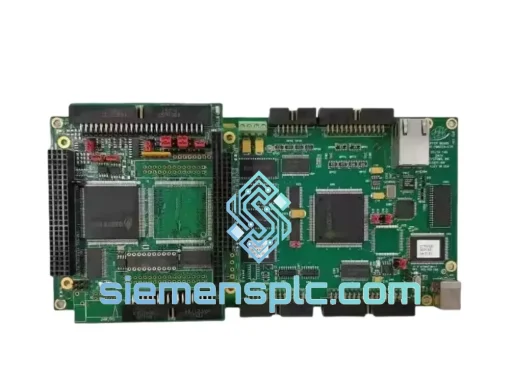
Delta Tau PMAC2A-ETH 603871-105 Motion Controller
Origin United States
Motion Controller
ABB
RFQ Ready
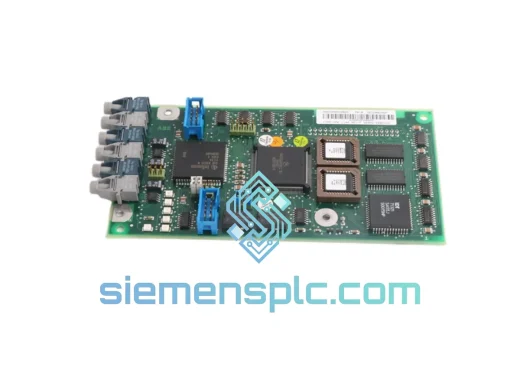
ABB YPK114A 3ASD399002B20 Drive Communications Module
Origin SE
Drive Communications Module
Siemens
RFQ Ready
SIEMENS 6GK5108-0BA00-2AA3 Industrial Ethernet Switch
SIMATIC
Origin DE
Industrial Ethernet Switch