Emerson
RFQ Ready
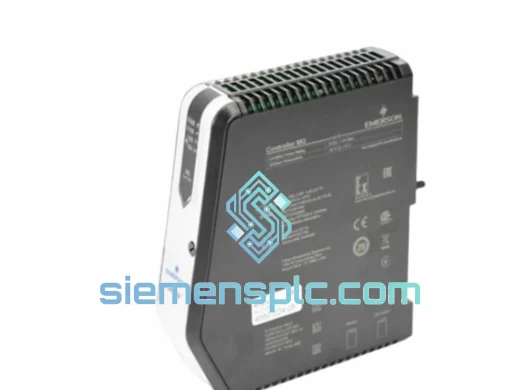
EMERSON SE4301T02 KL3003X1-BA1 12P4632X132 Digital Input Module
DeltaV
Origin US
Digital Input Module
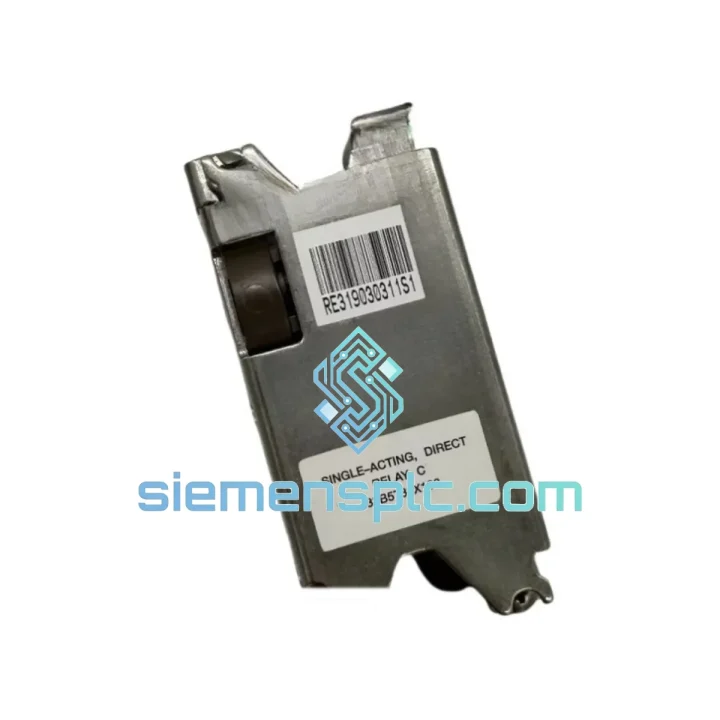
Request verified availability, condition, replacement risk review, packing options and courier lead time for 38B5786X132.
Click Request Quote and the part number is inserted into the inquiry form automatically.
Core fields for model confirmation and RFQ routing. Detailed product narrative remains below.
The Emerson 38B5786X132 is a single-acting, direct-action pneumatic relay designed as an integral amplifier stage within Fisher 3582 and 3610 series valve positioners. Its primary function in a closed-loop control architecture is volumetric amplification: the positioner’s pilot section generates a low-flow pneumatic signal proportional to the position error between the setpoint and the valve stem feedback. The relay intercepts this pilot signal and converts it into a high-flow actuator supply or exhaust event, enabling the diaphragm actuator to stroke at a rate consistent with the loop’s dynamic tuning parameters. In pressure and flow control loops with scan rates below 500 ms, inadequate relay capacity is a direct cause of phase lag accumulation — a condition that manifests as sustained oscillation at frequencies well below the process natural frequency, often misdiagnosed as PID tuning instability.
The suffix designation X132 within the 38B5786 relay family specifies a direct-action trim configuration: output pressure tracks input signal pressure in a proportional, non-inverting relationship. This is the correct selection for fail-open actuator assemblies where increasing positioner output pressure drives the valve toward the open position. The relay body is pressure die-cast from a zinc-aluminum alloy (Zamak-class), which provides dimensional stability across the full operating temperature range while maintaining a mass low enough — approximately 350 g — to avoid imposing mechanical stress on the positioner’s mounting boss under vibration loading. Internal sealing elements are nitrile rubber (NBR) diaphragms, rated for continuous service with clean instrument air conforming to ISA 7.0.01 and ISO 8573-1 Class 2.2.1 contamination limits.
Port geometry follows the Fisher standard: 1/4-inch NPT threads on the supply, output, and exhaust ports, with a two-bolt flange mounting interface that mates directly to the 3582 and 3610 positioner bodies without intermediate adapters or external tubing runs. Eliminating external pneumatic connections between the relay and positioner body removes a statistically significant source of field leakage — a factor that becomes critical in SIL-rated partial stroke test (PST) applications where actuator leakage rates must remain below defined thresholds to preserve the safety function’s probability of failure on demand (PFD) calculation.
The relay’s supply path flow coefficient (Cv) is rated at approximately 0.6, with the exhaust path sized to the same coefficient. This symmetry is not incidental: matched Cv values in both directions produce equal fill and exhaust times for a given actuator volume and differential pressure, which is a prerequisite for achieving symmetric stroking behavior in split-range valve pair configurations. Asymmetric stroking in split-range systems introduces a dead band at the crossover point that appears as a steady-state offset in the controlled variable — a defect that is difficult to eliminate through PID tuning alone.
An integrated 40-mesh stainless steel filter screen is positioned upstream of the relay’s internal nozzle orifice. At a nominal mesh opening of 420 µm, the screen captures metallic particulate and pipe scale that would otherwise score the diaphragm seat or partially obstruct the nozzle — a failure mode that produces a fixed output offset rather than a complete relay failure, making it diagnostically ambiguous without a calibrated pressure gauge on the relay output port. The screen is accessible for inspection and cleaning without relay removal in most Fisher positioner configurations.
This unit is stocked at our Xiamen, China facility with full traceability documentation. For real-time availability, volume pricing, or pre-sales technical consultation, contact [email protected] or WhatsApp +86 18359268345.
Real-time Stock & RFQ: [email protected] | WhatsApp: +86 18359268345
| Parameter | Specification |
|---|---|
| Manufacturer | Emerson (Fisher Controls Division) |
| Part Number | 38B5786X132 |
| Relay Action | Single-Acting, Direct Action (output ↑ with input ↑) |
| Compatible Positioner Series | Fisher 3582, 3610, 3610J |
| Supply Pressure Range | 20–100 psig (1.38–6.90 bar g) |
| Input Signal Range | 3–15 psig (0.21–1.03 bar g) |
| Output Signal Range | 3–15 psig (0.21–1.03 bar g), direct-proportional |
| Flow Coefficient (Cv) – Supply | ≈ 0.6 |
| Flow Coefficient (Cv) – Exhaust | ≈ 0.6 (symmetric) |
| Port Connections | 1/4-inch NPT (supply, output, exhaust) |
| Mounting Interface | Two-bolt flange, direct-mount to Fisher positioner body |
| Body Material | Zinc-aluminum alloy (Zamak die-cast) |
| Diaphragm Material | Nitrile rubber (NBR) |
| Operating Temperature Range | −40 °C to +85 °C (−40 °F to +185 °F) |
| Instrument Air Quality Requirement | ISA 7.0.01 / ISO 8573-1 Class 2.2.1 |
| Internal Filter | 40-mesh stainless steel screen (≈ 420 µm opening) |
| Approximate Weight | 350 g |
| Country of Origin | United States |
| Reference Document | Fisher Instruction Manual D102794X012 |
| Warranty | 12 months from date of shipment |
The 38B5786X132 operates on a two-diaphragm force-balance pilot principle. The input signal pressure acts on a small-area pilot diaphragm, generating a mechanical force that displaces a flapper element relative to a fixed nozzle seat. The degree of flapper displacement modulates the bleed rate of supply pressure through the relay’s internal amplifier chamber. The amplifier chamber pressure — which constitutes the relay output — reaches equilibrium when the feedback force generated by the output pressure acting on a larger-area feedback diaphragm equals the pilot force. This force-balance architecture provides inherent linearity across the full 3–15 psig input span without requiring external linearization or electronic compensation.
The direct-action geometry orients the flapper-nozzle assembly such that increasing input pressure increases nozzle restriction, which increases amplifier chamber pressure and therefore output pressure. This configuration exhibits lower hysteresis than reverse-acting designs because the supply valve spring preload acts in the same mechanical direction as the pilot force, rather than opposing it. In practice, this translates to relay hysteresis below 0.5% of span — a value that preserves positioner resolution in tight-tolerance flow and pressure control loops where valve position repeatability is a binding constraint on loop performance.
The zinc-aluminum body provides passive electrostatic shielding for co-located electronic positioner modules. The body is electrically bonded to the positioner frame through the two mounting bolts, establishing a low-impedance ground path. In installations adjacent to variable-frequency drives (VFDs) or high-current switching equipment — common in motor control center (MCC) rooms where pneumatic and electronic instrumentation share cable trays — this bonding path is the primary defense against capacitively coupled noise that could induce false position signals in the positioner’s LVDT or Hall-effect feedback sensor.
The 40-mesh filter screen deserves specific attention in facilities with aging instrument air distribution systems. Pipe scale and iron oxide particulate generated by corrosion of carbon steel headers are the dominant contamination sources. At 420 µm, the screen captures particles large enough to score the diaphragm seat but small enough to pass through standard upstream coalescing filters rated at 5 µm — a gap in the filtration chain that the relay’s integral screen is specifically designed to address. Inspection frequency should be calibrated to the facility’s air quality data; in clean systems, annual inspection is adequate, while systems with documented particulate events may require quarterly checks.
Every Emerson 38B5786X132 unit dispatched from our Xiamen facility passes a three-stage pre-shipment verification protocol. Stage one is a visual and dimensional inspection: label integrity, body casting surface condition, port thread gauge verification, and mounting flange flatness check. Stage two is a bench functional test: a calibrated 3–15 psig input sweep is applied to the pilot port while supply pressure is held at 60 psig, and output response is recorded at five points across the span. Acceptance criterion is ±2% of the theoretical direct-action curve at each test point. Stage three is packaging verification: anti-static moisture-proof wrapping, port plug installation, and label cross-check against the purchase order line item and serial number.
Xiamen’s logistics infrastructure supports competitive transit times to global industrial procurement destinations. The Port of Xiamen ranks among China’s top-ten container ports by annual throughput, with direct vessel services to major transshipment hubs. For air freight, Xiamen Gaoqi International Airport provides daily connections to DHL Express, FedEx International Priority, and UPS Worldwide Express networks. Indicative transit times: Southeast Asia 3–5 business days, Middle East 5–8 business days, Europe and North America 10–14 business days via express air. Same-day dispatch is available for orders confirmed before 14:00 CST. Sea freight consolidation (LCL) is available for orders exceeding 50 units, with weekly consolidation departures to Rotterdam, Los Angeles, and Singapore.
Standard shipment documentation includes a commercial invoice, packing list, and certificate of conformance. An Emerson factory test report is available for units sourced from authorized distributor stock. The applicable import HS code for pneumatic relay components is 8481.20.00; buyers are responsible for confirming applicable import duties and VAT in their jurisdiction. Proforma invoices for customs pre-clearance are available on request from our logistics team.
Email: [email protected]
WhatsApp: +86 18359268345
Web: siemensplc.com
Location: Xiamen, China
© 2026 siemensplc.com. All rights reserved.
We check the full part number, brand, series and visible nameplate information before quotation.
Sales confirms stock path, condition option, quantity and realistic lead time for export dispatch.
DHL, FedEx, UPS or buyer courier arrangements can be reviewed with packing requirements.
Similar brand or category products for fast comparison and multi-item RFQ lists.