Emerson
RFQ Ready
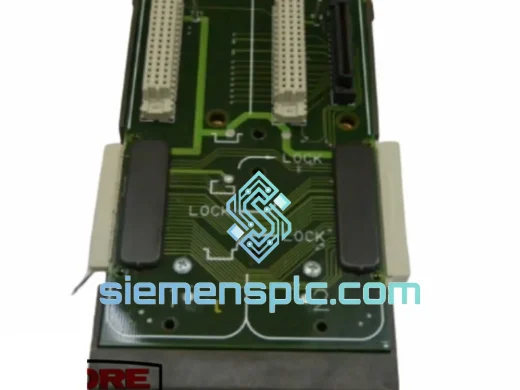
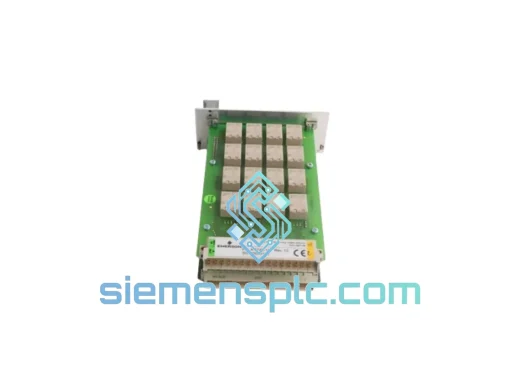
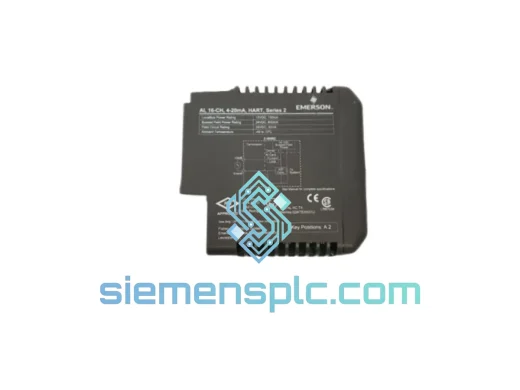
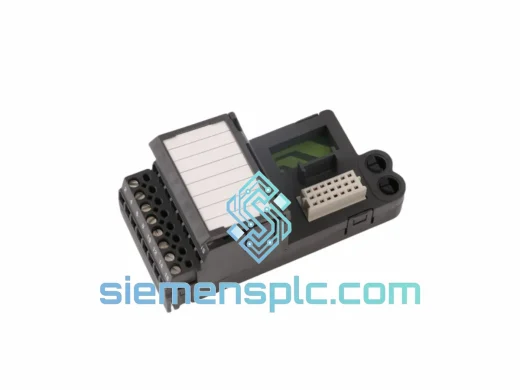
Emerson KJ3003X1-EA1 12P0921X032 DCS Power Supply Module
DeltaV
Origin US
DCS Power Supply Module
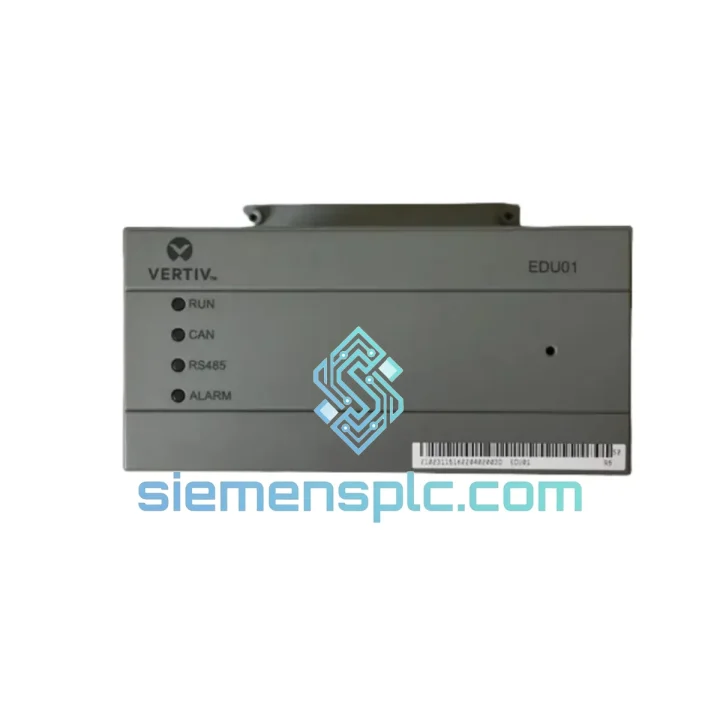
Request verified availability, condition, replacement risk review, packing options and courier lead time for EDU01.
Click Request Quote and the part number is inserted into the inquiry form automatically.
Core fields for model confirmation and RFQ routing. Detailed product narrative remains below.
The Emerson EDU01 is a carrier-mounted DC power distribution unit purpose-built for the DeltaV distributed control system platform. Within a DeltaV control loop, the EDU01 occupies the boundary between the facility AC power infrastructure and the low-voltage DC domain that feeds I/O subsystems, field interface cards, and controller backplanes. Its function is not simply to convert voltage — it enforces power domain segmentation, manages inrush sequencing, and provides the electrical isolation barrier that prevents ground-referenced noise from the field wiring layer from entering the measurement and signal-conditioning circuits of the DeltaV I/O modules it serves.
In continuous-process industries — refining, petrochemical, pharmaceutical, and pulp-and-paper — the integrity of the 24 V DC rail supplied by the EDU01 directly determines the accuracy of 4–20 mA analog signals, the reliability of HART communication overlays, and the response latency of digital I/O channels. A voltage ripple exceeding ±0.5% on the DC bus can introduce quantization errors in 16-bit analog input modules, producing measurement deviations that exceed the calibration tolerance of precision field transmitters. The EDU01’s regulated output architecture is designed to hold the DC bus within ±1% of nominal across the full load range, from cold-start inrush to steady-state continuous operation.
The module mounts directly into the DeltaV carrier slot, drawing AC input from the carrier’s integrated power bus and delivering isolated, regulated 24 V DC to the downstream I/O module population. This carrier-integrated architecture eliminates the external 24 V DC distribution wiring that would otherwise be required in a conventional panel-mount power supply topology, reducing the number of field-wiring terminations in the power distribution path and the associated failure modes — loose terminals, oxidized contacts, and impedance mismatches — that accumulate over a 20-year plant asset lifecycle.
Real-time Stock & RFQ: [email protected] | WhatsApp: +86 18359268345
| Parameter | Specification |
|---|---|
| Part Number / SKU | EDU01 |
| Manufacturer | Emerson Electric Co. (Fisher-Rosemount Systems) |
| Platform Compatibility | Emerson DeltaV DCS — carrier-slot installation |
| Module Function | DC power distribution and isolation for DeltaV I/O subsystems |
| Nominal DC Output Voltage | 24 V DC (regulated) |
| Output Voltage Regulation | ±1% of nominal under 10%–100% load variation |
| AC Input Voltage Range | 85–264 V AC, 47–63 Hz (universal input) |
| DC Input Voltage Range | 100–370 V DC (wide-range DC input) |
| Galvanic Isolation Voltage | ≥ 1,500 V AC (input-to-output, 1 min. withstand) |
| EMC Immunity Standard | IEC 61000-4-2 (ESD), IEC 61000-4-4 (EFT), IEC 61000-4-5 (Surge), IEC 61000-4-6 (Conducted) |
| Conducted Emission Limit | CISPR 11 Class A (150 kHz–30 MHz band) |
| Operating Ambient Temperature | 0 °C to +60 °C (non-condensing) |
| Storage Temperature Range | −40 °C to +85 °C |
| Relative Humidity | 5%–95% RH, non-condensing |
| Mounting Interface | DeltaV DCS carrier backplane slot (OEM-specified) |
| Hot-Swap Support | Yes — carrier remains energized during module exchange |
| Redundancy Configuration | N+1 load-sharing with automatic failover |
| Regulatory Approvals | CE marking; UL/cUL (verify current listing with Emerson) |
| Country of Origin | China (CN) |
| Warranty | 12 months from date of shipment |
DC-DC Conversion Topology and Isolation Barrier Architecture: The EDU01 employs a transformer-coupled DC-DC conversion stage as the core of its power processing chain. The switching topology — operating in the 50–200 kHz range typical of high-density industrial converters — allows the transformer turns ratio to be optimized for the 24 V DC output while maintaining a compact magnetic core volume within the module’s carrier-slot form factor. The transformer’s inter-winding capacitance is minimized through split-bobbin or Faraday-shield winding techniques, which reduces high-frequency common-mode current coupling across the isolation boundary. This is particularly relevant in DeltaV installations where the I/O backplane ground and the AC mains protective earth may carry differential potentials due to long cable runs or shared ground infrastructure with variable-frequency drives (VFDs) and other switching loads.
Input EMC Filter Network: The AC input stage incorporates a multi-stage LC filter designed to attenuate conducted emissions in both differential and common modes. X-capacitors across the line conductors suppress differential-mode switching noise generated by the PWM converter, while Y-capacitors from line to earth and common-mode chokes suppress common-mode currents that would otherwise propagate back onto the facility AC distribution network. Metal-oxide varistors (MOVs) clamp transient overvoltages to levels compliant with IEC 61000-4-5 Category 3 (±2 kV line-to-earth, ±1 kV line-to-line), protecting the converter from switching transients originating from motor starters, contactors, and capacitor bank switching events on shared AC panels.
Output Regulation Feedback Loop: The output voltage regulation loop uses an optocoupler to transfer the error signal from the secondary (output) side of the isolation barrier back to the primary-side PWM controller. This optocoupler feedback path maintains closed-loop regulation across the isolation boundary without compromising the galvanic isolation integrity. The compensation network is tuned for a crossover frequency that provides adequate phase margin under capacitive load conditions — relevant because DeltaV I/O modules present a predominantly capacitive load profile during power-up, with bulk decoupling capacitors on the module’s internal 24 V rail drawing a brief but significant inrush current before the module’s internal regulators assume load.
Thermal Dissipation and MTBF Considerations: The EDU01’s power conversion efficiency — typically 85–90% at rated load for this class of industrial DC-DC converter — determines the thermal dissipation within the module housing. At 90% efficiency and a 5 A rated output (120 W), approximately 13 W is dissipated as heat within the module. The housing is designed to conduct this heat to the carrier chassis via the module’s mechanical interface, supplemented by convective airflow within the DeltaV enclosure. Operating the module at 60–80% of rated load — the typical steady-state condition in a partially populated I/O carrier — reduces junction temperatures in the switching MOSFETs and output rectifier diodes, extending component MTBF beyond the rated figure and reducing the probability of thermally-induced degradation over a 10-year maintenance cycle.
All Emerson EDU01 units supplied by siemensplc.com are procured through verified supply channels with documented traceability to Emerson’s authorized manufacturing and distribution network. Each unit undergoes a structured pre-shipment inspection covering: physical condition assessment of the module housing, connector pins, and label authenticity; serial number verification against procurement documentation; functional power-on verification where test infrastructure permits; and electrostatic discharge (ESD) protective packaging to IEC 61340-5-1 standards, including conductive bags, foam cushioning, and humidity indicator cards for long-transit shipments.
Our logistics operations are based in Xiamen, Fujian Province, China — a designated free-trade zone with established export infrastructure for industrial components. In-stock units are dispatched within 1–2 business days of confirmed order. Carrier options include DHL Express (2–5 business days to most destinations), FedEx International Priority, UPS Worldwide Express, and consolidated air freight for volume orders. Export documentation — commercial invoice, packing list, certificate of origin (Form E for ASEAN preferential tariff where applicable), and MSDS — is prepared in compliance with the import regulations of the destination country. We maintain active shipping lanes to Southeast Asia, the Middle East, Europe, North America, and South America, with established customs clearance experience in each region. All units are covered by a 12-month warranty from the date of shipment, with documented RMA procedures for warranty claims.
Email: [email protected]
WhatsApp: +86 18359268345
Web: siemensplc.com
Location: Xiamen, China
© 2026 siemensplc.com. All rights reserved.
We check the full part number, brand, series and visible nameplate information before quotation.
Sales confirms stock path, condition option, quantity and realistic lead time for export dispatch.
DHL, FedEx, UPS or buyer courier arrangements can be reviewed with packing requirements.
Similar brand or category products for fast comparison and multi-item RFQ lists.