Emerson
RFQ Ready
Emerson KJ3003X1-EA1 12P0921X032 DCS Power Supply Module
DeltaV
Origin US
DCS Power Supply Module
Request verified availability, condition, replacement risk review, packing options and courier lead time for KJ4101X1-BC1.
Click Request Quote and the part number is inserted into the inquiry form automatically.
Core fields for model confirmation and RFQ routing. Detailed product narrative remains below.
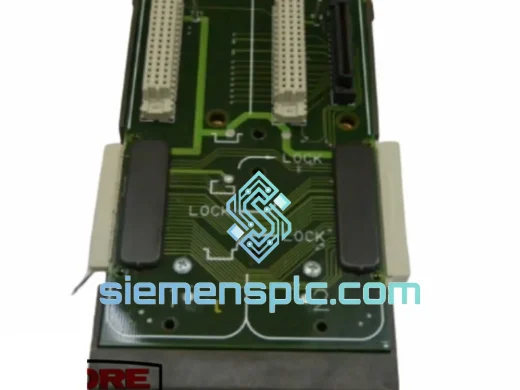
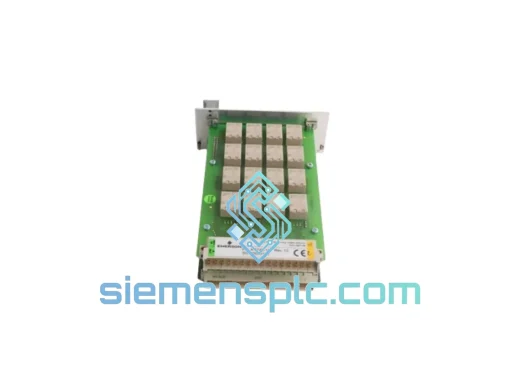
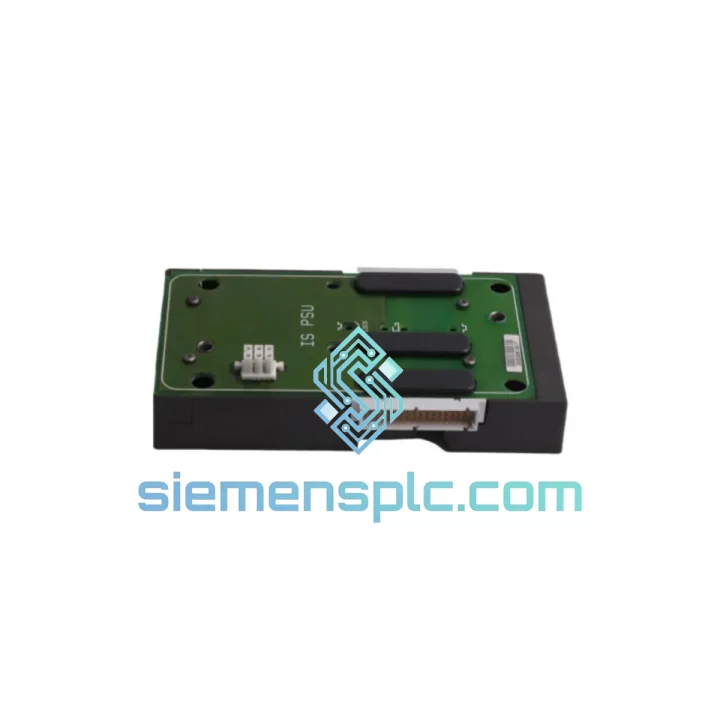
The KJ4101X1-BC1 (manufacturing reference 12P1872X012) is a purpose-built power supply carrier module within the Emerson DeltaV distributed control system architecture. Its role is not incidental to system operation — it constitutes the primary electromechanical interface between the DeltaV power supply module and the cabinet backplane bus, governing DC power routing, fault isolation, and alarm relay signaling across all populated I/O card slots. In continuous-process environments where unplanned shutdowns carry direct financial and safety consequences, the carrier’s internal architecture sets the reliability ceiling for the entire power distribution subsystem.
The KJ4101X1-BC1 consolidates bus bar distribution, hot-swap mechanical guidance, fault relay output, and LED status indication into a single carrier body. This integration eliminates the discrete terminal blocks, fuse holders, and inter-module wiring that would otherwise be required between a standalone power supply and a passive backplane rail. The result is a lower component count, fewer field-termination points, and a power distribution path that can be maintained — including full power supply replacement — without de-energizing the backplane or interrupting the DeltaV controller scan cycle.
Real-time Stock & RFQ: [email protected] | WhatsApp: +86 18359268345
| Manufacturer | Emerson Electric / Emerson Automation Solutions |
| Commercial Part Number | KJ4101X1-BC1 |
| Manufacturing Reference | 12P1872X012 |
| Product Family | DeltaV DCS — Power Distribution Subsystem |
| Module Classification | Power Supply Carrier / Backplane Power Interface |
| Compatible Power Supply Modules | Emerson DeltaV KJ4001X1-series (24 VDC and 48 VDC output variants) |
| Compatible Enclosures | DeltaV S-series and M-series controller and I/O cabinets |
| Backplane Bus Interface | DeltaV proprietary keyed multi-pin backplane power connector |
| DC Bus Distribution Topology | Parallel copper bus bar — all backplane slots supplied simultaneously |
| Voltage Regulation Tolerance | ±1 % across all populated slot positions under rated load |
| Hot-Swap Capability | Yes — live insertion and removal without backplane de-energization |
| Redundancy Architecture | N+1 load-sharing; automatic failover, no external transfer relay required |
| Fault Relay Output | Dry-contact relay; closes on power supply absence or output undervoltage |
| Relay Contact Rating | 24 VDC alarm bus; minimum switching current 10 mA |
| Status Indication | Dual LED: Power-Good (green), Fault (red) |
| Operating Temperature | 0 °C to +60 °C (32 °F to 140 °F) |
| Storage Temperature | −40 °C to +85 °C |
| Relative Humidity | 5 % to 95 % RH, non-condensing |
| Mechanical Form Factor | Cabinet-mount carrier card, proprietary DeltaV guide rail |
| Approximate Weight | 220 g |
| Country of Origin | USA |
| Applicable Standards | IEC 61131-2, IEC 61000-4-4, IEC 61000-4-5; CE, UL/cUL (system-level) |
| Warranty | 12 months operational warranty from date of shipment |
Parallel Bus Bar Distribution and Voltage Regulation: The carrier’s internal copper bus bars connect the power supply module output directly to all backplane slot positions in a parallel topology. Unlike a daisy-chain distribution scheme — where cumulative resistance along the rail produces a measurable voltage gradient between the first and last slot — the parallel bus maintains a uniform supply voltage within ±1 % across the full slot array. This characteristic is particularly significant for analog I/O modules, whose internal reference circuits are sensitive to supply variation at the millivolt level. The bus bar cross-section is sized to carry the full rated current of the compatible power supply module with a thermal margin that prevents resistive heating from degrading contact integrity over the module’s service life.
Isolation Stage Between Supply Output and Backplane Bus: A discrete isolation boundary exists between the power supply module’s output terminals and the backplane bus bars within the carrier body. This boundary performs two distinct protective functions. First, it attenuates transient voltage spikes generated during hot-swap insertion events — specifically the inductive kick produced when the power supply’s output filter capacitors charge through the connector contact resistance — preventing these transients from reaching the backplane and disturbing I/O module operation. Second, it establishes a defined impedance boundary that limits fault current propagation in the event of a downstream I/O module short circuit, confining the fault to the affected slot rather than collapsing the bus voltage across all slots simultaneously. The isolation design is consistent with the power supply interface requirements of IEC 61131-2.
Staged Contact Engagement for Hot-Swap Safety: The carrier’s connector geometry enforces a three-phase contact engagement sequence during power supply module insertion. Ground contacts engage first, establishing the chassis reference before any current-carrying path is completed. Power rail contacts engage second, allowing the power supply’s output to charge the bus bars against the now-grounded backplane. Signal and fault relay contacts engage last, after the power rail has stabilized. This sequencing eliminates the floating-ground condition that would otherwise exist during the insertion transient and suppresses the inrush current spike that occurs when an uncharged bus capacitance is connected to a live supply output. The mechanical guide rails constrain the power supply module to a single insertion axis, preventing connector pin damage from angular misalignment — a common cause of contact failure in field-replacement scenarios.
Fault Relay Architecture and DeltaV Alarm Bus Integration: The carrier contains a dedicated dry-contact relay whose coil is energized by the power supply module’s Power-Good signal. When the power supply output falls below the undervoltage threshold — or when the module is physically absent from the carrier — the relay de-energizes and the contact closes, generating a discrete alarm signal on the DeltaV system alarm bus. The DeltaV controller processes this signal within one scan cycle, logging a timestamped fault event and triggering operator notification through the DeltaV Operate HMI. The relay contact is rated for the 24 VDC alarm bus voltage with a minimum switching current of 10 mA, ensuring reliable operation in low-energy alarm circuits where contact resistance variation could otherwise cause false-clear conditions.
EMC Design — Loop Area Minimization and Ground Plane Continuity: The bus bar geometry within the carrier is arranged to minimize the enclosed loop area of the DC distribution path. A large loop area in a DC bus acts as an effective antenna for magnetically coupled interference from adjacent variable-frequency drives, transformer inrush events, and switching power supply harmonics — all common noise sources in process plant electrical environments. By routing the positive and return bus bars in close proximity with minimal separation, the carrier reduces the mutual inductance of the distribution path and the amplitude of conducted interference coupled into the backplane. Additionally, the carrier body provides a continuous low-impedance ground plane connection between the power supply module chassis and the cabinet backplane ground rail, maintaining the EMC reference path required for compliance with IEC 61000-4-4 (electrical fast transient, 2 kV) and IEC 61000-4-5 (surge, 1 kV) immunity levels.
Verified Genuine Emerson OEM Hardware: Each KJ4101X1-BC1 / 12P1872X012 unit supplied through siemensplc.com is sourced as genuine Emerson OEM hardware. Original Emerson part labels, date codes, and serial number markings remain intact and unaltered. No third-party remanufacturing, component substitution, or cosmetic relabeling is performed. Units are available as factory-sealed new surplus or as refurbished-to-specification stock that has completed full functional verification against Emerson’s published performance parameters.
Structured Pre-Shipment Inspection: Every unit passes a documented pre-shipment inspection protocol before dispatch. The inspection covers: visual examination of all connector pins, bus bar contacts, and carrier body for mechanical damage or corrosion; continuity verification of all bus bar distribution paths from supply connector to each slot position; LED indicator function check under applied power; and fault relay contact resistance measurement to confirm switching reliability. Units that do not satisfy all inspection criteria are quarantined and removed from available inventory.
ESD-Safe Packaging for International Air Freight: Units are sealed in anti-static ESD bags with humidity indicator cards, placed in foam-lined corrugated cartons rated for international air freight handling per ISTA 2A. This packaging standard protects the carrier’s backplane connector contacts and internal PCB components from electrostatic discharge events and mechanical shock loads during transit through multiple handling points.
12-Month Operational Warranty: All units carry a 12-month operational warranty from the date of shipment. Coverage applies to failure under normal operating conditions within the specified temperature range (0 °C to +60 °C) and humidity envelope (5 % to 95 % RH, non-condensing). Technical support for installation, integration, and compatibility questions is available throughout the warranty period via email and WhatsApp at no additional charge.
Export Documentation and Customs Compliance: siemensplc.com provides complete export documentation for all international shipments: commercial invoice, packing list, certificate of origin, and HS code classification to facilitate customs clearance in the destination country. Our logistics operations in Xiamen, China maintain established accounts with DHL Express, FedEx International Priority, and UPS Worldwide Express, with typical transit times of 3–7 business days to major industrial procurement hubs in Europe, North America, Southeast Asia, the Middle East, and Australia.
Xiamen Hub — Geographic Logistics Advantage: Xiamen is a designated port city with direct air freight connections to international cargo hubs including Hong Kong, Singapore, Frankfurt, and Los Angeles. In-stock units are dispatched same-day or next-business-day following order confirmation. This geographic position provides transit time parity with suppliers located in coastal industrial zones while avoiding the inland logistics delays that extend lead times for suppliers based in interior Chinese provinces.
Email: [email protected]
WhatsApp: +86 18359268345
Web: siemensplc.com
Location: Xiamen, China
© 2026 siemensplc.com. All rights reserved.
We check the full part number, brand, series and visible nameplate information before quotation.
Sales confirms stock path, condition option, quantity and realistic lead time for export dispatch.
DHL, FedEx, UPS or buyer courier arrangements can be reviewed with packing requirements.
Similar brand or category products for fast comparison and multi-item RFQ lists.