EPRO
RFQ Ready
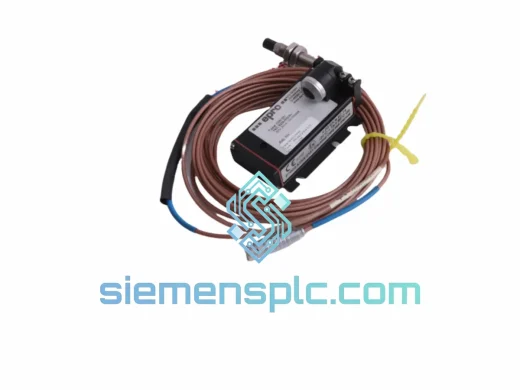
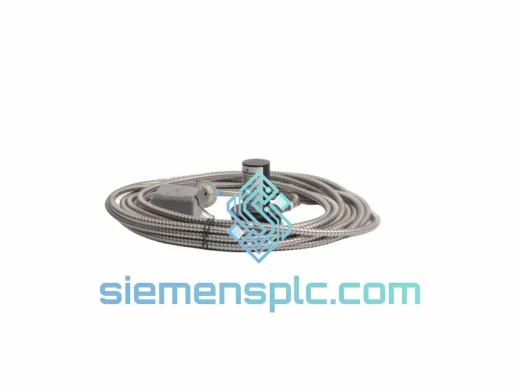
EPRO PR9268/302-000 Velocity Sensor – PR9268 Series
PR9268 Series
Origin DE
Velocity Sensor
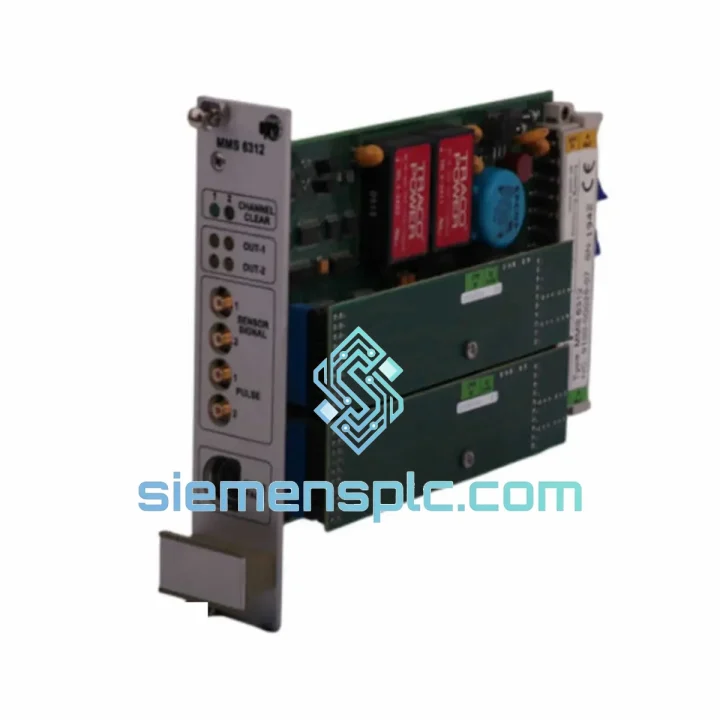
Request verified availability, condition, replacement risk review, packing options and courier lead time for MMS6312.
Click Request Quote and the part number is inserted into the inquiry form automatically.
Core fields for model confirmation and RFQ routing. Detailed product narrative remains below.
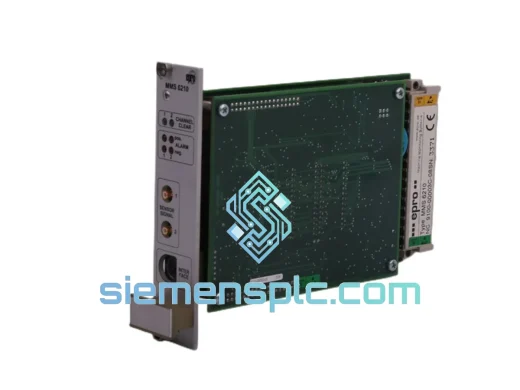
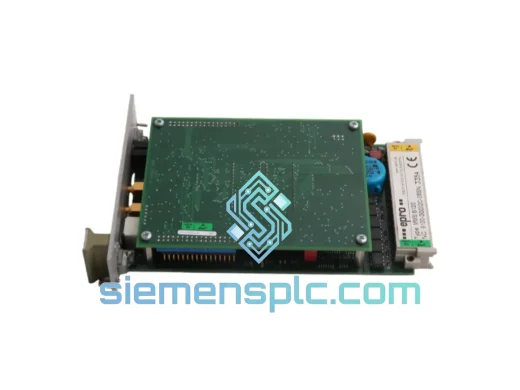
The EPRO MMS6312 is a dual-channel rotational speed monitor designed for the MMS6000 modular machinery protection platform. Its primary function is continuous shaft speed acquisition and overspeed trip arbitration in safety-critical rotating equipment — steam turbines, gas turbines, centrifugal compressors, boiler feed pumps, and turboexpanders. Unlike software-polled speed inputs on a DCS, the MMS6312 executes overspeed trip logic in dedicated hardware, decoupling the protection response from any scan-cycle latency inherent to programmable controllers.
Each of the two independent measurement channels accepts either a passive magnetic pickup (MPU/VR sensor) or an active proximity probe signal conditioned through an EPRO PR9268-series driver. The module converts the raw pulse train from the toothed wheel or gear into a calibrated RPM value, simultaneously driving a 4–20 mA analog output proportional to shaft speed and evaluating configurable trip and alert thresholds against that value. When a threshold is crossed, the corresponding SPDT relay output changes state within the hardware response window — independent of any host communication bus activity.
In turbomachinery protection architecture, the MMS6312 occupies the logic solver position between the speed sensor and the final element (trip solenoid or ESD valve). Its dual-channel topology enables 1oo2 (one-out-of-two) or 2oo2 (two-out-of-two) voting configurations at the system level, satisfying the redundancy requirements of API 670 Fifth Edition and supporting SIL loop assessments per IEC 61511. The module mounts into the MMS6000 rack alongside vibration, axial position, and temperature monitors, sharing a common backplane bus and power infrastructure — a design that reduces panel footprint and simplifies wiring compared to discrete relay-based protection schemes.
Real-time Stock & RFQ: [email protected] | WhatsApp: +86 18359268345
| Parameter | Specification |
|---|---|
| Model | MMS6312 |
| Platform | EPRO MMS6000 Modular Protection System |
| Measurement Channels | 2 (fully independent) |
| Sensor Input Type | Passive MPU (magnetic pickup) / Active proximity probe (via PR9268 driver) |
| Speed Measurement Range | 0 – 20,000 RPM (configurable per channel) |
| Analog Output | 4–20 mA per channel, speed-proportional, galvanically isolated |
| Relay Outputs | Configurable SPDT trip relay + alert relay per channel |
| Trip Response Time | Hardware-based; sub-cycle response independent of bus scan |
| Supply Voltage | 24 VDC nominal (via MMS6000 rack backplane) |
| Power Consumption | ≤ 5 W per module (typical) |
| Operating Temperature | −20 °C to +70 °C |
| Storage Temperature | −40 °C to +85 °C |
| Relative Humidity | 5–95 % RH, non-condensing |
| Mounting | MMS6000 rack slot (plug-in module, hot-swap capable) |
| Module Weight | Approx. 250 g |
| EMC Compliance | CE – EMC Directive 2014/30/EU |
| Functional Safety | SIL-capable; loop SIL assessment per IEC 61511 required |
| Industry Standard | API 670 Fifth Edition (Machinery Protection Systems) |
| Warranty | 12 months from date of shipment |
The MMS6312 implements a frequency-to-current conversion chain that begins at the sensor interface stage. Passive MPU inputs are conditioned through a high-impedance differential front end with integrated transient suppression, protecting the measurement circuit against the inductive voltage spikes common in proximity sensor cabling routed through motor control rooms. The pulse signal is then passed through a zero-crossing detector with hysteresis, eliminating false triggering from signal noise at low shaft speeds — a condition that occurs during turbine coast-down when MPU output amplitude drops proportionally with RPM.
Period measurement rather than pulse counting is used for RPM calculation at low speeds, transitioning to frequency counting at higher RPM. This dual-mode approach maintains measurement resolution across the full 0–20,000 RPM range without requiring range switching or operator intervention. The calculated speed value is updated on a fixed hardware clock cycle, ensuring deterministic refresh of both the analog output and the threshold comparators.
The overspeed trip comparator operates asynchronously from the analog output update loop. Threshold comparison is performed in dedicated hardware logic, not in a firmware scan loop, which means the relay output response to an overspeed event is not subject to firmware execution latency or watchdog timer delays. This architecture is a fundamental requirement for turbine overspeed protection, where the mechanical runaway time constant can be shorter than a software scan cycle at rated speed.
EMC design on the MMS6312 follows a layered approach: the module PCB uses a ground plane topology with localized decoupling at each active stage, the analog output circuit is galvanically isolated from the measurement ground, and the relay output contacts are rated for inductive loads with internal arc suppression. The MMS6000 rack chassis provides an additional shielding enclosure and a common equipotential bonding point for all module grounds — a configuration that meets IEC 61000-4 series immunity requirements for conducted and radiated disturbances in industrial environments.
Every EPRO MMS6312 unit supplied through siemensplc.com is sourced from verified industrial automation supply channels with full traceability. Prior to dispatch, each module undergoes physical inspection for label authenticity, connector integrity, and ESD-sensitive component condition. Units are stored in climate-controlled, ESD-safe warehousing in Xiamen, China, and shipped in anti-static packaging with desiccant to protect against humidity ingress during transit.
Xiamen’s geographic position as a major South China port city provides direct access to international freight routes serving Europe, the Middle East, Southeast Asia, and the Americas. Standard export documentation — commercial invoice, packing list, and certificate of origin — is prepared for every shipment to facilitate customs clearance. For time-critical plant shutdowns or emergency maintenance windows, expedited air freight options are available with typical transit times of 3–7 business days to most destinations. Sea freight consolidation is available for multi-unit project orders where lead time permits.
All units are covered by a 12-month warranty from the date of shipment. In the event of a warranty claim, the replacement or repair process is initiated within one business day of receiving the returned unit and fault confirmation. Batch and lot documentation is available upon request for quality records and incoming inspection purposes.
Email: [email protected]
WhatsApp: +86 18359268345
Web: siemensplc.com
Location: Xiamen, China
© 2026 siemensplc.com. All rights reserved.
We check the full part number, brand, series and visible nameplate information before quotation.
Sales confirms stock path, condition option, quantity and realistic lead time for export dispatch.
DHL, FedEx, UPS or buyer courier arrangements can be reviewed with packing requirements.
Similar brand or category products for fast comparison and multi-item RFQ lists.