EPRO
RFQ Ready
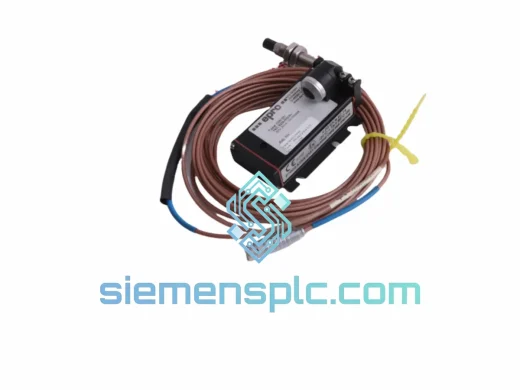
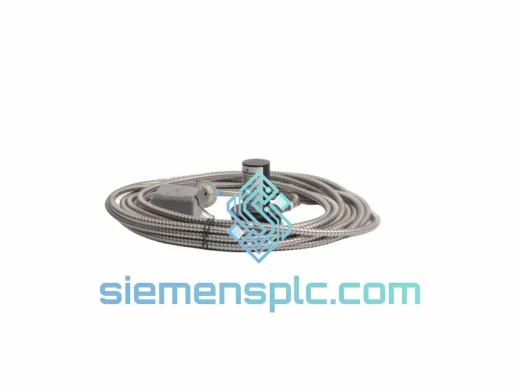
EPRO PR9268/302-000 Velocity Sensor – PR9268 Series
PR9268 Series
Origin DE
Velocity Sensor
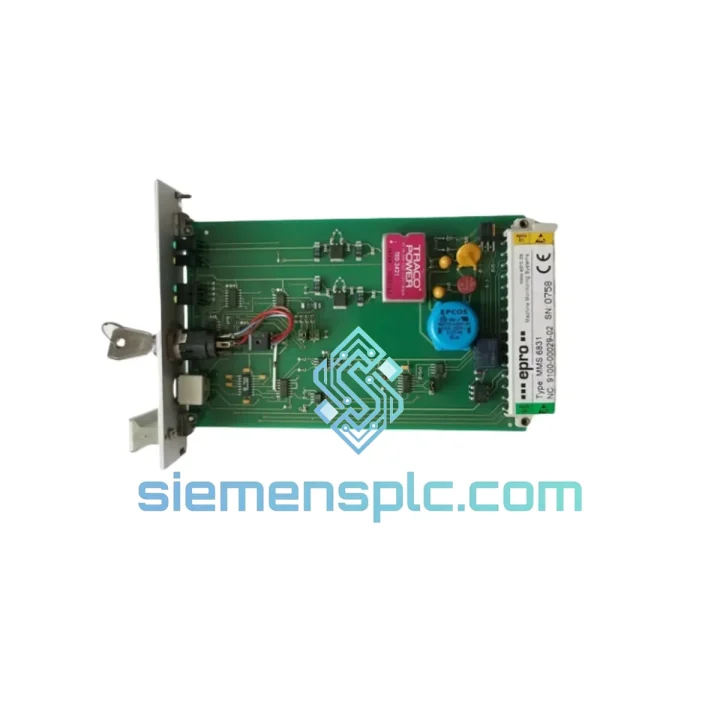
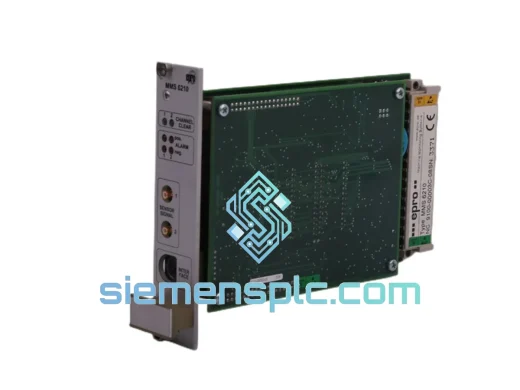
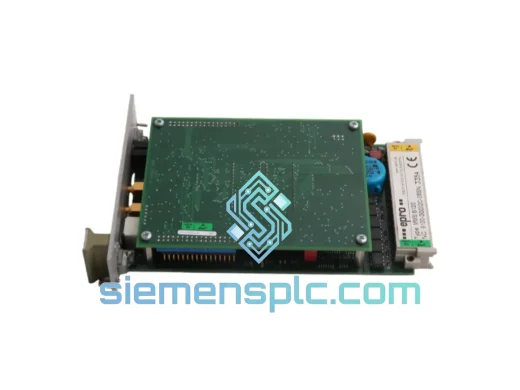
Request verified availability, condition, replacement risk review, packing options and courier lead time for MMS6831.
Click Request Quote and the part number is inserted into the inquiry form automatically.
Core fields for model confirmation and RFQ routing. Detailed product narrative remains below.
Your turbine tripped at 02:00. The control room is dark. Maintenance is on-site and the root cause is staring you in the face — a failed MMS6831 vibration interface card. Every hour offline is burning through your production budget. You don’t need a sales pitch. You need a card on a plane tonight.
We stock the EPRO MMS6831 in Xiamen. Verified, tested, ready to ship via DHL Express within 24 hours of order confirmation. This page exists for one reason: to get your machine back online as fast as physically possible.
URGENT REQUIREMENT? Contact: [email protected] | WhatsApp: +86 18359268345
| Parameter | Specification | Status |
|---|---|---|
| Part Number | MMS6831 | ✅ Ready to Ship |
| Manufacturer | EPRO GmbH (Baker Hughes Group) | OEM Original |
| Platform | MMS 6000 Modular Monitoring System | — |
| Function | Dual-channel vibration / displacement signal conditioner | — |
| Input Type | Eddy-current proximity probe (8 mm / 11 mm), velocity transducer | — |
| Input Channels | 2 × independent, galvanically isolated | — |
| Measurement Range | 0–2000 µm pp (displacement), configurable per channel | — |
| Frequency Response | 0.5 Hz – 10 kHz (–3 dB) | — |
| Analog Output | 4–20 mA per channel | — |
| Digital Output | RS-485 Modbus RTU | — |
| Supply Voltage | 24 V DC (18–32 V DC range) | — |
| Power Consumption | ≤ 4 W per card | — |
| Relay Outputs | 2 × SPDT (Alert / Danger) | — |
| Mounting | MMS 6000 backplane slot / DIN rail EN 60715 | — |
| Operating Temperature | –20 °C to +70 °C | — |
| Humidity | 5–95% RH, non-condensing | — |
| Protection Class | IP20 (card module) | — |
| EMC | EN 61000-4 series, CE marked | — |
| MTBF | > 100,000 hours (MIL-HDBK-217F) | — |
| Weight | 280 g | — |
| Origin | Germany | — |
| Shipping Hub | Xiamen, China | ✅ DHL / FedEx Express |
Common failure signatures that point to a dead MMS6831:
Step-by-step hot-swap replacement procedure (MMS 6000 backplane):
Firmware note: The MMS6831 does not require firmware flashing during field replacement. Configuration is entirely hardware-based via DIP switches. No laptop, no software tool required on-site.
The MMS6831 was not designed for a climate-controlled server room. It was built for the compressor deck of an offshore platform, the turbine hall of a combined-cycle power plant, and the motor control room of a petrochemical complex — environments where temperature swings 40 °C between day and night, where humidity condenses on cold surfaces at shift change, and where vibration from adjacent machinery never stops.
The card’s signal conditioning circuitry is mounted on a conformal-coated PCB. The coating seals the board against moisture ingress and airborne contaminants — sulfur compounds, salt spray, hydraulic oil mist — that corrode unprotected solder joints within 18 months in offshore service. Galvanic isolation between each input channel and the backplane bus eliminates ground-loop currents that corrupt measurement signals in large installations where multiple machines share a common DCS ground reference.
Vibration immunity is validated to IEC 60068-2-6 (sinusoidal, 10–500 Hz, 2 g) and IEC 60068-2-64 (random, broadband). The card remains in calibration under the structural vibration transmitted through the MMS 6000 rack from adjacent rotating equipment — a failure mode that eliminates cheaper third-party alternatives within months of installation.
Thermal design margin is conservative: rated to +70 °C operating, the internal components are derated to operate reliably at +85 °C junction temperature. In practice, this means the card continues to function correctly in enclosures that exceed nameplate ambient rating during summer peak loads — a real-world scenario in tropical and Middle Eastern installations where enclosure cooling fails silently.
Stock is held at our Xiamen warehouse, located 15 minutes from Xiamen Gaoqi International Airport (XMN) — a DHL and FedEx hub with direct freighter connections to Frankfurt, Dubai, Singapore, and Los Angeles. This is not a coincidence. It is the reason we can commit to next-flight-out dispatch for urgent orders.
Standard express timeline (from order confirmation):
Every shipment includes: commercial invoice with HS code pre-filled (8537.10 — boards, panels, consoles for electric control), packing list, and certificate of conformance. For orders requiring customs broker coordination in the destination country, our logistics team provides pre-alert documentation within 2 hours of dispatch. Air waybill number is sent to your email and WhatsApp immediately upon handover to the carrier.
For projects requiring on-site delivery to a remote location (offshore platform, mine site, desert facility), we coordinate with your freight forwarder or arrange last-mile delivery via local courier. Contact us with your delivery address and we will confirm feasibility and cost within 4 hours.
Email: [email protected]
WhatsApp: +86 18359268345
Web: siemensplc.com
© 2026 siemensplc.com. All rights reserved.
We check the full part number, brand, series and visible nameplate information before quotation.
Sales confirms stock path, condition option, quantity and realistic lead time for export dispatch.
DHL, FedEx, UPS or buyer courier arrangements can be reviewed with packing requirements.
Similar brand or category products for fast comparison and multi-item RFQ lists.