FOXBORO
RFQ Ready
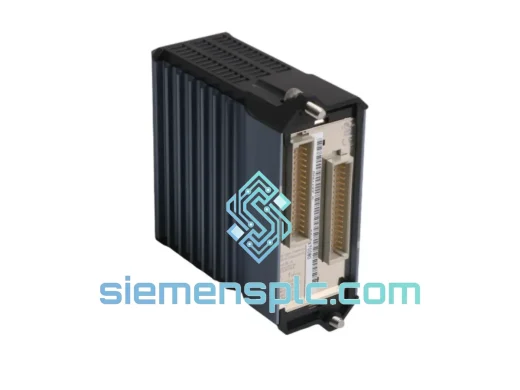
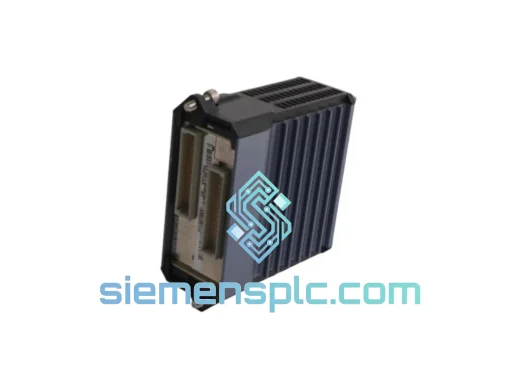
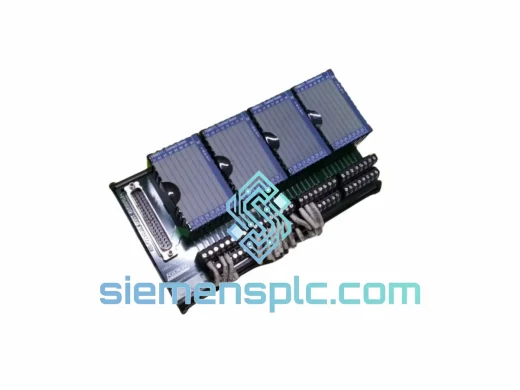
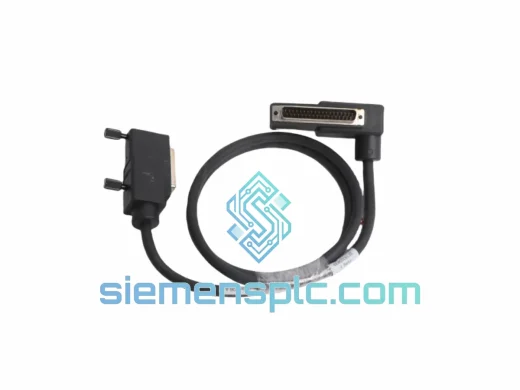
FOXBORO RH916DB DCS Termination Cable – I/A Series
I/A Series
Origin FR
DCS Termination Cable
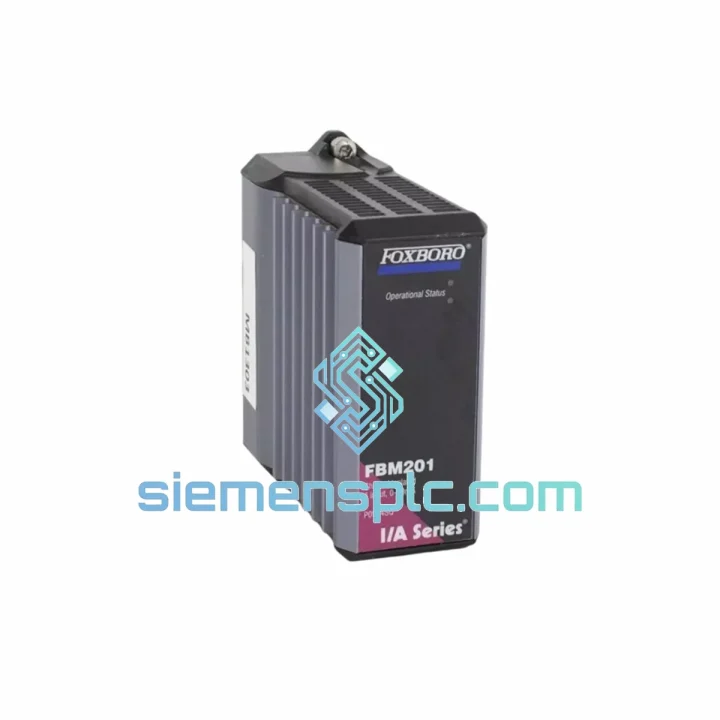
Request verified availability, condition, replacement risk review, packing options and courier lead time for P0916AA-0C.
Click Request Quote and the part number is inserted into the inquiry form automatically.
Core fields for model confirmation and RFQ routing. Detailed product narrative remains below.
The FBM201 P0916AA-0C is a dedicated analog input field bus module (FBM) designed for integration within Foxboro’s I/A Series Distributed Control System platform. It serves as the primary signal acquisition interface between 4–20 mA field transmitters and the DCS controller’s scan engine, performing analog-to-digital conversion, hardware-level signal conditioning, and deterministic data delivery across the Nodebus backplane. The module occupies a single slot within the FBM carrier assembly and draws logic power directly from the backplane bus, requiring no external auxiliary power at the field termination level.
Within a closed-loop process control architecture, the FBM201 operates at the physical boundary between the field instrumentation layer and the digital control domain. On each controller scan cycle, the DCS polls the module’s output registers via the Nodebus token-passing protocol, retrieving conditioned digital representations of all eight analog input channels. These values feed directly into the controller’s function block execution engine, where PID algorithms, ratio controllers, and cascade loops consume the data to compute corrective output signals. The module’s fixed-latency response to Nodebus poll cycles is a prerequisite for maintaining scan-to-scan determinism — any variable latency at the I/O acquisition layer propagates as jitter into the control loop’s derivative term, degrading stability margins in fast-response applications such as pressure and flow control.
The FBM201 is engineered for continuous-process industries including petroleum refining, chemical manufacturing, pulp and paper, and power generation, where analog measurement accuracy and system availability are non-negotiable operational requirements. Its hardware architecture reflects the design philosophy of the I/A Series platform: modularity, field replaceability, and transparent diagnostics accessible through the DCS operator interface without physical access to the termination cabinet.
Real-time Stock & RFQ: [email protected] | WhatsApp: +86 18359268345
| Parameter | Specification |
|---|---|
| Part Number | FBM201 / P0916AA-0C |
| Manufacturer | FOXBORO (Schneider Electric) |
| Platform | Foxboro I/A Series DCS |
| Module Class | Field Bus Module (FBM) — Analog Input |
| Input Signal Range | 4–20 mA current loop (two-wire and four-wire transmitter compatible) |
| Number of Input Channels | 8 differential analog input channels |
| ADC Resolution | 12-bit per channel |
| Measurement Accuracy | ±0.1% of full scale at 25°C ambient |
| Input Loop Burden | ≤ 250 Ω |
| Channel Isolation | Optical isolation, field-to-logic; individual signal conditioning per channel |
| Isolation Voltage | 500 VDC working isolation (field-to-logic boundary) |
| Anti-Aliasing Filter | Hardware low-pass filter, configurable cutoff; matched to scan rate |
| Scan Rate | Configurable; minimum 100 ms per channel group |
| Backplane Bus | Foxboro Nodebus (deterministic token-passing protocol) |
| Logic Supply Voltage | 5 VDC via backplane (system-supplied) |
| Field Loop Power | 24 VDC (system-supplied or external) |
| Operating Temperature | 0°C to +60°C |
| Storage Temperature | −40°C to +85°C |
| Relative Humidity | 5% to 95% RH, non-condensing |
| EMC Compliance | IEC 61000-4-2 / -4-3 / -4-4 / -4-5 / -4-6; CE marked |
| Safety Certifications | UL Listed, CE, RoHS compliant |
| Form Factor | Single-slot FBM carrier module |
| Approximate Weight | 0.45 kg (module only) |
| Warranty | 12 months from date of shipment |
Optocoupler Isolation Architecture: Each of the eight analog input channels is routed through a dedicated optocoupler stage positioned between the field termination point and the ADC input. This galvanic isolation barrier — rated at 500 VDC working isolation — interrupts ground loop current paths that form when field transmitters and the DCS controller reference different ground potentials. In large process plants where cable runs extend across multiple electrical zones, ground potential differences of several volts are common; without isolation, these differences appear as common-mode error voltages superimposed on the 4–20 mA signal, introducing systematic measurement offset that cannot be corrected in software. The per-channel isolation architecture also prevents a fault on one channel — such as a wiring short to a high-voltage source — from propagating to adjacent channels or to the module’s logic circuitry.
PCB-Level EMC Design: The module’s printed circuit board employs a split ground plane topology, with the analog signal ground and the digital logic ground physically separated and connected only at a single star point adjacent to the ADC reference. This arrangement prevents high-frequency switching currents from the Nodebus interface logic from coupling into the analog measurement path via shared ground impedance. Ferrite beads are placed on signal lines that cross the isolation boundary, attenuating high-frequency conducted noise above 10 MHz. Bulk and bypass decoupling capacitors are distributed at each power rail entry point to suppress power supply noise within the ADC’s sensitive frequency band. The module housing maintains shielding continuity with the FBM carrier chassis, which is bonded to the system cabinet protective earth, providing a low-impedance return path for capacitively coupled radiated interference.
Anti-Aliasing Filter and ADC Sampling: Prior to digitization, each channel’s conditioned analog signal passes through a hardware low-pass filter whose cutoff frequency is matched to the module’s configured scan rate. This filter ensures that signal components above the Nyquist frequency — half the sampling rate — are attenuated below the ADC’s noise floor before sampling occurs. Without this filter, high-frequency noise components would alias into the measurement band and appear as low-frequency measurement errors indistinguishable from genuine process variation. The filter’s time constant is selected to provide adequate attenuation at the Nyquist frequency while introducing minimal phase lag at the process signal frequencies of interest, preserving the dynamic response characteristics required for derivative-action PID control.
Nodebus Communication Layer: The FBM201’s backplane interface implements the Foxboro Nodebus protocol, a deterministic token-passing bus architecture that assigns each module a fixed time slot within the bus cycle. The module’s onboard microcontroller manages the Nodebus transaction layer: it buffers the most recent ADC conversion results for all eight channels and responds to the controller’s poll request within the protocol’s defined timing window. This bounded response time guarantees that the DCS controller receives fresh process data on every scan cycle without variable latency. In contrast to non-deterministic bus architectures, the Nodebus protocol’s fixed-slot assignment means that I/O acquisition latency does not increase as additional modules are added to the carrier, preserving control loop performance as the system is expanded.
Every FBM201 P0916AA-0C unit offered through siemensplc.com is sourced through traceable supply channels and processed through a structured incoming inspection protocol before being made available for sale. Incoming inspection covers label and serial number authenticity verification, connector pin condition assessment, housing integrity examination, and power-on self-test confirmation. Signal path continuity is verified across all eight input channels using calibrated test equipment. Units that do not satisfy all inspection criteria are quarantined and excluded from inventory.
All shipments originate from our warehouse facility in Xiamen, Fujian Province, China. Xiamen’s logistics infrastructure — including Xiamen Gaoqi International Airport and Xiamen Port — provides direct access to international express courier networks and sea freight consolidation services. Express courier shipments via DHL, FedEx, and UPS typically achieve transit times of 3–7 business days to destinations in Europe, North America, Southeast Asia, and the Middle East. Sea freight consolidation is available for volume orders where extended lead time is acceptable. Standard export documentation — commercial invoice, packing list, certificate of origin, and ESD-compliant packaging certification — is prepared for every shipment. Customs HS code classification guidance and export licensing support are available upon request for regulated destination markets.
All units are covered by a 12-month warranty against manufacturing defects and functional failure under normal operating conditions, commencing from the date of shipment. Dead-on-arrival units are replaced without charge upon return confirmation and incoming inspection at our facility. Warranty claims are processed within 5 business days of receipt of the returned unit, with replacement shipment dispatched upon claim approval.
Email: [email protected]
WhatsApp: +86 18359268345
Web: siemensplc.com
Location: Xiamen, China
© 2026 siemensplc.com. All rights reserved.
We check the full part number, brand, series and visible nameplate information before quotation.
Sales confirms stock path, condition option, quantity and realistic lead time for export dispatch.
DHL, FedEx, UPS or buyer courier arrangements can be reviewed with packing requirements.
Similar brand or category products for fast comparison and multi-item RFQ lists.