FOXBORO
RFQ Ready
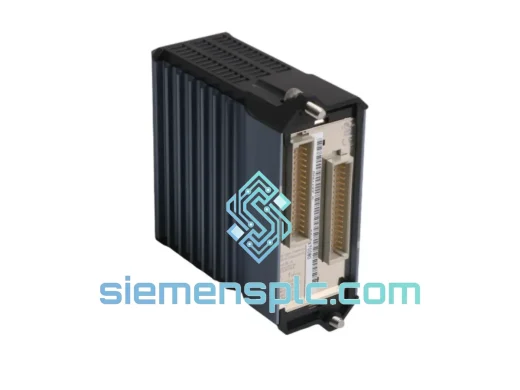
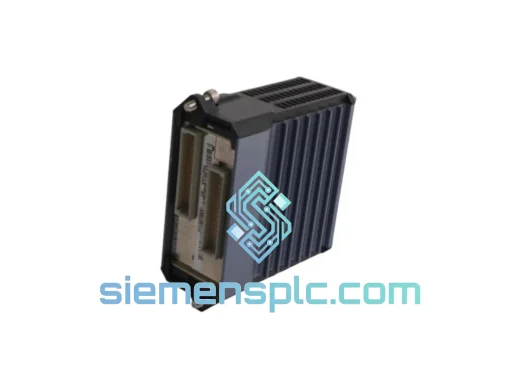
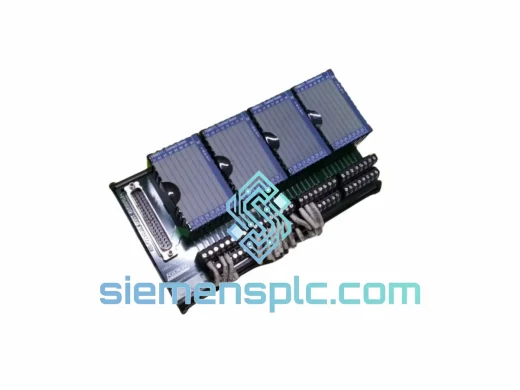
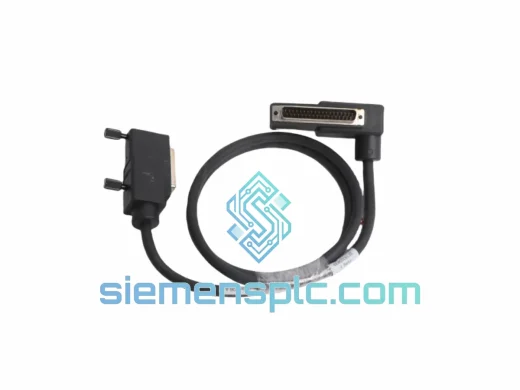
FOXBORO RH916DB DCS Termination Cable – I/A Series
I/A Series
Origin FR
DCS Termination Cable
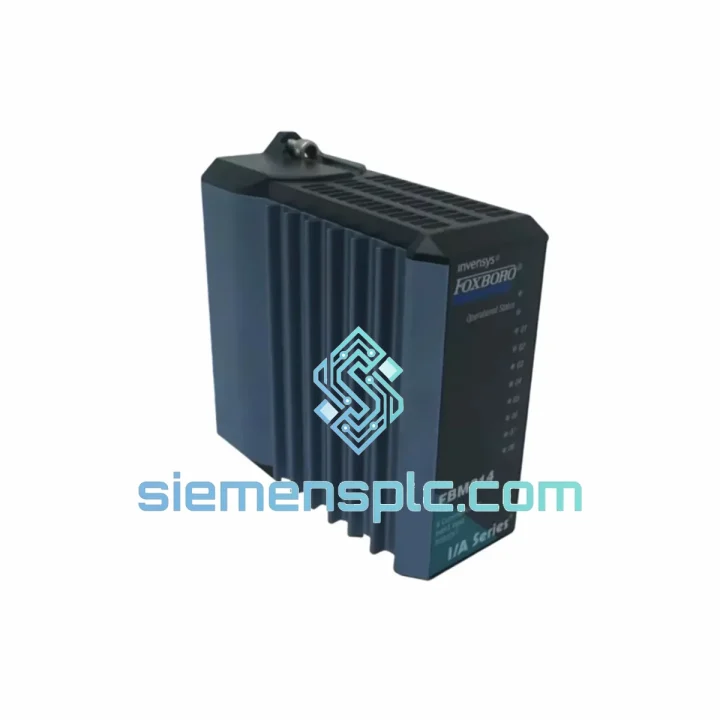
Request verified availability, condition, replacement risk review, packing options and courier lead time for FBM204 P0914SY.
Click Request Quote and the part number is inserted into the inquiry form automatically.
Core fields for model confirmation and RFQ routing. Detailed product narrative remains below.
The FBM204 (part number P0914SY) is a high-density analog input field bus module engineered for the Foxboro I/A Series Distributed Control System platform. Within a process control architecture, this module occupies the critical boundary between field instrumentation and the control network: it receives raw 4–20 mA or 1–5 V DC signals from transmitters, performs analog-to-digital conversion with per-channel galvanic isolation, and delivers calibrated process variable data to the Field Control Processor (FCP) via the I/A Series Nodebus. Its role is not passive signal routing — it is an active, self-diagnosing acquisition node whose integrity directly determines the accuracy and reliability of every closed-loop control calculation downstream.
Deployed across refineries, petrochemical complexes, power generation facilities, and pulp-and-paper mills, the FBM204 has accumulated decades of field service in environments where ambient temperature swings, electromagnetic interference from variable-frequency drives, and ground potential differences between field instruments are routine operating conditions. The module’s architecture addresses each of these stressors through deliberate hardware design rather than software compensation.
Real-time Stock & RFQ: [email protected] | WhatsApp: +86 18359268345
| Parameter | Specification |
|---|---|
| Manufacturer | Foxboro (Schneider Electric) |
| Model Number | FBM204 |
| Part Number | P0914SY |
| Module Category | Analog Input Field Bus Module |
| Host Platform | Foxboro I/A Series DCS |
| Input Signal Range | 4–20 mA (current loop) / 1–5 V DC (voltage mode, configurable per channel) |
| Channel Count | 16 differential analog input channels |
| ADC Resolution | 16-bit (effective), ±0.1% full-scale accuracy |
| Isolation Type | Channel-to-channel and channel-to-bus galvanic isolation (optical + transformer) |
| Isolation Voltage | 500 V DC (channel-to-bus), 250 V DC (channel-to-channel) |
| Communication Interface | I/A Series Nodebus (proprietary deterministic fieldbus) |
| Power Source | Supplied via I/A Series baseplate carrier (no external PSU required) |
| Power Consumption | ≤ 8 W (typical at full channel load) |
| Scan Rate | Configurable; typical 100 ms per 16-channel scan cycle |
| Operating Temperature | 0°C to +60°C |
| Storage Temperature | –40°C to +85°C |
| Relative Humidity | 5% to 95% RH, non-condensing |
| EMC Compliance | IEC 61000-4-2 (ESD), IEC 61000-4-4 (EFT), IEC 61000-4-5 (Surge) |
| Certifications | CE, UL/cUL (per I/A Series platform approval) |
| Mounting | I/A Series FBM baseplate / carrier (DIN-rail or rack) |
| Dimensions | Approx. 250 mm × 120 mm × 60 mm (H × W × D) |
| Weight | Approx. 0.85 kg (module only) |
| Warranty | 12 months from shipment date |
Galvanic Isolation Architecture: Each of the 16 input channels on the FBM204 passes through an independent isolation barrier constructed from an optocoupler stage followed by a DC-DC transformer stage. This dual-barrier topology is not redundant — the two stages address different failure modes. The optocoupler breaks the DC conduction path and suppresses common-mode voltages up to 500 V DC, which is the typical ground potential difference encountered between a field transmitter mounted on a process vessel and the control room ground bus. The transformer stage then provides galvanic separation for the power supply rail feeding the input conditioning circuitry, ensuring that a field-side wiring fault cannot inject noise into the module’s internal reference voltage. The result is a channel that remains accurate to ±0.1% full scale even when adjacent channels are subjected to 250 V DC common-mode stress.
Analog Front-End Signal Conditioning: Before the ADC, each channel passes through a passive RC anti-aliasing filter with a –3 dB corner frequency set below the Nyquist limit of the sampling rate. This filter attenuates high-frequency noise from variable-frequency drives (VFDs), which generate switching transients in the 2–20 kHz range — a frequency band that would otherwise alias into the DC process variable measurement. The filter’s time constant is matched to the module’s scan cycle, so no additional software filtering is required at the FCP level for standard process applications.
16-Bit ADC and Reference Stability: The onboard successive-approximation ADC operates at 16-bit resolution with a stable internal voltage reference. The reference circuit uses a bandgap topology with a temperature coefficient of ≤ 10 ppm/°C, which limits drift to less than 0.065 mV over the module’s full 0–60°C operating range. This stability is critical in applications such as reactor temperature measurement, where a 0.1°C process variable error can translate to a significant yield or safety margin deviation.
Nodebus Communication and Determinism: The FBM204 communicates with the I/A Series FCP via the Nodebus, a deterministic token-passing fieldbus operating at a fixed baud rate. Unlike Ethernet-based fieldbuses, the Nodebus does not experience collision-induced latency jitter. The FBM204’s bus interface logic implements a hardware token-receive timer that guarantees the module responds within a fixed window after receiving the bus token, ensuring that the FCP’s control algorithm receives fresh process variable data on every scan cycle without software-level polling overhead.
EMC Design — Conducted and Radiated Immunity: The module’s PCB layout places the analog input traces in a shielded inner layer, separated from the digital communication traces by ground plane layers on both sides. Ferrite beads are placed at the entry point of every field cable connection to suppress conducted RF interference in the 150 kHz–30 MHz range. The module housing is a grounded metal enclosure that provides a Faraday cage effect, attenuating radiated field interference by approximately 20 dB across the 30 MHz–1 GHz band. These measures allow the FBM204 to meet IEC 61000-4-3 radiated immunity at 10 V/m without performance degradation.
Hot-Swap and Baseplate Architecture: The FBM204 connects to the I/A Series baseplate via a gold-plated edge connector with a defined insertion/extraction force specification. The baseplate’s bus architecture includes a hardware interlock that de-energizes the module’s bus interface before the edge connector fully disengages, preventing bus contention during hot-swap operations. This allows maintenance personnel to replace a failed module without placing the associated control loops in manual or interrupting data acquisition on adjacent channels.
Every FBM204 P0914SY unit supplied by siemensplc.com is sourced as a genuine Foxboro (Schneider Electric) original component. Each module undergoes a structured pre-shipment verification protocol: visual inspection at board level for physical integrity and authentic manufacturer markings; functional power-on test with self-diagnostic confirmation; Nodebus communication handshake validation where test infrastructure permits; and a documentation audit cross-referencing part number, hardware revision, and serial number against manufacturer records. Anti-static packaging with desiccant is standard. A certificate of conformance is available upon request.
Logistics operations are based in Xiamen, China — a major international port city with direct air freight connections to DHL, FedEx, and UPS global hubs. Standard express delivery to Europe, North America, Southeast Asia, and the Middle East is 3–7 business days from shipment confirmation. Sea freight consolidation is available for bulk orders. All shipments include a tracking number and commercial invoice with accurate HS code classification (HS 8537.10) for smooth customs clearance. Import duty and VAT documentation support is available for EU and UK destinations.
The 12-month warranty covers functional failure under normal operating conditions. Warranty claims are processed with a target response time of 48 business hours. Replacement units are dispatched from Xiamen stock upon claim approval, minimizing site downtime.
Email: [email protected]
WhatsApp: +86 18359268345
Web: siemensplc.com
Location: Xiamen, China
© 2026 siemensplc.com. All rights reserved.
We check the full part number, brand, series and visible nameplate information before quotation.
Sales confirms stock path, condition option, quantity and realistic lead time for export dispatch.
DHL, FedEx, UPS or buyer courier arrangements can be reviewed with packing requirements.
Similar brand or category products for fast comparison and multi-item RFQ lists.