FOXBORO
RFQ Ready
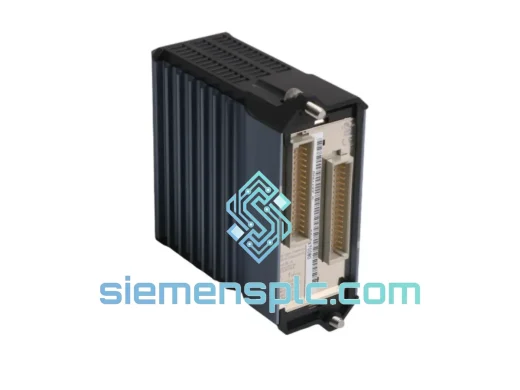
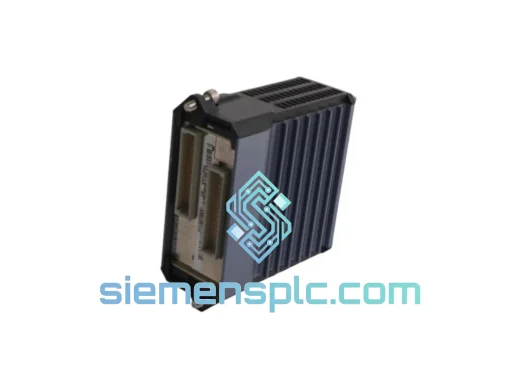
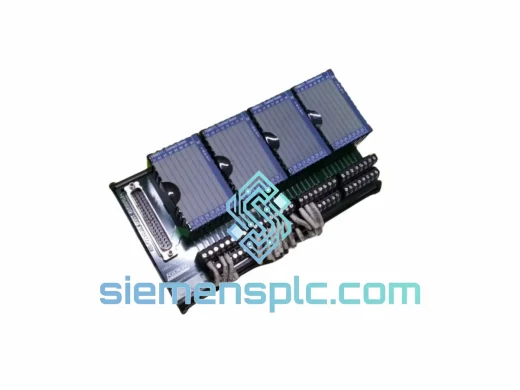
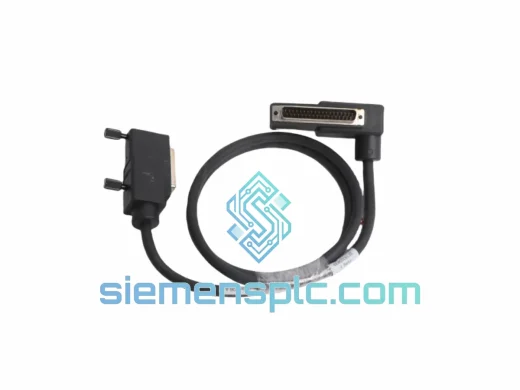
FOXBORO RH916DB DCS Termination Cable – I/A Series
I/A Series
Origin FR
DCS Termination Cable
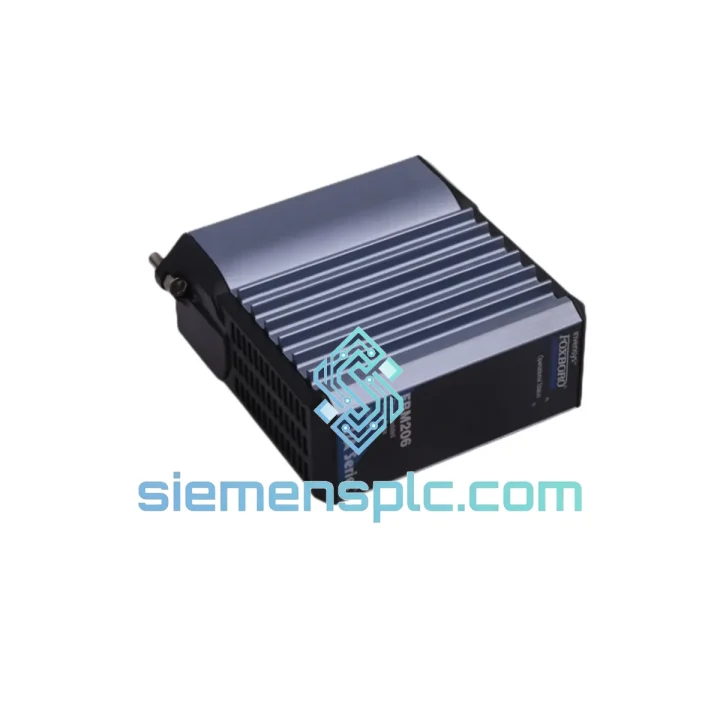
Request verified availability, condition, replacement risk review, packing options and courier lead time for FBM206.
Click Request Quote and the part number is inserted into the inquiry form automatically.
Core fields for model confirmation and RFQ routing. Detailed product narrative remains below.
The FBM206 occupies a precise functional position within the FOXBORO I/A Series Distributed Control System: it serves as the primary interface between high-frequency discrete pulse sources — turbine flow meters, positive displacement meters, incremental encoders, and proximity-switch-based counters — and the DCS control loop. Unlike analog input modules that rely on continuous signal conditioning chains, the FBM206 operates on event-driven counting logic. Each of its eight input channels independently accumulates pulse edges, stores a 32-bit count register, and reports totalized values to the control processor over the I/A Series Nodebus at deterministic scan intervals. This architecture makes the FBM206 indispensable in applications where volumetric totalization accuracy, batch quantity control, and shaft-speed monitoring must be maintained without signal cross-contamination between channels.
The module’s role in a control loop is not passive. In flow custody transfer applications, the FBM206 feeds pulse-derived flow totals directly into the DCS historian and batch executive, where they drive material balance calculations, alarm setpoints, and regulatory control outputs. In turbine speed monitoring, the module’s count rate — derived from pulse frequency — feeds into speed governor logic blocks. The 32-bit counter depth per channel (maximum count: 4,294,967,295 pulses before rollover) ensures that even high-throughput processes running at several kilohertz input frequencies do not require frequent software resets, preserving data continuity across extended production runs.
Real-time Stock & RFQ: [email protected] | WhatsApp: +86 18359268345
| Model | FBM206 |
| Manufacturer | FOXBORO (Schneider Electric I/A Series) |
| Module Function | Channel-Isolated 8-Input Pulse Counter |
| Number of Input Channels | 8, individually channel-isolated |
| Counter Register Depth | 32-bit per channel (max 4,294,967,295 counts) |
| Input Signal Type | Pulse / Frequency (contact closure, NPN/PNP open collector) |
| Channel Isolation Type | Optical isolation, channel-to-channel and channel-to-bus |
| Maximum Input Frequency | Per FOXBORO FBM206 hardware specification (consult datasheet P0914YE) |
| Input Voltage Range | Per FOXBORO FBM206 hardware specification |
| Communication Interface | I/A Series Nodebus / Fieldbus backplane |
| Operating Temperature | 0 °C to +60 °C |
| Storage Temperature | -40 °C to +85 °C |
| Relative Humidity | 5 % to 95 % RH, non-condensing |
| Power Supply | Supplied via I/A Series FBM baseplate (internal bus) |
| Form Factor | Standard FBM rack-mount, I/A Series baseplate compatible |
| Approx. Weight | 300 g |
| Certifications | CE, UL (per original FOXBORO factory certification) |
| Part / Reference Number | FBM206 / P0914YE |
| Warranty | 12 months from shipment date |
The FBM206’s hardware design centers on per-channel optical isolation — a topology that physically decouples each field input from the module’s internal logic bus using an optocoupler barrier. This is not a shared-isolation architecture where a single isolation stage protects a group of channels; each of the eight channels has its own dedicated optocoupler, meaning a ground fault, voltage transient, or wiring error on channel 3 cannot propagate to channels 1, 2, or 4 through a shared common. In electrically noisy industrial environments — motor control centers, variable frequency drives, high-current switching loads — this per-channel barrier is the primary defense against common-mode interference corrupting pulse count data.
The counting logic itself is implemented in dedicated hardware counters rather than firmware polling loops. Hardware-based counting eliminates the latency and jitter inherent in software scan-cycle counting, where a fast pulse burst arriving between two firmware scan cycles would be missed entirely. The FBM206’s hardware counters latch every qualifying edge regardless of the Nodebus communication cycle, accumulating counts asynchronously. The DCS control processor reads the accumulated count register at its configured scan rate; the module holds the count stable during the read transaction to prevent race conditions between the counter increment logic and the bus read operation.
EMC performance is further reinforced by the module’s PCB layout discipline: the high-frequency field-side circuitry (input conditioning, optocoupler drive) is physically separated from the low-voltage logic-side circuitry (counter registers, bus interface) by the isolation barrier, with no shared ground plane crossing the boundary. This layout practice, consistent with IEC 61000-4-4 (electrical fast transient) and IEC 61000-4-5 (surge) immunity requirements, ensures the module maintains counting accuracy in environments where conducted and radiated interference levels exceed typical office-grade equipment tolerances by orders of magnitude.
The backplane bus interface implements a deterministic handshake protocol with the I/A Series control processor. The FBM206 does not arbitrate for bus access independently; it responds to processor-initiated read cycles within a defined response window, ensuring that the control processor’s scan cycle time budget is not disrupted by module-side latency. This determinism is a fundamental requirement for DCS applications where control loop execution timing must be predictable to within milliseconds.
Every FOXBORO FBM206 unit supplied through siemensplc.com is sourced from traceable, authorized distribution channels. Units are subjected to a structured incoming inspection protocol covering physical authenticity verification (label format, PCB markings, serial number structure cross-referenced against known genuine FOXBORO production batches), functional bench testing in a compatible I/A Series test rack (channel-by-channel pulse input simulation, bus communication handshake verification), and pre-shipment documentation preparation. A Certificate of Conformance (COC) and Certificate of Origin (COO) declaration accompany every shipment as standard. Functional test reports and pre-shipment unit photographs are available upon request for buyers with incoming inspection requirements under ISO 9001 or site-specific QMS procedures.
Logistics operations are managed from Xiamen, China — a major international freight hub with direct access to DHL Express, FedEx International Priority, UPS Worldwide, and sea freight (LCL/FCL) services. Standard in-stock lead time is 1–3 business days from order confirmation. Packaging follows ESD-safe handling protocols: anti-static bag, foam-lined inner carton, corrugated outer box with fragile/sensitive electronics labeling, meeting ISTA 2A transit standards for international air and sea shipment. Available Incoterms: EXW, FOB Xiamen, CIF destination port. Export documentation — Commercial Invoice, Packing List, COO Declaration, COC — is provided as standard. Additional customs documentation (Form E, EUR.1, CITES if applicable) is available upon request. Volume pricing is available for orders of 5 or more units.
Email: [email protected]
WhatsApp: +86 18359268345
Web: siemensplc.com
Location: Xiamen, China
© 2026 siemensplc.com. All rights reserved.
We check the full part number, brand, series and visible nameplate information before quotation.
Sales confirms stock path, condition option, quantity and realistic lead time for export dispatch.
DHL, FedEx, UPS or buyer courier arrangements can be reviewed with packing requirements.
Similar brand or category products for fast comparison and multi-item RFQ lists.