FOXBORO
RFQ Ready
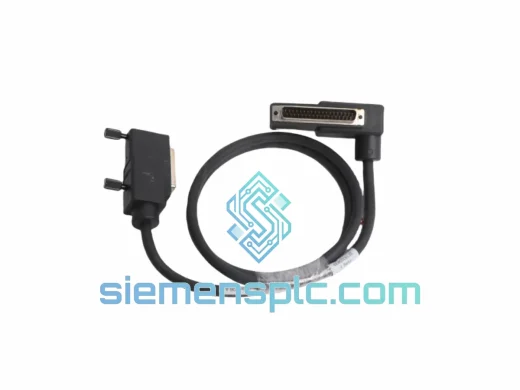
FOXBORO RH916DB DCS Termination Cable – I/A Series
I/A Series
Origin FR
DCS Termination Cable
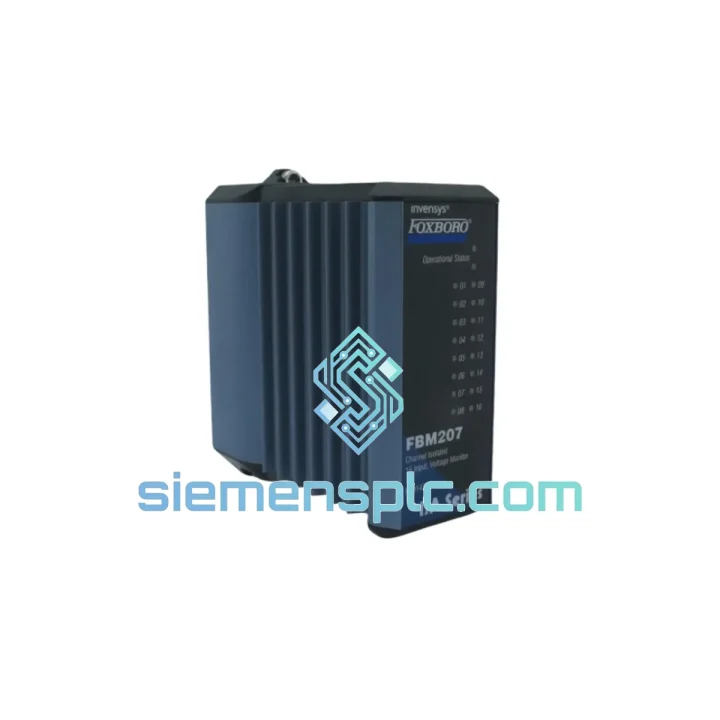
Request verified availability, condition, replacement risk review, packing options and courier lead time for FBM207-P0914TD.
Click Request Quote and the part number is inserted into the inquiry form automatically.
Core fields for model confirmation and RFQ routing. Detailed product narrative remains below.
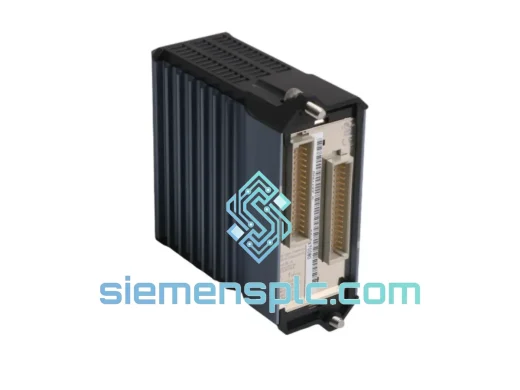
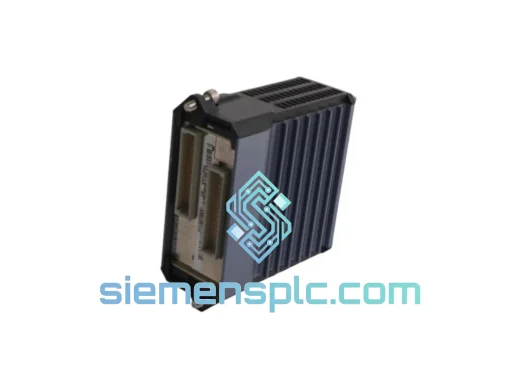
The Foxboro FBM207, catalog part number P0914TD, is a high-density analog input module engineered for the Foxboro I/A Series Distributed Control System. It provides 16 independently isolated measurement channels capable of accepting thermocouple, RTD, millivolt, and process voltage signals within a single plug-in form factor. Each channel operates through a dedicated analog front-end with galvanic isolation from both the backplane bus and adjacent channels, making it a structurally sound choice for multi-sensor installations where ground potential differences between field devices would otherwise introduce common-mode noise into the measurement chain.
In a typical I/A Series control architecture, the FBM207 occupies a slot on a ZCP270 or ZCP280 baseplate and communicates with the control processor — CP60, CP270, or CP280 — via the Nodebus backplane. The module’s internal microcontroller handles multiplexed ADC scanning across all 16 channels, applies linearization algorithms for thermocouple and RTD types, performs cold-junction compensation for TC inputs, and packages the engineering-unit values into Nodebus frames at the configured scan rate. The host control processor receives these frames and maps them directly into the I/A Series compound database, where they are available to function blocks such as PID, RATIO, and CALCA without additional signal conditioning hardware.
The 16-bit analog-to-digital converter delivers a resolution of approximately 1.5 µV per count on the ±100 mV range, which is sufficient for direct thermocouple measurement without preamplification. On the ±10 V voltage range, resolution is approximately 305 µV per count. Accuracy across the operating temperature band of 0 °C to 60 °C is maintained by an internal temperature reference and periodic auto-calibration cycles that the module executes autonomously without interrupting ongoing measurements. This self-calibration mechanism compensates for drift in the reference voltage and ADC gain, keeping total measurement error within the published specification over the module’s service life.
Input type selection — thermocouple type B, E, J, K, N, R, S, or T; RTD Pt100, Pt200, or Ni120; mV; or voltage — is configured per channel through the I/A Series System Configuration software (IACC). No hardware jumpers or physical reconfiguration are required when changing input types, which reduces commissioning time and eliminates the risk of wiring errors associated with jumper-based modules. The module stores its configuration in non-volatile memory and restores it automatically on power cycle or hot-swap reinsertion.
The FBM207 P0914TD is widely deployed in refining, petrochemical, power generation, pharmaceutical batch processing, and water treatment facilities. Its combination of high channel density, universal input compatibility, and true per-channel isolation makes it particularly effective in applications such as multi-point furnace temperature profiling, reactor jacket monitoring, and turbine exhaust temperature arrays, where dozens of thermocouples must be acquired with high integrity and without mutual interference.
Real-time Stock & RFQ: [email protected] | WhatsApp: +86 18359268345
| Parameter | Specification |
|---|---|
| Part Number | FBM207 / P0914TD |
| Manufacturer | Foxboro (Schneider Electric) |
| Series | I/A Series DCS |
| Module Function | Analog Input, Channel-to-Channel Isolated |
| Number of Channels | 16 (individually isolated) |
| Input Types | TC: B, E, J, K, N, R, S, T | RTD: Pt100, Pt200, Ni120 | mV | Voltage |
| mV / TC Input Range | ±100 mV |
| Voltage Input Range | ±10 V |
| ADC Resolution | 16-bit |
| mV Range Resolution | ~1.5 µV/count |
| Voltage Range Resolution | ~305 µV/count |
| Isolation Type | Channel-to-channel and channel-to-backplane galvanic isolation |
| Cold Junction Compensation | Internal, automatic |
| Linearization | Hardware-assisted, per ITS-90 thermocouple tables |
| Backplane Bus | Nodebus (I/A Series internal bus) |
| Compatible Baseplates | ZCP270, ZCP280 series |
| Compatible Processors | CP60, CP270, CP280 |
| Power Supply | Derived from I/A Series baseplate (no external supply required) |
| Operating Temperature | 0 °C to 60 °C |
| Storage Temperature | -40 °C to 85 °C |
| Relative Humidity | 5% to 95% non-condensing |
| Module Weight | Approx. 630 g |
| Form Factor | I/A Series standard FBM plug-in module |
| Certifications | CE, UL (per I/A Series system certification) |
| Warranty | 12 months from date of shipment |
The FBM207’s per-channel isolation architecture is implemented using individual DC-DC converter stages and optocoupler barriers for each of the 16 measurement channels. This design prevents ground loop currents — which arise when field sensors at different electrical potentials share a common return path — from flowing through the measurement circuit. In installations where thermocouples are welded directly to process equipment at varying ground potentials, a non-isolated module would exhibit common-mode voltages that degrade measurement accuracy or, in severe cases, saturate the ADC input. The FBM207 eliminates this failure mode entirely by breaking the galvanic path at each channel boundary.
The analog front-end for each channel consists of a differential input buffer, a programmable gain stage, and a sigma-delta ADC. The sigma-delta topology is well-suited to low-frequency, high-resolution measurement tasks: it oversamples the input signal at a high clock rate and applies a digital decimation filter to extract the 16-bit result. The decimation filter also provides inherent rejection of power-line frequency interference at 50 Hz and 60 Hz, which is configurable through the module’s software parameters. This eliminates the need for external notch filters on thermocouple wiring in electrically noisy industrial environments.
EMC performance is reinforced at the hardware level through multi-layer PCB construction with dedicated ground planes, ferrite bead filtering on all I/O lines entering the module, and transient voltage suppression (TVS) diodes on each channel input. The module meets IEC 61000-4-2 (ESD), IEC 61000-4-4 (EFT/Burst), and IEC 61000-4-5 (Surge) immunity requirements, which are standard for process control equipment operating in proximity to variable-frequency drives, contactors, and high-current switching loads.
The Nodebus interface logic is implemented in a dedicated ASIC that handles bus arbitration, frame assembly, and error detection independently of the measurement microcontroller. This separation of concerns means that a bus communication event — such as a processor poll or a configuration write — does not interrupt an ongoing ADC conversion cycle, preserving measurement determinism. The ASIC also implements watchdog supervision of the measurement microcontroller: if the microcontroller fails to update the output data registers within a configurable timeout period, the ASIC asserts a hardware fault flag that the control processor reads as a module failure, triggering the configured alarm response in the I/A Series compound.
Every FBM207 P0914TD unit dispatched from our Xiamen, China facility is sourced directly from authorized Foxboro distribution channels or verified surplus stock with full traceability documentation. Prior to shipment, each module undergoes a functional verification procedure that includes power-on self-test confirmation, Nodebus communication handshake validation, and spot-check measurement accuracy verification on a representative channel subset using a calibrated signal source traceable to national standards.
Units are packaged in anti-static bags, placed in conductive foam inserts, and shipped in double-wall corrugated cartons rated for international freight handling. For air freight shipments to Europe, North America, Southeast Asia, and the Middle East, transit times typically range from 3 to 7 business days via DHL Express, FedEx International Priority, or UPS Worldwide Express, depending on destination customs clearance. Sea freight consolidation is available for bulk orders where lead time permits.
A 12-month warranty covers manufacturing defects and functional failures under normal operating conditions. Warranty claims are processed with a target response time of 48 hours from receipt of the returned unit. Replacement or repair is provided at no charge for confirmed warranty cases. Extended warranty and annual maintenance contract options are available upon request for critical infrastructure applications.
Export documentation — including commercial invoice, packing list, certificate of origin, and ECCN classification — is prepared for all international shipments. Customers in regulated industries may request additional traceability records, including incoming inspection reports and calibration certificates, at the time of order placement.
Email: [email protected]
WhatsApp: +86 18359268345
Web: siemensplc.com
Location: Xiamen, China
© 2026 siemensplc.com. All rights reserved.
We check the full part number, brand, series and visible nameplate information before quotation.
Sales confirms stock path, condition option, quantity and realistic lead time for export dispatch.
DHL, FedEx, UPS or buyer courier arrangements can be reviewed with packing requirements.
Similar brand or category products for fast comparison and multi-item RFQ lists.