FOXBORO
RFQ Ready
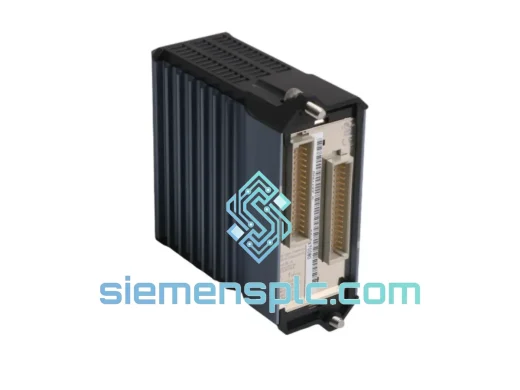
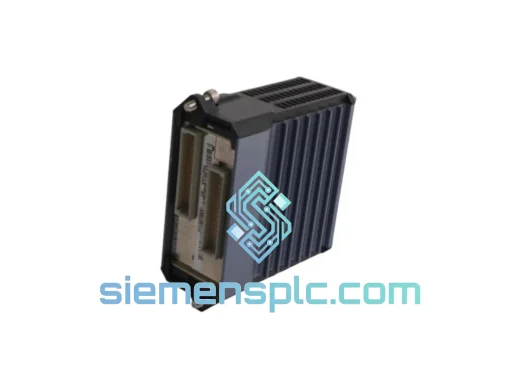
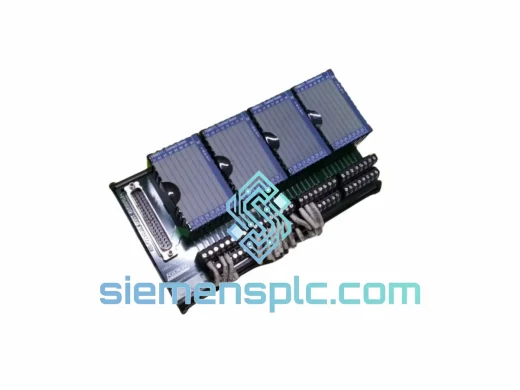
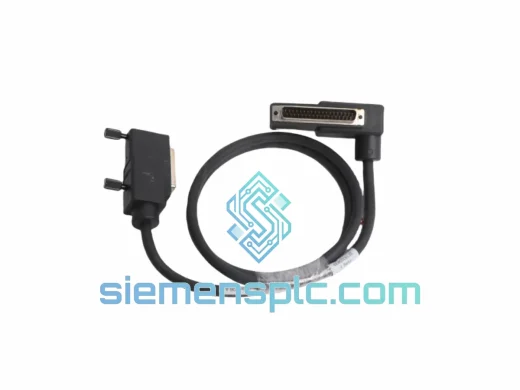
FOXBORO RH916DB DCS Termination Cable – I/A Series
I/A Series
Origin FR
DCS Termination Cable
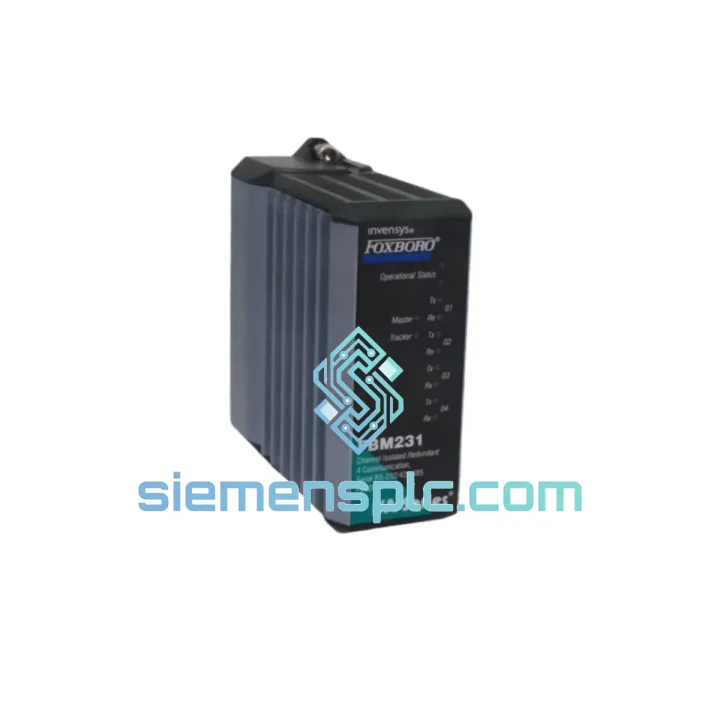
Request verified availability, condition, replacement risk review, packing options and courier lead time for FBM224 P0926GG.
Click Request Quote and the part number is inserted into the inquiry form automatically.
Core fields for model confirmation and RFQ routing. Detailed product narrative remains below.
The Foxboro FBM224, identified by part number P0926GG, is a dedicated isolated communication module engineered for deployment within the Foxboro I/A Series Distributed Control System. Its primary function is to provide a fully isolated data path between the DCS nodebus backplane and field-side fieldbus segments, eliminating ground-loop currents and common-mode voltage interference that are endemic to large-scale process plant electrical environments. Unlike passive isolator barriers inserted externally into wiring runs, the FBM224 integrates isolation directly into the module’s signal path, reducing component count, panel footprint, and potential failure points in the I/O chain.
In a typical I/A Series control loop, the FBM224 occupies a slot on an FBM baseplate and communicates upstream to the controller processor — CP60, CP270, or CP40B — via the Nodebus. Downstream, it interfaces with field instruments or sub-networks over the Foxboro fieldbus protocol. The galvanic isolation barrier within the module sustains a defined withstand voltage between the field side and the logic side, protecting both the DCS backplane and connected field devices from transient overvoltages originating in electrically noisy plant areas such as motor control centers, high-voltage switchgear rooms, and outdoor cable trays subject to lightning-induced surges.
Real-time Stock & RFQ: [email protected] | WhatsApp: +86 18359268345
| Parameter | Specification |
|---|---|
| Manufacturer | Foxboro (Schneider Electric) |
| Model Number | FBM224 |
| Part Number | P0926GG |
| Module Category | Isolated Communication Module |
| Parent Platform | Foxboro I/A Series DCS |
| Isolation Type | Galvanic — channel-to-channel and channel-to-backplane |
| Communication Protocol | Foxboro Nodebus (upstream) / I/A Series Fieldbus (downstream) |
| Mounting Interface | I/A Series FBM Baseplate carrier slot |
| Power Source | Backplane-supplied via baseplate connector |
| Operating Temperature | 0 °C to +60 °C |
| Storage Temperature | −40 °C to +85 °C |
| Relative Humidity | 5 % to 95 % non-condensing |
| Module Weight | 360 g (approximate) |
| EMC Compliance | CE (EMC Directive 2014/30/EU) |
| Safety Certification | UL Listed (refer to OEM datasheet for revision-specific listing) |
| RoHS Status | Compliant per Schneider Electric product records |
| Warranty | 12 months from date of shipment |
| Origin | Shipped from Xiamen, China |
The FBM224’s internal architecture centers on a transformer-coupled or optocoupler-based isolation stage positioned between the field-side signal conditioning circuitry and the Nodebus interface logic. This two-domain design means that the field-side ground reference — which in a large plant may float several volts above or below the DCS system ground due to long cable runs and distributed earthing — is entirely decoupled from the backplane logic ground. The practical consequence is that common-mode voltages up to the module’s rated isolation withstand level do not induce error currents into the measurement or communication path.
On the EMC side, the module’s PCB layout follows shielded-zone partitioning: the field-side analog or digital front-end occupies a physically separated copper pour from the digital logic section, with the isolation barrier forming the boundary. Decoupling capacitors are placed at the barrier boundary to suppress high-frequency conducted emissions from crossing the isolation gap capacitively. This approach satisfies IEC 61000-4-4 (electrical fast transient) and IEC 61000-4-5 (surge) immunity requirements without relying solely on external surge protection devices.
The Nodebus interface logic within the FBM224 implements the I/A Series proprietary token-passing protocol, which provides deterministic message scheduling across the backplane. Each FBM slot is allocated a defined time window within the Nodebus scan cycle, ensuring that communication latency from field instrument to controller is bounded and predictable — a prerequisite for closed-loop PID control with scan rates in the 100 ms to 500 ms range typical of process industry applications. The module’s local microcontroller handles protocol framing, error detection (CRC checking), and status reporting independently, offloading these tasks from the main controller processor and preserving CP throughput for control algorithm execution.
Thermal management within the module relies on conductive heat transfer through the baseplate mechanical interface rather than active cooling. The component selection — industrial-grade ICs rated to at least +85 °C junction temperature — provides margin above the module’s 60 °C ambient rating, supporting continuous operation in non-air-conditioned marshalling cabinets in tropical climates.
Every FBM224 P0926GG unit dispatched from our Xiamen, China facility is a genuine Foxboro original component sourced through verified industrial supply channels. Prior to shipment, each module undergoes a structured pre-dispatch inspection protocol: physical examination for mechanical damage, label and part-number verification against Foxboro OEM documentation, power-on functional verification where test fixtures are available, and anti-static packaging with humidity indicator cards sealed inside moisture-barrier bags.
Xiamen’s port infrastructure — Xiamen Gaoqi International Airport and Xiamen Port — provides direct air freight and sea freight connections to major industrial hubs across Southeast Asia, the Middle East, Europe, and the Americas. Air freight shipments to Singapore, Dubai, Rotterdam, and Houston typically transit in 3–5 business days. Sea freight LCL consolidation is available for multi-module orders where lead time permits. All shipments include commercial invoice, packing list, and certificate of origin documentation to support customs clearance. Export classification and HS code documentation are provided upon request to facilitate import duty calculation at the destination port.
A 12-month warranty covers all units against manufacturing defects and functional failure under normal operating conditions as defined in the Foxboro I/A Series installation guidelines. Warranty claims are processed with a target response time of 48 hours from receipt of the defective unit at our facility.
Email: [email protected]
WhatsApp: +86 18359268345
Web: siemensplc.com
Location: Xiamen, China
© 2026 siemensplc.com. All rights reserved.
We check the full part number, brand, series and visible nameplate information before quotation.
Sales confirms stock path, condition option, quantity and realistic lead time for export dispatch.
DHL, FedEx, UPS or buyer courier arrangements can be reviewed with packing requirements.
Similar brand or category products for fast comparison and multi-item RFQ lists.